



الصفحة 6
الصفحة 6

Dictionary of Pharmaceutical Medicine
Defines various terms typically used in pharmaceutical medicine. A new, 4th edition includes adaptations of the text to the steadily increasing regulatory requirements, particularly in the area of genetics/gene therapy, product quality (e.g., protection against falsified medicines) and of product safety (pharmacovigilance). Further evolving areas that are covered by the 4th edition are typical “grey zones” (health effects often borderline to medicinal products) such as cosmetics and dietary supplements where misleading information is prohibited on one hand but where any health claims need formal authorisation on the other.

Dendrimer Catalysis
catalytically active dendrimers have emerged as a class of molecular catalysts that has substantially enriched the field of homogeneous (and in part heterogeneous) catalysis. A general survey of transition metal dendrimer catalysts and the way they have developed is followed by in-depth discussions of dendritic transition metal catalysis based on non-covalent catalyst-support interaction and an overview of the rapidly growing field of stereoselective dendrimer catalysis. The development of dendrimer-encapsulated bimetallic nanoparticles has provided the interface with heterogeneous colloid catalysis. As cheaper and readily accessible alternatives to regular dendrimers, hyperbranched polymers are increasingly being used as catalyst platforms. These topics are complemented by a review of metallodendritic exoreptors for the redox recognition of oxo-anions and halides.

Current Drug Synthesis
Delivers an authoritative and comprehensive discussion of the medicinal chemistry of current drugs, as well as the cutting-edge science involved in their synthesis. The book demystifies the process of modern drug discovery for both industry practitioners and students, while capturing the state-of-the-art techniques used to discover some of the most impactful medicines on the market today. Covering six different disease areas – including infectious disease, cancer, cardiovascular and metabolic disease, the central nervous system, anti-inflammatory disease, and a miscellaneous section – the book explores 18 different drugs before concluding with chapters on computational drug discovery and peptide drugs.

Curcumin : clinical uses, health effects and potential complications
Curcumin is a natural product with polyphenolic structure. It is used in therapeutic remedies alone or in combination with other natural substances. Many researchers are investigating it because of its biological activities such as: anti-inflammatory, anti-cancer, anti-protozoal, anti-viral, anti-bacterial and has been found to be effective for treatment of Alzheimer, depression, headaches, fibromyalgia, leprosy, fever, menstrual problems, water retention, worms and kidney problems etc. It is an active ingredient in dietary spice, turmeric. It has reactive functional groups: a diketone moiety and two phenolic groups. Despite its unique biological activities, it suffers from some shortcomings which include: gastrointestinal problems, poor bioavailability due to its poor absorption, short half-life, poor solubility in aqueous solutions, rapid systemic elimination and antithrombotic activity which can interfere with blood clotting. The first chapter of this book reviews the different delivery systems used for incorporation of curcumin and its derivatives, release kinetics and up to date in vivo results. Chapter two discusses curcumin nano and microencapsulation and its implications on clinical uses.

Creative Chemical Sensor Systems
Schrader has compiled an excellent set of articles that present a current snapshot of chemical sensing utilizing state-of-the-art approaches ranging from combinatorial receptor libraries to artificial membrane pores. This volume is an excellent read for the budding and seasoned bioorganic chemist, chemical biologist, or supramolecular chemist as well as for those in allied fields who wish to apply emerging chemical techniques to solve current problems in chemical sensing.This book provides an overview of recent creative new approaches which use chemical means of detection and quantification of important analytes. Creative chemical sensor systems is a rapidly growing subject.

Contrast Agents III : Radiopharmaceuticals - From Diagnostics to Therapeutics
The series Topics in Current Chemistry presents critical reviews of the present and future trends in modern chemical research. The scope of coverage includes all areas of chemical science including the interfaces with related disciplines such as biology, medicine and materials science. The goal of each thematic volume is to give the nonspecialist reader, whether at the university or in industry, a comprehensive overview of an area where new insights are emerging that are of interest to a larger scientific audience.This volume on radiopharmaceutical contrast agents, which also covers new developments on radiopharmaceuticals used as therapeutic drugs is the third of a series on diagnostics following a volume that was exclusively dedicated to magnetic resonance imaging and a “mixed” volume on optical, ultrasound, X-ray and radiopharmaceutical agents

Contemporary Accounts in Drug Discovery and Development
Drug discovery is a lengthy and complex process that typically involves identifying an unmet medical need, determining a biological target, chemical library screening to identify a lead, chemical optimization, preclinical studies and clinical trials. This process often takes many years to complete, and relies on practitioners’ knowledge of chemistry and biology, but also—and perhaps more importantly—on experience. Improving the success rate in discovery and development through a thorough knowledge of drug discovery principles and advances in technology is critical for advancement in the field.

Collagen : Primer in Structure, Processing and Assembly
This volume of Topics in Current Chemistry is an attempt to update and compile the biochemical, molecular knowledge of the still growing family of collagenous proteins. Its intention is to provide a comprehensive summary of all mechanisms known to be involved in synthesis, processing and deposition of collagen molecules, all of which are apparently shared by any known collagen type as part of a common biosynthetic route. From the intracellular initiation of protein translation to the extracellular deposition of mature molecules into the scaffold of the preformed tissue texture, collagen biosynthesis exhibits a profile of mechanisms absolutely unique when compared to other proteins

Co- and post-translational modifications of therapeutic antibodies and proteins
A Comprehensive Guide to Crucial Attributes of Therapeutic Proteins in Biological Pharmaceuticals With this book, Dr. Raju offers a valuable resource for professionals involved in research and development of biopharmaceutical and biosimilar drugs. This is a highly relevant work, as medical practitioners have increasingly turned to biopharmaceutical medicines in their search for safe and reliable treatments for

Clinical trial registries : A practical guide for sponsors and researchers of medicinal products
A necessary addition to the library of all researchers who plan to publish their results in top-tier, peer-reviewed journals. ICMJE editors and other journal editors require registration of clinical trial information on publicly available Web sites before enrollment of study subjects and some countries and regions also require this information, as well as timely publication of study results. Not only does this book discuss the genesis of these requirements, it also provides practical information for researchers and sponsors on how to establish a workflow for a clinical registry project, how to file to a registry, and how to post results. More than 25 current Web addresses for registries are provided as well as a comprehensive annotated bibliography of papers on the topic of clinical trial registries. This book is a valuable source of information for all sponsors of medicinal products.

Clinical Pharmacology ; 12th ed.
Balancing science and practice for improved evidence-based drug therapy and good prescribing in therapeutic settings increasingly complicated by intercurrent disease and polypharmacy.
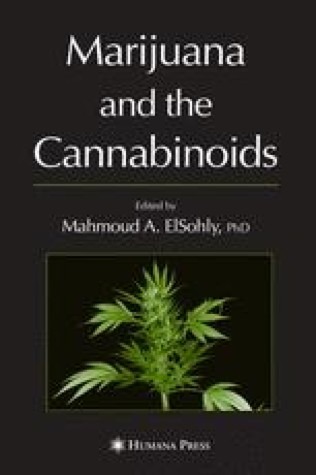
Marijuana and the Cannabinoids
Although primarily used today as one of the most prevalent illicit leisure drugs, the use of Cannabis sativa L., commonly referred to as marijuana, for medicinal purposes has been reported for more than 5000 years. Marijuana use has been shown to create numerous health problems, and, consequently, the expanding use beyond medical purposes into recreational use (abuse) resulted in control of the drug through international treaties. Much research has been carried out over the past few decades following the identification of the chemical structure of THC.The purpose of Marijuana and the Cannabinoids is to present in a single volume the comprehensive knowledge and experience of renowned researchers and scientists. Each chapter is written independently by an expert in his/her field of endeavor, ranging from the botany, the constituents, the chemistry and pharmacokinetics, the effects and consequences of illicit use on the human body, to the therapeutic potential of the cannabinoids.
Manufacturing of Pharmaceutical Proteins: From Technology to Economy
Manufacturing of Pharmaceutical Proteins: From Technology to Economy, renowned chemical engineer Dr. Stefan Behme delivers a comprehensive text covering all aspects of biopharmaceutical manufacturing, including legal and regulatory considerations, production facility design, quality assurance, supply chain management, emerging market regulations, and cost control.
Common Chinese materia medica ; Vol.7
Describes 247 species of 9 families of medicinal plants, which are commonly used in Chinese medicine. The most important species are Adina rubella, Gardenia jasminoides, Hedyotis diffusa, Morinda officinalis, Rubia cordifolia, Uncaria hirsuta, Uncaria macrophylla, Uncaria rhynchophylla, Uncaria sessilifructus, Uncaria sinensis of Rubiaceae; Lonicera confusa, Lonicera hypoglauca, Lonicera macranthoides, Lonicera japonica of Caprifoliaceae; Patrinia scabiosaefolia, Patrinia villosa, Nardostachys jatamansi of Valerianaceae; Dipsacus asperoides of Dipsacaceae; Arctium lappa, Artemisia annua, Artemisia argyi, Artemisia capillaris, Artemisia scoparia, Atractylodes lancea, Atractylodes macrocephala, Dendranthema indicum, Dendranthema morifolium, Eupatorium chinense, Eupatorium fortunei, Inula helenium, Saussurea costus, Saussurea involucrata, Senecio scandens, Serratula chinensis, Siegesbeckia orientalis, Solidago decurrens, Taraxacum mongolicum, Tussilago farfara、Xanthium sibiricum of Compositae; Gentiana crassicaulis, Gentiana manshurica, Gentiana rigescens, Gentiana scabra, Swertia pseudochinensis of Valerianaceae; Lysimachia christinae of Primulaceae and Plantago asiatica of Plantaginaceae.
Common Chinese materia medica ; Vol.6
Describes 226 species of 32 families of medicinal plants, which are commonly used in Chinese medicine. The most important species are Aquilaria sinensis and Daphne genkwa of Thymelaeaceae; Benincasa hispida, Siraitia grosvenorii, Trichosanthes kirilowii and Trichosanthes rosthornii of Cucurbitaceae; Camellia sinensis of Theaceae; Cleistocalyx operculatus, Eugenia caryophyllata and Rhodomyrtus tomentosa of Myrtaceae; Osbeckia chinensis of Melastomataceae; Quisqualis indica and Terminalia chebula of Combretaceae; Hypericum japonicum of Hypericaceae; Microcos paniculata of Tiliaceae; Hibiscus mutabilis of Malvaceae; Croton crassifolius, C. lachnocarpus, C. tiglium, Euphorbia humifusa, E. lathyris, E. pekinensis, Phyllanthus emblica and Sauropus spatulifolius of Euphorbiaceae. In each specie, it introduces the scientific names, medicinal names, morphologies, habitats, distributions, acquisition and processing methods of these medicinal plants, the content of medicinal properties, therapeutic effects, usage and dosage of these medicinal plants, and attaches unedited color pictures and pictures of part herbal medicines of each species.
Common Chinese Materia Medica ; Vol.4
Describes 256 species of medicinal plants from 5 families, which are commonly used in Chinese medicine. The most important species are Agrimonia pilosa, Amygdalus persica, Armeniaca mume, Armeniaca vulgaris, Armeniaca sibirica, Chaenomeles sinensis, Eriobotrya japonica of Rosaceae; Chimonanthus praecox of Calycanthaceae;Albizia julibrissin, Archidendron clypearia, Entada phaseoloides, Bauhinia championii of Mimosoideae; Caesalpinia sappan, Cassia tora, Gleditsia sinensis of Caesalpiniaceae; Abrus cantoniensis, Astragalus membranaceus, Astragalus membranaceus, Dalbergia odorifera, Desmodium caudatum, Desmodium styracifolium, Erythrina variegata, Euchresta japonica, Flemingia prostrata, Glycyrrhiza uralensis, Glycyrrhiza inflata, Glycyrrhiza glabra, Lablab purpureus, Sophora japonica and Spatholobus suberectus of Butterflyaceae. In each specie, it introduces the scientific names, medicinal names, morphologies, habitats, distributions, acquisition and processing methods of these medicinal plants, the content of medicinal properties, therapeutic effects, usage and dosage of these medicinal plants, and attaches unedited color pictures and pictures of part herbal medicines of each species. This book series has 10 volumes in total, which covers over 2000 kinds of Chinese medicines that are commonly used. These volumes not only introduce the efficacy function and some prescriptions of the medicines, but also introduce the biological characteristics of them in detail with clear photos of the habitats, so that readers can identify them in the field. Apart from the growing environment, the books expound the distribution areas and other information to facilitate researches and other applications. The volumes are targeted at readers of general interests and it is also of high referential value for scientific researcher and teachers. It can be used as a guide to researchers, clinical doctors, and students in the department of pharmaceutics and traditional Chinese medicine.
Common Chinese materia medica ; Vol.2
Contains 231 species of 40 families of medicinal plants. The most important family of which are Magnoliaceae, such as Magnolia officinalis and Magnolia officinalis subsp. biloba; Schisandra chinensis of Schisandraceae; Cinnamomum aromaticum of Lauraceae, Coptis chinensis Franch., Coptis omeiensis and Coptis teeta of Berberidaceae; Isatis indigotica, Lepidium apetalum and Raphanus sativus of Cruciferae; Rheum palmatum, Rheum officinale and Rheum taguticum of Polygonaceae, etc. In each specie, it introduces the scientific names, herbal medicine names, characteristics, habitats, distributions, Acquisition and processing methods, medicinal traits, tastes, functions, use and dosages, and other information of medicinal plants, and attaches unedited color pictures and pictures of part herbal medicines for each species. This book series has totally 10 volumes, which covers 2000 kinds of Chinese medicines that are commonly seen or used. These volumes not only introduce the efficacy, function and some prescriptions of the medicines, but also introduce the biological characteristics of them in detail with clear photos of the habitats, so that readers can identify them in the field. Apart from the growing environment, the books expound the distribution areas and other information to facilitate researches and other applications. The volumes are targeted at readers of general interests and it is also of high referential value for scientific researcher and teachers. It can be used as a guide to researchers, clinical doctors, and students in the department of pharmaceutics and traditional Chinese medicine.
Common Chinese materia medica ; Vol.10
Records 5 species of resin, 74 species of animals, 41 species of minerals and fossils. There are resins such as Liquidambar orientalis, Commiphore myrrha, Boswellia carterii, Garcinia hanburyi; animals such as Solenognathus hardwickii, , Cervus nippon, Scolopendra subspinipes, Cryptotympana pustulata, Agkistrodon acutus, Bombyx mori, Collocalia esculenta, Moschus moschiferus, Hippocampus kelloggi, Gekko gekko; minerals and fossils such as mercury, gypsum, alum, mirabilite, cinnabar, actinolite, calomel, keel, dens draconis, lithodes, fossilia spiriferis.
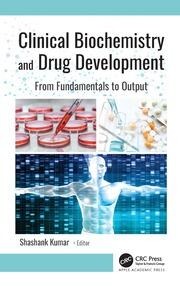
Clinical biochemistry and drug development : From fundamentals to output
Focuses on clinical biochemistry fundamentals, cell culture techniques, and drug discovery and development concepts. It deals with three different fields of clinical research: cell culture, clinical biochemistry, and drug discovery and development.

Class 2 Transferases I : EC 2.1.1
This new, second edition reflects considerable progress in enzymology: many enzymes are newly classified or reclassified. Each entry is correlated with references and one or more source organisms. New datafields are created: application and engineering (for the properties of enzymes where the sequence has been changed). The total amount of material contained in the Handbook has more than doubled so that the complete second edition consists of 39 volumes as well as a Synonym Index. In addition, starting in 2009, all newly classified enzymes are treated in Supplement Volumes. Springer Handbook of Enzymes is an ideal source of information for researchers in biochemistry, biotechnology, organic and analytical chemistry, and food sciences, as well as for medicinal applications
