


تحسين النتائح
ترتيب حسب
من
الى


This book provides insight into the Life Cycle Management (LCM) concept and the progress in its implementation. LCM is a management concept applied in industrial and service sectors to improve products and services, while enhancing the overall sustainability performance of business and its value chains. In this regard, LCM is an opportunity to differentiate through sustainability performance on the market place, working with all departments of a company such as research and development, procurement and marketing, and to enhance the collaboration with stakeholders along a company’s value chain. LCM is used beyond short-term business success and aims at long-term achievements by minimizing environmental and socio-economic burden, while maximizing economic and social value.
Presents recent advances in modelling, planning and evaluating city logistics for sustainable and liveable cities based on the application of ICT (Information and Communication Technology) and ITS (Intelligent Transport Systems). It highlights modelling the behaviour of stakeholders who are involved in city logistics as well as planning and managing policy measures of city logistics including cooperative freight transport systems in public-private partnerships. Case studies of implementing and evaluating city logistics measures in terms of economic, social and environmental benefits from major cities around the world are also given.
Presents recent advances in modelling, planning and evaluating city logistics for sustainable and liveable cities based on the application of ICT (Information and Communication Technology) and ITS (Intelligent Transport Systems). It highlights modelling the behaviour of stakeholders who are involved in city logistics as well as planning and managing policy measures of city logistics including cooperative freight transport systems in public-private partnerships. Case studies of implementing and evaluating city logistics measures in terms of economic, social and environmental benefits from major cities around the world are also given.
Presents recent advances in modelling, planning and evaluating city logistics for sustainable and liveable cities based on the application of ICT (Information and Communication Technology) and ITS (Intelligent Transport Systems). It highlights modelling the behaviour of stakeholders who are involved in city logistics as well as planning and managing policy measures of city logistics including cooperative freight transport systems in public-private partnerships. Case studies of implementing and evaluating city logistics measures in terms of economic, social and environmental benefits from major cities around the world are also given.
On the occasion of the annual Swiss Federal Design Competition, the Federal Office of Culture is realizing a publication and an exhibition - this year in collaboration with the Musée de design et d'arts appliqués contemporains in Lausanne. They serve as platforms to present and document all award winners and their award-winning works. Works from the fields of fashion, textiles, graphics, illustration, photography, product design and jewelry can be seen.
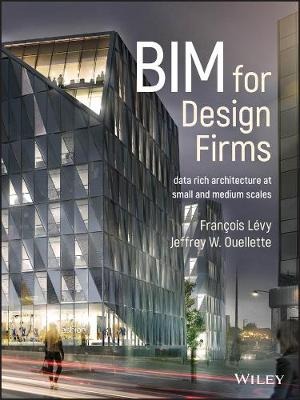
Expands on Building Information Modeling, showing its applicability to a range of design-oriented projects. It emphasizes the full impact that a data modeling tool has on design processes, systems, and the high level of collaboration required across the design team. It also explains the quantitative analysis opportunities that BIM affords for sustainable design and for balancing competing design agendas, while highlighting the benefits BIM offers to designing in 3D for construction. The book concludes with a deep look at the possible future of BIM and digitally-enhanced design.

Brings together highlights from DETAIL about wood as a material. Besides a theoretical basis, the publication also offers a comprehensive section on projects, ranging from experiments to elaborate details, which provides abundant inspiration and examples of successful architectural design using wood.
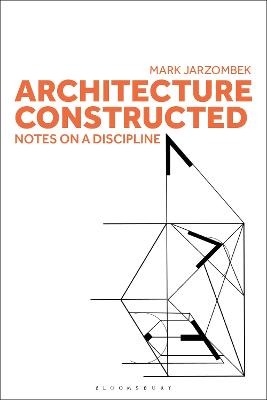
In this book, acclaimed architectural theorist Mark Jarzombek examines this tension head-on, and uses it to rethink the nature of the history of architecture. He reveals architecture to be a troubled, interconnected realm, incomplete and unstable, where labor, craft, and occupation are the ‘invisible’ complements to the work of the architect.
By introducing mathematical objects, it teaches students how to use a computer to perform numerical and symbolic calculations, define a function and calculate its values, plot and explore graphs, and execute simple algorithms. The course is rich in examples, applications, and models, drawn from economics, physics, biology, statistics, and mathematics itself. The analysis of these models constitutes, in a certain sense, the true purpose of the mathematical theory covered. Automatic calculation tools (mathematics software, spreadsheets) are used extensively to explore and illustrate concepts and properties. Mathcad® software, in particular, was used, both as a calculation tool and as a simple yet powerful programming language. Considerable space is devoted to approximation, emphasizing the distinction between numerical and symbolic calculation; to algorithms as a synthesis of the syntactic and semantic aspects of mathematical objects; and to computer simulation, interpreted as a "physical" experiment and a source of conjecture. The ability to use a calculator marks a sort of "democratization" of mathematics: even complex results, which have always required a broad background of knowledge and laborious calculations, are now quickly accessible to anyone who understands the meaning of mathematical objects and knows how to use the syntax.
E si parla di arte; oltre che di Pizzinato, di Pollock, grazie alla collaborazione della Guggenheim Collection di Venezia.E si parla di architettura, dalla topologia ai progetti di Ghery e di Renzo Piano.E di modelli matematici per la lotta contro il cancro, contro l’AIDS.Di come la matematica può aiutare a prevenire e intervenire. E si parla di matematica della guerra e di come la matematica possa aiutare a proteggere l’ambiente. Nel gennaio 2005, scrivendo queste parole, diventa di grande e drammatica attualità l’utilizzo dei modelli matematici per la meteorologia. Prevedere per salvare.
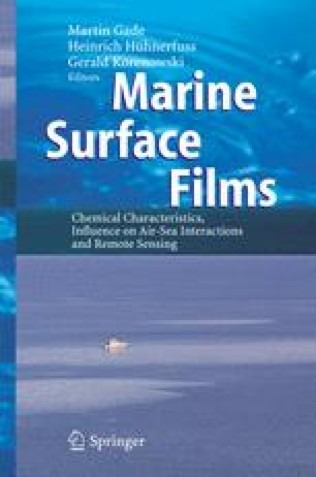
Since the late 1960s, various groups have investigated the influence of marine surface films on mechanisms dominating energy and mass transfer across the ocean/atmosphere interface. However, a compendium summarizing the state-of-the-art research in this field is still missing. The book fills this gap and transfers the accumulated knowledge to the scientific community. After a brief historical chapter basic chemical insights are presented, followed by theoretical and experimental approaches carried out in laboratory facilities. Air-sea interaction experiments are then described and finally, remote sensing applications with sea slicks and crude oil spills are presented.
Provides extensive quotes from the astronauts who drove the LRV on the Moon from interviews conducted especially for the book. It also details new material from interviews of engineers and managers at the Jet Propulsion Laboratory covering the robotic rovers, Sojourner, Sprit and Opportunity. The Foreword is written by David R. Scott, Commander of Apollo 15. Chapter 1: From Concept to Reality; Chapter 2: Lunar Roving Vehicle Subsystems; Chapter 3: Training for the Moon; Chapter 4: To the Hadley Plains; Chapter 4: Mysterious and Unknown Descartes; Chapter 5: Destiny at Taurus-Littrow; Chapter Six: The Quest for Mars-Chapter Seven: The New Vision of Exploration.
Draws parallels with the settlement of terrestrial frontiers to investigate how new space propulsion techniques may help future space settlers exploit extraterrestrial resources to establish independence from the Earth. "Living Off the Land in Space," a collaboration among two space scientists and an artist, is illuminated with many NASA-derived computer-generated images, including drawings, and presents the human (as well as the technological) side of space settlement. It will be an inspiring and indispensible source for those wishing to share in this great adventure.

Light scattering is a very powerful method to characterize the structure of polymers and nanoparticles in solution. Recent technical developments have strongly enhanced the possible applications of this technique, overcoming previous limitations like sample turbidity or insufficient experimental time scales. However, despite their importance, these new developments have not yet been presented in a comprehensive form. In addition, and maybe even more important to the broad audience, there lacks a simple-to-read textbook for students and non-experts interested in the basic principles and fundamental techniques of light scattering. As part of the Springer Laboratory series, this book tries not only to provide such a simple-to-read and illustrative textbook about the seemingly very complicated topic of light scattering from polymers and nanoparticles in dilute solution, but also intends to cover some of the newest technical developments in experimental light scattering.
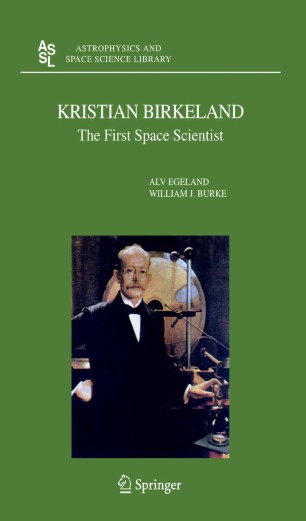
PREFACEThisscientific biography of Kristian Birkeland (1867–1917) was written to bring the story ofa Norwegian national hero to the attention ofthe English-speaking world. Birkeland’sheroic stature was established not on a field of military battle,but in the bitter cold of the Artic wilderness ashe sought to answer basic questions abouthow the Sun controlled northern lights andmag-netic storms. He was also afather of Norsk Hydro one ofNorway’s largest industries. Birkel and died before reaching the age of 50.Because Birkel and never kept adiary, documented information about his family and private life is sparse. Before he died, Olaf Devik, the last of Birke-ffland’s close friends, gave along interview and graciously transferred his personal archive to A.E. Birkeland’s 82 scientific papers and three book-length publications map the progress of his investigations. addressed this book questions that had vexed European scientists for centuries. Why do the northern lights appear overhead when the Earth’s magnetic field is disturbed? How are magnetic storms connected to disturbances on the Sun? To answer these questions Birkeland interpreted his advance laboratory simulations and daring campaigns in the Arctic wilderness in the light of Maxwell’s newly discovered laws of electricity and magnetism. Birkeland’s ideas were dismissed for decades, only to be vindicated when satellites could fly above the Earth’s atmosphere.
The book covers a multitude of important issues on the subject of "Innovations in Knowledge-Based Virtual Education ", aiming at researchers and practitioners from academia, industry, and government. The carefully selected contributions report on research, development and real-world experiences of virtual education.
Focuses on the role of civil society in the creation, dissemination, and interpretation of knowledge in geographical contexts. It offers original, interdisciplinary and counterintuitive perspectives on civil society. The book includes reflections on civil and uncivil society, the role of civil society as a change agent, and on civil society perspectives of undone science. Conceptual approaches go beyond the tripartite division of public, private and civic sectors to propose new frameworks of civic networks and philanthropic fields, which take an inclusive view of the connectivity of civic agency across sectors.
Talks about how the regulatory agencies and courts in the United States, European Union and India are dealing with the rising allegations of anti-competitive behaviour by standard essential patent (SEP) holders. It also discusses the role of standards setting organizations / standards developing organizations (SSO/SDO) and the various players involved in implementing the standards that influence practices and internal dynamics in the ICT sector. The book includes discussions on fair, reasonable and non-discriminatory (FRAND) licensing terms and the complexities that arise when both licensors and licensees of SEPs differ on what they mean by “fair”, “reasonable” and “non-discriminatory” terms. It also addresses topics such as the appropriate royalty base, calculation of FRAND rates and concerns related to FRAND commitments and the role of Federal Trade Commission (FTC) in collaborative standard setting process.
Concurrent engineering is well-established as an approach to engineer product parts. However, the concept has much broader application. Complex Systems Concurrent Engineering: Collaboration, Technology Innovation and Sustainability demonstrates how concurrent engineering can be used to benefit the development of complex systems, to produce results that sustain balanced stakeholder satisfaction over time. Gathered from the 14th ISPE International Conference on Concurrent Engineering, the collected papers cover all aspects of the sustainable and integrated development of complex systems, such as airplanes, satellites, space vehicles, automobiles and ships.
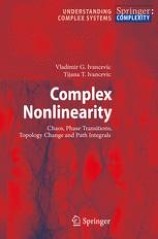
The book starts with a textbook-like expose on nonlinear dynamics, attractors and chaos, both temporal and spatio-temporal, including modern techniques of chaos–control. Chapter 2 turns to the edge of chaos, in the form of phase transitions (equilibrium and non-equilibrium, oscillatory, fractal and noise-induced), as well as the related field of synergetics. While the natural stage for linear dynamics comprises of flat, Euclidean geometry (with the corresponding calculation tools from linear algebra and analysis), the natural stage for nonlinear dynamics is curved, Riemannian geometry (with the corresponding tools from nonlinear, tensor algebra and analysis). The extreme nonlinearity – chaos – corresponds to the topology change of this curved geometrical stage, usually called configuration manifold. Chapter 3 elaborates on geometry and topology change in relation with complex nonlinearity and chaos. Chapter 4 develops general nonlinear dynamics, continuous and discrete, deterministic and stochastic, in the unique form of path integrals and their action-amplitude formalism.

سوريا - اتستراد درعا - غباغب
+963-15 2050 - 15 860 380 /1/2/3 - 11 662 3900