


تحسين النتائح
ترتيب حسب
من
الى


This new edition strives yet again to provide readers with a working knowledge of chaos theory and dynamical systems through parallel introductory explanations in the book and interaction with carefully-selected programs supplied on the accompanying diskette. The programs enable readers, especially advanced-undergraduate students in physics, engineering, and math, to tackle relevant physical systems quickly on their PCs, without distraction from algorithmic details. For the third edition of Chaos: A Program Collection for the PC, each of the previous twelve programs is polished and rewritten in C++ (both Windows and Linux versions are included). A new program treats kicked systems, an important class of two-dimensional problems, which is introduced in Chapter 13. Each chapter follows the structure: theoretical background; numerical techniques; interaction with the program; computer experiments; real experiments and empirical evidence; reference.
The second law of thermodynamics is considered one of the central laws of science, engineering and technology. For over a century it has been assumed to be inviolable by the scientific community. Over the last 10-20 years, however, more than two dozen challenges to it have appeared in the physical literature - more than during any other period in its 150-year history. The number and variety of these represent a cogent threat to its absolute status. This is the first book to document and critique these modern challenges. Written by two leading exponents of this rapidly emerging field, it covers the theoretical and experimental aspects of principal challenges. In addition, unresolved foundational issues concerning entropy and the second law are explored. This book should be of interest to anyone whose work or research is touched by the second law.
This book focuses on a challenging application field of cellular automata: pattern formation in biological systems, such as the growth of microorganisms, dynamics of cellular tissue and tumors, and formation of pigment cell patterns. These phenomena, resulting from complex cellular interactions, cannot be deduced solely from experimental analysis, but can be more easily examined using mathematical models, in particular, cellular automaton models.
Cell motility is a fascinating example of cell behavior which is fundamentally important to a number of biological and pathological processes. It is based on a complex self-organized mechano-chemical machine consisting of cytoskeletal filaments and molecular motors. In general, the cytoskeleton is responsible for the movement of the entire cell and for movements within the cell. The main challenge in the field of cell motility is to develop a complete physical description on how and why cells move. For this purpose new ways of modeling the properties of biological cells have to be found. This long term goal can only be achieved if new experimental techniques are developed to extract physical information from these living systems and if theoretical models are found which bridge the gap between molecular and mesoscopic length scales. Cell Motility gives an authoritative overview of the fundamental biological facts, theoretical models, and current experimental developments in this fascinating area.
This book aim to create a synchrotron radiation facility, CANDLE, as an international laboratory for advanced research in life and material sciences. About 50 researchers from NATO, partner countries and Armenia gathered at Yerevan to discuss modern trends in developments of advanced light sources with high spectral brilliance and applications in basic and applied research in a wide range of fields. Research with high brilliant photon beams are used, for example for practical applications in pharmacy, electronics and nanotechnology. Such practical relevance promoted the design and construction of now more than 50 such facilities worldwide. Overview and specialized talks on the status and highlights of newly constructed light sources (ALBA, SPEAR3, European XFEL Facility, Siberian Synchrotron Radiation Center, CANDLE), on instrumentation and development of experimental techniques, and frontier research in life and material sciences using synchrotron radiation have been presented.
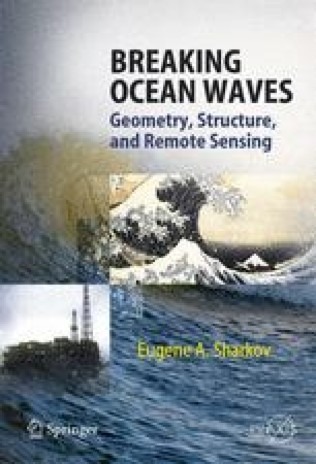
This book represents the most comprehensive description of the physical findings of an investigation into the spatio-temporal characteristics of the gravity of breaking waves and the foam activity in open sea by methods and instruments of optical and microwave remote sensing. Much emphasis is placed on the physical aspects of breaking processes necessary to measure the possibilities and limitations of remote sensing methods in specific observation cases of an oceanic surface. Numerous practical applications and illustrations are provided from air-borne, ship-borne and laboratory up-to-date experiments.
Ion channels are biological nanotubes that are formed by membrane proteins. Because ion channels regulate all electrical activities in living cells, understanding their mechanisms at a molecular level is a fundamental problem in biology. This book deals with recent breakthroughs in ion-channel research that have been brought about by the combined effort of experimental biophysicists and computational physicists, who together are beginning to unravel the story of these exquisitely designed biomolecules. With chapters by leading experts.
Bioconductor is a widely used open source and open development software project for the analysis and comprehension of data arising from high-throughput experimentation in genomics and molecular biology. Bioconductor is rooted in the open source statistical computing environment R. This volume's coverage is broad and ranges across most of the key capabilities of the Bioconductor project, including: Importation and preprocessing of high-throughput data from microarray, proteomic, and flow cytometry platforms / Curation and delivery of biological metadata for use in statistical modeling and interpretation. / Statistical analysis of high-throughput data, including machine learning and visualization,modeling and visualization of graphs and networks. This book is a dynamic document. Code underlying all of the computations that are shown is made available on a companion website, and readers can reproduce every number, figure, and table on their own computers.
Plants play a key role in purifying the biosphere of the toxic effects of industrial activity. This book shows how systematic application of the results of investigations into the metabolism of xenobiotics (foreign, often toxic substances) in plants could make a vastly increased contribution to planetary well-being. Deep physiological knowledge gained from an accumulation of experimental data enables the great differences between the detoxifying abilities of different plants for compounds of different chemical nature to be optimally exploited. Hence planting could be far more systematically adapted to actual environmental needs than is actually the case at present.
Specific binding of a ligand to a receptor is a key step in a variety of biol- ical processes, such as immune reactions, enzyme cascades, or intracellular transport processes. The ligand-receptor terminology implies that the rec- tor molecule is signi?cantly larger than the ligand, and the term "bioactive conformation" usually characterizes the conformation of a ligand when it is bound to a receptor. In a more general sense, bioactive conformation applies toanymoleculeinabiologicallyrelevantboundstateregardlessofsizecons- erations. Mostofthecontributions tothisbookaddressligandsthat aremuch smaller than their receptors. X-ray crystallography and high resolution NMR spectroscopy are the two main experimental techniques used to study bioactive conformations. The- fore, the twovolumes ofthisbookcover approachesthat use either ofthetwo techniques, or a combination thereof.

Leading international researchers and practitioners of bifurcations and instabilities in geomechanics debate the developments and applications which have occurred over the last few decades. The topics covered include modeling of bifurcation, structural failure of geomaterials and geostructures, advanced analytical, numerical and experimental techniques, and application and development of generalised continuum models etc. In addition analytical solutions, numerical methods, experimental techniques, and case histories are presented. Beside fundamental research findings, applications in geotechnical, petroleum, mining, and bulk materials engineering are emphasised.
Axions are peculiar hypothetical particles that could both solve the CP problem of quantum chromodynamics and at the same time account for the dark matter of the universe. Based on a series of lectures by world experts in this field held at CERN (Geneva), this volume provides a pedagogical introduction to the theory, cosmology and astrophysics of these fascinating particles and gives an up-to-date account of the status and prospect of ongoing and planned experimental searches. Learners and practitioners of astroparticle physics will find in this book both a concise introduction and a current reference work to a showcase topic that connects the "inner space" of the elementary particle world with the "outer space" of the universe at large.

Automated Nanohandling by Microrobots introduces an actuation principle for such microrobots and presents a new robot design. Different aspects of this research field regarding the hardware and software implementation of the system components, including the sensory feedback for automated nanohandling, are discussed in detail. Extensive applications of the microrobot station for nanohandling, nano-characterization and nanostructuring are provided, together with the experimental results.
This introduction to Atomic and Molecular Physics explains how our present model of atoms and molecules has been developed over the last two centuries both by many experimental discoveries and, from the theoretical side, by the introduction of quantum physics to the adequate description of micro-particles. It illustrates the wave model of particles by many examples and shows the limits of classical description. The interaction of electromagnetic radiation with atoms and molecules and its potential for spectroscopy is outlined in more detail and in particular lasers as modern spectroscopic tools are discussed more thoroughly. Many examples and problems with solutions are offered to encourage readers to actively engage in experimentation.
Atomic Spectroscopy provides a comprehensive discussion on the general approach to the theory of atomic spectra, based on the use of the Lagrangian canonical formalism. This approach is developed and applied to explain the hydrogenic hyperfine structure associated with the nucleus motion, its finite mass, and spin. The non-relativistic or relativistic, spin or spin-free particle approximations can be used as a starting point of general approach. The special attention is paid to the theory of Lamb shift formation. The formulae for hydrogenic spectrum including the account of Lamb shift are written in simple analytical form. The book is of interest to specialists, graduate and postgraduate students, who are involved into the experimental and theoretical research in the field of modern atomic spectroscopy.
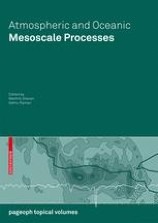
This volume contains many original findings on mesoscale processes in atmospheric and oceanic systems through mathematical modeling, numerical simulations and field experiments. These scientific papers examine and provide the latest developments on a range of topics that include tropical cyclones/hurricanes, mesoscale variability and modeling, seasonal monsoons and land surface processes including atmospheric boundary layer. This volume will be useful as a reading material in graduate level courses dealing with mesoscale systems, weather, climate, monsoon variability and boundary layer.
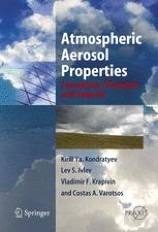
An increasing interest in studies of atmospheric aerosols in the context of their impact on the formation of climate, heterogeneous chemical reactions in the atmosphere affecting in particular the environmental quality, problems of visibility and human health is the cause of unusual scales of developments connected with studies of atmospheric aerosols. The necessity has arisen to analyze the latest results concerning, first of all, three aspects of the problems considered: 1. aerosol properties from data of complex field observational experiment; 2. processes of aerosol formation and interaction of aerosol with clouds, 3. aerosol as a climate-forming atmospheric component (including the problem of long-range transport). The monograph in hand is dedicated mainly to the problems of the impact of aerosol on climate processes in the atmosphere, from microphysical processes of formation and evolution of aerosol properties to the formation of macro-scale cloud sytems on aerosol particles.
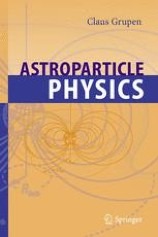
The book describes the branch of astrophysics in which processes in the universe are investigated with experimental methods known from particle physics experiments. After a historical introduction to the basics of elementary particles, their interactions and the relevant detection techniques are described. The main body of the book concerns cosmic rays. The modern aspects of astroparticle physics are described in a chapter on cosmology. The book provides an orientation in the field of astroparticle physics that many beginners might look for. The physics issues are presented with little mathematics, and the results are illustrated by many diagrams. The reader has a chance to enter this field of astrophysics with a book that closes the gap between expert and popular level.
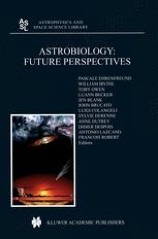
Astrobiology, a new exciting interdisciplinary research field, seeks to unravel the origin and evolution of life wherever it might exist in the Universe. The current view of the origin of life on Earth is that it is strongly connected to the origin and evolution of our planet and, indeed, of the Universe as a whole. We are fortunate to be living in an era where centuries of speculation about the two ancient and fundamental problems: the origin of life and its prevalence in the Universe are being replaced by experimental science. The subject of Astrobiology can be approached from many different perspectives. This book is focused on abiogenic organic matter from the viewpoint of astronomy and planetary science and considers its potential relevance to the origins of life on Earth and elsewhere. Guided by the review papers in this book, the concluding chapter aims to identify key questions to motivate future research and stimulate astrobiological applications of current and future research facilities and space missions. Today’s rich array of new spacecraft, telescopes and dedicated scientists promises a steady flow of discoveries and insights that will ultimately lead us to the answers we seek.
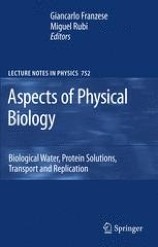
The present volume focuses on three main subtopics (biological water, protein solutions as well as transport and replication), presenting for each of the them the on-going debates on recent results. The role of water in biological processes, the mechanisms of protein folding, the phases and cooperative effects in biological solutions, the thermodynamic description of replication, transport and neural activity, all are subjects that are revised in this volume, based on new experiments and new theoretical interpretations.

سوريا - اتستراد درعا - غباغب
+963-15 2050 - 15 860 380 /1/2/3 - 11 662 3900