


تحسين النتائح
ترتيب حسب
من
الى

This book addresses the application of computing to cultural heritage and the discipline of Digital Humanities that formed around it. Digital Humanities research is transforming how the Human record can be transmitted, shaped, understood, questioned and imagined and it has been ongoing for more than 70 years. However, we have no comprehensive histories of its research trajectory or its disciplinary development. The authors make a first contribution towards remedying this by uncovering, documenting, and analysing a number of the social, intellectual and creative processes that helped to shape this research from the 1950s until the present day.
This book originate from a workshop held at the European University Institute of Florence, Italy, in December 2006. The workshop was devoted to the discussion of the different ways of understanding and explaining contemporary law, for the purpose of building computable models of it -- especially models enabling the development of computer applications for the legal domain.
This second volume of a comprehensive tour through mathematical core subjects for computer scientists completes the ?rst volume in two - gards: Part III ?rst adds topology, di?erential, and integral calculus to the t- ics of sets, graphs, algebra, formal logic, machines, and linear geometry, of volume 1. With this spectrum of fundamentals in mathematical e- cation, young professionals should be able to successfully attack more involved subjects, which may be relevant to the computational sciences. In a second regard, the end of part III and part IV add a selection of more advanced topics. In view of the overwhelming variety of mathematical approaches in the computational sciences, any selection, even the most empirical, requires a methodological justi?cation. Our primary criterion has been the search for harmonization and optimization of thematic - versity and logical coherence. This is why we have, for instance, bundled such seemingly distant subjects as recursive constructions, ordinary d- ferential equations, and fractals under the unifying perspective of c- traction theory.
Component-based software development regards software construction in terms of conventional engineering disciplines where the assembly of systems from readily-available prefabricated parts is the norm. Because both component-based systems themselves and the stakeholders in component-based development projects are different from traditional software systems, component-based testing also needs to deviate from traditional software testing approaches. Gross first describes the specific challenges related to component-based testing like the lack of internal knowledge of a component or the usage of a component in diverse contexts. He argues that only built-in contract testing, a test organization for component-based applications founded on building test artifacts directly into components, can prevent catastrophic failures like the one that caused the now famous ARIANE 5 crash in 1996. This book is the first comprehensive treatment of the intricacies of testing component-based software systems. With its strong modeling background, it appeals to researchers and graduate students specializing in component-based software engineering. Professionals architecting and developing component-based systems will profit from the UML-based methodology and the implementation hints based on the XUnit and JUnit frameworks.
Embedded systems are ubiquitous. They appear in cell phones, microwave ovens, refrigerators, consumer electronics, cars, and jets. Some of these embedded s- tems are safety- or security-critical such as in medical equipment, nuclear plants, and X-by-wire control systems in naval, ground and aerospace transportation - hicles. With the continuing shift from hardware to software, embedded systems are increasingly dominated by embedded software. Embedded software is complex. Its engineering inherently involves a mul- disciplinary interplay with the physics of the embedding system or environment. Embedded software also comes in ever larger quantity and diversity. The next generation of premium automobiles will carry around one gigabyte of binary code. The proposed US DDX submarine is e?ectively a ?oating embedded so- ware system, comprising 30 billion lines of code written in over 100 programming languages. Embedded software is expensive. Cost estimates are quoted at around US$15– 30 per line (from commencement to shipping). In the defense realm, costs can range up to $100, while for highly critical applications, such as the Space Shuttle, the cost per line approximates $1,000. In view of the exponential increase in complexity, the projected costs of future embedded software are staggering.
Modern cryptology employs mathematically rigorous concepts and methods from complexity theory. Conversely, current research in complexity theory often is motivated by questions and problems arising in cryptology. This book takes account of this trend, and therefore its subject is what may be dubbed "cryptocomplexity,'' some sort of symbiosis of these two areas. This textbook is suitable for undergraduate and graduate students of computer science, mathematics, and engineering, and can be used for courses on complexity theory and cryptology, preferably by stressing their interrelation. Starting from scratch, it is an accessible introduction to cryptocomplexity and works its way to the frontiers of current research. It provides the necessary mathematical background, has numerous figures, exercises, and examples, and presents some central, up-to-date research topics and challenges. Due to its comprehensive bibliography and subject index, it is also a valuable source for researchers, teachers, and practitioners working in these fields.
Complexity theory is the theory of determining the necessary resources for the solution of algorithmic problems and, therefore, the limits of what is possible with the available resources. An understanding of these limits prevents the search for non-existing efficient algorithms. This textbook considers randomization as a key concept and emphasizes the interplay between theory and practice: New branches of complexity theory continue to arise in response to new algorithmic concepts, and its results - such as the theory of NP-completeness - have influenced the development of all areas of computer science. The topics selected have implications for concrete applications, and the significance of complexity theory for today's computer science is stressed throughout.
This state-of-the-art survey contains the papers that were invited by the organizers after conclusion of an International Dagstuhl-Seminar on Complexity of Constraints, held in Dagstuhl Castle, Germany, in October 2006.
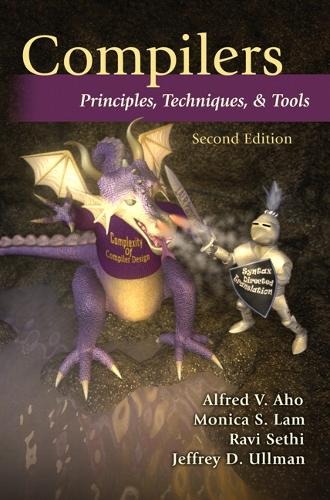
This introduction to compilers is the direct descendant of the well-known book by Aho and Ullman, Principles of Compiler Design. The authors present updated coverage of compilers based on research and techniques that have been developed in the field over the past few years. The book provides a thorough introduction to compiler design and covers topics such as context-free grammars, fine state machines, and syntax-directed translation.
Learn all the algorithmic techniques and programming skills you need from two experienced coaches, problem setters, and jurors for coding competitions. The authors highlight the versatility of each algorithm by considering a variety of problems and show how to implement algorithms in simple and efficient code. What to expect: * Master 128 algorithms in Python. * Discover the right way to tackle a problem and quickly implement a solution of low complexity.
Communications and Networking: An Introduction provides a clear and easy to follow treatment of the subject, written specifically for undergraduates who have no previous experience in the field. The author takes a step by step approach, with examples and exercises designed to give the reader increased confidence in using and understanding communications systems. Topics covered include communications technologies, networking models and standards, local area and wide area networks, network protocols, TCP/IP-based networks and network management.
Many approaches have already been proposed for classification and modeling in the literature. These approaches are usually based on mathematical mod els. Computer systems can easily handle mathematical models even when they are complicated and nonlinear (e.g., neural networks). On the other hand, it is not always easy for human users to intuitively understand mathe matical models even when they are simple and linear. This is because human information processing is based mainly on linguistic knowledge while com puter systems are designed to handle symbolic and numerical information. A large part of our daily communication is based on words. We learn from various media such as books, newspapers, magazines, TV, and the Inter net through words. We also communicate with others through words. While words play a central role in human information processing, linguistic models are not often used in the fields of classification and modeling. If there is no goal other than the maximization of accuracy in classification and modeling, mathematical models may always be preferred to linguistic models. On the other hand, linguistic models may be chosen if emphasis is placed on interpretability.
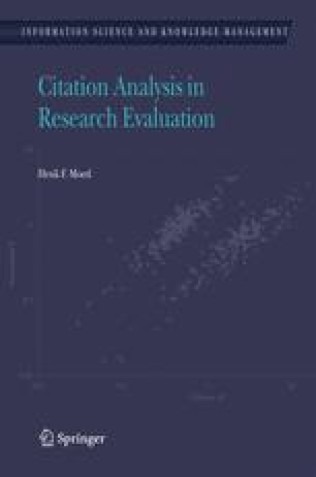
This book is written for members of the scholarly research community, and for persons involved in research evaluation and research policy. More specifically, it is directed towards the following four main groups of readers: – All scientists and scholars who have been or will be subjected to a quantitative assessment of research performance using citation analysis. – Research policy makers and managers who wish to become conversant with the basic features of citation analysis, and about its potentialities and limitations. – Members of peer review committees and other evaluators, who consider the use of citation analysis as a tool in their assessments. – Practitioners and students in the field of quantitative science and technology studies, informetrics, and library and information science. Citation analysis involves the construction and application of a series of indicators of the ‘impact’, ‘influence’ or ‘quality’ of scholarly work, derived from citation data, i.e. data on references cited in footnotes or bibliographies of scholarly research publications. Such indicators are applied both in the study of scholarly communication and in the assessment of research performance. The term ‘scholarly’ comprises all domains of science and scholarship, including not only those fields that are normally denoted as science – the natural and life sciences, mathematical and technical sciences – but also social sciences and humanities.
This book celebrates the life and work of Karen Spärck Jones in her seventieth year. she is one of the major figures of 20th century and early 21st Century computing and information processing. It book consists of fifteen new and original chapters written by leading international authorities reviewing the state of the art and her influence in the areas in which Karen Spärck Jones has been active. Although she has a publication record which goes back over forty years, it is clear even the very early work reviewed in the book can be read with profit by those working on recent developments in information processing like bioinformatics and the semantic web.
Covers the central ideas and concepts of chaos and fractals as well as many related topics including: the Mandelbrot set, Julia sets, cellular automata, L-systems, percolation and strange attractors.
This book provides a gentle, software engineering oriented introduction to category theory. Assuming only a minimum of mathematical preparation, this book explores the use of categorical constructions from the point of view of the methods and techniques that have been proposed for the engineering of complex software systems: object-oriented development, software architectures, logical and algebraic specification techniques, models of concurrency, inter alia. After two parts in which basic and more advanced categorical concepts and techniques are introduced, the book illustrates their application to the semantics of CommUnity – a language for the architectural design of interactive systems. "For computer scientists, this unique book presents Category Theory in a manner tailored to their interests and with examples to which they can relate." Ira Forman, IBM "This book applies little-known yet quite powerful formal tools from category theory to software structures: designs, architectures, patterns, and styles. Rather than focus on issues at the level of computational models and semantics, it instead applies these tools to some of the problems facing the sophisticated software architect.
Case-based reasoning (CBR) has received a great deal of attention in recent years and has established itself as a core methodology in the field of artificial intelligence. The key idea of CBR is to tackle new problems by referring to similar problems that have already been solved in the past. More precisely, CBR proceeds from individual experiences in the form of cases. The generalization beyond these experiences typically relies on a kind of regularity assumption demanding that 'similar problems have similar solutions'. Making use of different frameworks of approximate reasoning and reasoning under uncertainty, notably probabilistic and fuzzy set-based techniques, this book develops formal models of the above inference principle, which is fundamental to CBR. The case-based approximate reasoning methods thus obtained especially emphasize the heuristic nature of case-based inference and aspects of uncertainty in CBR. This way, the book contributes to a solid foundation of CBR which is grounded on formal concepts and techniques from the aforementioned fields. Besides, it establishes interesting relationships between CBR and approximate reasoning, which not only cast new light on existing methods but also enhance the development of novel approaches and hybrid systems.

This book covers a variety of well known topics of interest to practitioners in industry and research scientists. The range of topics includes languages, tools and methodologies for the semantic Web, semantic Web-based ontology management and engineering, semantic Web services, practical applications of the semantic Web techniques, artificial intelligence methods and tools for the semantic Web, software agents on the semantic Web, visualization and modeling of the semantic Web. The goal of this book is to provide a state-of-the-art review of the research as well as to introduce topics of interest to experts.
C++ hat sich in den letzten Jahren rasant entwickelt: C++11, C++14, C++17 und C++20 haben viele Verbesserungen und neue Möglichkeiten gebracht. Vieles, was vor 10 Jahren noch gut und empfehlenswert war, kann heute besser und sicherer gemacht werden. Dieses Buch stellt C++ mit Visual Studio 2019 auf dem Stand von Mai 2020 umfassend dar. Das ist nicht nur der Umfang von C++17, sondern auch schon ein Teil von C++20.
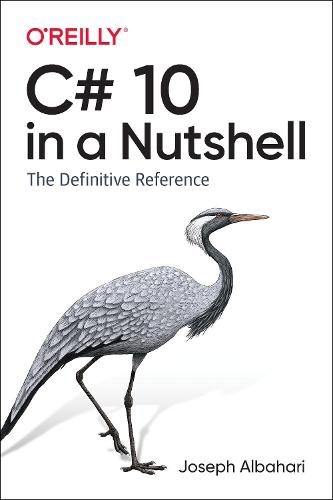
When you have questions about C# 10.0 or .NET 6, this guide has the answers you need. C# is a language of unusual flexibility and breadth, but with its continual growth, there's so much more to learn. In the tradition of O'Reilly's Nutshell guides, this thoroughly updated edition is simply the best one-volume reference to the C# language available today. Organized around concepts and use cases, this comprehensive and complete reference provides intermediate and advanced programmers with a concise map of C# and .NET that also plumbs significant depths

سوريا - اتستراد درعا - غباغب
+963-15 2050 - 15 860 380 /1/2/3 - 11 662 3900