


تحسين النتائح
ترتيب حسب
من
الى

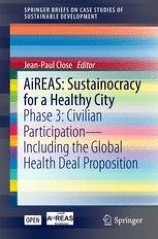
This volume describes phase 3 of the AiREAS multidisciplinary cocreation effort to produce a Healthy City. Phase 1 referred to making visible the invisible from an air quality and human exposure perspective. Phase 2 studies air quality related to health and Phase 3 looks at air quality, health and lifestyle from the perspective of persuasion to innovative change. The three books together describe the coming about and first results of the AiREAS "healthy city" cooperative in the city of Eindhoven and Province of North Brabant in the Netherlands. AiREAS is an initiative focused on the multidisciplinary co-creation of healthy cities using the core human value of human health and air quality as guiding principle for profound regional innovation.

Environmental issues continued to loom large in the last decade of the twentieth century,especially environmental problems related to rising levels of CO emissions and 2 other greenhouse gases on the planet’s average temperatures and, subsequently, storm patterns. Floods and droughts, in combination with unseasonably high and low temperatures became the norm rather than the exception for large expanses of Africa,Asia and Oceania. Even large areas of Europe and NorthAmerica were s- jected to recurrent floods and droughts and experienced unseasonable extremes of hot and cold temperatures associated with man-made intrusions into the natural environment. And, still, a global plan of action to haltman-related patterns of def- estation, desertification, and over-fishing of the seas has yet to come into being. At the same time, the number of regional conflicts and civil wars increased and, with them, the lives of many women, children, old people and other n- combatants were lost in these conflicts.
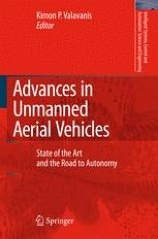
There has been tremendous emphasis in unmanned aerial vehicles, both of fixed (airplanes) and rotary wing (vertical take off and landing, helicopters) types over the past ten years. Applications span both civilian and military domains, the latter being the most important at this stage. This edited book provides a solid and diversified reference source related to basic, applied research and development on small and miniature unmanned aerial vehicles, both fixed and rotary wing. As such, the book offers background information on the evolution of such vehicles over the years, followed by modeling and control fundamentals that are of paramount importance due to unmanned aerial vehicle model complexity, nonlinearity, coupling, inhirent instability and parameter values uncertainty. Aspects of navigation, including visual-based navigation and target tracking are discussed, followed by applications to attitude estimation on micro unmanned aerial vehicles, autonomous solar unmanned aerial vehicle, biomimetic sensing for autonomous flights in near-earth environments, localization of air-ground wireless sensor networks, decentralized formation tracking, design of an unmanned aerial vehicle for volcanic gas sampling and design of an on-board processing controller for miniature helicopters.
The purpose of the book is to review the fundamentals of displacement based methods, starting from engineering seismology, earthquake geotechnical engineering, to focus on design, analysis and testing of structures with emphasis on buildings and bridges.
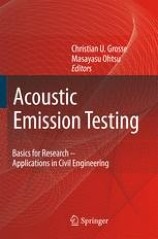
The book covers all levels from the description of AE basics for AE beginners (level of a student) to sophisticated AE algorithms and applications to real large-scale structures as well as the observation of the cracking process in laboratory specimen to study fracture processes.

سوريا - اتستراد درعا - غباغب
+963-15 2050 - 15 860 380 /1/2/3 - 11 662 3900