


تحسين النتائح
ترتيب حسب
من
الى


Makes use of Lie groups to shed new light on the analysis of economic conservation laws. Economic conservation laws are not simply abstract concepts; this book shows that they are tools of empirical analysis that can be applied to such topics as analyses of macro performance and corporate efficiency.

This book examines the capabilities needed to transform a globally distributed organization into a virtual organization (an organization that exists and operates across time and distance with the support of global communications technologies such as the Internet). It introduces techniques for definition of goals for virtualization, for monitoring progress toward virtualization and for studying the impact of virtualization on social uncertainty, knowledge sharing and knowledge transfer, organizational memory, transactive memory, communities of practice and organizational commitment, power and control. These techniques are applied in an extended case study of a development aid organization's attempts to use knowledge management for virtualization over a two year period. The multidisciplinary team of authors examines virtualization from points of view ranging from the organizational to the technological to the sociological and psychological.

The aim of this dissertation is to examine bargaining power effects in financial contracting. In particular power effects on firms' choices of contract type (debt vs. equity) and placement mode (public offering vs. private placement)

In the German banking sector, management is continually increasing its focus on shareholder interests. This can be seen in the ambitious profitability targets set by management in this sector. Some municipalities are also putting increasing pressure on Landesbanks and saving banks, as members of the largest German banking group, to create greater financial value.
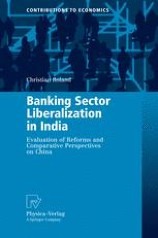
Banking Sector Liberalization in India explores in detail the changes in the Indian banking sector over the last 20 years, and puts them into a comparative perspective with the Chinese banking sector. For this purpose, the author develops a detailed indicator-based framework for assessing the liberalization of a banking sector along various process steps based on financial liberalization and transformation studies. This framework, along with the indicators for the process and the results of liberalization, is applied to the banking sectors in India and China to test for the effects of liberalization on the sector and the macro level. The key finding is that while liberalization has improved the sectoral performance, it has so far had no effect on the macro level. The book features a detailed description of recent reforms in the Indian banking sector, a set of indicators for evaluating banking sector reforms, and a large number of graphs with key figures for the banking sectors in India and China.

Hints of globalization have actually been around for several decades, even though they made only a modest impact; however, the availability of global capital and advances in communication technology have emp- sized the process of internationalization and the tools available to connect and integrate business activities to answer to more complex needs of c- ents. Moreover, the financial scandals and the review of mutual fund trade activity in the US by the Attorney General Elliot Spitzer have highlighted the importance to focus all efforts on renewing the confidence of prof- sional investors and their clients who have entrusted their capital to asset managers. Therefore, there is a growing need in the market to reinforce the concept of “Shared Positive Values” among the entire industry and among its stakeholders.

The aim of this study is to contribute to this understanding by answering the following questions: How do banks adjust capital and risk after an increase in capital requirements? How do banks adjust their regulatory capital buffer over the business cycle? And what is the impact of banks' charter value on the regulatory capital buffer?

Key for successful knowledge management is a balance between exploration and exploitation. Danger arises when exploration is neglected in favour of exploitation since that may result in an organization which lacks innovation capability. In order to prevent this, an idea has been put forward in recent knowledge management research called ambidexterity, which means the simultaneous and balanced pursuing of both exploration and exploitations activities. Tatjana-Xenia Puhan follows up on this idea by concluding that ambidexterity need not necessarily be implemented in one single organization but can also be realised in a network of associated organizations. The interorganizational ambidexterity is based on co-specialisation: one organisation is devoted solely to exploration while associated organizations focus on their competences in exploitation. Furthermore, the author develops the concept of think tanks as organizations that concentrate on radical innovations while their network associates exploit this newly generated knowledge commercially.

Our book is one of the first to probe deeply into the art and science of branding industrial products. We provide the concepts, the theory, and dozens of cases illustrating the successful branding of industrial goods.

The introduction of the Mercedes-Benz Production System (MPS) is exemplary of a trend within the automotive industry: the creation and introduction of company-specific standardised production systems. This book contributes to the debate about production systems by examining the social and economic implications of the role of standardisation in production systems. In this context it addresses three core issues: First, the driving forces behind the changing forms and functions of standardisation and the role of institutions therein. Second, the impact of standardisation on the evolution of automotive production systems. Third, based on the author's own empirical research conducted over a three year period at the Mercedes-Benz plant Stuttgart-Untertürkheim/Germany, the book examines the influence of standardisation on the work of actors on the shop floor in terms of organisational learning processes and the regulation of work.

Studies the interaction of the financial market, economic activity and the macroeconomy from a dynamic perspective. The financial market to be studied here encompasses the money and bond market, credit market, stock market and foreign exchange market. Economic activity is described by the activity of firms, banks, households, governments and countries. The book shows how economic activity affects asset prices and the financial market and how asset prices and financial market volatility feed back to economic activity. The focus in this book is on theories, dynamic models and empirical evidence.

Proceedings of the NATO Advanced Research Workshop on Assessment of Hydrogen Energy for Sustainable Development: Energy & Environmental Security, Istanbul, Turkey, 7-10 August 2006
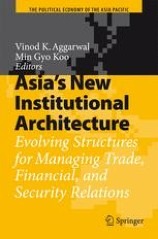
This book investigates the origins and evolution of Asia’s new institutional architecture in trade, finance, and security from both a theoretical and empirical perspective. The traditional institutional equilibrium in Asia has come under heavy strain in the "post triple shocks period" - the post-Cold War, the post-financial crisis of 1997-98, and the post-9-11 attacks. The new dynamics of rivalry and cooperation among states at both the intraregional and transregional levels is now shaping a new institutional architecture. Political and business leaders from Northeast and Southeast Asia interact with each other more frequently. South Asia’s participation in the rest of Asia in recent years is truly impressive. As we show, the future institutional trajectory of Asia is still open, but we believe that the book provides a timely examination of key shifts in the region. In doing so, our hope is to provide policymakers and analysts with an institutional road map for the future.
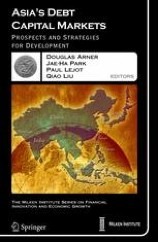
The book has three parts. Part I describes the characteristics and historical origins of these markets. Part II examines the contemporary bond markets and shows how they contribute to general welfare, describes the relationship between the banking sector and capital markets, and assesses prospects for reform in Asia's governmental and corporate debt markets. Part III explains the micro-level impediments and obstacles that must be the first targets of any reform efforts, provides an appraisal of attempts at regional cooperation to stimulate structural reform, and lastly contributes proposals to accelerate the growth and reach of bond markets throughout Asia.
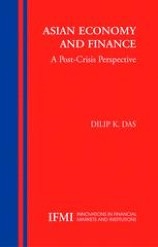
Topicality of Asian economy has refused to fade for almost four decades; if anything it has been levitating. The Asian economy has changed markedly since the economic and financial crisis of 1997-1998 and is continuing to evolve. As a scholarly subject matter, Asian economy has not stopped attracting academicians, policy mandarins, decision makers in the arena of business and students of Asian economy. The Asian crisis was a cataclysmic event for the region and brought to the surface several systemic limitations, like those in the financial sector, corporate governance, regulatory oversight, legal framework, and exchange rate management. Managers of Asian economy need to get to the bottom of these acutely problematical systemic issues. Additionally, Asian economies need to change with the demands of time and devise their post-crisis development strategy. Asia’s growth model, that served it so well for four decades, is overdue for renewal so that it can re-strengthen its bonds with the ever-evolving regional and global economic reality. The old growth model is likely to be less relevant and effective in the post-crisis future of the Asian economies. It is sure to run into the wall of diminishing returns.
This book has a rather long-winding history. It is not like anything else the present author ever wrote, as all the rest is theoretical economics in a d- tinctively mathematical dress. For the emergence of the following pages, there are several people, - cept the author, who are to have the credit, or perhaps the blame.
Agent-based computational modeling with its intrinsic multidisciplinary approach is gaining increasing recognition in the social sciences, particularly in economics, business and finance. This volume is devoted to recent contributions to the field from both the social sciences and computer sciences.
The purpose of this book is to give an up-to date view of the scientific production in the fields of Agent-based Computational Economics (mainly in Market Finance and Game Theory). Based on communications given at AE'2005 (Lille, USTL, France), this book offers a wide panorama of recent advances in ACE (both theoretical and methodological) that will interest academics as well as practitioners.

Containing tips, techniques and short cuts gained from practical experience, this book show how to use ARIS in an easy way, supporting smart methods and smart models, and displays how ARIS can be used as a powerful tool for BPM.

ARIS is ranked as the leading Business Process Modelling tool in the Gartner Quadrant for Business Process Analysis and Optimization. The ARIS Design Platform is being used as a business process management (BPM) tool for projects in BPM, quality management, business analysis and design, software development, implementation of service-oriented architectures and so forth. Following on from Rob Davis’ successful introductory text, ARIS Design Platform: Getting Started with BPM, this new book covers in detail some of the more advanced concepts of using ARIS Business Architect in the new ARIS 7 Design Platform. Written in a reader-friendly style, it contains detailed explanations of key concepts combined with numerous examples, hints and tips gained from many years of practical experience of using ARIS.

سوريا - اتستراد درعا - غباغب
+963-15 2050 - 15 860 380 /1/2/3 - 11 662 3900