



الصفحة 55
الصفحة 55

Approximation and Online Algorithms ; Vol.3879 : 3rd International Workshop, WAOA 2005, Palma de Mallorca, Spain, October 6-7, 2005, Revised Selected Papers
The third Workshop on Approximation and Online Algorithms (WAOA 2005) focused on the design and analysis of algorithms for online and computationally hard problems. Both kinds of problems have a large number of applications from a variety of ?elds. WAOA 2005 took place in Palma de Mallorca, Spain, on 6–7 October 2005. The workshop was part of the ALGO 2005 event that also hosted ESA, WABI, and ATMOS. The two previous WAOA workshops were held in Budapest (2003) and Rome (2004).

Approximation and online algorithms ; Vol.3351 ; 2nd international workshop, WAOA 2004, Bergen, Norway, September 14-16, 2004, Revised Selected Papers
The 2nd Workshop on Approximation and Online Algorithms (WAOA 2004) focused on the design and analysis of algorithms for online and computationally hard problems. Both kinds of problems have a large number of applications arising from a variety of fields. The workshop was part of the ALGO 2004 event which also hosted ESA, WABI, IWPEC, and ATMOS. Topics of interests for WAOA2004 were : applications to game theory, appr- imation classes, coloring and partitioning, competitive analysis, computational finance, cuts and connectivity, geometric problems, in approximability results, mechanism design, network design, routing, packing and covering, paradigms, randomization techniques, and scheduling problems. on the reviews, This volume contains the 21 selected papers

Approximation and Online Algorithms ; 5th International Workshop, WAOA 2007, Eilat, Israel, October 11-12, 2007. Revised Papers
The Fifth Workshop on Approximation and Online Algorithms (WAOA 2007) focused on the design and analysis of algorithms for online and computationally hard problems.

Approximation and Online Algorithms ; 4th International Workshop, WAOA 2006, Zurich, Switzerland, September 14-15, 2006, Revised Papers
It focuses on the design and analysis of algorithms for online and computationally hard problems. Both kinds of problems have a large number of applications

Appraisal and repair of of building structures
This book is a practical guide to the detection and remedy of faults in claddings and fixings on buildings. It sets out the problems involved in common cladding systems for buildings, and relates these problems to all the materials used: stone, masonry, concrete and glass-reinforced composites.
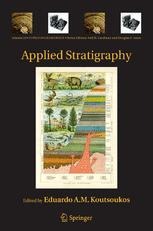
Applied Stratigraphy
This book aims to incorporate major aspects and essential elements underpinning the modern applications and perspectives of stratigraphy. It focuses on traditional and innovative techniques and how these can be utilized in reconstructing the geological history of sedimentary basins and in solving manifold geological problems and phenomena. Each chapter summarizes contributions by leading researchers in the field. It is hoped that this book will provide the reader with key insights into all these aspects and applications.
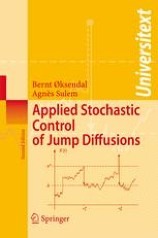
Applied Stochastic Control of Jump Diffusions
The main purpose of the book is to give a rigorous, yet mostly nontechnical, introduction to the most important and useful solution methods of various types of stochastic control problems for jump diffusions and its applications.
Applied Stochastic Control of Jump Diffusions
The main purpose of the book is to give a rigorous, yet mostly nontechnical, introduction to the most important and useful solution methods of various types of stochastic control problems for jump diffusionsThe types of control problems covered include classical stochastic control, optimal stopping, impulse control and singular control. Both the dynamic programming method and the maximum principle method are discussed, as well as the relation between them. Corresponding verification theorems involving the Hamilton-Jacobi Bellman equation and/or (quasi-)variational inequalities are formulated. There are also chapters on the viscosity solution formulation and numerical methods.The text emphasises applications, mostly to finance. All the main results are illustrated by examples and exercises appear at the end of each chapter with complete solutions. This will help the reader understand the theory and see how to apply it.The book assumes some basic knowledge of stochastic analysis, measure theory and partial differential equations.
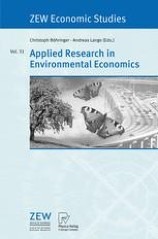
Applied Research in Environmental Economics
Sustainable development, climate policy, and biodiversity conservation are examples of issues on the current political agenda in many countries. These themes are also subject to economic research, and economic insights are increasingly finding their way into the design of environmental policy. Still, the reception of academic findings by policy makers as well as the timely identification of policy-relevant questions by economic researchers often seem to be problematic. This volume attempts to vitalise the exchange between policy makers and academics. It offers a snapshot of environmental economic research on a range of policy-relevant problems.
Applied Remote Sensing for Urban Planning, Governance and Sustainability
Despite the promising and exciting possibilities presented by new and fast-developing remote sensing technologies applied to urban areas, there is still a gap perceived between the generally academic and research-focused spectrum of results offered by the “urban remote sensing” community and the application of these data and products by the local governmental bodies of urban cities and regions. While there is no end of interesting science questions that we can ask about cities, sometimes these questions don't match well with what the operational problems and concerns of a given city are. The authors present data from six urban regions from all over the world. They explain what the important questions are, and how one can use data and scientific skills to help answer them.
Applied Quantitative Finance
Applied Quantitative Finance (2nd edition) provides a comprehensive and state-of-the-art treatment of cutting-edge topics and methods. It provides solutions to and presents theoretical developments in many practical problems such as risk management, pricing of credit derivatives, quantification of volatility and copula modelling. The synthesis of theory and practice supported by computational tools is reflected in the selection of topics as well as in a finely tuned balance of scientific contributions on practical implementation and theoretical concepts. This linkage between theory and practice offers theoreticians insights into considerations of applicability and, vice versa, provides practitioners comfortable access to new techniques in quantitative finance.
Applied Probability and Statistics
This text is designed for a one-semester course on Probability and Statistics. The exposition unfolds systematically from an introductory chapter to such topics as random variables and vectors, stochastic processes, estimation, testing and regression. The topics are well chosen and the presentation is enriched by many examples from real life. Following every chapter, the reader will find many original, solved and unsolved problems and hundreds of multiple choice questions, enabling those unfamiliar with the topics to master them. Additionally appealing are the interesting historical notes on the mathematicians mentioned throughout and a useful bibliography. A distinguishing character of the book is the thorough and succinct handling of the various topics.

Applied Physics
Presents all the essential course information in an easy-to-follow, topic-by-topic format. You also get hundreds of examples, solved problems, and practice exercises to test your skills

Applied Parallel Computing ; 6th International Conference, PARA 2002, Espoo, Finland, June 15-18, 2002. Proceeding
These proceedings contain the papers presented at PARA 2002, the Sixth In-ternational Conference on Applied Parallel Computing. PARA 2002 was held inEspoo, Finland, June 15–18, 2002, and hosted by CSC, the Finnish informationtechnology center for science. The general theme of the conference was advancedscientific computing.The conference demonstrated the ability of advanced scientific computing tosolve real-world problems, and highlighted methods, instruments, and trends infuture scientific computing. The conference began with a one-day tutorial sessionon Grid programming.The conference focused on an application-oriented, multi-disciplinary, andmulti-scale approach. A wide variety of scientific computing applications wereintroduced, from semiconductor processing and behavior of the human body tooceanic and atmospheric phenomena.
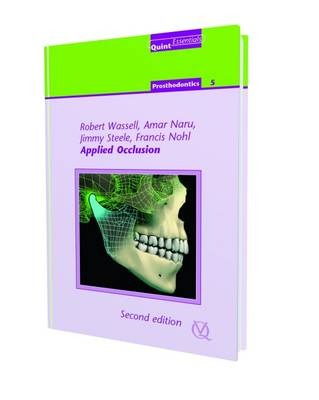
Applied Occlusion : QuintEssentials of Dental Practice ; Vol. 29
Includes many new illustrations, highlighted practical tips, and updates to the text with the most recent advances in the literature. The narrated 3D animations on the accompanying DVD clarify the effects of jaw movement, and comprehensive clinical videos demonstrate the process of investigating and managing real-life occlusal problems. The authors of this practical guide bring occlusal concepts and techniques to life and demystify them for dentists and students alike.
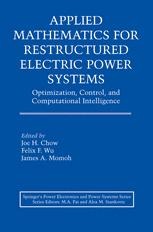
Applied Mathematics for Restructured Electric Power Systems : Optimization, Control, and Computational Intellige
Discusses the use of applied mathematics to solve challenging power system problems. This book covers such areas as: control, optimization, and computational intelligence. It follows a three-part format: a description of an important power system problem or problems; the practice and/or particular research approaches; and, research directions.
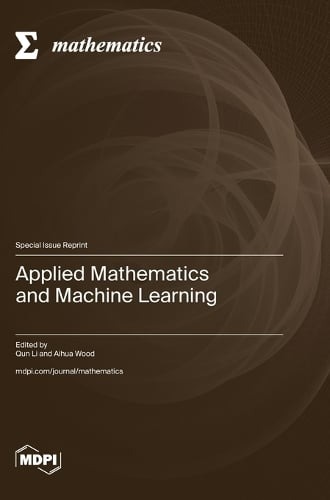
Applied mathematics and machine learning
The simultaneous availability of large datasets and high-performance computing capability in recent years has enabled the rapid development of powerful machine learning algorithms. On the one hand, state-of-the-art machine learning techniques have transformed many areas of science and engineering; on the other hand, theoretical discoveries in mathematical algorithms, differential equations, and statistical inferences, to name a few, have provided the foundation for the exploration of new multidisciplinary models for solving practical problems. This Special Issue endeavors to continue the journey that started in our previous Special Issue (Applied Mathematics and Computational Physics) by providing a platform for researchers from both academia and industry, as well as government, to present their new computational methods that have engineering and physics applications.
Applied Hydrogeophysics
This book focuses on how hydrogeophysical methods can be applied to solve problems facing environmental engineers, geophysicists, agronomists, hydrologists, soil scientists and hydrogeologists. We present applications of hydrogeophysical methods to the understanding of hydrological processes and environmental problems dealing with the flow of water and the transport of solutes and contaminants. The majority of the book is organized as a series of process-driven chapters, each authored by leading experts. Areas covered include: infiltration and solute transport processes, biogeochemical functioning of soil-water systems, coastal groundwater interactions, cold region hydrology, engineered barriers and landfill processes. In addition, the book offers insight into the development of new data fusion methodologies, of value to many hydrogeophysical investigations, and provides an account how the rapidly developing self-potential technique can give valuable information about water fluxes and hydrochemical states within the subsurface.
Applied computational materials modeling : Theory, simulation and experiment
this book provides the average person working in the materials field with a more balanced perspective of the role that computational modeling can play in every day research and development efforts. This is done by presenting a series of examples of the successful application of various computational modeling procedures (everything from first principles to quantum approximate to CALPHAD methods) to real life surface and bulk alloy problems.This book should have a large appeal in the materials community, both for experimentalists who would greatly benefit from adding computational methods to their everyday research regimes, as well as for those scientists/engineers familiar with a particular computational method who would like to add complementary techniques to their arsenal of research and development tools
Applied Civil Engineering Risk Analysis
Povides readers with the tools needed to determine the probability of failure, and when multiplied by the consequences of failure, illustrates how to assess the risk of civil engineering problems. Presenting methods for quantifying uncertainty that exists in engineering analysis and design, with an emphasis on fostering more accurate analysis and design.
