



الصفحة 52
الصفحة 52

Physical Acoustics in the Solid State
Suitable for researchers and graduate students in physics and material science, "Physical Acoustics in the Solid State" reviews the modern aspects in the field, including many experimental results, especially those involving ultrasonics. Practically all fields of solid-state physics are covered: metals, semiconductors, magnetism, superconductivity, different kinds of phase transitions, low-dimensional systems, and the quantum Hall effect. After a review of the relevant experimental techniques and an introduction to the theory of elasticity, emphasizing the symmetry aspects, applications in the various fields of condensed matter physics are presented. Also treated are Brillouin-scattering results and results from thermodynamic investigations, such as thermal expansion and specific heat.

Physical Acoustics in the Solid State
Reviews the modern aspects in the field, including many experimental results, especially those involving ultrasonics. Practically all fields of solid-state physics are covered. Also treated are Brillouin-scattering results and results from thermodynamic investigations, such as thermal expansion and specific heat.

Physical (A)Causality : Determinism, Randomness and Uncaused Events
Addresses the physical phenomenon of events that seem to occur spontaneously and without any known cause. These are to be contrasted with events that happen in a predetermined, predictable, lawful, and causal way. The book tries to answer some of these questions by introducing intrinsic, embedded observers and provable unknowns; that is, observables and procedures which are certified (relative to the assumptions) to be unknowable or undoable. A (somewhat iconoclastic) review of quantum mechanics is presented which is inspired by quantum logic. Postulated quantum (un-)knowables are reviewed. More exotic unknowns originate in the assumption of classical continua, and in finite automata and generalized urn models, which mimic complementarity and yet maintain value definiteness. Traditional conceptions of free will, miracles and dualistic interfaces are based on gaps in an otherwise deterministic universe.
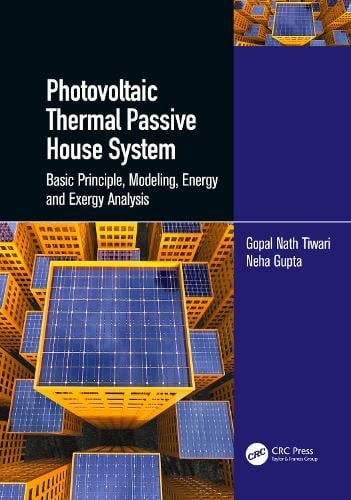
Photovoltaic Thermal Passive House System : Basic Principle, Modeling, Energy and Exergy Analysis
Sustainable Advanced Solar Passive House provides a platform to disseminate knowledge regarding the basics of solar energy, heat transfer, and solar houses, including designing concepts. Apart from a brief introduction to solar physics and thermodynamics, the book primarily deals with the technical description of solar houses and associated concepts. Different types of photovoltaic modules and their integration with the buildings are discussed with case studies, including energy balance equations and fundamental energy matrices. It discusses concepts like energy matrices, solar passive heating/cooling, architecture design, low-cost building, energy/exergy analysis, building integrated photovoltaic, and energy conservation.

Photosystem I: The Light-Driven Plastocyanin : Ferredoxin Oxidoreductase
This book summarizes recent advances made in the biophysics, biochemistry, and molecular biology of the enzyme known as Photosystem I, the light-induced plastocyanin: ferredoxin oxidoreductase. The volume provides a unique compilation of chapters that includes information highlighting controversial issues to indicate the frontiers of research and places special emphasis on methodology and practice for new researchers.

Photoprotection, Photoinhibition, Gene Regulation, and Environment
In this volume, the dual role of photoprotective responses in the preservation of leaf integrity and in redox signaling networks modulating stress acclimation, growth, and development is addressed. In addition, the still unresolved impact of photoinhibition on plant survival and productivity is discussed. Specific topics include dissipation of excess energy via thermal and other pathways, scavenging of reactive oxygen by antioxidants, proteins key to photoprotection and photoinhibition, peroxidation of lipids, as well as signaling by reactive oxygen, lipid-derived messengers, and other messengers that modulate gene expression. Approaches include biochemical, physiological, genetic, molecular, and field studies, addressing intense visible and ultraviolet light, winter conditions, nutrient deficiency, drought, and salinity.

Photopolarimetry in Remote Sensing ; Proceedings of the NATO Advanced Study Institute, held in Yalta, Ukraine, 20 September - 4 October 2003
Photopolarimetric remote sensing is vital in fields as diverse as medical diagnostics, astrophysics, atmospheric science, environmental monitoring and military intelligence. The areas considered here include: radiative transfer; dynamic systems; backscatter polarization; biological systems; astrophysical phenomena; comets; and instrumentation. Subtopics include observational information including determining morphology and chemistry, light-scattering models, and characterization methodologies. While this introductory text highlights the latest advances in this multi-disciplinary topic, it is also a reference guide for the advanced researcher.

Photonic Crystals : Towards Nanoscale Photonic Devices
Just like the periodical crystalline potential in solid state crystals determines their properties for the conduction of electrons, the periodical structuring of photonic crystals leads to envisioning the possibility of achieving a control of the photon flux in dielectric and metallic materials. The use of photonic crystals as cages for storing, filtering or guiding light at the wavelength scale paves the way to the realization of optical and optoelectronic devices with ultimate properties and dimensions. This will contribute towards meeting the demands for greater miniaturization imposed by the processing of an ever increasing number of data.

Photonic Crystals : Towards Nanoscale Photonic Devices
Just like the periodical crystalline potential in solid-state crystals determines their properties for the conduction of electrons, the periodical structuring of photonic crystals leads to envisioning the possibility of achieving a control of the photon flux in dielectric and metallic materials. The use of photonic crystals as a cage for storing, filtering or guiding light at the wavelength scale thus paves the way to the realisation of optical and optoelectronic devices with ultimate properties and dimensions. This should contribute toward meeting the demands for a greater miniaturisation that the processing of an ever increasing number of data requires. Photonic Crystals intends at providing students and researchers from different fields with the theoretical background needed for modelling photonic crystals and their optical properties, while at the same time presenting the large variety of devices, from optics to microwaves, where photonic crystals have found applications. As such, it aims at building bridges between optics, electromagnetism and solid-state physics.
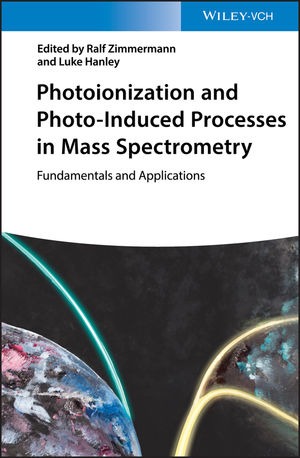
Photoionization and photo-Induced processes in mass spectrometry : Fundamentals and applications
Photoionization and Photo-Induced Processes in Mass Spectrometry: Fundamentals and Applications starts with a complete overview of the fundamentals of the technique, covering the basics of the gas phase ionization as well as those of laser desorption and ablation, pulse photoionization, and single particle ionization. Numerous application examples from different analytical fields are described that showcase the power and the wide scope of photo ionization in mass spectrometry.

Photochemistry and Photophysics of Coordination Compounds II
Photochemistry (a term that broadly speaking includes photophysics) is abranchofmodern science that deal swith the interaction of lightwithmatter and lies at the crossroadsof chemistry, physics, and biology. However, before being a branch of modern science, photochemistry was (and still is today), an extremely important natural phenomenon. When God said: “Let there be light”, photochemistry began to operate, helping God to create the world as wenowknowit.

Photochemistry and Photophysics of Coordination Compounds I
Photochemistry (a term that broadly speaking includes photophysics) is abranchofmodern science that deal swith the interaction of lightwithmatter and lies at the crossroadsof chemistry, physics, and biology. However, before being a branch of modern science, photochemistry was (and still is today), an extremely important natural phenomenon. When God said: “Let there be light”, photochemistry began to operate, helping God to create the world as wenowknowit.

Philosophy and Religion in German Idealism
This book contains the selected proceedings of a conference on Religion in German Idealism which took place in Nij- gen (Netherlands) in January 2000. The conference was - ganized by the Centre of German Idealism, which co-or- nates the research on classical German philosophy in the Netherlands and in Belgium. Generous support of the Dutch Organisation for Scientific Research (NWO) has made this conference possible. A few months after the conference Ludwig died, and this circumstance unexpectedly delayed efforts to bring the proceedings of the conference to p- lished form. We are now happy to present those proce- ings, dedicated to the memory of the founding father of the Centre.

Philosophy and Design : From Engineering to Architecture
This volume provides the reader with an integrated overview of state-of-the-art research in philosophy and ethics of design in engineering and architecture. It contains twenty-five essays that focus on engineering designing in its traditional sense, on designing in novel engineering domains, including ICT, genetics, and nanotechnology, designing of socio-technical systems, and on architectural and environmental designing. These essays are preceded by an introductory text structuring the field of philosophy and ethics of design in engineering and architecture as one in which a series of similar philosophical, societal, and ethical questions are asked. This volume enables the reader to overcome the traditional separation between engineering designing and architectural designing.
Philosophical Problems Today
Philosophy of logic and language, and of meaning and communication are central to this volume. The discussion of these issues involves analytical approaches, including semantics and semiotics, philosophy of science, mathematical logic, phenomenology, hermeneutics and some aspects of philosophical anthropology and aesthetics. Philosophy of the Absolute also belongs to this broad repertoire of philosophical problems and disciplines. A number of problems and viewpoints derive from the metaphysical system; any relativistic view on ethical values, for instance, makes sense in relation to some absolute. Metaphysical system building may have come to an end, but after all it belongs to philosophy to remind us of our past.

Phenomenology of life - From the animal Soul to the human mind ; Book I : In search of experience
Transcendental phenomenology presumed to have overcome the classic mind-body dichotomy in terms of consciousness, yet, according to progress in scientific studies, the biological functions of the brain seem to appropriate significant functions attributed traditionally to consciousness. Should we indeed dissolve the specificity of human consciousness by explaining human experience in its multiple sense-giving modalities through the physiological functions of the brain? The present collection of studies addresses this crucial question challenging such "naturalizing" reductionism from multiple angles.

Phénoménologie de la religion et herméneutique théologique dans la pensée du jeune Heidegger : Commentaire analytique des Fondements philosophiques de la mystique médiévale (1916-1919) = Phenomenology of religion and theological hermeneutics in the thought of the young Heidegger : Analytical commentary on the Philosophical Foundations of Medieval Mysticism (1916-1919)
Deals with the unknown from Heidegger's texts (Philosophical Bases of Medieval Mysticism) to many scholars / Gives the first in-depth interpretation of the text mentioned above - which, moreover, is not translated into French however - in all languages / Connects two goals: reconstructing Heidegger's early phenomenology of religion but also trying to propose a new kind of phenomenology of religion outside of Heidegger / Not a single comment, but also a real essay in religious phenomenology / Shows how Heidegger's early phenomenology of religion is compatible with a specific theological hermeneutics; thus making Heidegger's thought useful for further-philosophical research such as theology and "Religionswissenschaft"

Phenolic Compound Biochemistry
This book is written for researchers, instructors, advanced undergraduate students and beginning graduate students in the life sciences who wish to become more familiar with these and many other intriguing aspects of phenolic compounds. Topics covered include nomenclature, chemical properties, biosynthesis, including an up-to-date overview of the genetics controlling phenolic metabolism, isolation and characterization of phenolic compounds, phenolics used in plant defense, and the impact of phenolics on human health. The book is written in an accessible style, and assumes only basic knowledge of organic chemistry, biochemistry and cell physiology. More than 300 chemical structures and reaction schemes illustrate the text.

Phase Transitions of Simple Systems
This monograph develops a unified microscopic basis for phases and phase changes of bulk matter and small systems in terms of classical physics. The origins of such phase changes are derived from simple but physically relevant models of how transitions between rigid crystalline, glassy and fluid states occur, how phase equilibria arise, and how bulk properties evolve from those of small systems.

Pharmacovigilance in the European Union : Practical Implementation across Member States
Presents the results of an in-depth comparative study assessing the implementation of the EU Pharmacovigilance Directive in six EU Member States. By going beyond legal transposition and instead focusing on practical implementation, this study aims to close a gap in EU compliance research. Based on qualitative interviews with relevant actors in Germany, Poland, Portugal, France, Finland and the UK, the authors identify perceived challenges and best-practices, issue recommendations, and thereby contribute to a better understanding of the factors that incentivize or impede the practical implementation of EU law at the national level.
