



الصفحة 52
الصفحة 52

Complex Computing-Networks : Brain-like and Wave-oriented Electrodynamic Algorithms
This book uniquely combines new advances in the electromagnetic and the circuits&systems theory. It integrates both fields regarding computational aspects of common interest. Emphasized subjects are those methods which mimic brain-like and electrodynamic behaviour; among these are cellular neural networks, chaos and chaotic dynamics, attractor-based computation and stream ciphers.
Complex Artificial Environments : Simulation, Cognition and VR in the Study and Planning of Cities
This book explores the possibilities of applying the theories of complexity and self-organization developed to account for various phenomena in the natural science to artifacts traditionally the realm of humanities and social sciences. The emphasis of this volume is on the development of cities and the impact of these methods on urban simulation methods.

Complex Anorectal Disorders : Investigation and Management
Book has focused on the broad structural investigation of the anorectum and on the focused management of largely “functional” problems. And it has done so in style. For this is a core area of specialist practice;your more general colleagues may think twice before referring you new cases of cancer and in?ammatory bowel disease (both also central areas in colorectal surgery), but they will not hesitate in referring the patients whose inves- gation and management are described here. And they will expect you to know how to deal with them. These are some of the most challenging patients to manage. Rightly have the editors covered the physiological areas,rightly the psychological issues, rightly the medicolegal aspects: here is the making of a specialist—the sword and the shield.
Complex and Adaptive Dynamical Systems : A Primer
We are living in an ever more complex world, an epoch where human actions can accordingly acquire far-reaching potentialities. Complex and adaptive dynamical systems are ubiquitous in the world surrounding us and require us to adapt to new realities and the way of dealing with them. This primer has been developed with the aim of conveying a wide range of "commons-sense" knowledge in the field of quantitative complex system science at an introductory level, providing an entry point to this both fascinating and vitally important subject.

Complex Analysis with Applications to Number Theory
The book discusses major topics in complex analysis with applications to number theory.It 's including the theory of several finitely and infinitely complex variables, hyperbolic geometry, two- and three-manifolds, and number theory. In addition to solved examples and problems, the book covers most topics of current interest, such as Cauchy theorems, Picard’s theorems, Riemann–Zeta function, Dirichlet theorem, Gamma function, and harmonic functions.

Complex Analysis : In the Spirit of Lipman Bers
In this book, the main focus is the theory of complex-valued functions of a single complex variable. This theory is a prerequisite for the study of many current and rapidly developing areas of mathematics including the theory of several and infinitely many complex variables, the theory of groups, hyperbolic geometry and three-manifolds, and number theory.

Complex analysis
The guiding principle of this presentation of ``Classical Complex Analysis'' is to proceed as quickly as possible to the central results while using a small number of notions and concepts from other fields. Thus the prerequisites for understanding this book are minimal; only elementary facts of calculus and algebra are required.
Competitiveness in the Tourism Sector : A Comprehensive Approach from Economic and Management Points
International tourism is expected to be a major vehicle of economic development in industrializing countries in the 21st century, especially for Asia. To generate long-term growth, countries with tourism-based economies must develop strategies for employing their comparative advantages to achieve competitive advantages. However, competitiveness in the tourist industry is multi-dimensional and complex. This study evaluates the competitiveness of the Taiwanese tourism sector by a multi-dimensional framework. The theoretical model proposes that the competitiveness of tourist destinations should be composed of Ricardian comparative advantages (like the conditions of natural endowments and the degree of technological change); Porterian competitive advantages; tourism management, i.e., providing high quality education and job training, public goods, support services and reduced transaction costs to enhance comparative and competitive advantages; and environmental conditions.
Competitive Programming in Python : 128 Algorithms to Develop your Coding Skills
Learn all the algorithmic techniques and programming skills you need from two experienced coaches, problem setters, and jurors for coding competitions. The authors highlight the versatility of each algorithm by considering a variety of problems and show how to implement algorithms in simple and efficient code. What to expect: * Master 128 algorithms in Python. * Discover the right way to tackle a problem and quickly implement a solution of low complexity.

Compartment Syndrome : A Guide to Diagnosis and Management
Compartment syndrome is a complex physiologic process with significant potential harm, and though an important clinical problem, the basic science and research surrounding this entity remains poorly understood. This book fills the gap in the knowledge of compartment syndrome, re-evaluating the current state of the art on this condition. The current clinical diagnostic criteria are presented, as well as the multiple dilemmas facing the surgeon. Pathophysiology, ischemic thresholds and pressure management techniques and limitations are discussed in detail. The main surgical management strategy, fasciotomy, is then described for both the upper and lower extremities, along with wound care. Compartment syndrome due to patient positioning, in children and polytrauma patients, and unusual presentations are likewise covered. Novel diagnosis and prevention strategies, as well as common misconceptions and legal ramifications stemming from compartment syndrome, round out the presentation.
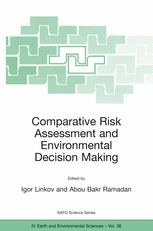
Comparative risk assessment and environmental decision making
Decision making in environmental projects is typically a complex and confusing process characterized by trade-offs between socio-political, environmental, and economic impacts. Comparative Risk Assessment (CRA) is a methodology applied to facilitate decision making when various activities compete for limited resources. CRA has become an increasingly accepted research tool and has helped to characterize environmental profiles and priorities on the regional and national level. CRA may be considered as part of the more general but as yet quite academic field of multi-criteria decision analysis (MCDA). Considerable research in the area of MCDA has made available methods for applying scientific decision theoretical approaches to multi-criteria problems, but its applications, especially in environmental areas, are still limited. The papers show that the use of comparative risk assessment can provide the scientific basis for environmentally sound and cost-efficient policies, strategies, and solutions to our environmental challenges.
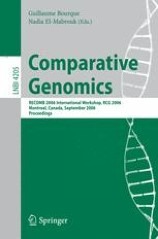
Comparative genomics ; Vol.4205 ; RECOMB 2006 International Workshop, RECOMB-CG 2006, Montreal, Canada, September 24-26, 2006, Proceedings
The papers address a broad variety of aspects and components of the field of comparative genomics, ranging from new quantitative discoveries about genome structure and process to theorems on the complexity of computational problems inspired by genome comparison.

Comparative genomics ; Vol. 3678 : RECOMB 2005 International Workshop, RCG 2005, Dublin, Ireland, September 18-20, 2005, Proceedings
This book constitutes the refereed proceedings of the RECOMB 2005 Satellite Workshop, the 3rd RECOMB Comparative Genomics meeting RCG 2005, held in Dublin, Ireland in September 2005. The 14 revised full papers presented were carefully reviewed and selected from 21 initial submissions. The papers address a broad variety of aspects and components of the field of comparative genomics, ranging from new quantitative discoveries about genome structure and process to theorems on the complexity of computational problems inspired by genome comparison.

Comparative genomics ; Vol. 3388 : RECOMB 2004 International Workshop, RCG 2004, Bertinoro, Italy, October 16-19, 2004, Revised Selected Papers
This papers investigates the problem of conservation of combinatorial structures in genome rearrangement scenarios. We give a characterization of a class of scenarios that conserve all common intervals, called commuting scenarios, and a characterization of permutations for which commuting scenarios exist. We show that measuring conservation of common intervals can be useful tool in assessing the quality of rearrangement scenarios, by investigating in detail three specific scenarios involving the mouse, rat and human X chromosomes.

Comparative genomics ; RECOMB 2007, International Workshop, RECOMB-CG 2007, San Diego, CA, USA, September 16-18, 2007, Proceedings
This book provides an evolutionary conceptual framework for comparative genomics, with the ultimate objective of understanding the loss and gain of genes during evolution, the interactions among gene products, and the relationship between genotype, phenotype and the environment. The many examples in the book have been carefully chosen from primary research literature based on two criteria: their biological insight and their pedagogical merit. The phylogeny-based comparative methods, involving both continuous and discrete variables, often represent a stumbling block for many students entering the field of comparative genomics. They are numerically illustrated and explained in great detail.

Commutative algebras of Toeplitz Operators on the Bergman Space
This book is devoted to the spectral theory of commutative C*-algebras of Toeplitz operators on the Bergman space and its applications. For each such commutative algebra there is a unitary operator which reduces Toeplitz operators from this algebra to certain multiplication operators, thus providing their spectral type representations. This yields a powerful research tool giving direct access to the majority of the important properties of the Toeplitz operators studied herein, such as boundedness, compactness, spectral properties, invariant subspaces.
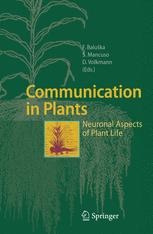
Communication in Plants : Neuronal Aspects of Plant Life
Plant neurobiology is a newly emerging field of plant sciences. It covers signalling and communication at all levels of biological organization – from molecules up to ecological communities. In this book, plants are presented as intelligent and social organisms with complex forms of communication and information processing. Authors from diverse backgrounds such as molecular and cellular biology, electrophysiology, as well as ecology treat the most important aspects of plant communication, including the plant immune system, abilities of plants to recognize self, signal transduction, receptors, plant neurotransmitters and plant neurophysiology. Further, plants are able to recognize the identity of herbivores and organize the defence responses accordingly. The similarities in animal and plant neuronal/immune systems are discussed too. All these hidden aspects of plant life and behaviour will stimulate further intense investigations in order to understand the communicative plants in their whole complexity.

Communicating with One Another : Toward a Psychology of Spontaneous Spoken Discourse
In other words, this book is a call for a paradigm shift in the study of oral communication. It is a must read for people interested in language use, as well as for specialists in language studies. "The authors have identified crucial theoretical and methodological assumptions that have hampered scholarship on language use. Their critical assessment is grounded in nuanced theoretical analysis and rigorous empirical studies. As a result, they reveal the complexity, elegance, and moral aspects of day to day dialogical communication."

Clinical guide to oral implantology : step by step procedures
Guides dentists through the complete surgical process, from basic techniques, impressions and sinus grafting, to complete denture stabilisation, implant aesthetics, suturing, and more. Complete chapters are dedicated to complications and their management, and a selection of challenging cases. Key points Practical guide to oral implantology for dental surgeons Covers basic surgery and more complex issues including complications and their management

Clinical cases in periodontics ; 1st ed.
Describes the core principles of periodontics and demonstrates their practical, every-day application through a range of representative cases building from the simple to the complex and from the common to the rare. This unique approach supports the new trend in case-based and problem-based learning, thoroughly covering topics ranging from infant oral health to complex pulp therapy.
