



الصفحة 5
الصفحة 5

Intelligent engineering systems and computational cybernetics
A further important component of machine intelligence is a kind of “structural uniformity” giving room and possibility to model arbitrary particular details a priori not specified and unknown.This idea is similar to the ready-to-wear industry, which introduced products, which can be slightly modified later on in contrast to tailor-made creations aiming at maximum accuracy from the beginning. These subsequent corrections can be carried out by machines automatically. This “learning ability” is a key element of machine intelligence.The past decade confirmed that the view of typical components of the present soft computing as fuzzy logic, neural computing.
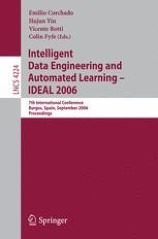
Intelligent data engineering and automated Learning - IDEAL 2006 ; 7th International Conference, Burgos, Spain, September 20-23, 2006, Proceedings
This volume of Lecture Notes in Computer Science contains accepted - pers presented at IDEAL 2006 held at the University of Burgos, Spain, during, September 20–23, 2006. The conference received 557 submissions from over 40 countriesaroundtheworld,whichweresubsequentlyrefereedbytheProgramme Committeeandmanyadditionalreviewers.Afterrigorousreview,170top-quality papers were accepted and included in the proceedings. The acceptance rate was only 30%, which ensured an extremely high-quality standard of the conference. The buoyant number of submitted papers is a clear proof of the vitality and increased importance of the ?elds related to IDEAL, and is also an indication of the rising popularity of the IDEAL conferences.
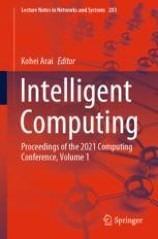
Intelligent Computing ; Proceedings of the 2021 Computing Conference ; Vol.1
This book is a comprehensive collection of chapters focusing on the core areas of computing and their further applications in the real world. Each chapter is a paper presented at the Computing Conference 2021 held on 15-16 July 2021. Computing 2021 attracted a total of 638 submissions which underwent a double-blind peer review process. Of those 638 submissions, 235 submissions have been selected to be included in this book. The goal of this conference is to give a platform to researchers with fundamental contributions and to be a premier venue for academic and industry practitioners to share new ideas and development experiences.

Intelligence and Security Informatics ; Vol. 3975 ; IEEE International Conference on Intelligence and Security Informatics, ISI 2006, San Diego, CA, USA, May 23-24, 2006.
In the past few years, intelligence and security informatics (ISI) research, which is concerned with the study of the development and use of advanced information te- nologies and systems for national and international security-related applications, has experienced tremendous growth and attracted substantial interest from academic - searchers in related fields as well as practitioners from both government agencies and industry. The ISI community is maturing, and a core set of research methodologies and technical approaches has emerged and is becoming the underpinning of ISI research.

Integrated Science in Digital Age ; ICIS 2019
The ICIS 2019 received roughly 50 contributions, by authors hailing from six countries. Following a peer-review process, the Scientific Committee – a multidisciplinary group of 110 experts from 38 countries around the globe – selected roughly 60% for publication. The main topics covered include: Artificial Intelligence Research; Digital Business & Finance; Educational Sciences; Health Management Informatics; Public Administration in the Digital Age; and Social Problem-solving.

Innovative Internet Community Systems ; Vol. 3473 ; 4th International Workshop, IICS 2004, Guadalajara, Mexico, June 21-23, 2004. Revised Papers
This book constitutes the thoroughly refereed postproceedings of the 4th International Workshop on Innovative Internet Community Systems, IICS 2004, held in Guadalajara, Mexico, in June 2004. The 25 revised full papers presented together with 2 invited papers have been carefully reviewed. They focus mainly on system-oriented problems, text processing, and theoretical foundations of distributed and Internet systems. They also deal with speed and quality-of-service problems of Internet protocols, aspects of cooperation and collaboration in Internet systems, as well as agent and text-processing-based methods. In addition, 9 papers stem from two mini-workshops, one on computational epidemiology and the other on optimization of urban traffic systems.

Innovative Concepts for Autonomic and Agent-Based Systems ; 2nd International Workshop on Radical Agent Concepts, WRAC 2005, Greenbelt, MD, USA, September 20-22, 2005, Revised Papers
This volume includes revised versions of papers presented at the workshop. The workshop was structured so as to allow adequate time for discussion and interaction, to exchange ideas and reflect on the motivations, scientific grounds and practical consequences of the concepts presented. Many of the ideas are truly “radical”, and so authors were given time to revise their papers to reflect further thoughts on the ideas presented and to reflect feedback received at the workshop. We are grateful to Jeff Kephart for a very interesting keynote speech describing IBM’s current and future work in this field, which fit very well with the aims and scope of the workshop.

Innovations in robot mobility and control
The most important aspects of this book is that the principles and models introduced in the text are all field-tested, and thus can readily be used in solving real world problems, such as factory automation, disposal of nuclear wastes, landmine clearing and computerized surgery.

Innovations in Intelligent Machines - 1
This book includes a collection of chapters on the state of art in the area of intelligent machines. This research would provide a sound basis to make autonomous systems human-like. The contributions include: An introduction to intelligent machines / Supervisory control of multiple UAVs / Intelligent autonomous UAV task allocation / UAV path planning / Dynamic path planning / Routing in UAVS State estimation of micro air vehicles / Architecture for soccer playing robots / Robot perception / Application engineers scientists and researchers will find this book useful.

Innovations in Hybrid Intelligent Systems
Hybrid Artificial Intelligence Systems (HAIS) combines symbolic and sub-symbolic techniques to construct more robust and reliable problem solving models. This volume focused on "Hybrid Artificial Intelligence Systems" contains a collection of papers that were presented at the 2nd International Workshop on Hybrid Artificial Intelligence Systems, held in 12 - 13 November, 2007, Salamanca, Spain. This carefully edited book provides a comprehensive overview of the recent advances in the hybrid intelligent systems and covers a wide range of application areas, including data analysis and data mining, intelligent control, pattern recognition, robotics, optimization, etc. The book is aimed at researchers, practitioners and postgraduate students who are engaged in developing and applying advanced intelligent systems principles to solving real-world problems.
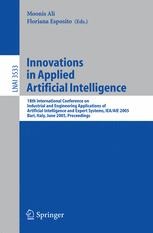
Innovations in Applied Artificial Intelligence ; 18th International Conference on Industrial and Engineering Applications of Artificial Intelligence and Expert Systems, IEA/AIE 2005, Bari, Italy, June 22-24, 2005, Proceedings
The contributions oriented to the technological aspects of AI and the quality of the papers are witness to a research activity clearly aimed at consolidating the theoretical results that have already been achieved. The c- ference program also included two invited lectures, by Katharina Morik and Roberto Pieraccini. Many people contributed in different ways to the success of the conference and to this volume. The authors who continue to show their enthusiastic interest in applied intelligence research are a very important part of our success. We highly appreciate the contribution of the members of the Program Committee, as well as others who reviewed all the submitted papers with eficiency and dedication.

Information Storage : A Multidisciplinary Perspective
Examines some of the underlying processes behind different forms of information management, including how we store information in our brains, the impact of new technologies such as computers and robots on our efficiency in storing information, and how information is stored in families and in society.

Information Processing with Evolutionary Algorithms : From Industrial Applications to Academic Speculations
The last decade of the 20th century has witnessed a surge of interest in num- ical, computation-intensive approaches to information processing. The lines that draw the boundaries among statistics, optimization, arti cial intelligence and information processing are disappearing, and it is not uncommon to nd well-founded and sophisticated mathematical approaches in application - mains traditionally associated with ad-hoc programming. Heuristics has - come a branch of optimization and statistics. Clustering is applied to analyze soft data and to provide fast indexing in the World Wide Web. Non-trivial matrix algebra is at the heart of the last advances in computer vision. The breakthrough impulse was, apparently, due to the rise of the interest in arti cial neural networks, after its rediscovery in the late 1980s. Disguised as ANN, numerical and statistical methods made an appearance in the - formation processing scene, and others followed. A key component in many intelligent computational processing is the search for an optimal value of some function. Sometimes, this function is not evident and it must be made explicit in order to formulate the problem as an optimization problem. The search - ten takes place in high-dimensional spaces that can be either discrete, or c- tinuous or mixed. The shape of the high-dimensional surface that corresponds to the optimized function is usually very complex. Evolutionary algorithms are increasingly being applied to information processing applications that require any kind of optimization.

Informatics in Control, Automation and Robotics II
Informatics in Control, Automation and Robotics II is a collection of the best papers presented at the 2nd International Conference on Informatics in Control, Automation and Robotics (ICINCO). The purpose of ICINCO was to bring together researchers, engineers and practitioners interested in the application of informatics to Control, Automation and Robotics.

Informatics in Control, Automation and Robotics I
The present book includes a set of selected papers from the first “International Conference on Informatics in Control Automation and Robotics” (ICINCO 2004), held in Setúbal, Portugal, from 25 to 28 August 2004. The conference was organized in three simultaneous tracks: “Intelligent Control Systems and Optimization”, “Robotics and Automation” and “Systems Modeling, Signal Processing and Control”. The book is based on the same structure.

Informatics in Control Automation and Robotics : Selected Papers from the International Conference on Informatics in Control Automation and Robotics 2006
The present book includes a set of selected papers from the 3rd “International Conference on Informatics in Control Automation and Robotics” (ICINCO 2006), held in Setúbal, Portugal, 1-5 August 2006.

Informatics education - supporting computational thinking ; 3rd International Conference on informatics in secondary schools : Evolution and perspectives, ISSEP 2008 Torun Poland, July 1-4, 2008 Proceedings
Informatics Education – Supporting Computational Thinking contains papers presented at the Third International Conference on Informatics in Secondary Schools – Evolution and Perspective, ISSEP 2008, held in July 2008 in Torun, Poland. As with the proceedings of the two previous ISSEP conferences (2005 in Klag- furt, Austria, and 2006 in Vilnius, Lithuania), the papers presented in this volume address issues of informatics education transcending national boundaries and, the- fore, transcending differences in the various national legislation and organization of the educational system. Observing these issues, one might notice a trend. The p- ceedings of the First ISSEP were termed From Computer Literacy to Informatics F- damentals [1]. There, broad room was given to general education in ICT.

Industrial Robots Programming : Building Applications for the Factories of the Future
Industrial Robots Programming focuses on designing and building robotic manufacturing cells, and explores the capabilities of today’s industrial equipment as well as the latest computer and software technologies. Special attention is given to the input devices and systems that create efficient human-machine interfaces, and how they help non-technical personnel perform necessary programming, control, and supervision tasks.

Inconsistency tolerance
Inconsistency arises in many areas in advanced computing. Often inconsistency is unwanted, for example in the specification for a plan or in sensor fusion in robotics; however, sometimes inconsistency is useful. Whether inconsistency is unwanted or useful, there is a need to develop tolerance to inconsistency in application technologies such as databases, knowledge bases, and software systems. To address this situation, inconsistency tolerance is being built on foundational technologies for identifying and analyzing inconsistency in information, for representing and reasoning with inconsistent information, for resolving inconsistent information, and for merging inconsistent information. The idea for this book arose out of a Dagstuhl Seminar on the topic held in summer 2003. The nine chapters in this first book devoted to the subject of inconsistency tolerance were carefully invited and anonymously reviewed. The book provides an exciting introduction to this new field.

Implants and Oral Rehabilitation of the Atrophic Maxilla : Advanced Techniques and Technologies
Covers the most suitable techniques for the rehabilitation of patients experiencing tooth loss, trauma or other situations resulting in bone atrophy. The book discusses current technologies, from diagnosis to treatment and surgery, applied to atrophic jaws using innovative tools and new PSI (patient specific implant) approaches.
