


تحسين النتائح
ترتيب حسب
من
الى

Contains the Proceedings of the 1st International Conference on Cognitive Neurodynamics held in Shanghai, November 17-21, 2007. The participants were treated to an exciting and stimulating conference that left everyone with an enthusiastic vision for the future of the field. The latest important progress was covered by 13 mini-symposia including: Models of Mental Disorders; Cognitive Machines; Dynamics in learning and memory; Central nervous system synchronization; Neuroinformatics; Cognitive Computational Modeling of Human Language Processing; Cognitive Neurodynamics of Attention; Bottom-Up and Top-Down; Brain Networks; From Anatomy to Dynamics; Translational Cognitive Neuroimaging; K-sets; Theory and Applications; Advanced Signal Processing Techniques for Brain Data Analysis; Visual cortex: information processing and dynamics; Dynamics of Firing Patterns and Synchronization in Neuronal Systems.
This series has already become a classic. In general, one volume is published per year. The advances section presents fields of neurosurgery and related areas in which important recent progress has been made. The technical standards section features detailed descriptions of standard procedures to assist young neurosurgeons in their post-graduate training.

This series, sponsored by the European Association of Neurosurgical Societies, has already become a classic. In general, one volume is published per year. The Advances section presents fields of neurosurgery and related areas in which important recent progress has been made. The Technical Standards section features detailed descriptions of standard procedures to assist young neurosurgeons in their post-graduate training. The contributions are written by experienced clinicians and are reviewed by all members of the Editorial Board.

Cet ouvrage a été conçu comme une aide pour le médecin généraliste, confronté quotidiennement à la pathologie traumatique. Les deux auteurs, urgentistes expérimentés, apportent des réponses claires, concises et pratiques aux problèmes que posent les lésions traumatiques. Des gestes simples, un abord clinique détaillé, la nécessité de recourir ou non à des examens complémentaires ou à un avis spécialisé sont ici expliqués et justifiés. Le style est précis, concis, et un lexique complète les définitions et les matériels cités dans le texte. Les auteurs se sont entourés des avis de généralistes et de spécialistes pour définir des conduites à tenir simples et compatibles avec les nécessités du terrain.

Abeta Peptide and Alzheimer’s Disease summarizes current knowledge of beta-amyloid peptide (Aß) and its role as the major culprit in Alzheimer’s Disease (AD), shown by recent advances in genetics and brain biochemistry.the book covers fundamental biochemical studies on the Aß peptide, the genetic impact on Aß expression and processing, and various AD therapeutic strategies that target Aß. Although specifically focusing on Aß and AD, there is also some discussion on the similarity and differences of this peptide and AD with other amyloidogenic diseases.

The British Nuclear Medicine Society celebrates its 50th Anniversary with this booklet, which reflects the research of many of the pioneers in the use of radionuclides for the diagnosis and therapy of human disease. Since 1949 there have been remarkable advances in radionuclide techniques and imaging equipment: from the first devices “home-made” in the many physics departments throughout the UK, to the sophisticated multimodality imagers now in everyday use in Nuclear Medicine. The BNMS has been instrumental in promoting the use of radionuclide techniques in the investigation of pathology by supporting and providing education, research and guidelines on the optimum use of radiation to help patients.

Seeks to address the immediacy of COVID-19 by focusing on the implications of the virus in a wider interdisciplinary context Law, Humanities and the COVID Crisis</i> sets out a framework for understanding the COVID-19 virus beyond its epidemiological constraints, asking us to question the very definition of what it means to be human. Researchers from around the world offer their critical reflections on the past, present, and future of this period of sociocultural upheaval and the tremendous suffering that has laid bare fundamental imbalances in our society.

Offers contributions to a philosophical and realistic approach to the place of adjudication in contemporary constitutional democracies. Bringing together scholars from different legal and philosophical backgrounds, purports to cast light on the role(s) of judges and the function of judicial interpretation inside of constitutional states, from the standpoint of legal realism as a revisited and sophisticated jurisprudential outlook. In so doing, also copes with a few major jurisprudential issues, like, e.g., determining the ideas that make up the core of legal realism, exploring the relation between legal realism and legal positivism, identifying the boundaries of judicial interpretation as they appear from a realist standpoint, as well as considering some skeptical outlooks on the very claims of contemporary legal realism.

Investigates the use of duress as a defence in international criminal law, specifically in cases of child soldiers. The prosecution of children for international crimes often only focuses on whether children can and should be prosecuted under international law. However, it is rarely considered what would happen to these children at the trial stage. This work offers a nuanced approach towards international prosecution and considers how children could be implicated and defended in international courts.
Explores ways to leverage information technology and machine learning to combat disease and promote health, especially in resource-constrained settings. It focuses on digital disease surveillance through the application of machine learning to non-traditional data sources.
Organized into five parts. Part One presents the fundamentals of ML. Part Two looks at the main types of data used to characterize brain disorders, including clinical assessments, neuroimaging, electro- and magnetoencephalography, genetics and omics data, electronic health records, mobile devices, connected objects and sensors. Part Three covers the core methodologies of ML in brain disorders and the latest techniques used to study them. Part Four is dedicated to validation and datasets, and Part Five discusses applications of ML to various neurological and psychiatric disorders.
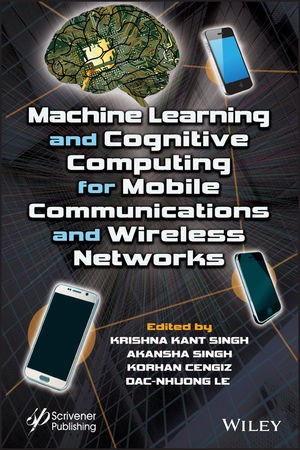
Communication and network technology has witnessed recent rapid development and numerous information services and applications have been developed globally. These technologies have high impact on society and the way people are leading their lives. The advancement in technology has undoubtedly improved the quality of service and user experience yet a lot needs to be still done. Some areas that still need improvement include seamless wide-area coverage, high-capacity hot-spots, low-power massive-connections, low-latency and high-reliability and so on. Thus, it is highly desirable to develop smart technologies for communication to improve the overall services and management of wireless communication. Machine learning and cognitive computing have converged to give some groundbreaking solutions for smart machines. With these two technologies coming together, the machines can acquire the ability to reason similar to the human brain. The research area of machine learning and cognitive computing cover many fields like psychology, biology, signal processing, physics, information theory, mathematics, and statistics that can be used effectively for topology management. Therefore, the utilization of machine learning techniques like data analytics and cognitive power will lead to better performance of communication and wireless systems.
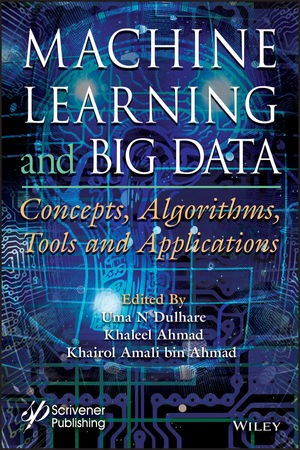
Showcase novel use-cases and applications, present empirical research results from user-centered qualitative and quantitative experiments of these new applications, and facilitate a discussion forum to explore the latest trends in big data and machine learning by providing algorithms which can be trained to perform interdisciplinary techniques such as statistics, linear algebra, and optimization and also create automated systems that can sift through large volumes of data at high speed to make predictions or decisions without human intervention
Approaches ML as the computational implementation of the scientific principle. This principle consists of continuously adapting a model of a given data-generating phenomenon by minimizing some form of loss incurred by its predictions. Trains readers to break down various ML applications and methods in terms of data, model, and loss, thus helping them to choose from the vast range of ready-made ML methods.

Laser-based additive manufacturing (LAM) is a revolutionary advanced digital manufacturing technology developed in recent decades, which is also a key strategic technology for technological innovation and industrial sustainability. This technology unlocks the design and constraints of traditional manufacturing and meets the needs of complex geometry fabrication and high-performance part fabrication. A deeper understanding of the design, materials, processes, structures, properties and applications is desired to produce novel functional devices, as well as defect-free structurally sound and reliable LAM parts.The topics in this Special Issue reprint include macro- and micro-scale additive manufacturing with lasers, such as structure/material design, fabrication, modeling and simulation, in situ characterization of additive manufacturing processes and ex situ materials characterization and performance, with an overview that covers various applications in aerospace, biomedicine, optics and energy.
This state-of-the-art survey contains the papers that were invited by the organizers after conclusion of an International Dagstuhl-Seminar on Complexity of Constraints, held in Dagstuhl Castle, Germany, in October 2006.

The book is organized as follows. In the beginning of this book (chapters 1 through 6), you learn how to build a data warehouse, for example, defining the architecture, understanding the methodology, gathering the requirements, designing the data models, and creating the databases. Then in chapters 7 through 10, you learn how to populate the data warehouse, for example, extracting from source systems, loading the data stores, maintaining data quality, and utilizing the metadata. After you populate the data warehouse, in chapters 11 through 15, you explore how to present data to users using reports and multidimensional databases and how to use the data in the data warehouse for business intelligence, customer relationship management, and other purposes. Chapters 16 and 17 wrap up the book: After you have built your data warehouse, before it can be released to production, you need to test it thoroughly. After your application is in production, you need to understand how to administer data warehouse operation.
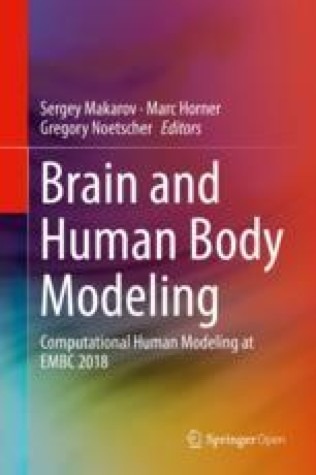
This book describes modern applications of computational human modeling with specific emphasis in the areas of neurology and neuroelectromagnetics, depression and cancer treatments, radio-frequency studies and wireless communications. Special consideration is also given to the use of human modeling to the computational assessment of relevant regulatory and safety requirements. Readers working on applications that may expose human subjects to electromagnetic radiation will benefit from this book’s coverage of the latest developments in computational modelling and human phantom development to assess a given technology’s safety and efficacy in a timely manner.

Biometric User Authentication for IT Security: From Fundamentals to Handwriting conveys general principals of passive (physiological trait like fingerprint, iris, face) and active (learned and trained behavior like voice, handwriting and gait) biometric recognition techniques to the reader. This professional book, unlike other publications in this area which concentrate on passive schemes, reflects a more comprehensive analysis of one particular active biometric technique: handwriting. Aspects which are thoroughly discussed include sensor characteristic dependency, attack scenarios, and the generation of cryptographic keys from handwriting.
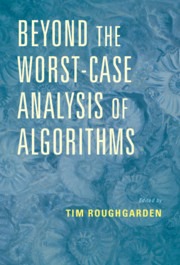
There are no silver bullets in algorithm design, and no single algorithmic idea is powerful and flexible enough to solve every computational problem. Nor are there silver bullets in algorithm analysis, as the most enlightening method for analyzing an algorithm often depends on the problem and the application. However, typical algorithms courses rely almost entirely on a single analysis framework, that of worst-case analysis, wherein an algorithm is assessed by its worst performance on any input of a given size. The purpose of this book is to popularize several alternatives to worst-case analysis and their most notable algorithmic applications, from clustering to linear programming to neural network training. Forty leading researchers have contributed introductions to different facets of this field, emphasizing the most important models and results, many of which can be taught in lectures to beginning graduate students in theoretical computer science and machine learning.

سوريا - اتستراد درعا - غباغب
+963-15 2050 - 15 860 380 /1/2/3 - 11 662 3900