



الصفحة 5
الصفحة 5
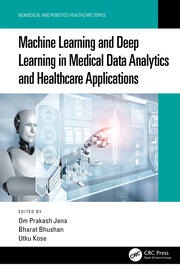
Machine learning and deep learning in medical data analytics and healthcare applications
Introduces and explores a variety of schemes designed to empower, enhance, and represent multi-institutional and multi-disciplinary machine learning (ML) and deep learning (DL) research in healthcare paradigms. Serving as a unique compendium of existing and emerging ML/DL paradigms for the healthcare sector, this book demonstrates the depth, breadth, complexity, and diversity of this multi-disciplinary area. It provides a comprehensive overview of ML/DL algorithms and explores the related use cases in enterprises such as computer-aided medical diagnostics, drug discovery and development, medical imaging, automation, robotic surgery, electronic smart records creation, outbreak prediction, medical image analysis, and radiation treatments.

Lone Parenthood in the Life Course
Provides a comprehensive portrait of lone parenthood at the beginning of the XXI century from a life course perspective. The contributions included in this volume examine the dynamics of lone parenthood in the life course and explore the trajectories of lone parents in terms of income, poverty, labour, market behaviour, wellbeing, and health. Throughout, comparative analyses of data from countries as France, the United Kingdom, Ireland, Germany, Belgium, Sweden, Switzerland, Hungary, and Australia help portray how lone parenthood varies between regions, cultures, generations, and institutional settings. The findings show that one-parent households are inhabited by a rather heterogeneous world of mothers and fathers facing different challenges.

Locational Tournaments in the Context of the EU Competitive Environment : A New Institutional Economics Approach to Foreign Direct Investment Policy Competition between Governments in Europe
The last decade has witnessed a dramatic change in attitude towards foreign direct investment (FDI) and a significant increase in competition between governments to attract FDI as a result. These "locational tournaments" are perpetuated not simply by classical factor endowments, but also by government interventions that impact both market imperfections and FDI flows.
Linked Democracy : Foundations, Tools, and Applications
This book shows the factors linking information flow, social intelligence, rights management and modelling with epistemic democracy, offering licensed linked data along with information about the rights involved. This model of democracy for the web of data brings new challenges for the social organisation of knowledge, collective innovation, and the coordination of actions. Licensed linked data, licensed linguistic linked data, right expression languages, semantic web regulatory models, electronic institutions, artificial socio-cognitive systems are examples of regulatory and institutional design (regulations by design). The web has been massively populated with both data and services, and semantically structured data, the linked data cloud, facilitates and fosters human-machine interaction. Linked data aims to create ecosystems to make it possible to browse, discover, exploit and reuse data sets for applications. Rights Expression Languages semi-automatically regulate the use and reuse of content.

Legitimacy Needs as Drivers of Business Exit
A diversified firm’s withdrawal from a business unit, i.e. business exit, is a significant phenomenon in management practice. Although divestitures are highly relevant in practice, the acquisition of business units attracts much more attention in strategic management research. Carolin Decker develops and empirically applies a framework in which business exits serve the purpose of re-establishing a firm’s previously harmed legitimacy. She suggests four types of legitimacy needs that are to be satisfied with the divestiture of a business unit and the simultaneous pursuit of strategic reorientation. The author tests the theoretical framework with secondary data on 213 business exits. Her findings support the idea that legitimacy needs drive the likelihood of fit-enhancing business exits in divesting firms.

Language Choice in a Nation Under Transition : English Language Spread in Cambodia
This book examines language choice in contemporary Cambodia, and uses the case study to explore and evaluate competing explanations for the spread of English globally. the multiple contexts in which Cambodians make individual and institutional language policy choices are considered. Chapters 2 and 3 examine the economic and political contexts for language choice, as Cambodia has transitioned from a planned economy and communism to a market economy and democracy. Chapters 4, 5, and 6 examine the assistance context for language choice; the bilateral, multilateral, and nongovernmental development agencies that have recently begun to work in Cambodia demand certain language skills of Cambodian employees and government counterparts, and support the learning of these languages in both nonformal and formal education.

Landscapes of Lifelong Learning Policies across Europe : Comparative Case Studies
This book explores different landscapes of Lifelong Learning policies (LLP), producing case-based examinations of their institutional, discursive, and relational dimensions. Across Europe, young people develop their life courses amidst diverse living conditions and are confronted with a variety of institutional and structural arrangements that impact on their opportunities in education and labour. Considering the relevance of LLP in shaping those opportunities, the chapters draw from multi-level, mixed-methods research and offer original insights on the interplay of discourses and governance patterns in the processes of policy-making and deliverance. The book yields noteworthy insights into the widely differing realities across the European landscape, and also into the diverging ways young people deal with and actively participate in LLP.
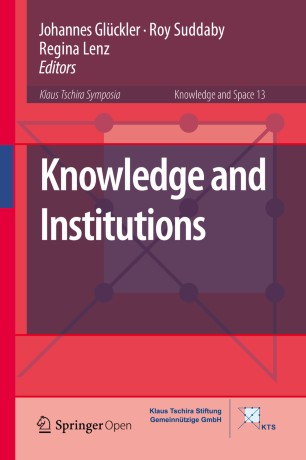
Knowledge and Institutions
Bridges the disciplinary boundaries within the social sciences to explore the role of social institutions in shaping geographical contexts, and in creating new knowledge. It includes theorizations as well as original empirical case studies on the emergence, maintenance and change of institutions as well as on their constraining and enabling effects on innovation, entrepreneurship, art and cultural heritage, often at regional scales across Europe and North America. Rooted in the disciplines of management and organization studies, sociology, geography, political science, and economics the contributors all take comprehensive approaches to carve out the specific contextuality of institutions as well as their impact on societal outcomes. Not only does this book offer detailed insights into current debates in institutional theory, it also provides background for scholars, students, and professionals at the intersection between regional development, policy-making, and regulation.

Julie Snow Architects
This, the first monograph on Snow's work, provides in depth documentation of 14 of her residential, institutional, corporate, and public projects, including the Koehler Residence in New Brunswick, Canada, a series of Minneapolis Light Rail Stations, the Minnesota Children's Museum, and the University of South Dakota School of Business.
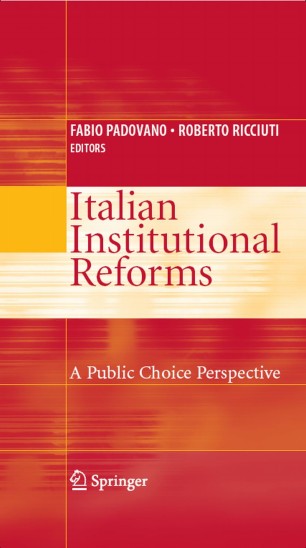
Italian Institutional Reforms : A Public Choice Perspective
Using a public choice perspective, this book explains the evolution and political and economic impact of recent changes to the Italian institutional framework. Because these changes are so numerous and broad, their implementation serves as a case study for other Western governments. Particular attention is paid to the introduction of the EURO, the reform of voting from proportional to majoritarian rule, the impact of corporatism, constraints imposed by the Maastricht Treaty, and the switch from a highly centralized government to a federal organization.
Communicative figurations : Transforming communications in times of deep mediatization
This open access volume is about how to research the influence of our changing media environment. Today, there is not one single medium that is the driving force of change. With the spreading of various technical communication media such as mobile phone and internet platforms, we are confronted with a media manifold of deep mediatization. But how can we investigate its transformative capability? This book answers this question by taking a non-media-centric perspective, researching the various figurations of collectivities and organizations humans are involved in. The first part of the book outlines a fundamental understanding of the changing media environment of deep mediatization and its transformative capacity. The second part focuses on collectivities and movements: communities in the city, critical social movements, maker, online gaming groups and networked groups of young people. The third part moves institutions and organizations into the foreground, discussing the transformation of journalism, religion, politics, and education, whilst the fourth and final part is dedicated to methodologies and perspectives.

Clinical Bioethics : A Search for the Foundations
Clinical Bioethics. A Search for the Foundations compares major theoretical models in the foundation of clinical bioethics and explains medicine as a normative practice. The goals of medicine are discussed with particular reference to the subjectivisation of health and the rationalisation of health care institutions. This volume provides a consistent reconstruction of bioethical judgment both at the level of epistemological statute and institutional context, i.e. clinical ethics committees and clinical ethics consultation.
Civilian Lunatic asylums during the First World War : A study of Austerity on London's Fringe
This book explores the history of asylums and their civilian patients during the First World War, focusing on the effects of wartime austerity and deprivation on the provision of care.

Children's Exploration and Cultural Formation
This book examines the educational conditions that support cultures of exploration in kindergartens. It conceptualises cultures of exploration, whether those cultures are created through children’s own engagement or are demanded of them through undertaking specific tasks within different institutional settings.

Changing Forests : Collective Action, Common Property, and Coffee in Honduras
It merges political ecology, collective-action theories, and institutional analysis to study how the people and forests have changed through socioeconomic and political transitions. It studies the complex, often contradictory relationships between the people and their natural resources to understand why forest cover endures."Changing Forests" therefore encompasses three broad phases: (1) the premodern period, which considers historic perturbations in western Honduras from the period of colonialism into the middle of the twentieth century; (2) the period of state-led logging and intervention in La Campa, which caused major degradation in forest cover; and (3) the recent period in which export coffee production transformed property rights, and people’s perceptions of the forest gained new conservationist and economic dimensions. Each phase entails perspectives and experiences that influenced human use of forests, and shaped subsequent transformations.

Care in Healthcare : Reflections on Theory and Practice
This book examines the concept of care and care practices in healthcare from the interdisciplinary perspectives of continental philosophy, care ethics, the social sciences, and anthropology. Areas addressed include dementia care, midwifery, diabetes care, psychiatry, and reproductive medicine. Special attention is paid to ambivalences and tensions within both the concept of care and care practices. Contributions in the first section of the book explore phenomenological and hermeneutic approaches to care and reveal historical precursors to care ethics. Empirical case studies and reflections on care in institutionalised and standardised settings form the second section of the book.

Building the judiciary : law, courts, and the politics of institutional development
Building the Judiciary uncovers the causes and consequences of judicial institution-building in the United States from the commencement of the new government in 1789 through the close of the twentieth century.Explaining why and how the federal judiciary became an independent, autonomous, and powerful political institution.

Building the Foundation : Whole Numbers in the Primary Grades : The 23rd ICMI Study
This twenty-third ICMI Study addresses for the first time mathematics teaching and learning in the primary school (and pre-school) setting, while also taking international perspectives, socio-cultural diversity and institutional constraints into account. One of the main challenges of designing the first ICMI primary school study of this kind is the complex nature of mathematics at the early level. Accordingly, a focus area that is central to the discussion was chosen, together with a number of related questions. The broad area of Whole Number Arithmetic (WNA), including operations and relations and arithmetic word problems, forms the core content of all primary mathematics curricula. this study presents a meta-level analysis and synthesis of what is currently known about WNA, providing a useful base from which to gauge gaps and shortcomings, as well as an opportunity to learn from the practices of different countries and contexts.

Bridging Educational Leadership, Curriculum Theory and Didaktik : Non-affirmative Theory of Education
This book is open access under a CC BY 4.0 license. This volume argues for the need of a common ground that bridges leadership studies, curriculum theory, and Didaktik. It proposes a non-affirmative education theory and its core concepts along with discursive institutionalism as an analytical tool to bridge these fields. It concludes with implications of its coherent theoretical framing for future empirical research.

Big data analysis of nanoscience bibliometrics, patent, and funding data (2000-2019)
Presents an evaluation of nanotechnologies outputs (academic outputs and patents) and their impact from 2000-2019. The evaluation uses Elsevier’s Scopus (the largest abstract and citation database of peer-reviewed literature), SciVal (a scientific research analysis platform), Funding Institutional (a funding database), and PatentSight (a patent analysis platform). It covers four key topics regarding nanoscience research, including: 1) An overview of nano-related scholarly output, 2) Nanoscience and its contribution to basic science, 3) Nanoscience and its impact on and collaboration with industry partners, and 4) Key factors that promote the development of nanoscience.
