



الصفحة 5
الصفحة 5

Newman and Carranza’s Clinical Periodontology
An Integrated Study Companion provides core information on periodontology and implant dentistry in a format that reflects the current, case-based U.S. National Board Dental Examination. Each chapter ends with a case-based exercise, allowing you to apply your knowledge to the practice setting. Like the well-knownNewman and Carranza's Clinical Periodontology textbook, it covers everything from basic science and fundamental procedures to advanced techniques in reconstructive, esthetic, and implant therapy - but with a focus on need-to-know content.
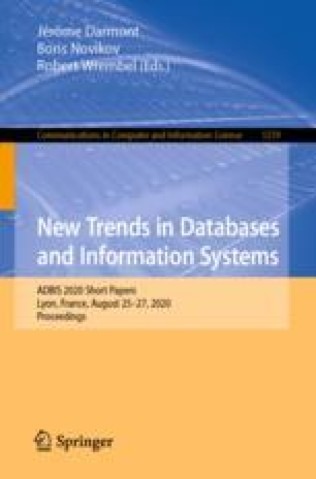
New Trends in Databases and Information Systems ; ADBIS 2020 Short Papers, Lyon, France, August 25–27, 2020, Proceedings
This book constitutes thoroughly refereed short papers of the 24th European Conference on Advances in Databases and Information Systems, ADBIS 2020, held in August 2020. ADBIS 2020 was to be held in Lyon, France, however due to COVID-19 pandemic the conference was held in online format. The 18 presented short research papers were carefully reviewed and selected from 69 submissions. The papers are organized in the following sections: data access and database performance; machine learning; data processing; semantic web; data analytics.

New Trends in Cancer for the 21st Century
It is difficult to imagine anyone who has not heard of cancer. This disease can affect families, friends or any one of us at any time in our lives. Every year nearly 3 million Europeans are diagnosed with cancer, leading to around 800,000 deaths per year. These deaths occur not only in aging populations, but also in children and adults who are in the most active period of their lives. This represents a tremendous problem that cannot be ignored by politicians or citizens. Fortunately, there is a constantly growing awareness that although cancer is a problem to be dealt with by clinicians, it should also be the concern of everyone. This volume contains the lectures held at the International Symposium on Cancer "New Trends in Cancer for the 21st Century". Fundamental researchers, politicians and representatives from patient coalitions share here their knowledge and interests as well as their concerns and experiences. Not only do these papers provide state-of-the-art information on cancer, they are also an opportunity to look at the problem from different points of view. It can be encouraging to realise that we are not alone in this fight.

New Trends and Technologies in Computer-Aided Learning for Computer-Aided Design ; IFIP International Working Conference: EduTech 2005, Perth, Australia, October 20-21, 2005
Computation and communication technologies underpin work and development in many different areas. Among them, Computer-Aided Design of electronic systems and E-Learning technologies are two areas which are different but share many concerns. The design of CAD and E-Learning systems already touches on a number of parallels, such as system interoperability, user interfaces, standardization, EML-based formats, reusability aspects (of content or designs), and intellectual property rights. Furthermore, the teaching of Design Automation tools and methods is particularly amenable to a distant or blended learning setting, and implies the interconnection of typical CAD tools, such as simulators or synthesis tools, with e-learning tools. There are many other aspects in which synergy can be found when using E-Learning technology for teaching and learning technology. This workshop, sponsored by IFIP WG 10.5 Design and Engineering of Electronic Systems in cooperation with IFIP WG 3.6 Distance Education, will explore the interrelationship between these two subjects, where Computer-Aided Design meets Computer-Aided Learning. New Trends and Technologies in Computer-Aided Learning for Computer-Aided Design documents recent approaches and results presented at the EduTech 2005 Workshop, which was held in October 2005 in Perth, Australia and sponsored by the International Federation for Information Processing (IFIP). The topics chosen for this working conference are very timely: learning environments, tools and applications for education, education technologies and trends, and teaching in the hardware design area.

New Technologies, Mobility and Security
NTMS’2007 is the first IFIP International Conference on New Technologies, Mobility and Security that was held from May 2 to May 4, 2007 in Paris, France. NTMS'2007 aims at fostering advances in the areas of New Technologies, Wireless Networks, Mobile Computing, Ad hoc and Ambient Networks, QoS, Network Security and E-commerce, to mention a few, and provides a dynamic forum for researchers, students and professionals to present their state-of-the-art research and development in these interesting areas. The event was combined with tutorial sessions and workshops. Tutorials preceded the main program, aiming at the dissemination of mature knowledge and technology advances in the field. One Workshop immediately followed the main conference, offering the opportunity for a more focused exchange of ideas and presentation of on-going research relevant to selected topics.

New Stream Cipher Designs : The eSTREAM Finalists
The goal of eSTREAM was to promote the design of new stream ciphers with a particular emphasis on algorithms that would be either very fast in software or very resource-efficient in hardware. Algorithm designers were invited to submit new stream cipher proposals to eSTREAM, and 34 candidates were proposed from around the world. Over the following years the submissions were assessed with regard to both security and practicality by the cryptographic community, and the results were presented at major conferences and specialized workshops dedicated to the state of the art of stream ciphers.

New Perspectives in the Study of Mesoamerican Primates : Distribution, Ecology, Behavior, and Conservation
The purpose of this volume is to present a comprehensive overview of recent advances in primate field research, ecology, and conservation biology in Mesoamerica. The overall goal of each contribution is to integrate newly collected field data with theoretical perspectives drawn from evolutionary biology, socioecology, biological anthropology, and conservation to identify how our current knowledge of primate behavior and ecology has moved beyond more traditional approaches. A corollary to this, and an important goal of the volume is to identify geographical regions and species for which we continue to lack sufficient information, to develop action plans for future research, and to identify areas for immediate conservation action. Despite many decades of primate research in Mesoamerica, much is still unknown concerning the basic ecology and behavior of these species, demography, current distribution, and conservation status of local populations, and the effectiveness of conservation policies on primate survivorship. Four major areas of research are the focus of the volume: Evolutionary Biology and Biogeography; Population Demography and Ecology; Behavior; and Conservation and Management Policies.

New perspectives in critical data studies: the ambivalences of data power
Examines the ambivalences of data power. Firstly, the ambivalences between global infrastructures and local invisibilities challenge the grand narrative of the ephemeral nature of a global data infrastructure. They make visible local working and living conditions, and the resources and arrangements required to operate and run them. Secondly, the book examines ambivalences between the state and data justice. It considers data justice in relation to state surveillance and data capitalism, and reflects on the ambivalences between an “entrepreneurial state” and a “welfare state”. Thirdly, the authors discuss ambivalences of everyday practices and collective action, in which civil society groups, communities, and movements try to position the interests of people against the “big players” in the tech industry.

New Partnerships for Innovation in Microfinance
"The book presents valuable information with a strong analytical tilt. … targets economists and managers in banking and development finance organizations, as well as policy makers, international development organizations, and development agencies. Because it covers a range of issues related to funding microfinance, and is written in relatively simple language, yet intelligently argued, it can be used as a resource book for courses on microfinance funding and development. … a useful read for practitioners in the sector."

New Horizons for Asian Museums and Museology
This book presents up-to-date information about museums and museology in present-day Asia, focusing on Japan, Mongolia, Myanmar, and Thailand. Asian countries today have developed or are developing their own museology and museums, which are not simple copies of European or North American models. This book provides readers with carefully chosen examples of museum activities—for example, exhibition and sharing information, database construction, access to and conservation of museum collections, relationships between museums and local communities, and international cooperation in the field of cultural heritage.

New horizons for a data-driven economy : A roadmap for usage and exploitation of big data in Europe
The book is structured in four parts: Part I “The Big Data Opportunity” explores the value potential of big data with a particular focus on the European context. It also describes the legal, business and social dimensions that need to be addressed, and briefly introduces the European Commission’s BIG project. Part II “The Big Data Value Chain” details the complete big data lifecycle from a technical point of view, ranging from data acquisition, analysis, curation and storage, to data usage and exploitation. Next, Part III “Usage and Exploitation of Big Data” illustrates the value creation possibilities of big data applications in various sectors, including industry, healthcare, finance, energy, media and public services. Finally, Part IV “A Roadmap for Big Data Research” identifies and prioritizes the cross-sectorial requirements for big data research, and outlines the most urgent and challenging technological, economic, political and societal issues for big data in Europe.

New Frontiers in Enterprise Risk Management
This book provides introductory material about enterprise risk management, and the role of risk in decision making. It presents enterprise risk management from perspectives of finance, accounting, insurance, supply chain operations, and project management. Technology tools are addressed, to include financial models of risk as well as accounting aspects using data envelopment analysis, neural network tools for credit risk evaluation, and real option analysis applied to information technology outsourcing. Three chapters present enterprise risk management experience in China, to include banking, chemical plant operations, and information technology.

New frontiers in artificial intelligence ; JSAI-isAI International Workshops, JURISIN, AI-Biz, LENLS, Kansei-AI, Yokohama, Japan, November 10–12, 2019, Revised Selected Papers
This book constitutes extended, revised and selected papers from the 11th International Symposium of Artificial Intelligence supported by the Japanese Society for Artificial Intelligence, JSAI-isAI 2019. It was held in November 2019 in Yokohama, Japan. The 26 papers were carefully selected from 46 submissions and deal with topics of AI research and are organized into 4 sections, according to the 4 workshops: JURISIN 2019, AI-Biz 2019, LENLS 16, and Kansei-AI 2019.

New Frontiers in Artificial Intelligence ; JSAI 2007 Conference and Workshops, Miyazaki, Japan, June 18-22, 2007, Revised Selected Papers
The technology of artifcial intelligence is increasing its importance thanks to the rapid growth of the Internet and computer technology. In Japan, the annual conference series of JSAI (The Japanese Society for Arti?cial Intelligence) has been playing a leading role in promoting AI research, and selected papers of the annual conferences have been published in the LNAI series since 2003. This book consists of award papers from the 21st annual conference of JSAI (JSAI 2007) and selected papers from the four co-located workshops.

New Frontiers in Artificial Intelligence ; JSAI 2006 Conference andWorkshops
The objectives of this book are to present the award papers of the 20th annual conference of JSAI 2006 and selected papers from the three co-located international workshops and to promote the study exchange among researchers worldwide.

New Frontiers in Artificial Intelligence ; Joint JSAI 2005 Workshop Post-Proceedings
The objectives of this book are to present the award papers from the 19th annual conference of JSAI 2005 and the selected papers from the ?ve co-located international workshops and to promote the study exchange among worldwide researchers. Five papers received awards among more than 200 presentations in the conference, and 40 papers were selected from the workshops of Logic and Engineering of Natural Language Semantics 2005 (LENLS 2005), Learning with Logics and Logics for Learning (LLLL 2005), Agent Network Dynamics and Intelligence (ANDI 2005), Conversational Informatics (CI 2005) and Risk Management Systems with Intelligent Data Analysis (RMSIDA 2005).

New Frontiers for Entertainment Computing ; IFIP 20th World Computer Congress, First IFIP Entertainment Computing Symposium (ECS 2008), September 7-10, 2008, Milano, Italy
The IFIP series publishes state-of-the-art results in the sciences and technologies of information and communication. The scope of the series includes: foundations of computer science; software theory and practice; education; computer applications in technology; communication systems; systems modeling and optimization; information systems; computers and society; computer systems technology; security and protection in information processing systems; artificial intelligence; and human-computer interaction. Proceedings and post-proceedings of refereed international conferences in computer science and interdisciplinary fields are featured. These results often precede journal publication and represent the most current research.

New Directions in Intelligent Interactive Multimedia
This book summarizes the works and new research results presented at the First International Symposium on Intelligent Interactive Multimedia Systems and Services (KES-IIMSS 2008), organized by the University of Piraeus and its Department of Informatics in conjunction with KES International (Piraeus, Greece, July 9-11, 2008). The aim of the symposium was to provide an internationally respected forum for scientific research into the technologies and applications of intelligent interactive multimedia systems and services.

New Directions in Human Information Behavior
The book presents chapters by an interdisciplinary range of scholars who show new directions that often challenge the established views and paradigms of information behavior studies. Beginning with an evolutionary framework, the book examines information behaviors over various epochs of human existence from the Palaeolithic Era and within pre-literate societies, to contemporary behaviors by 21st century humans. Drawing upon social and psychological science theories the book presents a more integrated and holistic approach to the understanding of information behaviors that include multitasking and non-linear longitudinal processes, individuals’ information ground, information practices and information sharing, digital behaviors and human information organizing behaviors. The final chapter of the book integrates these new approaches and presents an overview of the key trends, theories and models for further research.

New Directions in Cognitive Information Retrieval
New Directions in Cognitive Information Retrieval presents an exciting new direction for research into cognitive oriented information retrieval (IR) research, a direction based on an analysis of the user’s problem situation and cognitive behavior when using the IR system. This contrasts with the current dominant IR research paradigm which concentrates on improving IR system matching performance. The chapters describe the leading edge concepts and models of cognitive IR that explore the nexus between human cognition, information and the social conditions that drive humans to seek information using IR systems. Chapter topics include: Polyrepresentation, cognitive overlap and the boomerang effect, Multitasking while conducting the search, Knowledge Diagram Visualizations of the topic space to facilitate user assimilation of information, Task, relevance, selection state, knowledge need and knowledge behavior, search training built into the search, children’s collaboration for school projects, and other cognitive perspectives on IR concepts and issues.
