


تحسين النتائح
ترتيب حسب
من
الى

Here is a comprehensive and up to-do-date presentation of the origins, and properties of clay minerals at the Earths surface. Concluding chapters show that clay minerals can form in variety of different environments: meteorites, lavas, subduction zones, among others.
This book introduces a multi-disciplinary and comprehensive research on China's long-term low-carbon emission strategies and pathways. After comprehensively considering China’s own socioeconomic conditions, policy design, energy mix, and other macro-development trends and needs, the research team has proposed suggestions on China’s low-carbon development strategies and pathways until 2050, with required technologies and policies in order to realize the goals of building a great modern socialist country and a beautiful China.
This book is open access under a CC BY 4.0 license. This book examines how China can increase the share of natural gas in its energy system. China’s energy strategy has global ramifications and impact, and central to this strategy is the country’s transition from coal to gas. The book presents the culmination of a two-year collaboration between the Development Research Center of the State Council (DRC) and Shell.
The long-term effects of the Chernobyl incident on the environment are still becoming apparent, twenty years after the event. This book, written by two researchers with frontline experience in this field, provides a detailed review of these over a wide range of ecosystems. It also discusses the responses and countermeasures utilised to combat the effects of the accident, as well as considering the health, social, psychological and economic impacts on the human population. Chernobyl - Catastrophe and Consequences provides a comprehensive assessment of the Chernobyl accident and its long-term consequences draws on the most recent measurements of contamination in the terrestrial and aquatic food chains discusses the sociological consequences of such disasters in detail This book adds valuable weight to the debate about the environmental cost of nuclear power and the issue of nuclear safety.
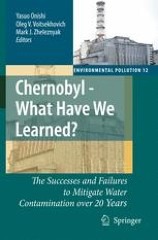
Twenty million people have been exposed to Chernobyl radionuclides through the Dnieper River aquatic pathways. This book presents a 20-year historical overview and comprehensive study results of the aquatic environment affected by the 1986 Chernobyl nuclear accident. During this time, many water quality management practices and countermeasures were enacted. The book presents in-depth analyses of these water remediation actions, using current science and mathematical modeling, and discusses why some were successful, but many others failed. The chapter entitled Where Do We Go From Here? incorporates a comprehensive discussion of the planned New Safe Confinement (NSC) structure to cover the Chernobyl plant. The book closes with a summary and conclusions drawn from these analyses, making it a valuable reference tool for the future. This book will be of interest to engineers, scientists, decision-makers, and those involved in radiation protection and radioecology, environmental protection and risk assessment, water remediation and mitigation measures, and radioactive waste disposal. In addition, the detailed, almost day-to-day, emergency responses to the Chernobyl accident described in this book will also be useful to people developing emergency and long-term responses to accidental or intentional (by terrorists) releases of radionuclides, toxic chemicals and biological agents.
It merges political ecology, collective-action theories, and institutional analysis to study how the people and forests have changed through socioeconomic and political transitions. It studies the complex, often contradictory relationships between the people and their natural resources to understand why forest cover endures."Changing Forests" therefore encompasses three broad phases: (1) the premodern period, which considers historic perturbations in western Honduras from the period of colonialism into the middle of the twentieth century; (2) the period of state-led logging and intervention in La Campa, which caused major degradation in forest cover; and (3) the recent period in which export coffee production transformed property rights, and people’s perceptions of the forest gained new conservationist and economic dimensions. Each phase entails perspectives and experiences that influenced human use of forests, and shaped subsequent transformations.
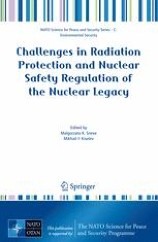
The book covers radiation protection and nuclear safety supervision of installations built during the cold war, particularly in relation to regulatory strategies for safe decommissioning of unique or unusual nuclear facilities and remediation
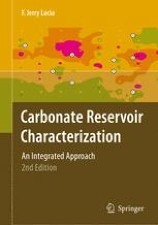
One principal need in petroleum recovery from carbonate reservoirs is the description of the three-dimensional distribution of petrophysical properties in order to improve performance predictions by means of fluid-flow computer simulations. The book focuses on a rock based approach for the integration of geological, petrophysical, and geostatistical methods to construct a reservoir model suitable to input into flow simulation programs. This second edition includes a new chapter on model construction and new examples of limestone, dolostone, and touching-vug reservoir models as well as improved chapters on basic petrophysical properties, rock-fabric/petrophysical relationships, calibration of wireline logs, and sequence stratigraphy.
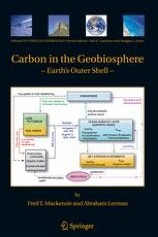
Carbon and carbon dioxide always played an important role in the geobiosphere that is part of the Earth’s outer shell and surface environment. The book’s eleven chapters cover the fundamentals of the biogeochemical behavior of carbon near the Earth’s surface, in the atmosphere, minerals, waters, air-sea exchange, and inorganic and biological processes fractionating the carbon isotopes, and its role in the evolution of inorganic and biogenic sediments, ocean water, the coupling to nutrient nitrogen and phosphorus cycles, and the future of the carbon cycle in the Anthropocene. This book is mainly a reference text for Earth and environmental scientists; it presents an overview of the origins and behavior of the carbon cycle and atmospheric carbon dioxide, and the human effects on them. The book can also be used for a one-semester course at an intermediate to advanced level addressing the behavior of the carbon and related cycles.
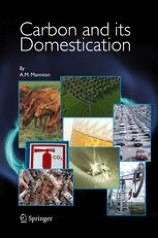
Carbon is chemically versatile and is thus the body and soul of biological, geological, ecological and economic systems. Its appropriation by humans through diversion of its biogeochemical cycle has been a mainstay of development. This domestication is characterized by a number of thresholds: control of fire, development of agriculture, expansion of Europe, fossil-fuel use and biotechnology. All have exacted an environmental toll, not least being climatic change and biodiversity loss. Carbon management now and in the future is a ‘hot’ political issue.
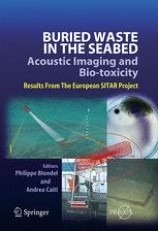
Buried waste on the seabed is a major source of pollution. But, very often, waste sites are not known until a serious problem occurs, or are not adequately mapped. Recent examples around Europe include WWI and WWII ammunition dump sites (e.g. Beufort Dyke in the UK), dumped nuclear submarines in the Arctic Seas, clandestine or hidden toxic-waste in the Baltic Sea and the North Sea.. Even if properly documented, waste sites evolve with time (dumped material can move with currents and tides, especially on a scale of decades; toxic-material barrels can corrode and leak). This book shows the results of a concerted EU-funded effort to tackle this problem and find innovative ways to identify and map toxic waste sites ona the seabed, whether they have been covered with sediments or not. These results are applicable to any region on the seabed in the entire world.
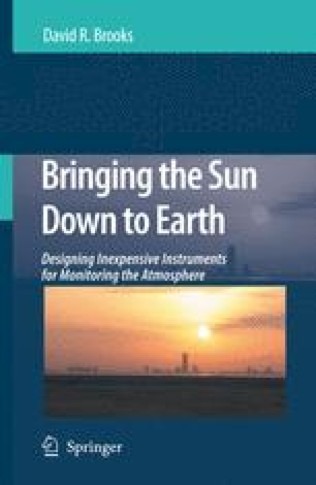
The book describes in detail how to design, build, calibrate, and use inexpensive instruments for measuring solar radiation, ranging from total radiation from the entire sky to narrow spectral bands of radiation travelling along a path directly from the sun. Students and their teachers will learn a great deal about weather, the seasons, and the atmosphere, and they will develop a much better understanding of how to measure the physical world around them.
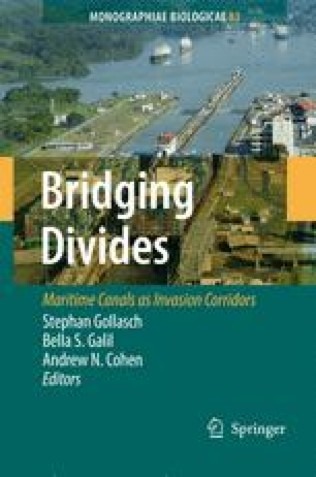
Maritime canals dissolve natural barriers to the dispersal of marine organisms, thus providing novel opportunities for natural dispersal, as well as for shipping-mediated transport. The introduction of alien species has proved to be one of the most profound and damaging of anthropogenic deeds - with both ecological and economic costs. This book is the first to assess the impacts of the world’s three principal maritime canals – the Kiel, the Panama, the Suez – as invasion corridors for alien biota. These three canals differ in their hydrological regimes, the types of biotas they connect, and in their permeability to invasions.
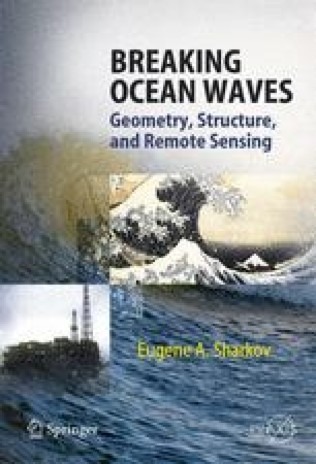
This book represents the most comprehensive description of the physical findings of an investigation into the spatio-temporal characteristics of the gravity of breaking waves and the foam activity in open sea by methods and instruments of optical and microwave remote sensing. Much emphasis is placed on the physical aspects of breaking processes necessary to measure the possibilities and limitations of remote sensing methods in specific observation cases of an oceanic surface. Numerous practical applications and illustrations are provided from air-borne, ship-borne and laboratory up-to-date experiments.
Biosolids Engineering and Management, is a collection of methods of practical design, calculation and numerical examples that illustrate how organized, analytical reasoning can lead to the discovery of clear, direct solutions, especially in the areas of biosolids management, treatment, disposal and beneficial use. The book’s including sludge and biosolids transport, pumping and storage, sludge conversion to biosolids, chlorination, stabilization, regulatory requirements, costs, agricultural land application, landfill, ocean disposal, combustion, incineration and sludge treatment process selection.
Environmental biotechnology, which was in its infancy in the early 80's, has evolved thanks to the revolution brought about by molecular biology. Multiple successes in the biological cleanup of civil and industrial wastewater and of hydrocarbon soil pollution, demonstrate the vast power of clean technologies. In addition, the buildup of information on the activities of microorganisms as catalysts in all sorts of natural, industrial and animal environments has flourished. There is a continuing realization of the critical role of microbial processes in biological, industrial and geological systems. Since environmental biotechnology has matured, it is ready to tackle bigger challenges: the scaling up of many bioremediation systems still in progress, the search for novel biocatalysts for industrial applications, the continuing effort against common human life-threatening processes such as antibiotic resistance, the accumulation of hormone-mimicking substances (endocrine disrupters), the deposition of air-borne pesticides in the environment and, the degradation of recalcitrant contaminants. These endeavors will help prevent the contamination of food chains, protect human life and allow for human activity and economic development that do not compromise environmental sustainabijity.
For the first time, this opportune book provides a comprehensive treatment of the many innovative, non-timber bioproducts that may be derived from Canada’s vast forests, including their potential economic, social and environmental impacts. It also offers a balanced discussion of the technological, policy and regulatory issues surrounding the emerging global bioeconomy. This book will not only be of interest to Canadian forestry professionals and entrepreneurs, but also to those interested in the contribution of forestry to the bioeconomy worldwide.
The biological effects of asteroid and comet impacts have been widely viewed as primarily destructive. The role of an impactor in the K/T boundary extinctions has had a particularly important influence on thinking concerning the role of impacts in ecological and biological changes. th During the 10 and final workshop of the ESF IMPACT program during March 2003, we sought to investigate the wider aspects of the involvement of impact events in biological processes, including the beneficial role of these events from the prebiotic through to the ecosystem level. The ESF IMPACT programme (1998-2003) was an interdisciplinary effort that is aimed at understanding impact processes and their effects on the Earth environment, including environmental, geological and biological changes.
Global warming has worsened the water resource crisis in many arid zones worldwide, from Africa to Asia, affecting millions of people and putting them at risk of hunger. Effective management of arid zone resources, including understanding the risks of toxic trace and heavy elements to humans, coupled with the need to produce more food to feed the world’s growing population, has thus become increasingly important. This very timely book, the only one of its kind on the market, fills the gap of our knowledge of trace elements in these regions. This book begins by introducing the nature and properties of arid zone soil, followed by an updated overview and comprehensive coverage of the major aspects of the trace elements and heavy metals of most concern in the world’s arid and semi-arid soils. These aspects include: - content and distribution - solution chemistry - solid-phase chemistry - selective sequential dissolution techniques - transfer fluxes - bioavailability - pollution and remediation In order to illustrate the themes, a comprehensive and focused case study on transfer fluxes of trace elements in Israeli arid soils is presented. Finally it closes with the global perspectives on anthropogenic interferences in the natural trace elements’ distribution.
This valuable study of environmental subsystems functioning under various climatic and anthropogenic conditions provides a unique insight into the social context of global changes in biogeochemical cycles and demonstrates current understanding of globalization and sustainable development.

سوريا - اتستراد درعا - غباغب
+963-15 2050 - 15 860 380 /1/2/3 - 11 662 3900