


تحسين النتائح
ترتيب حسب
من
الى

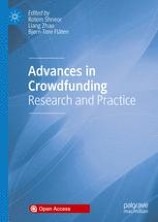
This book presents a comprehensive and up-to-date collection of knowledge on the state of crowdfunding research and practice. It considers crowdfunding models and their different manifestations across a variety of geographies and sectors, and explores the perspectives of fundraisers, backers, platforms, and regulators.
This book provides an investor-friendly presentation of the premises and applications of the quantitative finance models governing investment in one asset class of publicly traded stocks, specifically real estate investment trusts (REITs). The models provide highly advanced analytics for REIT investment, including: portfolio optimization using both historic and predictive return estimation; model backtesting; a complete spectrum of risk assessment and management tools with an emphasis on early warning systems, risk budgeting, estimating tail risk, and factor analysis; derivative valuation; and incorporating ESG ratings into REIT investment.
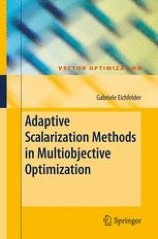
This book presents new adaptive solution methods for multiobjective optimization problems based on parameter dependent scalarizations. With the help of sensitivity results an adaptive parameter control is developed so that high-quality approximations of the efficient set are generated. These examinations are based on a general scalarization approach for arbitrary partial orderings defined by a closed pointed convex cone in the objective space. The application of the results to many other well-known scalarization methods is also presented. Background material of multiobjective optimization and scalarization approaches is concisely summarized at the beginning. The effectiveness of these new methods is demonstrated by test problems and a recent problem in intensity-modulated radiotherapy. The book concludes with a further application: a procedure for solving multiobjective bilevel optimization problems.
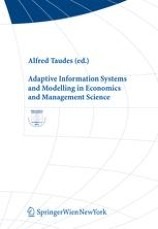
Learning and adaption are key features of "real economies". Studying interesting real phenomena like innovation, industry evolution or the role of expectation formulation in financial markets thus necessitates novel methods of data analysis and modelling. This title covers statistical models of heterogeneity, artificial consumer markets, models of adaptive expectation formulation in financial markets and agent-based models of industry evolution, product diversification and energy markets. The joint findings are presented in a manner that is interesting both for readers with a background in economics/management and mathematics and statistics and also for non-expert readers because it allows them to grasp the ideas of modern management science. This book thus provides a unique integrated toolbox for building realistic agent-based models of learning and adaption in a variety of settings based on sound data analysis.
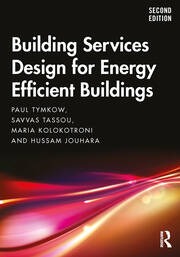
The following issues are addressed: background issues on climate change, whole-life performance and design collaboration generic strategies for energy efficient, low-carbon design health and wellbeing and post occupancy evaluation building ventilation air conditioning and HVAC system selection thermal energy generation and distribution systems low-energy approaches for thermal control electrical systems, data collection, controls and monitoring building thermal load assessment building electric power load assessment space planning and design integration with other disciplines.
"Reduce, Reuse, Recycle, and Recover" is the sustainable guideline that has replaced the "Take, Make, Waste" attitude of the industrial age. Based on their background at the ETH Zurich and the Future Cities Laboratory in Singapore, the authors provide both a conceptual and practical look into materials and products which use waste as a renewable resource. It looks into innovative concepts of how materials usually regarded as waste can be processed into new construction elements. The products are organized along the manufacturing processes: densified, reconfigured, transformed, designed and cultivated materials.
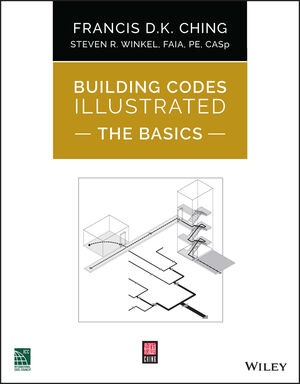
Delivers a concise visual introduction to the 2021 International Building Code (IBC) distilled from the industry bestseller Building Codes Illustrated. With clear language and Frank Ching's distinctive illustrations, the book offers readers a sound understanding of the foundations of the IBC. A solid understanding of the fundamentals of the 2021 International Building Code for students without a background in architecture or engineering Intuitive and memorable study material for people seeking licensure via the Architect Registration Exam Visually striking and memorable material designed to catch the reader's eye, hold attention, and improve retention

The first introduction to health-focused building standards for design and construction professionals. More than a summary of the state of the field, this practical resource guides designers, builders, developers, and owners through considerations for incorporating WELL®, Fitwel®, and other systems from the planning phase to ground-breaking and beyond.Drawing on the authors’ backgrounds in sustainable design and public health, chapters on the evolution of the green building movement and the relationship between health and the built environment provide vital context for understanding health-focused standards and certifications. The final chapter looks toward the future of health and the built environment.
This volume is an interdisciplinary book, which introduces, in a very readable way, state of the art research in the fundamental topics of mathematical modelling of Biosystems. These topics include: the study of Biological Growth and its mechanisms, the coupling of pattern to form via theorems of Differential Geometry, the human immunodeficiency virus dynamics, the inverse folding problem and the possibility of analysing true protein backbone flexibility, the Biclustering techniques for the organization of microarray data, the analytical approach to the modelling of biomolecular structure via Steiner trees, the action of biocides on resistance mechanisms of mutated and phenotypic bacteria strains, a description of the fundamental processes for the distribution and abundances of species towards a unified theory of Ecology, and a special introduction to Protein Physics aiming to explain the all-or-none first order phase transitions from native to denatured states.
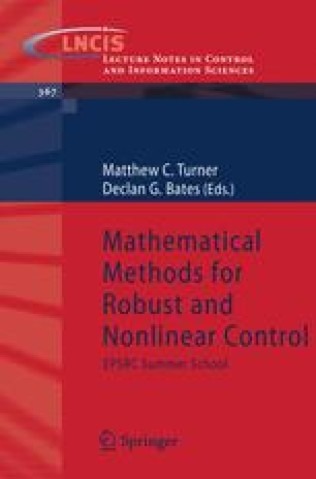
The underlying theory on which much modern robust and nonlinear control is based can often be dif?cult for the student to grasp. In particular, the mathematical - pects can be problematic for students from a standard engineering background. The EPSRC sponsored Summer School which was held in Leicester in September 2006 attempted to “?ll the gap” in students’ appreciation the theory relevant to several important areas of control. This book is a collection of lecture notes which were p- sented at that workshop and consists of, broadly, two parts. The ?rst nine chapters are devoted to the theory behind several areas of robust and nonlinear control and are aimed at introducing fundamental concepts to the reader. The last six chapters contain detailed case studies which aim to demonstrate the use and effectiveness of these modern techniques in real engineering applications. It is hoped that this book will provide a useful introduction to many of the more common robust and nonlinear control techniques and serve as a valuable reference for the more adept practitioner.
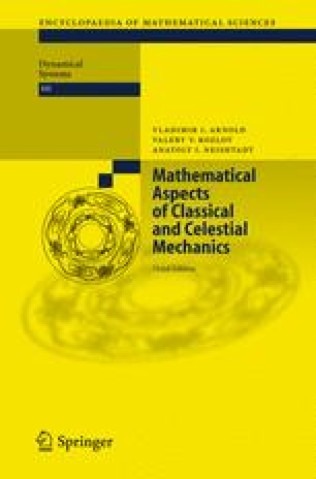
In this book we describe the basic principles, problems, and methods of clssical mechanics. Our main attention is devoted to the mathematical side of the subject. Although the physical background of the models considered here and the applied aspects of the phenomena studied in this book are explored to a considerably lesser extent, we have tried to set forth first and foremost the “working” apparatus of classical mechanics. This apparatus is contained mainly in Chapters 1, 3, 5, 6, and 8. Chapter 1 is devoted to the basic mathematical models of classical - chanics that are usually used for describing the motion of real mechanical systems. Special attention is given to the study of motion with constraints and to the problems of realization of constraints in dynamics. In Chapter 3 we discuss symmetry groups of mechanical systems and the corresponding conservation laws. We also expound various aspects of ord- reduction theory for systems with symmetries, which is often used in appli- tions. Chapter 4 is devoted to variational principles and methods of classical mechanics. They allow one, in particular, to obtain non-trivial results on the existence of periodic trajectories. Special attention is given to the case where the region of possible motion has a non-empty boundary. Applications of the variational methods to the theory of stability of motion are indicated.

By introducing mathematical objects, it teaches students how to use a computer to perform numerical and symbolic calculations, define a function and calculate its values, plot and explore graphs, and execute simple algorithms. The course is rich in examples, applications, and models, drawn from economics, physics, biology, statistics, and mathematics itself. The analysis of these models constitutes, in a certain sense, the true purpose of the mathematical theory covered. Automatic calculation tools (mathematics software, spreadsheets) are used extensively to explore and illustrate concepts and properties. Mathcad® software, in particular, was used, both as a calculation tool and as a simple yet powerful programming language. Considerable space is devoted to approximation, emphasizing the distinction between numerical and symbolic calculation; to algorithms as a synthesis of the syntactic and semantic aspects of mathematical objects; and to computer simulation, interpreted as a "physical" experiment and a source of conjecture. The ability to use a calculator marks a sort of "democratization" of mathematics: even complex results, which have always required a broad background of knowledge and laborious calculations, are now quickly accessible to anyone who understands the meaning of mathematical objects and knows how to use the syntax.

MARSWALK ONE: First Steps on a New Planet addresses the question of why we should embark on a journey to Mars, documenting what the first human crew will do when they place their feet in the red dust of the planet. The book also addresses why we need to carry out these tasks and, more importantly, what a human crew could achieve that an automated mission could not. Understanding the clear benefits of sending a human crew to the surface of Mars, and how these benefits can be seen back on Earth, is the key to sustained long-term public and political support for the programme in terms of cash and commitment. The book accepts that the journey will be made, but does not specify precisely when. Flight time, and how to get to and from the planet are discussed briefly, to understand why the suggested duration spent at Mars is reasonable. The main objective of the work is to look at what science will be done on the surface – supported by orbital operations – and what hardware and technology will be employed to achieve the mission objectives. This analysis is drawn from previous experiences in manned and unmanned space programmes, including Apollo, Skylab, Salyut/Mir, Shuttle and ISS, Viking, Luna/Lunokhod, and recent Mars missions such as Pathfinder and Global Surveyor.

As the title suggests, a fundamental challenge of this branch of international maritime law is to achieve a balance between the interests of the two main stakeholders. Institutionally, the effort to achieve this balance dates back a number of decades with its genesis mainly found in the work of the International Labour Organization. It has to be said that whilst this effort achieved great progress, it has led to a haphazard, plethora of legal instruments.
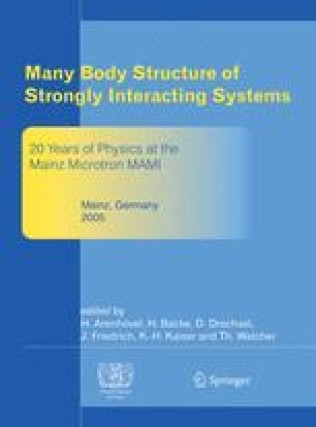
This carefully edited proceedings volume provides an extensive review and analysis of the work carried out over the past 20 years at the Mainz Microtron (MAMI). This research centered around the application of Quantum Chromodynamics in the strictly nonperturbative regime at hadronic scales of about 1 fm. Due to the many degrees of freedom in hadrons at this scale the leitmotiv of this research is "Many body structure of strongly interacting systems". Further, an outlook on the research with the forthcoming upgrade of MAMI is given. This volume is an authoritative source of reference for everyone interested in the field of the electro-weak probing of the structure of hadrons.
This book discusses the progress of science and the transfer of scientific knowledge to technological application. It also identifies the factors necessary to achieve this progress. Based on a case study of the physical chemist Fritz Haber's discovery of ammonia synthesis between 1903 and 1909, the book places Haber's work in historical and scientific (physicochemical) context. The scientific developments of the preceding century are framed in a way that emphasizes the confluence of knowledge needed for Haber's success. Against this background, Haber's work is presented in detail along with the indispensable contributions of his colleague, the physical chemist, Walter Nernst, and their assistants. The detailed accounts of scientific advancement remind us of the physical basis on which our scientific theories and ideas are built. Without this reminder we often forget how complex, and how beautiful achievements in science can be.
Gives an comprehensive account of magnetism, spanning the historical development, the physical foundations and the continuing research underlying the field, one of the oldest yet still vibrant field of physics. It covers both the classical and quantum mechanical aspects of magnetism and novel experimental techniques. Perhaps uniquely, it also discusses spin transport and magnetization dynamics phenomena associated with atomically and spin engineered nano-structures against the backdrop of spintronics and magnetic storage and memory applications.

The main topic of Magnetic Control of Tokamak Plasmas is the design of feedback control systems guaranteeing the stability of plasma equilibrium inside a tokamak and the regulation of the plasma position and shape during plasma pulses. Modelling and control details are presented, allowing the non-expert to understand the control problem. Starting from equations of magneto-hydro-dynamics, all the steps needed for the derivation of plasma state-space models are enumerated. The basics of electromagnetics are frequently recalled. The control problem is then described beginning with control of current and position – vertical and radial – and progressing to the more challenging shape control. The solutions proposed vary from simple PIDs to more sophisticated MIMO controllers.
The objective of Document Analysis and Recognition (DAR) is to recognize the text and graphicalcomponents of a document and to extract information. With ?rst papers dating back to the 1960’s, DAR is a mature but still gr- ing research?eld with consolidated and known techniques. Optical Character Recognition (OCR) engines are some of the most widely recognized pr- ucts of the research in this ?eld, while broader DAR techniques are nowadays studied and applied to other industrial and o?ce automation systems. In the machine learning community, one of the most widely known - search problems addressed in DAR is recognition of unconstrained handwr- ten characters which has been frequently used in the past as a benchmark for evaluating machine learning algorithms, especially supervised classi?ers.
Assimilating new research in the field of low-dimensional metals, this monograph provides a detailed overview of the current status of research on quasi-one- and two-dimensional molecular metals, describing normal-state properties, magnetic field effects, superconductivity, and the phenomena of interacting p and d electrons. It will be useful not only for frontier researchers with a broad interest in low-dimensional electronic and magnetic properties, but also for graduate students of solid-state physics and chemistry with some background knowledge of solid-state physics. It includes a number of fundamental and novel findings relating to the characteristics of these low-dimensional metals, which in future are likely to become standard material in textbooks on solid-state physics.

سوريا - اتستراد درعا - غباغب
+963-15 2050 - 15 860 380 /1/2/3 - 11 662 3900