



الصفحة 5
الصفحة 5

Achieving the Paris Climate Agreement goals ; Part 2 : Science-based target setting for the finance industry — Net-Zero Sectoral 1.5˚C pathways for real economy sectors
Provides an in-depth analysis of industry sectors globally, and its purpose is to present emission reduction targets in 5-year steps (2025 to 2050) for the main twelve finance sectors per the Global Industry Classification System. This scientific analysis aims to support the United Nations Principles for Responsible Investment initiative to give sustainability guidance for the global finance industry. The industry sector pathways presented here are based on the latest global and regional 100% renewable energy and non-energy greenhouse gas Representative Concentration Pathways in order to keep climate change significantly under +1.5 C and thereby achieve the Paris Climate Agreement goals. The heart of this book is three chapters presenting the results of industry scenario modelling. These chapters cover twelve industry and service sectors as well as transportation and buildings. The specific energy demand and specific emissions are presented based on the emission accounting concept of “Scope 1, Scope 2 and Scope 3” emission pathways. This methodology has been developed to measure the climate and sustainability index for companies, and this research project expands the methodology to apply it to entire industry sectors ...

Achieving the Paris climate agreement goals : Global and regional 100% renewable energy scenarios with non-energy GHG Pathways for +1.5°C and +2°C
Presents detailed pathways to achieve 100% renewable energy by 2050, globally and across ten geographical regions. Based on state-of-the-art scenario modelling, it provides the vital missing link between renewable energy targets and the measures needed to achieve them. Bringing together the latest research in climate science, renewable energy technology, employment and resource impacts, the book breaks new ground by covering all the elements essential to achieving the ambitious climate mitigation targets set out in the Paris Climate Agreement. For example, sectoral implementation pathways, with special emphasis on differences between developed and developing countries and regional conditions, provide tools to implement the scenarios globally and domestically. Non-energy greenhouse gas mitigation scenarios define a sustainable pathway for land-use change and the agricultural sector. Furthermore, results of the impact of the scenarios on employment and mineral and resource requirements provide vital insight on economic and resource management implications.

Academic Integrity in Canada : An Enduring and Essential Challenge
Firmly grounded in the scholarly literature globally, it engages with the experience of local practicioners. It presents aspects of academic integrity that is specific to Canada, such as the existence of an "honour culture", rather than relying on an "honour code". It also includes Indigenous voices and perspectives that challenge traditional understandings of intellectual property, as well as new understandings that have arisen as a consequence of Covid-19 and the significant shift to online and remote learning.

A structural study and study of the site of Al-Rahma hospital - Deir Ez-Zour
Presents the structural study and design of Al-Rahma Hospital, located in Deir Ez-Zour, Al-Kanamat area near the Euphrates River. The hospital includes two basement levels and ten floors above ground. The basements house medical imaging rooms, storage spaces, and a shelter.
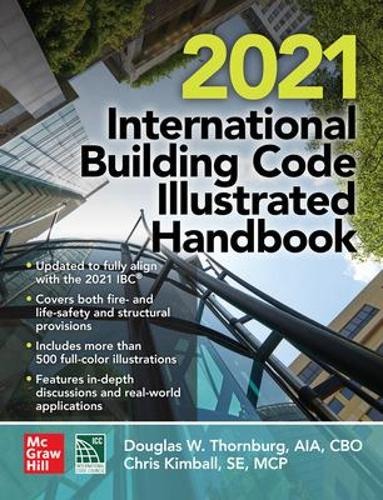
2021 International building code illustrated handbook ; 1st ed.
A full-color guide makes it easy to understand and apply complex IBC® provisions and achieve compliance. With an emphasis on structural and fire- and life-safety requirements, including building classification and means of egress regulations, this practical resource contains hundreds of user-friendly diagrams that clarify the application and intent of the IBC®.
