



الصفحة 49
الصفحة 49

Active mining ; 2nd International workshop, AM 2003, Maebashi, Japan, October 28, 2003, revised selected papers
"This volume contains the papers selected for presentation at the 2nd Inter- tional Workshop on Active Mining (AM 2003) which was organized in conju- tion with the 14th International Symposium on Methodologies for Intelligent Systems (ISMIS 2003), The workshop was organized by the Maebashi Institute of Technology for shed light on the future development of active mining. "This volume contains : Topics Database Management / Artificial Intelligence / Algorithm Analysis and Problem Complexity / Health Informatics / Bioinformatics

Abstraction, Reformulation, and Approximation ; 7th International Symposium, SARA 2007, Whistler, Canada, July 18-21, 2007, Proceedings
This volume contains the proceedings of SARA 2007, the seventh symposium, held at Whistler Village, British Columbia, Canada, July 18-21. Three distinguished speakers were invited to give keynote presentations, and their abstracts are included herein,It has been recognized since the inception of artificial intelligence that abstractions, problem reformulations and approximations (AR&A) are central to human common-sense reasoning and problem solving and to the ability of systems to reason effectively in complex domains.AR&A techniques have been used in a variety of problem-solving settings, including automated reasoning, cognitive modelling.
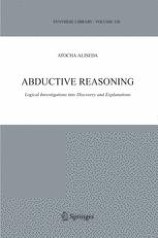
Abductive Reasoning : Logical Investigations into Discovery and Explanation
Abductive Reasoning: Logical Investigations into Discovery and Explanation is a much awaited original contribution to the study of abductive reasoning, providing logical foundations and a rich sample of pertinent applications.

A vision-based system to early detection of drowning incidents in swimming pools
Being one of the leading causes of death; drowning has become a severe problem in the past few years. Our goal from this project is to focus on the comprehensive survey of drowning detection and prevention techniques. There are various methodologies put up in the domain of swimming pool safety using different intelligent control systems. Various methods have been adopted for drowning detection using the concepts of image processing, pressure and motion sensing. The main objectives of this work are to detect the drowning person in an indoor swimming pool and send an alarm to the lifeguard to rescue if the previously detected person is missing for a specific amount of time.
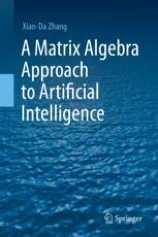
A Matrix Algebra Approach to Artificial Intelligence
The book consists of two parts: the first discusses the fundamentals of matrix algebra in detail, while the second focuses on the applications of matrix algebra approaches in AI. Highlighting matrix algebra in graph-based learning and embedding, network embedding, convolutional neural networks and Pareto optimization theory, and discussing recent topics and advances, the book offers a valuable resource for scientists, engineers, and graduate students in various disciplines
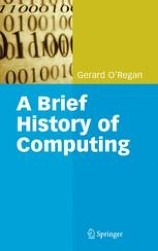
A Brief History of Computing
This text provides a comprehensive introduction to the key topics in the history of computing, in an easy-to-follow and concise manner. It covers the significant areas and events in the field.
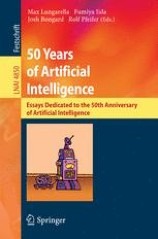
50 Years of Artificial Intelligence : Essays Dedicated to the 50th Anniversary of Artificial Intelligence
This Festschrift volume, published in celebration of the 50th Anniversary of Artificial Intelligence, includes 34 refereed papers written by leading researchers in the field of Artificial Intelligence. The papers were carefully selected from the invited lectures given at the 50th Anniversary Summit of AI, held at the Centro Stefano Franscini, Monte Verità, Ascona, Switzerland, July 9-14, 2006. The summit provided a venue for discussions on a broad range of topics.
3rd Kuala Lumpur International Conference on Biomedical Engineering 2006 ; Biomed 2006, 11-14 December 2006, Kuala Lumpur, Malaysia
The Kuala Lumpur International Conference on Biomedical Engineering (Biomed 2006) was held from 11 to 14 December 2006 at the Palace of the Golden Horses, Kuala Lumpur, Malaysia. This international conference was jointly organised by the Department of Biomedical Engineering, University of Malaya, Malaysia; Department of Biomedical Engineering, Inje University, Korea; and Malaysian Society of Medical and Biological Engineering. The papers presented at Biomed 2006 cover the following areas: artificial intelligence, biological effects of non-ionising electromagnetic fields, biomaterials, biomechanics, biomedical sensors, biomedical signal analysis, biotechnology, clinical engineering, human performance engineering, imaging, medical informatics, medical instruments and devices, physiological modelling, simulation, and control, prostheses and artificial organs, regulations and organisations, rehabilitation engineering, telemedicine, tissue engineering, and virtual reality in medicine.

3D Segmentation for medical images (OsteoVision) = التقطيع ثلاثي الأبعاد للصور الطبية
With the increasing integration of AI across various sectors, artificial intelligence (AI) is already playing a significant role in the healthcare industry, and its use is expected to grow further. AI systems used in image processing and computer vision algorithms have shown a significant ability to perform many operations such as segmentation, classification, and detection. This project presents the application of computer vision algorithms in the field of medical imaging for diagnostic, therapeutic, and interventional purposes. This thesis explores the use of several computer vision algorithms to address different pathologies, specifically brain tumors (glioma) (see Appendix A) and knee osteoarthritis (OA), as well as tracking the progression of knee osteoarthritis using the Kellgren and Lawrence (KL) grading system, a common method for classifying the severity of OA into five grades. To achieve the desired impact, the project employs various techniques, including 3D segmentation for brain tumors, 2D segmentation for knee joints, and multinomial classification for determining the severity of knee OA injuries. The primary aims of the project are to enhance diagnostic accuracy, assist in creating treatment plans, provide an assistive tool for healthcare providers to make more informed decisions, leverage AI's capabilities to detect abnormalities that might escape the human eye, and streamline workflow. To facilitate these goals, the project incorporates a user-friendly UI, a website, and a Flutter-based mobile application, enabling healthcare providers to efficiently integrate these tools into their practice and improve patient care.
3-D Computer vision : Principles, algorithms and applications
Offers advanced content on computer vision (basic content can be found in its prerequisite textbook, “2D Computer Vision: Principles, Algorithms and Applications”), including the basic principles, typical methods and practical techniques. It is intended for graduate courses on related topics, e.g. Computer Vision, 3-D Computer Vision, Graphics, Artificial Intelligence, etc. The book is mainly based on my lecture notes for several undergraduate and graduate classes I have offered over the past several years, while a number of topics stem from my research publications co-authored with my students. This book takes into account the needs of learners with various professional backgrounds, as well as those of self-learners. Furthermore, it can be used as a reference guide for practitioners and professionals in related fields.
