



الصفحة 47
الصفحة 47

Basic concepts in medicinal chemistry
Designed to help students incrementally build their knowledge of fundamental concepts of medicinal chemistry and their applications to therapeutic decisions, it is progressively organized. Specific sections of the text have been updated to make potentially confusing concepts easier to understand. Numerous examples and review questions further reinforce learning and analytical skills.

Azaheterocycles Based on -, ß-Unsaturated Carbonyls
Devoted to heterocyclizations of aliphatic and aromatic, -unsaturated carbonyls with various binucleophiles leading to three-, five-, six and seven-membered partially hydrogenated nitrogen-containing heterocycles. During the last decade interest in these classes of organic c- pounds has been experiencing a scientific renaissance owing to their significant role in biological processes in living cells and diverse effects on physiological activities. In addition, such compounds are also more prevalent from the vi- point of ''classical'' problems of organic chemistry, among them reactivity, chemo- and regioselectivity, tautomerism, conformational analysis and features of their electronic structure. The character of these problems in the case of partially hydrogenated heterocycles differs sufficiently from that for hetero- omatized and perhydrogenated heterocyclic compounds and investigations in this field very often lead to interesting and unusual results. Extensively characterized cyclocondensations of, -unsaturated carbonyls, their synthetic equivalents and their precursors are the most widespread, facile and generally valid pathway to dihydroazaheterocycles.
Axially chiral compounds : Asymmetric synthesis and applications
Appearing widely in natural products, biologically active molecules, asymmetric chemistry, and material science, axially chiral motifs constitute the core backbones of the majority of chiral ligands and organocatalysts in asymmetric catalysis. In a new work of particular relevance to synthetic chemists, Axially Chiral Compounds: Asymmetric Synthesis and Applications delivers a clearly structured and authoritative volume covering the classification, characteristics, synthesis, and applications of axial chirality.

Automatic Quantum Computer Programming : A Genetic Programming Approach
Computer science will be radically transformed if ongoing efforts to build large-scale quantum computers eventually succeed and if the properties of these computers meet optimistic expectations. Nevertheless, computer scientists still lack a thorough understanding of the power of quantum computing, and it is not always clear how best to utilize the power that it is understood. This dilemma exists because quantum algorithms are difficult to grasp and even more difficult to write. Despite large-scale international efforts, only a few important quantum algorithms are documented, leaving many essential questions about the potential of quantum algorithms unanswered.

Austenitic TRIP/TWIP steels and steel-zirconia composites : Design of tough, transformation-strengthened composites and structures
This book presents a collection of the most up-to-date research results in the field of steel development with a focus on pioneering alloy concepts that result in previously unattainable materials properties.

Aulton's pharmaceutics : The design and manufacture of medicines
A comprehensive textbook covering the design of dosage forms and all aspects of drug delivery systems. Pharmaceutics in its broadest sense is the 'art of the apothecary' or, in simple terms, pharmaceutical preparations. It remains a diverse subject in the pharmacy curriculum, encompassing design of drugs, their manufacture and the elimination of micro-organisms from the products.
Atomistic modeling of materials failure
Atomistic Modeling of Materials Failure is an introduction to molecular and atomistic modeling techniques applied to solid deformation and fracture. Focusing on a variety of brittle, ductile and geometrically confined materials, this detailed overview includes computational methods at the atomic scale, and describes how these techniques can be used to model the dynamics of cracks, dislocations and other deformation mechanisms.

Atomistic approaches in modern biology : From quantum chemistry to molecular simulations
This volume of Topics in Current Chemistry presents an overview of atomistic theoreticalmethodsapplied tomolecular biologicalsystems. Itthus repesents abottom-upview of chemistryonbiologyfroma theoreticalperspective. The chapters arearrangedsuchthat important issuesareconsidered startingfrom a quantum mechanical perspective and proceeding to a molecular mechanics and molecular dynamics descriptiono fthemotionoftheelementaryparticles involved.which are responsible for the properties and function of biomolecules. Depending on the length and time scales relevant for a given phenomenon to be investigated, tailored theoretical methods are required to account for these. If one is interested in large scale motions of molecules, a molecul- mechnanics-based description willbeappropriate.
Atomic Force Microscopy, Scanning Nearfield Optical Microscopy and Nanoscratching : Application to Rough and Natural Surfaces
Making a clear distinction is made between nano- and micro-mechanical testing for physical reasons, this monograph describes the basics and applications of the supermicroscopies AFM and SNOM, and of the nanomechanical testing on rough and technical natural surfaces in the submicron range down to a lateral resolution of a few nm. New or improved instrumentation, new physical laws and unforeseen new applications in all branches of natural sciences (around physics, chemistry, mineralogy, materials science, biology and medicine) and nanotechnology are covered as well as the sources for pitfalls and errors.

Atmosphere and Climate : Studies by Occultation Methods
In this book we focus on sensors on Low Earth Orbit (LEO) satellites, which exploit solar, lunar, stellar, GNSS (Global Navi- tion Satellite Systems), and LEO-crosslink signals for observing the Earth's - mosphere and climate. The methods all share the key properties of self-calibration, high accuracy and vertical resolution, global coverage, and (if using radio signals) all-weather ca- bility. The atmospheric parameters obtained extend from the fundamental va- ables temperature, density, pressure and water vapor via trace gases, aerosols and cloud liquid water to ionospheric electron density. Occultation data are therefore of high value in a wide range of fields including climate monitoring and research, atmospheric physics and chemistry, operational meteorology, and ionospheric physics.

Atlas of oral and maxillofacial anatomy
Enables readers to observe the anatomy from the same view as seen during invasive clinical procedures. This is critical for a better understanding of these procedures, and surgical annotations are included as necessary. Atlas of Oral and Maxillofacial Anatomy is the first book of its kind to be devoted to the clinical anatomy of the region for dentists and oral and maxillofacial surgeons. It will satisfy the demand for such a comprehensive atlas in this field of surgery and will be welcome and timely for clinicians and trainees. Beyond specialists and residents in oral and maxillofacial surgery and general dentists, the book will be of value for craniofacial surgeons, anatomists, plastic surgeons, ENT surgeons, head and neck surgeons, neurosurgeons, dental students, medical students, dental hygienists, and nurses working with dentists and oral and maxillofacial surgeons. Top quality photographs of fresh cadaveric dissections / Anatomy shown as seen during invasive clinical procedures / Ideal aid for dentists and oral and maxillofacial surgeons

Atlas of fallen dust in Kuwait
Serves as an atlas of deposited dust and dust storms in Kuwait in relation to local and global regions. It features a wealth of maps and images of dust storm trajectories in the region, together with detailed descriptions of the chemical and physical properties of fallen dust
Atkins’ physical chemistry
Widely acknowledged by both students and lecturers around the globe to be the textbook of choice for studying physical chemistry. Now in its twelfth edition, the text has been enhanced with additional learning features, and the writing style has been refreshed to resonate with the modern student.
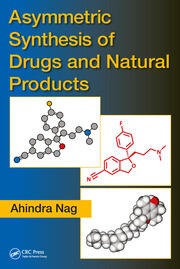
Asymmetric synthesis of drugs and natural products
Focuses on different techniques of asymmetric synthesis of important compounds, such as drugs and natural products. It gives insightful information on recent asymmetric synthesis by Inorganic, Organic and Enzymatic combinations

Asymmetric organo-metal catalysis : Concepts, principles, and applications
In Asymmetric Organo-Metal Catalysis: Concepts, Principles, and Applications, accomplished chemist Liu-Zhu Gong delivers a comprehensive discussion of how to design efficient organo/metal combined catalyst systems, new cooperatively catalyzed asymmetric reactions, relay catalytic cascades, and multicomponent reactions. The distinguished author covers critical topics, like the combined catalysis of chiral phase transfer catalysts, enamine, iminium, nucleophilic Lewis base, or Bronsted acids with metal complexes, while also covering the cooperative catalysis of photocatalysts and organocatalysts.
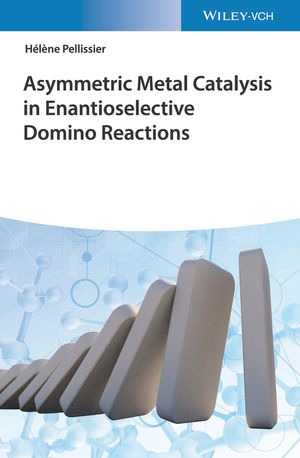
Asymmetric metal catalysis in Enantioselective Domino reactions
Collects the major progress in the field of enantioselective one-, two-, and multicomponent domino reactions promoted by chiral metal catalysts. It clearly illustrates how enantioselective metal-catalyzed processes constitute outstanding tools for the development of a wide variety of fascinating one-pot asymmetric domino reactions, thereby allowing many complex products to be easily generated from simple materials in one step. The book also strictly follows the definition of domino reactions by Tietze as single-, two-, as well as multicomponent transformations.

Asymmetric hydrogenation and transfer hydrogenation
Details its complex subject matter clearly and plainly and covers everything from catalyst development and reactions to mechanisms and applications in academia and industry. The papers included within come from many of the leading voices in their respective fields and represent the newest and best research available today.
Asphaltenes, heavy oils, and petroleomics
Petroleomics is the prediction of all properties of petroleum based on the Petroleome, or complete listing of all components in a given crude oil. As it is developed, petroleomics will lead petroleum science into a bright new future, and it is the major focus of this book. A necessary step has been to resolve the molecular size and structure of asphaltene and its hierarchical aggregate structures, as well as the dynamics of asphaltenes. This is especially important for heavy oils. Flow assurance concerns and interfacial science are also treated. The technological development of downhole fluid analysis addresses the most important issues in deepwater production of oil.
Aspects of mathematical modelling : Applications in science, medicine, economics and management
The construction of mathematical models is an essential scientific activity. Mathematics has long been associated with developments in the exact sciences and engineering, but more recently mathematical modelling has been used to investigate complex systems that arise in many other fields. The contributors to this book demonstrate the application of mathematics to modern research topics in ecology and environmental science, health and medicine, phylogenetics and neural networks, theoretical chemistry, economics and management. The reader will find some review papers outlining current research directions in hot topics such as pattern formation and applications to medicine, and more targeted research papers on current developments in the various disciplines included.
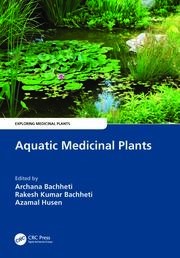
Aquatic medicinal plants
The use of medicinal plants in herbal and modern medicine has gained popularity over the last few decades due to consumers taking more natural approaches to medicine. Aquatic medicinal plants are rich in bioactive compounds and demonstrate various commercial, nutraceutical, and biological applications. Aquatic Medicinal Plants offers the reader a wealth of information on uses of bioactive components of these plants, along with crucial references, and explains their traditional uses, phytochemistry, and pharmacological properties.
