



الصفحة 46
الصفحة 46
Asian economy and finance : A post-crisis perspective
Topicality of Asian economy has refused to fade for almost four decades; if anything it has been levitating. The Asian economy has changed markedly since the economic and financial crisis of 1997-1998 and is continuing to evolve. As a scholarly subject matter, Asian economy has not stopped attracting academicians, policy mandarins, decision makers in the arena of business and students of Asian economy. The Asian crisis was a cataclysmic event for the region and brought to the surface several systemic limitations, like those in the financial sector, corporate governance, regulatory oversight, legal framework, and exchange rate management. Managers of Asian economy need to get to the bottom of these acutely problematical systemic issues. Additionally, Asian economies need to change with the demands of time and devise their post-crisis development strategy. Asia’s growth model, that served it so well for four decades, is overdue for renewal so that it can re-strengthen its bonds with the ever-evolving regional and global economic reality. The old growth model is likely to be less relevant and effective in the post-crisis future of the Asian economies. It is sure to run into the wall of diminishing returns.

Asian Digital Libraries. Looking Back 10 Years and Forging New Frontiers ; 10th International Conference on Asian Digital Libraries, ICADL 2007, Hanoi, Vietnam, December 10-13, 2007. Proceedings
The theme reflects upon the growth of the digital libraries community and explores new areas that the community could delve into in the coming years.

Arum palaestenium in cancer therapies
Cancer is a very complicated sequence of disease conditions progressing gradually with a generalized loss of growth control.1–3 There were only a few options of cancer treatment for patients for many decades which include surgery, radiation therapy, and chemotherapy as single treatments or in combination.4,5 But recently, many pathways involved in cancer therapy progression and how they can be targeted has improved dramatically, with combinatorial strategies, involving multiple targeted therapies or “traditional” chemotherapeutics, such as the taxanes and platinum compounds, being found to have a synergistic effect.6 New approaches, such as drugs, biological molecules, and immune-mediated therapies, are being used for treatment.
Artificial life models in software
Artificial Life Models in Software presents software tools, environments and realities dealing with creation, imitation and analysis of artefactual, virtual and living forms, written by those who personally design and produce software, hardware and art installations in artificial life, simulated complex systems and virtual worlds. This timely volume offers a nearly exhaustive overview and original analysis of major non-profit artificial life software packages. The carefully selected topics include: · simulation of real and imaginary life forms and their evolution · self-organization · emergent behaviours · swarm intelligence · evolutionary robotics · agent-based simulations · adaptive, complex and biologically inspired ecosystems · creative computer art There has long been a need within the academic and research community for an informal introduction and guidance to modern software tools for modelling and simulation of life-like phenomena – Artificial Life Models in Software fills this gap and provides invaluable information to both professional and amateur readers, offering detailed reviews of contemporary software for artificial life.
Artificial intelligence-based Internet of things systems
Discusses the evolution of future generation technologies through Internet of Things (IoT) in the scope of Artificial Intelligence (AI). The main focus of this volume is to bring all the related technologies in a single platform, so that undergraduate and postgraduate students, researchers, academicians, and industry people can easily understand the AI algorithms, machine learning algorithms, and learning analytics in IoT-enabled technologies. This book uses data and network engineering and intelligent decision support system-by-design principles to design a reliable AI-enabled IoT ecosystem and to implement cyber-physical pervasive infrastructure solutions. This book brings together some of the top IoT-enabled AI experts throughout the world who contribute their knowledge regarding different IoT-based technology aspects. Addresses the complete functional framework workflow in AI-enabled IoT ecosystem; Presents intelligent object identification and object discovery through the IoT ecosystem and its implications to the real world ;Explores security and privacy issues and trustworthy machine learning related to data-intensive technologies in AI-based IoT ecosystems.

Artificial intelligence techniques in hydrology and water resources management
The sustainable management of water cycles is crucial in the context of climate change and global warming. It involves managing global, regional, and local water cycles, as well as urban, agricultural, and industrial water cycles, to conserve water resources and their relationships with energy, food, microclimates, biodiversity, ecosystem functioning, and anthropogenic activities. Hydrological modeling is indispensable for achieving this goal, as it is essential for water resources management and the mitigation of natural disasters. In recent decades, the application of artificial intelligence (AI) techniques in hydrology and water resources management has led to notable advances. In the face of hydro-geo-meteorological uncertainty, AI approaches have proven to be powerful tools for accurately modeling complex, nonlinear hydrological processes and effectively utilizing various digital and imaging data sources, such as ground gauges, remote sensing tools, and in situ Internet of Things (IoT) devices.
Artificial intelligence in higher education : A practical approach
Highlights the broad field of artificial intelligence applications in education, regarding any type of artificial intelligence that is correlated with education. It discusses learning methodologies, intelligent tutoring systems, intelligent student guidance and assessments, intelligent education chatbots, and artificial tutors and presents the practicality and applicability implications of AI in education. The book offers new and current research along with case studies showing the latest techniques and educational activities. Will find interest with academicians which includes teachers, students of various disciplines, higher education policymakers who believe in transforming the education industry, research scholars who are pursuing their Ph.D. or Post Doc. in the field of Education Technology, Education, and Learning, etc. and those working in the area of Education Technology and Artificial Intelligence such as industry professionals in education management and e-learning companies
Artificial Intelligence for Cloud and Edge Computing
Discusses the future possibilities of AI with cloud computing and edge computing. Aims to conduct analyses, implementation and discussion of many tools (of artificial intelligence, machine learning and deep learning and cloud computing, fog computing, and edge computing including concepts of cyber security) for understanding integration of these technologies. Readers can quickly get an overview of these emerging topics and get many ideas of the future of AI with cloud, edge, and in many other areas. Topics include machine and deep learning techniques for Internet of Things based cloud systems; security, privacy and trust issues in AI based cloud and IoT based cloud systems; AI for smart data storage in cloud-based IoT; blockchain based solutions for AI based cloud and IoT based cloud systems.This book is relevent to researchers, academics, students, and professionals. Presents fusion of cloud computing services and AI technology for bringing a significant change in the technology industry; Includes self-assessment problems for increasing knowledge of real world problems, i.e., how AI and cloud/edge computing can change business for the better; Provides innovative results of integrations of AI in other applications such as healthcare, finance, manufacturing, transportation, agriculture, etc.

Artificial intelligence and symbolic computation ; 8th International Conference, AISC 2006, Beijing, China, September 20-22, 2006, Proceedings
This book constitutes the refereed proceedings of the 8th International Conference on Artificial Intelligence and Symbolic Computation, AISC 2006, held in Beijing, China in September 2006. The 18 revised full papers presented together with 4 invited papers were carefully reviewed and selected from 39 submissions. Based on heuristics and mathematical algorithmics, artificial intelligence and symbolic computation are two views and approaches for automating (mathematical) problem solving. The papers address all current aspects in the area of symbolic computing and AI: mathematical foundations, implementations, and applications in industry and academia. The papers are organized in topical sections on artificial intelligence and theorem proving, symbolic computation, constraint satisfaction/solving, and mathematical knowledge management.
Artificial Intelligence and International Economic Law : Disruption, Regulation, and Reconfiguration
This book was finalized while countries around the world were still confronting a global public health crisis caused by the COVID-19 pandemic. Many came to rely on digital services as an infrastructure for social interaction and professional endeavors, including academic and educational work. The pandemic seems to have precipitated a further shift towards digital technologies and artificial intelligence. It is our hope that this book will contribute to an informed discussion about the relevance of and implications for international economic law beyond the pandemic"

Artificial intelligence : The revolution of drug discovery
The successful application of AI is dependent on the availability of high-quality data, the addressing of ethical concerns, and the recognition of the limitations of AI-based approaches. Moreover artificial intelligence has been a game changer in the past decade. AI proved his worth by making the impossible possible in a short period of time. The health care industry has adopted artificial intelligence technology to deal with the ever-changing therapeutic and drug requirements of patients every day, as we encounter new viruses for which no antidote has been prepared, such as the Corona virus, diseases such as malaria, and the most important problem is the resistance to antibiotics by superbugs that are constantly developing new resistance mechanisms causing harm and confusion.
Artificial Intelligence : Applications and innovations
It's about the science of artificial intelligence (AI). AI is the study of the design of intelligent computational agents. This book provides a valuable resource for researchers, scientists, professionals, academicians and students dealing with the new challenges and advances in the areas of AI and innovations. This book also covers a wide range of applications of machine learning such as fire detection, structural health and pollution monitoring and control. Provides insight into prospective research and application areas related to industry and technology / Discusses industry- based inputs on success stories of technology adoption / Discusses technology applications from a research perspective in the field of AI / Provides a hands- on approach and case studies for readers of the book to practice and assimilate learning
Artificial economics : Agent-based methods in finance, game theory and their applications
The purpose of this book is to give an up-to date view of the scientific production in the fields of Agent-based Computational Economics (mainly in Market Finance and Game Theory). Based on communications given at AE'2005 (Lille, USTL, France), this book offers a wide panorama of recent advances in ACE (both theoretical and methodological) that will interest academics as well as practitioners.
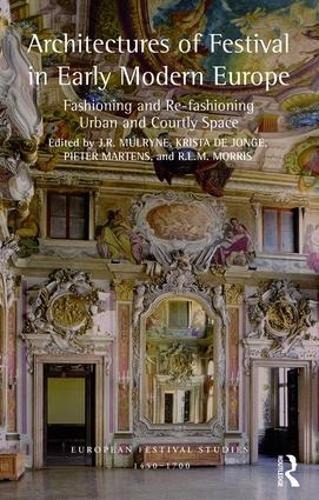
Architectures of festival in early modern Europe : Fashioning and re-fashioning urban and courtly space
Draws on up-to-date research by a Europe-wide group of academic scholars and museum and gallery curators to provide a unique, intellectually-stimulating and beautifully-illustrated account of temporary architecture created for festivals of the sixteenth and seventeenth centuries, together with permanent architecture pressed into service for festival occasions across major European locations including Italian, French, Austrian, Scottish and German.

Architecture of computing systems - ARCS 2006 ; 19th International Conference, Frankfurt / Main, Germany, March 13-16, 2006, Proceedings
Technological progress is one of the driving forces behind the dramatic devel- mentofcomputersystemarchitecturesoverthe pastthreedecades.Eventhough it is quite clear that this development cannot only be measured by the ma- mum number of components on a chip, Moore’s Law may be and is often taken as a simple measure for the non-braked growth of computational power over the years. The more components are realizable on a chip, the more innovative and unconventional ideas can be realized by system architects. As a result, research in computer system architectures is more exciting than ever before. This book coversthe trends that shape the ?eld of computer system archit- tures.
Architecture and design for industry 4.0 : Theory and practice
The book is structured into three sections (research, practice, and technologies), with the goal of creating a new framework useful for widespread awareness necessary to initiate technology transfer processes for the benefit of the public sector, universities, research centers, and innovative companies, and a new professional figure capable of controlling the entire process is essential. Thus, the book chapters arouse a series of relevant topics such as computational and parametric design, performance-based architecture, data-driven design strategies, parametric environmental design and analysis, computational and parametric structural design and analysis
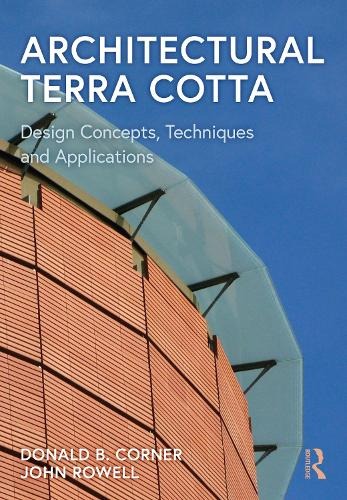
Architectural Terra Cotta : Design concepts, techniques and applications
Examines the evolution of terra cotta and prepares architects and builders to make new, creative uses of the timeless material. Terra cotta is among the oldest of manufactured building products, yet it has once again become a material of choice in contemporary façade design. From the walls of Babylon to high performance rainscreens, terra cotta claddings have repeatedly proven to be technically superior and aesthetically triumphant. Understanding the evolution of terra cotta prepares architects to add new, creative chapters to a rich history.
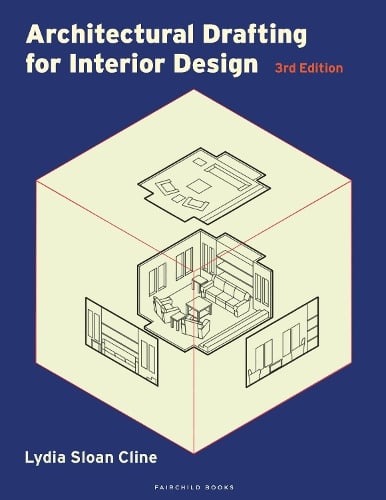
Architectural Drafting for Interior Design
Incorporates material and examples that are meaningful to today's interior designers. Beginning interior designers will learn how to communicate their ideas graphically with a resource that is designed specifically for them. This book addresses their needs by focusing on topics independent of CAD, such as how to draw a floor plan, how to use it to create an interior elevation, and how to understand the relationship between 2D and 3D drawings. Written with NCIDQ, CIDA and NKBA requirements in mind, this book will provide readers with a strong, standards-based foundation in interior design.
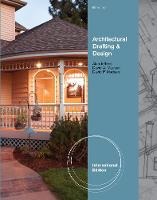
Architectural drafting and design
Ideal book for all architectural drafters and CAD operators, whether beginning, intermediate, or advanced. An important feature of this best--seller is its step--by--step instructions for the design and layout of each type of drawing associated with a complete set of architectural plans, with projects that can be completed using either CAD or manual drawing methods. The basics of residential design, commercial drafting, basic materials used for construction, common construction methods, and drawings typically associated with commercial construction are all covered in this comprehensive book, which is written to meet the most recent editions of IRC and IBC. Readers will be introduced to the various types of projects that a designer or architect is likely to complete during the actual design process and will gain the knowledge needed to complete the drawings required by most municipalities to obtain a building permit for a single--family residence.
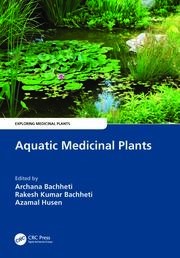
Aquatic medicinal plants
The use of medicinal plants in herbal and modern medicine has gained popularity over the last few decades due to consumers taking more natural approaches to medicine. Aquatic medicinal plants are rich in bioactive compounds and demonstrate various commercial, nutraceutical, and biological applications. Aquatic Medicinal Plants offers the reader a wealth of information on uses of bioactive components of these plants, along with crucial references, and explains their traditional uses, phytochemistry, and pharmacological properties.
