



الصفحة 42
الصفحة 42

Automata, Languages and Programming ; 35th International Colloquium, ICALP 2008, Reykjavik, Iceland, July 7-11, 2008, Proceedings, Part I
The two-volume set LNCS 5125 and LNCS 5126 constitutes the refereed proceedings of the 35th International Colloquium on Automata, Languages and Programming, ICALP 2008, held in Reykjavik, Iceland, in July 2008.

Autoformation et aide au diagnostic en hématologie avec le logiciel ADH = Self-study and diagnostic aid in hematology with ADH software
The software includes a rich iconography on blood and marrow cells which will complement the knowledge in cytology of hematologists. Certain cytological abnormalities encountered in certain pathologies are also presented.
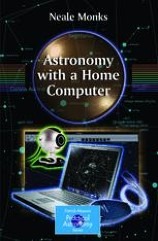
Astronomy with a home computer
Here is a one-volume guide to just about everything computer-related for amateur astronomers!Today’s amateur astronomy is inextricably linked to personal computers. Computer-controlled "go-to" telescopes are inexpensive. CCD and webcam imaging make intensive use of the technology for capturing and processing images. Planetarium software provides information and an easy interface for telescopes. The Internet offers links to other astronomers, information, and software. The list goes on and on.

Astronomical image and data analysis
With information and scale as central themes, this comprehensive survey explains how to handle real problems in astronomical data analysis using a modern arsenal of powerful techniques. It treats those innovative methods of image, signal, and data processing that are proving to be both effective and widely relevant. The coverage includes chapters or appendices on: detection and filtering; image compression; multichannel, multiscale, and catalog data analytical methods; wavelets transforms, Picard iteration, and software tools. This second edition of Starck and Murtagh's highly appreciated reference again deals with topics that are at or beyond the state of the art. It presents material which is more algorithmically oriented than most alternatives and broaches new areas like ridgelet and curvelet transforms. Throughout the book various additions and updates have been made.

Assembly language for x86 processors ; 8th ed.
Focuses on its primary goal, to teach students how to write and debug programs at the machine level. It will never replace a complete book on computer architecture, but it does give students the first-hand experience of writing software in an environment that teaches them how a computer works. Our premise is that students retain knowledge better when theory is combined with experience. In an engineering course, students construct prototypes; in a computer architecture course, students should write machine-level programs.

Assembly Language for x86 Processors ; 7th ed.
Focuses on its primary goal, to teach students how to write and debug programs at the machine level. It will never replace a complete book on computer architecture, but it does give students the first-hand experience of writing software in an environment that teaches them how a computer works. Our premise is that students retain knowledge better when theory is combined with experience. In an engineering course, students construct prototypes; in a computer architecture course, students should write machine-level programs.
ASP.NET MVC Framework Preview
The ASP.NET MVC framework is the latest evolution of Microsoft's ASP.NET web platform. It introduces a radical high–productivity programming model, promotes cleaner code architecture, supports test–driven development, and provides powerful extensibility, combined with all the benefits of ASP.NET 3.5. ASP.NET MVC Framework Preview is a first look at this technology's main features, designed to give you a head start getting to grips with this powerful new technology.
Artificial Mind System : Kernel Memory Approach
This book is written from an engineer's perspective of the mind. "Artificial Mind System" exposes the reader to a broad spectrum of interesting areas in general brain science and mind-oriented studies. In this research monograph a picture of the holistic model of an artificial mind system and its behaviour is drawn, as concretely as possible, within a unified context, which could eventually lead to practical realisation in terms of hardware or software. With a view that "the mind is a system always evolving", ideas inspired by many branches of studies related to brain science are integrated within the text, i.e. artificial intelligence, cognitive science / psychology, connectionism, consciousness studies, general neuroscience, linguistics, pattern recognition / data clustering, robotics, and signal processing.
Artificial life models in software
Artificial Life Models in Software presents software tools, environments and realities dealing with creation, imitation and analysis of artefactual, virtual and living forms, written by those who personally design and produce software, hardware and art installations in artificial life, simulated complex systems and virtual worlds. This timely volume offers a nearly exhaustive overview and original analysis of major non-profit artificial life software packages. The carefully selected topics include: · simulation of real and imaginary life forms and their evolution · self-organization · emergent behaviours · swarm intelligence · evolutionary robotics · agent-based simulations · adaptive, complex and biologically inspired ecosystems · creative computer art There has long been a need within the academic and research community for an informal introduction and guidance to modern software tools for modelling and simulation of life-like phenomena – Artificial Life Models in Software fills this gap and provides invaluable information to both professional and amateur readers, offering detailed reviews of contemporary software for artificial life.

Artificial intelligence in theory and practice ; IFIP 19th World Computer Congress, TC 12: IFIP AI 2006 Stream, August 21-24, 2006, Santiago, Chile
The IFIP series publishes state-of-the-art results in the sciences and technologies of information and communication. The scope of the series includes: foundations of computer science; software theory and practice; education; computer applications in technology; communication systems; systems modeling and optimization; information systems; computers and society; computer systems technology; security and protection in information processing systems; artificial intelligence; and human-computer interaction. Proceedings and post-proceedings of referred international conferences in computer science and interdisciplinary fields are featured.

Artificial intelligence in HCI ; 1st International conference, AI-HCI 2020, Held as Part of the 22nd HCI International Conference, HCII 2020, Copenhagen, Denmark, July 19–24, 2020, Proceedings
This book constitutes the refereed proceedings of the First International Conference on Artificial Intelligence in HCI, AI-HCI 2020, held as part of the 22nd International Conference on Human-Computer Interaction, HCII 2020, in July 2020. The conference was planned to be held in Copenhagen, Denmark, but had to change to a virtual conference mode due to the COVID-19 pandemic.

Artificial intelligence hardware design : Challenges and solutions
Learn foundational and advanced topics in Neural Processing Unit design with real-world examples from leading voices in the field. A thorough introduction to neural networks and neural network development history, as well as Convolutional Neural Network (CNN) models Explorations of various parallel architectures, including the Intel CPU, Nvidia GPU, Google TPU, and Microsoft NPU, emphasizing hardware and software integration for performance improvement Discussions of streaming graph for massive parallel computation with the Blaize GSP and Graphcore IPU An examination of how to optimize convolution with UCLA Deep Convolutional Neural Network accelerator filter decomposition
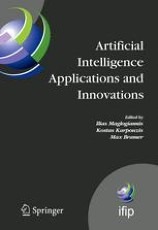
Artificial intelligence applications and innovations ; 3rd IFIP Conference on Artificial Intelligence Applications and Innovations (AIAI), 2006, June 7-9, 2006, Athens, Greece
The IFIP series publishes state-of-the-art results in the sciences and technologies of information and communication. The scope of the series includes: foundations of computer science; software theory and practice; education; computer applications in technology; communication systems; systems modeling and optimization; information systems; computers and society; computer systems technology; security and protection in information processing systems; artificial intelligence; and human-computer interaction. Proceedings and post-proceedings of referred international conferences in computer science and interdisciplinary fields are featured. These results often precede journal publication and represent the most current research.

Artificial intelligence applications and innovations ; 16th IFIP WG 12.5 International Conference, AIAI 2020, Neos Marmaras, Greece, June 5–7, 2020, Proceedings, Part I
This 2 volume-set of IFIP AICT 583 and 584 constitutes the refereed proceedings of the 16th IFIP WG 12.5 International Conference on Artificial Intelligence Applications and Innovations, AIAI 2020, held in Neos Marmaras, Greece, in June 2020.* The 70 full papers and 5 short papers presented were carefully reviewed and selected from 149 submissions. They cover a broad range of topics related to technical, legal, and ethical aspects of artificial intelligence systems and their applications

Artificial intelligence and soft computing ; 19th International conference, ICAISC 2020, Zakopane, Poland, October 12-14, 2020, Proceedings, Part II
The two-volume set LNCS 12415 and 12416 constitutes the refereed proceedings of of the 19th International Conference on Artificial Intelligence and Soft Computing, ICAISC 2020, held in Zakopane, Poland*, in October 2020. The 112 revised full papers presented were carefully reviewed and selected from 265 submissions. The papers included in the first volume are organized in the following six parts: neural networks and their applications; fuzzy systems and their applications; evolutionary algorithms and their applications; pattern classification; bioinformatics, biometrics and medical applications; artificial intelligence in modeling and simulation. The papers included in the second volume are organized in the following four parts: computer vision, image and speech analysis; data mining; various problems of artificial intelligence; agent systems, robotics and control.

Artificial intelligence : Theories, models and applications ; 5th Hellenic Conference on AI, SETN 2008, Syros, Greece, October 2-4, 2008. Proceedings
This book constitutes the refereed proceedings of the 5th Hellenic Conference on Artificial Intelligence, SETN 2008, held at Syros, Greece in October 2008.

Artificial evolution ; 8th International Conference, Evolution artificielle, EA 2007, Tours, France, October 29-31, 2007, revised selected papers
This book constitutes the thoroughly refereed post-conference proceedings of the 8th International Conference on Artificial Evolution, EA 2007, held in Tours, France in October 2007.
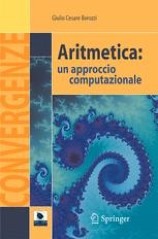
Aritmetica : Un approccio computazionale = Arithmetic : A computational approach
Intended to be a contribution to the algorithmic re-reading of some classic topics of elementary number theory and an invitation to more demanding reading, according to the indications provided by the bibliography annexed to it.
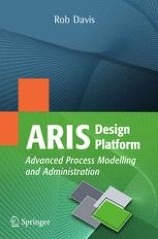
ARIS design platform : Advanced process modelling and administration
ARIS is ranked as the leading Business Process Modelling tool in the Gartner Quadrant for Business Process Analysis and Optimization. The ARIS Design Platform is being used as a business process management (BPM) tool for projects in BPM, quality management, business analysis and design, software development, implementation of service-oriented architectures and so forth. Following on from Rob Davis’ successful introductory text, ARIS Design Platform: Getting Started with BPM, this new book covers in detail some of the more advanced concepts of using ARIS Business Architect in the new ARIS 7 Design Platform. Written in a reader-friendly style, it contains detailed explanations of key concepts combined with numerous examples, hints and tips gained from many years of practical experience of using ARIS.
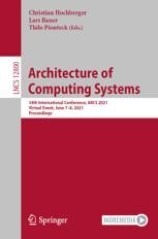
Architecture of computing systems ; 34th International Conference, ARCS 2021, Virtual Event, June 7–8, 2021, Proceedings
This book constitutes the proceedings of the 34th International Conference on Architecture of Computing Systems, ARCS 2021, held virtually in July 2021. The 12 full papers in this volume were carefully reviewed and selected from 24 submissions. 2 workshop papers (VEFRE) are also included. ARCS has always been a conference attracting leading-edge research outcomes in Computer Architecture and Operating Systems, including a wide spectrum of topics ranging from fully integrated, self-powered embedded systems up to high-performance computing systems. It also provides a platform covering newly emerging and cross-cutting topics, such as autonomous and ubiquitous systems, reconfigurable computing and acceleration, neural networks and artificial intelligence. The selected papers cover a variety of topics from the ARCS core domains, including heterogeneous computing, memory optimizations, and organic computing.
