



الصفحة 4
الصفحة 4

Optical and Digital Techniques for Information Security
Optical and Digital Techniques for Information Security is the first book in a series focusing on Advanced Sciences and Technologies for Security Applications. This book encompases the results of research investigation and technologies used to secure, verify, recognize, track, and authenticate objects and information from theft, counterfeiting, and manipulation by unauthorized persons and agencies. This Information Security book will draw on the diverse expertise in optical sciences and engineering, digital image processing, imaging systems, information processing, computer based information systems, sensors, detectors, and biometrics to report innovative technologies that can be applied to information security issues.

Numerical Simulation of Mechatronic Sensors and Actuators
The second edition of this book fully preserves the character of the first edition to combine the detailed physical modeling of mechatronic systems and their precise numerical simulation using the Finite Element (FE) method. Most of the text and general appearance of the previous edition were retained, while the coverage was extended and the presentation improved. A large part of the book describes the application of the developed numerical calculation schemes to industrial problems, e.g.: analysis and optimization of electrodynamic loudspeakers. In these parts, new computational methods are included, and last but not least, this new edition contains a new chapter on computational aeroacoustics to study the complex phenomenon of flow induced noise.

New developments in nanosensors for pharmaceutical analysis ; 1st ed.
Presents an overview of developments in nanosensor usage in pharmaceutical analysis, thereby helping pharmaceutical companies attain reliable, precise, and accurate analysis of pharmaceuticals. This book presents very simple, precise, sensitive, selective, fast, and relatively inexpensive methods for pre-treatment, prior to analysis. These methods may be considered for further application in clinical studies and assays. The book includes the manufacturing of sensors for pharmaceutical analysis at nano- or smaller scales, and gives simple and relatable designs for the fabrication of sensors.

Networked Embedded Sensing and Control ; Workshop NESC'05 : University of Notre Dame, USA, October 2005 Proceedings
Recent technological developments in sensing, communications, control and computation have created an emerging class of complex systems hereon called networked embedded systems. These systems can be roughly described as collections of spatially distributed sensors, actuators and controllers whose behaviour is coordinated through wired or wireless communication links. This integration between different technologies and scientific domains presents new and challenging fundamental problems underlying the theoretical foundations for this class of systems. This workshop aims at bringing together researchers working of different aspects of networked embedded systems in order to exchange research experiences and to identify the main scientific challenges in this exciting new area.

Nanotechnology-Enabled Sensors
Nanotechnology provides us with tools to create functional materials, devices, and systems by controlling materials at the atomic and molecular scales, and at the same time make use of novel properties and phenomena. Considering that most chemical and biological sensors, as well as many physical sensors, depend on interactions occurring within the nano scale range, the impact that nanotechnology will have on the sensor world is significant. Nanotechnology enabled sensors find applications in several novel fields such as sensing single molecules, bio-hazards, toxic chemicals, gas sensors, process control and diagnostics.

Nanotechnology in Intelligent Food Packaging
This book is a state-of-the-art exposition of nanotechnology and food packaging which is undergoing rapid advancement. This book is specially designed with an emphasis on the state-of-the-art in nanotechnology and food packaging. It offers fascinating techniques for producing smart and active food packaging and also discusses its toxicity and the role that nanosensors play in detecting different pathogens in food packaging. The concluding chapters also explain recent developments concerning the incorporation of health supplements in food packaging and their future role in producing intelligent food packaging.

Nanostructured and advanced materials for applications in sensor, optoelectronic and photovoltaic technology ; Proceedings of the NATO Advanced Study Institute on nanostructured and advanced materials for applications in sensors, optoelectronic and photovoltaic technology ; Sozopol, Bulgaria, 6-17 September 2004
Nanotechnology is an emerging scientific field receiving significant worldwide attention. On a nanometer scale, materials or structures may possess new and unique physical properties. Some of these are now known to the scientific community, but there may well be many properties not yet known to us, rendering it as a fascinating area of research and a suitable subject for a NATO ASI. Yet another aspect of the field is the possibility for creating meta-stable phases with unconventional properties and the ultra-miniaturization of current devices, sensors, and machines. Such nanotechnological and related advanced materials have an extremely wide range of potential applications, viz. nanoscale electronics, sensors, optoelectronics, photonics, nano-biological systems, na- medicine, energy storage systems, etc. This is a wide-ranging subject area and therefore requires the formation of multi-disciplinary teams of physicists, chemists, materials scientists, engineers, molecular biologists, pharmacologists, and others to work together on the synthesis and processing of materials and structures, the understanding of their physical properties, the design and fabrication of devices.

Nanoscale Assembly : Chemical Techniques
Recent advances have pushed the limits of lithography firmly into the sub-100 nm domain, with smallest feature sizes around 10 nm. However, compared to living organisms, devices fabricated using nanolithography are not nearly as complex, as they are essentially 2D and contain only a limited number of chemical elements. For centuries, Nature has been a major inspiration for science. First of all to learn how Life functions at cellular level, but increasingly, as a blueprint for designing non-natural devices where the building blocks and their assembly are inspired by biological examples. The key tool in translating these examples into the domain of engineering, has been self-assembly or self-organization. This book gathers a spectrum researchers who have not only furthered our knowledge of self-assembly using small molecules, polymers and colloidal particles as building blocks, but who have also shown it to be a practical tool in the assembly of an astonishing variety of devices, ranging from molecular electronics to biosensors.

Nanomedicine : Innovations, applications, and breakthroughs in the quest for health and medicine's future
Revolutionizing healthcare, by providing innovative solutions to some of the most challenging issues in medicine. This book provides an in-depth overview of nanoscale materials and devices that are advancing diagnostics, therapeutics, and personalized care in medical field. It focuses on nanomedicine’s impact on vaccine efficacy as well as innovative diagnosis and therapy for various type of cancer while addressing concerns about safety and toxicity. It examines how nanotechnology is enhancing drug delivery by precisely targeting medicines to specific cells or tissues, thereby increasing treatment efficacy with reduced side effects. Explores how nanoparticles are advancing medical imaging for earlier and more accurate disease detection, and how nanosensors allow real-time biomarker monitoring for faster and more reliable diagnoses. Additionally, it explores nanomedicine's role in managing cardiovascular diseases, improving bone health through nano-extracellular vesicles, and regenerative medicine, including ongoing clinical trials and ethical considerations.

Nanobiosensors : From design to applications
Nanobiosensors - From Design to Applications covers several aspects of biosensors beginning from the basic concepts to advanced level research. It will help to bridge the gap between various aspects of biosensors development technology and applications. It covers biosensors related material in broad spectrum such as basic concepts, biosensors & their classification, biomarkers & their role in biosensors, nanostructures-based biosensors, applications of biosensors in human diseases, drug detection, toxins, and smart phone based biosensors.

Multi-Sensor Data Fusion : An Introduction
This textbook provides a comprehensive introduction to the theories and techniques of multi-sensor data fusion. It is aimed at advanced undergraduate and first-year graduate students in electrical engineering and computer science, as well as researchers and professional engineers. The book is intended to be self-contained. No previous knowledge of multi-sensor data fusion is assumed, although some familiarity with the basic tools of linear algebra, calculus and simple probability theory is recommended.

Multimedia technology and enhanced learning ; 2nd EAI International conference, ICMTEL 2020, Leicester, UK, April 10-11, 2020, Proceedings, Part II
This two-volume book constitutes the refereed proceedings of the Second International Conference on Multimedia Technology and Enhanced Learning, ICMTEL 2020, held in Leicester, United Kingdom, in April 2020. Due to the COVID-19 pandemic all papers were presented in YouTubeLive. The 83 revised full papers have been selected from 158 submissions. They describe new learning technologies which range from smart school, smart class and smart learning at home and which have been developed from new technologies such as machine learning, multimedia and Internet of Things.
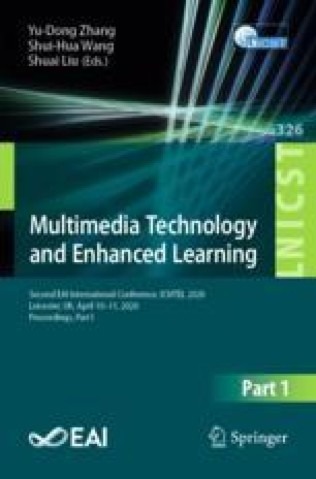
Multimedia Technology and Enhanced Learning ; 2nd EAI International Conference, ICMTEL 2020, Leicester, UK, April 10-11, 2020, Proceedings, Part I
This two-volume book constitutes the refereed proceedings of the Second International Conference on Multimedia Technology and Enhanced Learning, ICMTEL 2020, held in Leicester, United Kingdom, in April 2020. Due to the COVID-19 pandemic all papers were presented in YouTubeLive. The 83 revised full papers have been selected from 158 submissions. They describe new learning technologies which range from smart school, smart class and smart learning at home and which have been developed from new technologies such as machine learning, multimedia and Internet of Things.

Multimedia big data computing for IoT applications : Concepts, paradigms and solutions
This book considers all aspects of managing the complexity of Multimedia Big Data Computing (MMBD) for IoT applications and develops a comprehensive taxonomy. It also discusses a process model that addresses a number of research challenges associated with MMBD, such as scalability, accessibility, reliability, heterogeneity, and Quality of Service (QoS) requirements, presenting case studies to demonstrate its application. Further, the book examines the layered architecture of MMBD computing and compares the life cycle of both big data and MMBD. Written by leading experts, it also includes numerous solved examples, technical descriptions, scenarios, procedures, and algorithms.

Multifunctional systems for combined delivery, biosensing and diagnostics
Multifunctional Systems for Combined Delivery, Biosensing, and Diagnostics explores how multifunctional nanocarriers are being used in combined delivery and diagnostics in contemporary medicine. Particular attention is given to efforts to i) reduce the side effects of therapeutic agents, ii) increase the pharmacological effect, and iii) improve aqueous solubility and chemical stability of different therapeutic agents. The chapters focus on applications of nanostructured materials and nanocarriers, highlighting how these can be used effectively in both diagnosis and delivery.

Molecular Sensors for Cardiovascular Homeostasis
This book reveals state-of-the-science of several newly discovered ion channel families and their role in the pathogenesis of cardiovascular diseases.It offers comprehensive and up-to-date information for a deeper understanding of the relationship between macro- and micro-environments, ion channels, and pathophysiological responses, and for developing novel therapies for treating devastating cardiovascular illnesses.

Molecular microbiology of heavy metals
Molecular Microbiology of Heavy Metals includes chapters on allocation of metals in cells, metal transporter, storage and metalloregulatory proteins, cellular responses to metal ion stress, transcription of genes involved in metal ion homeostasis, uptake of essential metals, metal efflux and other detoxification mechanisms. Also discussed are metal bioreporters for the nanomolar range of concentration and tools to address the metallome. Chapters in the second part cover specific metals such as Fe, Mn, Cu, Ni, Co, Zn and Mo as key nutrient elements and Ag, As, Cd, Hg and Cr as toxic elements.

Molecular bio-sensors and the role of metal ions
Represents a milestone of contemporary progress and understanding of molecular bio-sensors for metal ions. It is bringing together the latest research in academia and industry, and it also emphasizes the spectrum of evolving regulations from regulatory bodies. This vibrant research area is covered by 31 internationally recognized experts. The impact of MILS-23 is manifested by more than 1300 references and close to 200 figures, more than 100 of them in color; further information is summarized in several tables. In conclusion, Volume 23 significantly advances our understanding of Molecular Bio-Sensors, it is therefore an essential resource for scientists working in the wide range from earth sciences, material sciences, physics, pharmacology, enzymology, analytical, organic, and inorganic biochemistry all the way through to medicine including the clinic.

Modern Food Microbiology
With 30 revised and updated chapters, the new edition of this classic text brings benefits to professors and students alike who will find new sections on proteobacteria, bottled water, food sanitizers (eletrolyzed oxidating water, ozone, chlorine, activin, chitosans, endolysins, etc.), bicontrol, biosensors quorum sensing, molecular genetic methods of analysis, food safety objectives, noroviruses, and prions. The book builds on the trusted and established sections on food preservation by modified atmosphere, high pressure and pulsed electric field processing, food-borne pathogens, food regulations, fresh-cut produce, new food products, and risk assessment and analysis. In-depth references, appendixes, illustrations, index and thorough updating of taxonomies make this an essential for every food scientist.

Modelling and Optimization of Biotechnological Processes : Artificial Intelligence Approaches
The book begins with a historical introduction to the field of bioprocess control based on artificial intelligence approaches, followed by two chapters covering the optimization of fed-batch culture using genetic algorithms. Online biomass soft-sensors are constructed in Chapter 4 using recurrent neural networks. The bioprocess is then modelled in Chapter 5 by cascading two soft-sensor neural networks. Optimization and validation of the final product are detailed in Chapters 6 and 7. The general conclusions are drawn in Chapter 8.
