


تحسين النتائح
ترتيب حسب
من
الى


Recent years have seen spectacular advances in the field of circadian biology. These have attracted the interest of researchers in many fields, including endocrinology, neurosciences, cancer, and behavior. By integrating a circadian view within the fields of endocrinology and metabolism, researchers will be able to reveal many, yet-unsuspected aspects of how organisms cope with changes in the environment and subsequent control of homeostasis. This field is opening new avenues in our understanding of metabolism and endocrinology. A panel of the most distinguished investigators in the field gathered together to discuss the present state and the future of the field. The editors trust that this volume will be of use to those colleagues who will be picking up the challenge to unravel how the circadian clock can be targeted for the future development of specific pharmacological strategies toward a number of pathologies.

This book examines health trajectories and health transitions at different stages of the life course, including childhood, adulthood and later life. It provides findings that assess the role of biological and social transitions on health status over time. The essays examine a wide range of health issues, including the consequences of military service on body mass index, childhood obesity and cardiovascular health, socio-economic inequalities in preventive health care use, depression and anxiety during the child rearing period, health trajectories and transitions in people with cystic fibrosis, and oral health over the life course.

Te frst section deals with anatomy and the healing of wounds, discusses You have in your hands a work that should become a old and new plastic surgical procedures, and outlines the milestone of our understanding of medical history. In it history of anaesthesia. Te second covers the methods Professor Paolo Santoni-Rugiu and Mr Philip Sykes trace used from ancient times to reconstruct various areas of the development of plastic surgery and much of medi- the body and is the most extensive. Te last section d- cine in general, over three millennia. With his extensive cusses the history of cosmetic surgery and the origin of knowledge of clinical plastic surgery, no one could be present day procedures. better placed than the senior author to gather this valu- Te pages ring with the names of giants of the medical able material from historical documents.

Bacterial infections have become more difficult, and sometimes impossible, to treat due to antibiotic resistance, which occurs when bacteria develop the ability to defeat the available drugs designed to kill them. According to the Centers for Disease Control and Prevention, each year, 2 million Americans become sick with antibiotic-resistant infections, and of that, about 23,000 die. This book examines the challenges related to antibiotic resistance, the development and use of diagnostic testing to identify antibiotic resistance, the development of treatments for resistant infections, and appropriate antibiotic use.

This book discusses the relationship between periodicals, tourism, and nation-building in Mexico. It enquires into how magazines, a staple form of the promotional apparatus of tourism since its inception, articulated an imaginative geography of Mexico at a time when that industry became a critical means of economic recovery and political stability after the Revolution. Notwithstanding their vogue, popularity, reach, and close affiliations to commerce and state over several decades, magazines have not received any sustained critical attention in the scholarship on that period.
Provides basic concepts and deep knowledge about various security mechanisms that can be implemented in IoT through Blockchain technology. This book aids readers in gaining insight and knowledge about providing security and solutions to different challenges in IoT using Blockchain technology. This book primarily focuses on challenges to addressing the integration of the IoT with Blockchain with respect to potential benefits for IoT. This book gives descriptive analysis of Blockchain integrated with IoT applications and platforms for the development of IoT solutions along with possible topologies to that integration. Several application examples are included in a variety of industries / Provides the latest on secure IIoT communication using Blockchain technology for Industry 4.0 / Includes updates on using Blockchain technology in secure vehicular communication (VANET), healthcare, retail, and gaming / Provides the latest on secure IIoT communication using Blockchain technology for Industry 4.0

Provides a timely and coherent account of the recent advances in many-core computing research. Starting with programming models, operating systems and their applications; it presents runtime management techniques, followed by system modelling, verification and testing methods, and architectures and systems. Computing has moved away from a focus on performance-centric serial computation, instead towards energy-efficient parallel computation. This provides continued performance increases without increasing clock frequencies, and overcomes the thermal and power limitations of the dark-silicon era. As the number of parallel cores increases, we transition into the many-core computing era. There is considerable interest in developing methods, tools, architectures and applications to support many-core computing.
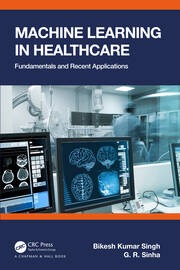
Discusses how to build various ML algorithms and how they can be applied to improve healthcare systems. Healthcare applications of AI are innumerable: medical data analysis, early detection and diagnosis of disease, providing objective-based evidence to reduce human errors, curtailing inter- and intra-observer errors, risk identification and interventions for healthcare management, real-time health monitoring, assisting clinicians and patients for selecting appropriate medications, and evaluating drug responses. Extensive demonstrations and discussion on the various principles of machine learning and its application in healthcare is provided, along with solved examples and exercises.
Challenges in complexity and variability of multimedia data have led to revolutions in machine learning techniques. Multimedia data, such as digital images, audio streams and motion video programs, exhibit richer structures than simple, isolated data items. A number of pixels in a digital image collectively conveys certain visual content to viewers. A TV video program consists of both audio and image streams that unfold the underlying story. To recognize the visual content of a digital image, or to understand the underlying story of a video program, we may need to label sets of pixels or groups of image and audio frames jointly.

The book is organized in four parts: The first focuses on technical aspects, basic mathematical notions and elementary machine learning techniques. The second provides an extensive survey of most relevant machine learning techniques for media processing, while the third part focuses on applications and shows how techniques are applied in actual problems. The fourth part contains detailed appendices that provide notions about the main mathematical instruments used throughout the text
Key to our culture is that we can disseminate information, and then maintain and access it over time. While we are rapidly advancing from vulnerable physical solutions to superior, digital media, preserving and using data over the long term involves complicated research challenges and organization efforts. Uwe Borghoff and his coauthors address the problem of storing, reading, and using digital data for periods longer than 50 years. They briefly describe several markup and document description languages like TIFF, PDF, HTML, and XML, explain the most important techniques such as migration and emulation, and present the OAIS (Open Archival Information System) Reference Model. To complement this background information on the technology issues the authors present the most relevant international preservation projects, such as the Dublin Core Metadata Initiative, and experiences from sample projects run by the Cornell University Library and the National Library of the Netherlands. A rated survey list of available systems and tools completes the book.
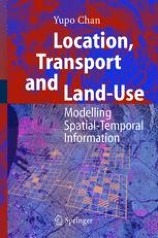
Shows the use of statistical tools for forecasting and analyzing implications of land-use decisions. The idea is that la- use on a map is necessarily a consequence of individual, and often conflicting, siting decisions over time.
Linear Genetic Programming examines the evolution of imperative computer programs written as linear sequences of instructions. In contrast to functional expressions or syntax trees used in traditional Genetic Programming (GP), Linear Genetic Programming (LGP) employs a linear program structure as genetic material whose primary characteristics are exploited to achieve acceleration of both execution time and evolutionary progress.

As part of this objective, ICT (information and communication technologies) services should become available for every citizen, and for all schools, homes and businesses. The book you have in front of you is about Semantic Web technology and law. Law is something omnipresent; all citizens — at some points in their lives — have to deal with it. In addition, law involves a large group of professionals, and is a mul- billion business world wide. Information technology is important because it that can improve citizens’ interaction with law, as well as improve legal professionals’ work environment. Legal professionals dedicate a significant amount of their time to finding, reading, analyzing and synthesizing information in order to take decisions, and prepare advice and trials, among other tasks. As part of the “Semantic-Based Knowledge and Content Systems” Strategic Objective, the European Commission is funding projects to construct technology to make the Semantic Web vision come true. 1 The articles in this book are related to two current foci of the Strategic Objective : • Knowledge acquisition and modelling, capturing knowledge from raw information and multimedia content in webs and other distributed repositories to turn poorly structured information into machi- processable knowledge.
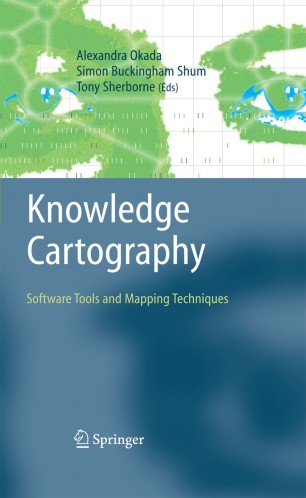
The authors see mapping software as a set of visual tools for reading and writing in a networked age. In an information ocean, the primary challenge is to find meaningful patterns around which we can weave plausible narratives. Maps of concepts, discussions and arguments make the connections between ideas tangible and disputable.With 17 chapters from the leading researchers and practitioners, the reader will find the current state–of-the-art in the field. Part 1 focuses on educational applications in schools and universities, before Part 2 turns to applications in professional communities.
Explores knowledge and skill chains in engineering and manufacturing in the age of global communications. Information infrastructure involves a range of activities from product planning, engineering, and manufacturing trough transportation, marketing, and repair/upgrade to returns and recycling/disposal. Distinct from the traditional engineering database, life-cycle support information has its own characteristic requirements, -- flexible extensibility, distributed architecture, multiple viewpoints, long-time archiving, and product usage information. Several authors address the architecture of the information infrastructure, its services and its requirements. Other papers focus on the knowledge and skill chains that develop in a variety of situations: the supply chain, the factory floor, the man-system interaction, etc. For each of these, state-of-the-art and state-of-research scenarios for various industrial sectors address both engineering and operations requirements in the current socio-economic environment.

Web semantics and semi-structured data , Semantic caching , Data warehousing and semantic data mining , Spatial, temporal, multimedia and multimodal semantics , Semantics in data visualization , Semantic services for mobile users , Supporting tools , Applications of semantic-driven approaches These topics are to be understood as specifically related to semantic issues. Contributions submitted to the journal and dealing with semantics of data will be considered even if they are not from the topics in the list. While the physical appearance of the journal issues is like the books from the we- known Springer LNCS series, the mode of operation is that of a journal. Contributions can be freely submitted by authors and are reviewed by the Editorial Board.
Data warehousing and semantic data mining • Spatial, temporal, multimedia and multimodal semantics • Semantics in data visualization • Semantic services for mobile users • Supporting tools • Applications of semantic-driven approaches These topics are to be understood as speci?cally related to semantic issues. Contributions submitted to the journal and dealing with semantics of data will be considered even if they are not within the topics in the list. While the physical appearanceof the journal issues looks like the books from the well-known Springer LNCS series, the mode of operation is that of a jo- nal. Contributions can be freely submitted by authors and are reviewed by the Editorial Board. Contributions may also be invited, and nevertheless carefully reviewed, as in the case for issues that contain extended versions of best papers from major conferences addressing data semantics issues. Special issues, foc- ing on a speci?c topic, are coordinated by guest editors once the proposal for a special issue is accepted by the Editorial Board.
• Semantics in data visualization • Semantic services for mobile users • Supporting tools • Applications of semantic-driven approaches These topics are to be understood as specifically related to semantic issues. Contributions submitted to the journal and dealing with semantics of data will be considered even if they are not within the topics in the list. While the physical appearance of the journal issues is like the books from the we- known Springer LNCS series, the mode of operation is that of a journal. Contributions can be freely submitted by authors and are reviewed by the Editorial Board. Contributions may also be invited, and nevertheless carefully reviewed, as in the case for issues that contain extended versions of the best papers from major conferences addressing data semantics issues. Special issues, focusing on a specific topic, are coordinated by guest editors once the proposal for a special issue is accepted by the Editorial Board. Finally, it is also possible that a journal issue be devoted to a single text.
– semantic caching – data warehousing and semantic data mining – spatial, temporal, multimedia and multimodal semantics – semantics in data visualization – semantic services for mobile users – supporting tools – applications of semantic-driven approaches These topics are to be understood as speci?cally related to semantic issues. Contributions submitted to the journal and dealing with semantics of data will be considered even if they are not within the topics in the list. While the physical appearance of the journal issues looks like the books from the well-known Springer LNCS series, the mode of operation is that of a journal. Contributions can be freely submitted by authors and are reviewed by the Editorial Board. Contributions may also be invited, and nevertheless carefully reviewed, as in the case for issues that contain extended versions of best papers from major conferences addressing data semantics issues. Special issues, focusing on a speci?c topic, are coordinated by guest editors once the proposal for a special issue is accepted by the Editorial Board. Finally, it is also possible that a journal issue be devoted to a single text.

سوريا - اتستراد درعا - غباغب
+963-15 2050 - 15 860 380 /1/2/3 - 11 662 3900