



الصفحة 4
الصفحة 4

Fallibility at Work : Rethinking Excellence and Error in Organizations
This book addresses how organizations can deal with human fallibility in order to create space for excellence at work. Some mistakes in work settings put lives at risk, while others create openings for innovative breakthroughs. In order to deal constructively with fallibility, an organization needs a communication climate where it is normal to voice opinions, admit mistakes, and ask for help in critical situations. The book builds on interviews with practitioners in healthcare, aviation, IT, public governance, and industry. It connects narratives from these fields with theories from organizational psychology and philosophy, as well as from positive organizational scholarship. In the final chapter, an overall ethics of fallibility at work is outlined. Fallibility at Work contributes to research in multiple academic disciplines, but also reaches out to practitioners who are interested in the connections between error and excellence in organizations.

Expert C# 2005 Business Objects
Rockford Lhotka started writing his Business Objects books in 1996, and over the years, he's become one of the world's foremost authorities on building distributed object-oriented systems. His industry-standard VB .NET Business Objects book not only addresses changes in .NET 2.0 and Visual Studio 2005, but also reflects substantial enhancements and improvements to the CSLA .NET Framework and how it can be used to create enterprise-level .NET applications. The depth of Rockford's thinking now influences developers across language boundaries. With this book, you can learn directly from the expert whose framework has become universally accepted and respected.

Evaluation and Decision Models with Multiple Criteria : Stepping stones for the analyst
The purpose of Evaluation and Decision Models: A Critical Perspective is to provide a critical thinking framework for all individuals utilizing decision and evaluation models, whether it be for research or applications. It is axiomatic that all evaluation and decision models suffer some limitations. There are situations where a decision model will not perform to expectations. This book argues that there is no best decision or evaluation model, but that decision-makers must understand the principles of formal evaluation and decision models and apply them critically. Hence, the book seeks to deepen our understanding of evaluation and decision models and encourage users of these models to think more analytically about them.
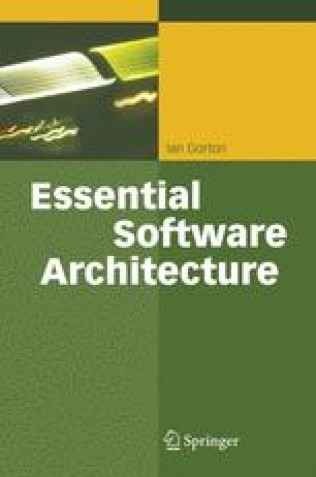
Essential Software Architecture
Job titles like "Technical Architect" and "Chief Architect" nowadays abound in the software industry, yet many people suspect that "architecture" is one of the most overused and least understood terms in professional software development. Gorton's book helps resolve this predicament. It concisely describes the essential elements of knowledge and key skills required to be a software architect. The explanations encompass the essentials of architecture thinking, practices, and supporting technologies.

Entrepreneurship and innovation education : Frameworks and tools
This book is a compilation of tools, techniques and frameworks for use in the field of entrepreneurship and innovation (E&I) education. Developed and honed over the past two decades, these teaching approaches are combined with well-versed practical insight. As professors know all too well, the human brain cannot articulate more than three or four dimensions of a problem without the aid of what could be referred to as checklists for thinking: frameworks (visual or otherwise) that help students think in terms of multiple variables affecting a problem.

Entrepreneurship and innovation : Theory, practice and context, 4th
Provides an overview of the theory, Practice and context of entrepreneurship and innovation at both the industry and firm level. It provides a foundation of ideas and understandings designed to shape the reader’s thinking and behaviour to better appreciate the role of innovation and entrepreneurship in modern economies, And to recognise their own abilities in this regard. The book provides the reader with an overview of these elements and how they combine to create new value in the market.

Engineering Fluid Mechanics
Guides students from theory to application, emphasizing critical thinking, problem solving, estimation, and other vital engineering skills. Clear, accessible writing puts the focus on essential concepts, while abundant illustrations, charts, diagrams, and examples illustrate complex topics and highlight the physical reality of fluid dynamics applications.

Engineering Design : A Systematic Approach
Engineering Design (3rd edition) describes a systematic approach to engineering design. The authors argue that such an approach, applied flexibly and adapted to a particular task, is essential for successful product development. The design process is first broken down into phases and then into distinct steps, each with its own working methods. The third edition of this internationally-recognised text is enhanced with new perspectives and the latest thinking. These include extended treatment of product planning; new sections on organisation structures, simultaneous engineering, leadership and team behaviour; and updated chapters on quality methods and estimating costs. New examples have been added and existing ones extended, with additions on design to minimise wear, design for recycling, mechanical connections, mechatronics, and adaptronics.

Engaged Learning with Emerging Technologies
The major purpose of this book is to present and discuss current thinking, theories, conceptual frameworks, models and promising examples of engaged learning with emerging technologies. Contributions come from distinguished academics in the USA, Canada, the Netherlands, United Kingdom, Germany, Australia, New Zealand, China, Korea and Singapore. Following from a constructivist orientation, coupled with social cultural dimensions of learning, this volume documents how emerging learning technologies are appropriated into meaningful and engaged learning and instructional situations. The field of learning technologies is grounded on the theoretical constructs of the learning sciences and thus the chapters in this book balance between theory and practice and prepositions and solutions.

Emissive Materials : Nanomaterials
This review book, although uneven, will play a role in guiding scientists who are thinking about working in the fields generally lumped together as ‘emissive nanomaterials’. It is carefully referenced, and each of the four chapters includes a long list of abbreviations used therin, which should make it easier for student use.

Elliptic and Parabolic Problems : A Special Tribute to the Work of Haim Brezis
This volume contains contributions by former students and collaborators of Haim Brezis given in honor of his 60th anniversary at a conference in Gaeta. H. Brezis has made significant contributions in the fields of partial differential equations and functional analysis. He is an inspiring teacher and counselor of many mathematicians in the front ranks. The collection of papers presented here grew out from his deep insight of analysis. In addition it reflects Brezis's elegant way of creative thinking

Early geometrical thinking in the environment of patterns, mosaics and isometries
This book discusses the learning and teaching of geometry, with a special focus on kindergarten and primary education. It examines important new trends and developments in research and practice, and emphasizes theoretical, empirical and developmental issues. Further, it discusses various topics, including curriculum studies and implementation, spatial abilities and geometric reasoning, as well as the psychological roots of geometrical thinking and teacher preparation in geometry education. It considers these issues from historical, epistemological, cognitive semiotic and educational points of view in the context of students' difficulties and the design of teaching and curricula.

Drugs, the brain, and behavior : The pharmacology of therapeutics and drug use disorders
Provides a comprehensive overview of the brain and explores the clinical and pharmacological issues surrounding drug abuse and dependence. Dr Brick provides definitions, historic discoveries about the nervous system, and original, eye-catching illustrations to discuss the brain/behavior relationship, basic neuroanatomy, neurophysiology, and the mechanistic actions of mood-altering drugs. Topics include: how psychoactive drugs affect cognition, behavior, and emotion; the brain/behavior relationship; the specific effects of major addictive and psychoactive drug groups; new definitions and thinking about abuse and dependence; and the medical uses of drugs, such as cannabinoids. A new chapter on biobehavioral markers explores how markers can guide the clinician in the diagnosis of some disorders. This book offers a quick reference guide which uses a balance of instruction, illustrations, tables, and formulas, that will give you a broad, lasting introduction to this intriguing subject.

Divinity Compromised : A Study of Divine Accommodation in the Thought of John Calvin
This book is the first monograph devoted to the theme of divine accommodation in the writings of John Calvin to appear in any language. The work offers careful analysis of the topic along several different lines: it analyzes the character of Calvin’s thinking on accommodation. It gives an account of the ways in which accommodation expresses itself in his writings. It probes the question of the penetration of accommodation into Calvin’s theology and particularly its implications for his doctrine of God. And it compares Calvin’s handling of accommodation with that of other exegetes in order to set his thinking in context.

Digital marketing
Covers general topics of digital marketing and seven chapters focused on how to use marketing theory and concepts, in combination with digital marketing tools, to “do digital marketing.” grounded in marketing theory and concepts taking a strategic and analytical approach with global examples - relevant chapters designed through “thinking about global digital marketing” “legal and ethical issues” “privacy and security considerations” and “value creation” latest digital marketing tools with emphasizing current marketing trends and showcasing how tools should be applied - hands-on digital marketing exercises, including mocking up a website (using tools, not programming), creating google search ad campaigns, creating social media and community content with additional direction toward industry certifications such as google ads, social media, and email marketing.

Dialogic Education and Technology : Expanding the Space of Learning
Dialogic Education and Technology is about using new technology to draw people into the kind of dialogues which take them beyond themselves into learning, thinking and creativity. The program of research reported in this book reveals key characteristics of learning dialogues and demonstrates ways in which computers and networks can deepen, enrich and expand such dialogues. A dialogic perspective is developed drawing upon recent work in communications theory, psychology, computer science and philosophy. The central argument of the book is that there is a convergence between this dialogic perspective in education and the affordances of new information and communications technology. A genuinely dialogic perspective is relatively new to the field of educational technology and there is a considerable amount of interest in this topic amongst researchers who wish to see what extra insights, if any, a dialogical approach can offer them.

DevOps for Digital Leaders : Reignite Business with a Modern DevOps-Enabled Software Factory
In DevOps for Digital Leaders, deep collective experience on both sides of the dev–ops divide informs the global thought leadership and penetrating insights of the authors, all three of whom are cross-portfolio DevOps leaders at CA Technologies. Aruna Ravichandran, Kieran Taylor, and Peter Waterhouse analyze the organizational benefits, costs, freedoms, and constraints of DevOps. They chart the coordinated strategy of organizational change, metrics, lean thinking, and investment that an enterprise must undertake to realize the full potential of DevOps and reach the sweet spot where accelerating code deployments drive increasing customer satisfaction, revenue, and profitability.

Designing urban agriculture : A complete guide to the planning, design, construction, maintenance and management of edible landscapes
About the intersection of ecology, design, and community. Showcasing projects and designers from around the world who are forging new paths to the sustainable city through urban agriculture landscapes, it creates a dialogue on the ways to invite food back into the city and pave a path to healthier communities and environments.This full-color guide begins with a foundation of ecological principles and the idea that the food shed is part of a city's urban systems network. It outlines a design process based on systems thinking and developed for a lifecycle or regenerative-based approach. It also presents strategies, tools, and guidelines that enable informed decisions on planning, designing, budgeting, constructing, maintaining, marketing, and increasing the sustainability of this re-invented cityscape.

Designing green landscapes
This book presents the latest thinking in adaptive management for forest ecosystems. Based on the ‘multiple path’ principle, this approach links species choice and silvicultural methods with changing demands and changing environmental conditions, to ensure continuous adaptation, often several times within the lifetime of a tree. The ‘multiple path’ principle at the core of this approach represents a robust theoretical framework for designing forested landscapes. It provides a logical basis both for coordinating spatial objectives and for integrating varied forms of expertise; it limits planning horizons to realistic timeframes; and it allows for forecasts based on current real attributes of spatially explicit land parcels. This is in stark contrast with traditional forestry practices which simply assess the forest resource at regular time intervals and prescribe standard management schedules for specific forest types.

Design to Value : The architecture of holistic design and creative technology
Design to Value is a commitment to process above all else. Well understood and applied in the manufacturing industries, its potential is only now starting to be realised in architecture, engineering and construction. It challenges designers to lead the way in creating more innovative and stakeholder-centric analyses, workflows, construction techniques and products. Through architectural thinking, value in the built environment can be maximised. Seeking to create deep and lasting impacts on industry, society and the planet, Design to Value rejects architecture’s current professional services model. The design and delivery stages of traditional procurement routes are not sustainable, and Design to Value outlines a new path for informed design processes.
