



الصفحة 4
الصفحة 4
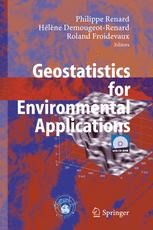
Geostatistics for environmental applications ; Proceedings of the Fifth European Conference on geostatistics for environmental applications
Once applied only to problems of mining-reserves assessment or petroleum-reservoir characterization, geostatistics is now being used in an increasingly large number of disciplines in environmental sciences. On the one hand, it enables the analysis and handling, in a rigorous probabilistic framework of the issues of spatial and temporal interpolation of continuous or categorical environmental variables. On the other hand, the methodology is also used to design and optimize sampling campaigns. "Geostatistics for Environmental Applications" contains forty selected contributions covering the latest progress in a broad spectrum of fields including air quality, climatology, ecology, groundwater hydrology, surface hydrology, oceanography, soil contamination, epidemiology and health, natural hazards, and remote sensing.

Geometric Properties for Incomplete Data
Computer vision and image analysis require interdisciplinary collaboration between mathematics and engineering. This book addresses the area of high-accuracy measurements of length, curvature, motion parameters and other geometrical quantities from acquired image data. It is a common problem that these measurements are incomplete or noisy, such that considerable efforts are necessary to regularise the data, to fill in missing information, and to judge the accuracy and reliability of these results. This monograph brings together contributions from researchers in computer vision, engineering and mathematics who are working in this area.

Geological Storage of Highly Radioactive Waste : Current Concepts and Plans for Radioactive Waste Disposal
The book describes and assesses current concepts for long-term disposal of highly radioactive waste. Different types of rock are discussed and assessed with respect to practical difficulties in construction of a repository, and the efficiency in isolating radioactive waste. Safety matters are most important and are treated in the respective chapters and in a final, conclusive chapter. Cost issues and related quality matters are discussed for the case of constructing a virgin repository and repositories in the form of converted abandoned mines.

Genetic Engineering of Mesenchymal Stem Cells
MSC (mesenchymal stem cells) have been reported to initiate revascularization after injury, to facilitate engraftment of blood-forming stem cells, and to reduce the incidence of graft-vs. host disease through their immune-suppressive qualities. Finally, bone marrow-derived MSC have been reported to home to areas of solid tumor revascularization, and thus may be used as delivery vehicles to target ablative agents into dividing tumor cells. Recently the characteristics of human MSC from adipose (fat) tissue have also been identified. The possibility of repairing tissues, speeding stem cell engraftment, and targeting solid tumors for specific killing, using MSC easily harvested from bone marrow, or better yet, from unwanted fat tissue, holds broad appeal, and is an intriguing possibility that could have dramatic effect on health care. This book has information on how to isolate, grow, and characterize MSC from marrow and fat, and gives important insight into how these cells may be used for gene delivery and cellular therapies in the future. Updates on emerging clinical trials are given.

Genetic control of neuronal migrations in human cortical development
Introduction Cortical development is a complex, tightly regulated process that eventually leads to the six-layered adult human neocortex, the substrate of the unique cognitive, emotional, and social abilities of our species. The basic mechanisms of early cortical development are believed to be very similar among mammals, which has led to a tendency of extrapolating experimental data from rodents on humans.

Galactose Regulon of Yeast : From Genetics to Systems Biology
The galactose regulon of yeast is one of the best studied regulons. It is an ideal paradigm for demonstrating fundamental and evolving concepts in biology and is used in this book as a model system to explain various facets of conventional and modern biology. The book starts with a brief historical overview on yeast research, i.e. early observations in enzyme adaptation, classical genetics, formulating hypotheses based on genetic inference. This is followed by molecular genetics of the galactose regulon, isolation of genes and testing of the hypotheses. The power of mutational analysis in deciphering molecular mechanisms is conveyed. Further, contemporary topics such as genomics, evolution, single cell analysis of transcriptional switching, binary and graded responses, biological consequences of feed back regulation in genetic circuits, and stochasticity are addressed.

Fuzzy Modeling with Spatial Information for Geographic Problems
This book focuses on research advances in approaches for incorporating explicit handling of uncertainty, especially by fuzzy sets, to address geographic problems. It has two aims: to stimulate research in the theory and application of fuzzy sets to spatial information management and geographic problem solving; and to highlight advances that have matured so much that geoscientists, computer scientists, geographers, et al. use fuzzy modeling. The book includes examples of the use of fuzzy sets in representational issues such as terrain features, landscape morphology, spatial extents and approaches for spatial interpolation, plus applications using fuzzy sets covering data mining, spatial decision making, ecological simulation, and reliability in GIS.

Fundamentals of Space Medicine
Topics discussed in this book include: adaptation of sensory-motor, cardio-vascular, bone, and muscle systems to the microgravity of spaceflight; psychological and sociological issues of living in a confined, isolated, and stressful environment; operational space medicine, such as crew selection, training and in-flight health monitoring, countermeasures and support; results of space biology experiments on individual cells, plants, and animal models; and the impact of long-duration missions such as the human mission to Mars. The author also provides a detailed description of how to fly a space experiment, based on his own experience with research projects conducted onboard Salyut-7, Mir, Spacelab, and the Space Shuttle. Now is the time to look at the future of human spaceflight and what comes next. The future human exploration of Mars captures the imagination of both the public and the scientific community. Many physiological, psychological, operational, and scientific issues need to be solved before the first crew can explore the enigmatic Red Planet. This book also identifies the showstoppers that can be foreseen and what we need to learn to fully understand the implications and risks of such a mission.

Functionalized Nanoscale Materials, Devices and Systems
The primary objective of the NATO Advanced Study Institute (ASI) titled “Functionalized Nanoscale Materials, Devices, and Systems for Chem. -Bio Sensors, Photonics, and Energy Generation and Storage” was to present a contemporary and comprehensive overview of the field of nanostructured materials and devices and its applications in chem. -bio sensors, nanophotonics, and energy generation and storage devices. The study has become one of the most promising disciplines in science and technology, as it aims at the fundamental understanding of new physical, che- cal, and biological properties of systems and the technological advances arising from their exploration. Such systems are intermediate in size, between the isolated atoms and molecules and bulk material, where the unique transitional characteristics between the two can be understood, controlled, and manipulated.

From parity violation to hadronic structure and more : Refereed and selected contributions from Grenoble, France, June 8-11, 2004
Almost 50 years after the proposal of Lee and Young in 1956 to test the hypothesis of parity violation in weak interactions and the subsequent experimental verification of parity violation by C. S. Wu, parity violation has today become a useful property of weak interactions. This is due to the fact that the focus nowadays has changed: parity violation in weak interactions is no more a topic of investigation but is used as a tool in many different fields ranging from nuclear physics to the search for the hidden extra dimensions requested by string theory. For our first workshop which took place June 5-8, 2002, at the Institut fiir Ke- physik of the Johannes Gutenberg-Universitat Mainz, we concentrated on the in vestigation of the strangeness contribution in the nucleon. This book contains the refereed and selected papers of the second workshop "From Parity Violation to Hadron Structure and more (Part II)", which took place June 8-11, in the Labo- toire de Physique Subatomique et de Cosmologie, in Grenoble. These papers appear in EPJAdirect, the electronic-only part of EPJA, and they are accessible without restrictions. They will also appear in printed form and can be ordered through Springer. The excellent presentations show the dramatic and steady progress in the accuracy of measured parity violating asymmetries over the last few years.

Fragmented Intimacy : Addiction in a Social World
Fragmented Intimacy transcends familiar concepts of addiction by focusing not on addicts in isolation but on the social contexts that are disrupted and on the struggle that affects all those involved as they attempt to regroup and initiate change. Applicable to drugs, alcohol, and gambling, this engagingly written book offers both innovative theory and practice-strengthening interventions.

Foundations of Global Genetic Optimization
This book is devoted to the application of genetic algorithms in continuous global optimization. Some of their properties and behavior are highlighted and formally justified. Various optimization techniques and their taxonomy are the background for detailed discussion. The nature of continuous genetic search is explained by studying the dynamics of probabilistic measure, which is utilized to create subsequent populations. This approach shows that genetic algorithms can be used to extract some areas of the search domain more effectively than to find isolated local minima. The biological metaphor of such behavior is the whole population surviving by rapid exploration of new regions of feeding rather than caring for a single individual. One group of strategies that can make use of this property are two-phase global optimization methods. In the first phase the central parts of the basins of attraction are distinguished by genetic population analysis. Afterwards, the minimizers are found by convex optimization methods executed in parallel.

Foreign Investor Misconduct in International Investment Law
examines the issue of foreign investor misconduct in modern international investment law, focusing on the approach that international investment law as it currently operates has developed towards foreign investor misconduct. The term ‘misconduct’ is not a legal notion, but is used to describe a certain phenomenon, namely, a group/class of actions. This term is convenient since it makes it possible to introduce and describe the phenomenon as such, without a division into concrete types of conduct, like ‘abuse of process’, ‘violation of national law’, ‘corruption’, ‘investment contrary to international norms and standards’, etc.

Food Price Volatility and Its Implications for Food Security and Policy
This book provides fresh insights into concepts, methods and new research findings on the causes of excessive food price volatility. It also discusses the implications for food security and policy responses to mitigate excessive volatility. The approaches applied by the contributors range from on-the-ground surveys, to panel econometrics and innovative high-frequency time series analysis as well as computational economics methods. It offers policy analysts and decision-makers guidance on dealing with extreme volatility.

Food addiction
This approach acknowledges the apparent parallels between substance use disorders and overeating of highly palatable, high-caloric foods. Although this idea seems to be relatively new, research on food addiction actually encompasses several decades, a fact that often remains unrecognized. Scientific use of the term addiction in reference to chocolate even dates back to the 19th century. In the 20th century, food addiction research underwent several paradigm shifts, which include changing foci on anorexia nervosa, bulimia nervosa, obesity, or binge eating disorder. Thus, the purpose of this review is to describe the history and state of the art of food addiction research and to demonstrate its development and refinement of definitions and methodologies

Financial statement analysis : A practitioner's guide
This fully revised and up-to-date 5th Edition offers fresh information that will help you to evaluate financial statements in today's volatile markets and uncertain economy. The declining connection between GAAP earnings and stock prices has introduced a need to discriminate between instructive and misleading non-GAAP alternatives. This book integrates the alternatives and provides guidance on understanding the extent to which non-GAAP reports, particularly from US companies, may be biased.

Financial mathematics, derivatives and structured products
Introduces readers to the financial markets, derivatives, structured products and how the products are modelled and implemented by practitioners. In addition, it equips readers with the necessary knowledge of financial markets needed in order to work as product structurers, traders, sales or risk managers. As the book seeks to unify the derivatives modelling and the financial engineering practice in the market, it will be of interest to financial practitioners and academic researchers alike. Further, it takes a different route from the existing financial mathematics books, and will appeal to students and practitioners with or without a scientific background. The book can also be used as a textbook for the following courses: Financial Mathematics (undergraduate level) Stochastic Modelling in Finance (postgraduate level) Financial Markets and Derivatives (undergraduate level) Structured Products and Solutions (undergraduate/postgraduate level)

Financial economics and econometrics
Covers financial data and univariate models; asset returns; interest rates, yields and spreads; volatility and correlation; and corporate finance and policy. Each chapter begins with a theory in financial economics, followed by econometric methodologies which have been used to explore the theory. Next, the chapter presents empirical evidence and discusses seminal papers on the topic. Boxes offer insights on how an idea can be applied to other disciplines such as management, marketing and medicine, showing the relevance of the material beyond finance. Readers are supported with plenty of worked examples and intuitive explanations throughout the book, while key takeaways, ‘test your knowledge’ and ‘test your intuition’ features at the end of each chapter also aid student learning.

Filtering Theory : With Applications to Fault Detection, Isolation, and Estimation
The focus of this book is on filtering for linear processes, and its primary goal is to design filters from a class of linear stable unbiased filters that yield an estimation error with the lowest root-mean-square (RMS) norm. Various hierarchical classes of filtering problems are defined based on the availability of statistical knowledge regarding noise, disturbances, and other uncertainties. An important characteristic of the approach employed in this work for several aspects of filter analysis and design is structural in nature, revealing an inherent freedom to incorporate other classical secondary engineering constraints—such as placement of filter poles at desired locations—in filter design. Such a structural approach requires an understanding of powerful tools that then may be used in several engineering applications besides filtering.

Fecal Incontinence : Diagnosis and Treatment
Fecal incontinence is a frequent, distressing condition that has a devastating impact on patients’ lives. However, patients are typically embarrassed and reluctant to acknowledge this disability, so they relinquish the possibility of being cured and remain socially isolated. Since fecal incontinence may result from various pathophysiological situations, an accurate diagnostic work-up of each patient is fundamental. Today, a wide range of therapeutic options is available, but making the correct choice is pivotal to the successful management of this condition. This book is aimed at all physicians involved in the assessment and treatment of fecal incontinence. Its main purpose is to review the latest advances in the epidemiologic, socio-economic, psychologic, diagnostic, and therapeutic aspects of fecal incontinence, in order to establish guidelines for effective treatment.
