


تحسين النتائح
ترتيب حسب
من
الى


Magnetism and Structure in Functional Materials addresses three distinct but related topics: (i) magnetoelastic materials such as magnetic martensites and magnetic shape memory alloys, (ii) the magnetocaloric effect related to magnetostructural transitions, and (iii) colossal magnetoresistance (CMR) and related magnanites. The goal is to identify common underlying principles in these classes of materials that are relevant for optimizing various functionalities. The emergence of apparently different magnetic/structural phenomena in disparate classes of materials clearly points to a need for common concepts in order to achieve a broader understanding of the interplay between magnetism and structure in this general class of new functional materials exhibiting ever more complex microstructure and function. The topic is interdisciplinary in nature and the contributors correspondingly include physicists, materials scientists and engineers. Likewise the book will appeal to scientists from all these areas.

Magnetic heterostructures constitute an important field in magnetism and nanotechnology, which has developed over the past fifteen years due to important advances in epitaxial- growth techniques and lithographic processes. Magnetic heterostructures combine different physical properties which do not exist in nature. Examples are semiconductors/ferromagnets, superconductors/ferromagnets, and ferromagnets/antiferromagnets. These combinations display rich and novel physical properties different from those that exit in any single one of them. Interlayer exchange coupling, exchange bias, proximity effects, giant magneto-resistance, tunneling magneto-resistance, spininjection and spintransport are examples of new physical phenomena that rely on the combination of different materials layers
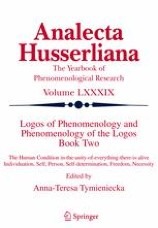
The Human Condition-in-the-unity-of-everything-there-is-alive, under whose aegis the present selection of essays falls, offers the urgently needed new approach to reinvestigating humanness. While recent advances in the neurosciences, genetics and bio-engineering challenge the traditional abstract conception of "human nature", indicating its transformability, thus putting in question the main tenets of traditional philosophical anthropology, in the new perspective of the Human Creative Condition the human individual is seen in its emergence and unfolding within the dynamic networks of the logos of life, and within the evolution of living types.
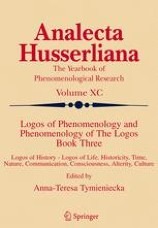
Situated at the crossroads of nature and culture, physics and consciousness, cosmos and life, history – intimately conjoined with time – continues to puzzle the philosopher as well as the scientist. Does brute nature unfold a history? Does human history have a telos? Does human existence have a purpose, Phenomenology of life projects a new interrogative system for reexamining these questions.We are invited to follow the logos of life as it spins in innumerable ways the interplay of natural factors, human passions, social forces, science and experience – through interruptions and kairic moments of accomplishment .

Prompted and ever diversified by the specifically human interrogative logos, scientific inquiries seek a common system of links in order to mutually confirm and rectify their results. Coming closer and closer to phenomenology, the sciences of life find the common ground of the reality in the ontopoiesis of life.Could it not be that the interrogative logos of science, participating in human creative inventiveness will bring together also the divergent scientific methods in a common network? A network which comprises natural processes, societal sharing-in-life, and existential communication.
Contribute to our understanding of this dynamic process by clearly presenting and discussing the most important hypotheses, issues and theories in philosophical and logical study of language, thought and action. Among the fundamental issues discussed are the rationality and freedom of agents, theoretical and practical reasoning, individual and collective attitudes and actions, the nature of cooperation and communication, the construction and conditions of adequacy of scientific theories, propositional contents and their truth conditions, illocutionary force, time, aspect and presupposition in meaning, speech acts within dialogue, the dialogical approach to logic and the structure of dialogues and other language games, as well as formal methods needed in logic or artificial intelligence to account for choice, paradoxes, uncertainty and imprecision.
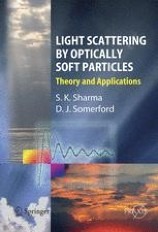
Deals with a particular class of approximation methods in the context of light scattering by small particles. This class of approximations has been termed as eikonal or soft particle approximations. The eikonal approximation was studied extensively in the potential scattering and then adopted in optical scattering problems. In this context, the eikonal and other soft particle approximations pertain to scatterers whose relative refractive index compared to surrounding medium is close to unity. The study of these approximations is very important because soft particles occur abundantly in nature. For example, the particles that occur in ocean optics, biomedical optics, atmospheric optics and in many industrial applications can be classified as soft particles. This book was written in recognition of the long-standing and current interest in the field of scattering approximations for soft particles. It should prove to be a useful addition for researchers in the field of light scattering.
This book critically reviews a diverse body of scholarship and practice that informs the conceptualization, curriculum, teaching and measurement of life skills in education settings around the world. It discusses life skills as they are implemented in schools and non-formal education, providing both qualitative and quantitative evidence of when, with whom, and how life skills do or do not impact young women’s and men’s lives in various contexts. Specifically, it examines the nature and importance of life skills, and how they are taught.
Energy, chemistry, solvents, and habitats -- the basic elements of living systems - define the opportunities and limitations for life on other worlds. This class-tested text examines each of these parameters in crucial depth and makes the argument that life forms we would recognize may be more common in our solar system than many assume. It also considers, however, exotic forms of life that would not have to rely on carbon as basic chemical element, solar energy as a main energy source, or water as primary solvent. Finally the question of detecting bio- and geosignature of such life forms is discussed, ranging from Earth environments to deep space. While speculative considerations in this emerging field of science cannot be avoided, the authors have tried to present their study with the breadth and seriousness that a scientific approach to this issue requires. They seek an operational definition of life and investigate the realm of possibilities that nature offers to realize this very special state of matter and avoid scientific jargon wherever possible to make this intrinsically interdisciplinary subject understandable to a broad range of readers.
Leibniz’s metaphysics of space and time stands at the centre of his philosophy and is one of the high-water marks in the history of the philosophy of science. In this work, Futch provides the first systematic and comprehensive examination of Leibniz’s thought on this subject. In addition to elucidating the nature of Leibniz’s relationalism, the book fills a lacuna in existing scholarship by examining his views on the topological structure of space and time, including the unity and unboundedness of space and time. It is shown that, like many of his more recent counterparts, Leibniz adopts a causal theory of time where temporal facts are grounded on causal facts, and that his approach to time represents a precursor to non-tensed theories of time.
The chapters of the book are the result of intense discussion in the course of an international conference focused on the title question of this book, and were selected in view of their contribution to this topic. They are clustered in thematically organized parts. No effort has been made to hide the controversies underlying the different interpretations of Leibniz’s “rationalism” – in each particular domain and as a whole. On the contrary, the editor firmly believes that only through a variety of conflicting interpretive perspectives can the multi-faceted nature of an oeuvre of such a magnitude and variety as Leibniz’s be brought to light and understood as it deserves.

Contains two of the three lectures that were given at the 33rd Probability Summer School in Saint-Flour (July 6-23, 2003). Amir Dembo’s course is devoted to recent studies of the fractal nature of random sets, focusing on some fine properties of the sample path of random walk and Brownian motion. In particular, the cover time for Markov chains, the dimension of discrete limsup random fractals, the multi-scale truncated second moment and the Ciesielski-Taylor identities are explored. Tadahisa Funaki’s course reviews recent developments of the mathematical theory on stochastic interface models, mostly on the so-called nabla varphi interface model. The results are formulated as classical limit theorems in probability theory, and the text serves with good applications of basic probability techniques.

This book discusses and addresses the compelling questions concerning the ideals of citizenship, the processes of learning to fulfill these ideals, and possibilities of education in fostering citizenship. Rather than advocating for one framework, the authors demonstrate the continuously contested nature of the concept of citizenship as theoretically discussed and practically experienced. The monograph combines, in an unconventional way, selected philosophical accounts and everyday experiences from certain locations in Tanzania and Uganda.
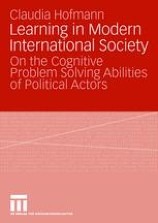
Claudia Hofmann engages in a theoretical modelling of international learning processes and the substantiation of this model through three cases from international politics. She answers two questions: How may international actors learn as a collective? And how may the lessons learned influence actor behaviour and problem solving processes? As a foundation for answering these questions she examines the nature of actor behaviour within a social international system and integrates the diffusion of norms and values among macro-level actors.
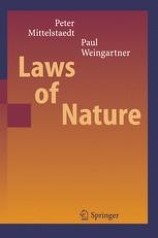
The book is concerned with the laws of nature and in particular with the laws of physics. The authors discuss three important questions: First, whether the observed regularities are based on strict "laws of nature" that hold rigorously and without any exception. Second, what we call a "law of nature" is studied by comparing this concept with invariance principles, causality principles, teleological principles and means of predicting future events. Finally, on the basis of these investigations the authors treat the ambitious and intricate third question, why the laws of nature hold. Are there rational reasons for this largely unexplained phenomenon? This book addresses students as well as researchers. It will be an excellent reference for those interested in the philosophical foundations of the natural sciences.

Optical Resonators provides a detailed discussion of the properties of optical resonators for lasers from basic theory to recent research. In addition to describing the fundamental theories of resonators such as geometrical optics, diffraction, and polarisation the characteristics of all important resonator schemes and their calculation are presented. Experimental examples, practical problems and a collection of measurement techniques support the comprehensive treatment of the subject. Optical Resonators is the only book currently available that provides a comprehensive overview of the the subject. Combined with the structure of the text and the autonomous nature of the chapters this work will be as suitable for those new to the field as it will be invaluable to specialists conducting research. This second edition has been enlarged by new sections on Q-switching and resonators with internal phase/amplitude control. In addition, the whole book has been brought up-to-date.
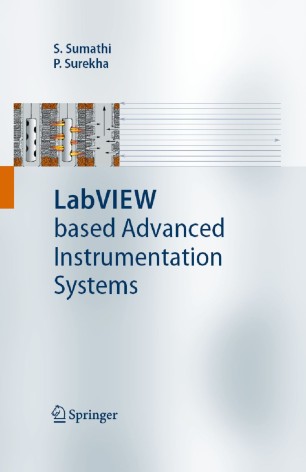
Information is a valuable resource to an organization. User-friendly, computer-controlled instrumentation and data analysis techniques are revolutionizing the way measurements are being made, allowing nearly instantaneous comparison between theoretical predictions, simulations, and actual experimental results. This book provides comprehensive coverage of fundamentals of advanced instrumentation systems based on LabVIEW concepts. This book is for those who wish a better understanding of virtual instrumentation concepts, its purpose, its nature, and the applications developed using the National Instrument’s LabVIEW software.
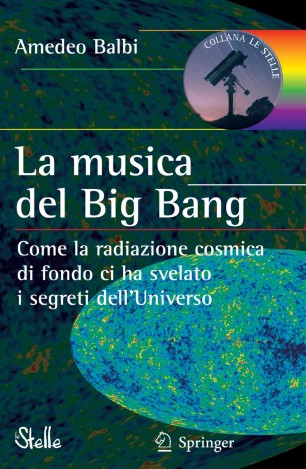
Cosmic microwave background radiation is the residue of the great heat following the Big Bang. A tenuous sign, over 13 billion years old, in which the answers to many of the questions about the nature of our Universe are hidden. Discovered by chance in 1964, in the last forty years this fossil trace of the origins of the Cosmos has been explored with every available means. Two Nobel Prizes in physics have already been awarded for research involving it, the last in 2006 for the results of the COBE satellite. Much of the information encoded in the cosmic background radiation was impressed by the superimposition of acoustic waves present in the early Universe: a "music" of the Big Bang, which cosmologists have tried for years to reconstruct, using techniques similar to those that allow to distinguish the sound of different musical instruments. Only recently have the first notes of this extraordinary cosmic symphony finally been revealed, but the investigation is not over yet. This book illustrates, with a language suitable even for non-specialists, the theories, observations and discoveries that have brought cosmology into a new era.
Cosmic microwave background radiation is the residue of the great heat following the Big Bang. A tenuous sign, over 13 billion years old, in which the answers to many of the questions about the nature of our Universe are hidden. Discovered by chance in 1964, in the last forty years this fossil trace of the origins of the Cosmos has been explored with every available means. Two Nobel Prizes in physics have already been awarded for research involving it, the last in 2006 for the results of the COBE satellite. Much of the information encoded in the cosmic background radiation was impressed by the superimposition of acoustic waves present in the early Universe: a "music" of the Big Bang, which cosmologists have tried for years to reconstruct, using techniques similar to those that allow to distinguish the sound of different musical instruments. Only recently have the first notes of this extraordinary cosmic symphony finally been revealed, but the investigation is not over yet. This book illustrates, with a language suitable even for non-specialists, the theories, observations and discoveries that have brought cosmology into a new era.
Knowledge-Driven Computing constitutes an emerging area of intensive research located at the intersection of Computational Intelligence and Knowledge Engineering with strong mathematical foundations. It embraces methods and approaches coming from diverse computational paradigms, such as evolutionary computation and nature-inspired algorithms, logic programming and constraint programming, rule-based systems, fuzzy sets and many others. The use of various knowledge representation formalisms and knowledge processing and computing paradigms is oriented towards the efficient resolution of computationally complex and difficult problems.

سوريا - اتستراد درعا - غباغب
+963-15 2050 - 15 860 380 /1/2/3 - 11 662 3900