


تحسين النتائح
ترتيب حسب
من
الى

Learn all the algorithmic techniques and programming skills you need from two experienced coaches, problem setters, and jurors for coding competitions. The authors highlight the versatility of each algorithm by considering a variety of problems and show how to implement algorithms in simple and efficient code. What to expect: * Master 128 algorithms in Python. * Discover the right way to tackle a problem and quickly implement a solution of low complexity.

Case-based reasoning (CBR) has received a great deal of attention in recent years and has established itself as a core methodology in the field of artificial intelligence. The key idea of CBR is to tackle new problems by referring to similar problems that have already been solved in the past. More precisely, CBR proceeds from individual experiences in the form of cases. The generalization beyond these experiences typically relies on a kind of regularity assumption demanding that 'similar problems have similar solutions'. Making use of different frameworks of approximate reasoning and reasoning under uncertainty, notably probabilistic and fuzzy set-based techniques, this book develops formal models of the above inference principle, which is fundamental to CBR. The case-based approximate reasoning methods thus obtained especially emphasize the heuristic nature of case-based inference and aspects of uncertainty in CBR. This way, the book contributes to a solid foundation of CBR which is grounded on formal concepts and techniques from the aforementioned fields. Besides, it establishes interesting relationships between CBR and approximate reasoning, which not only cast new light on existing methods but also enhance the development of novel approaches and hybrid systems.
For cloud users and providers alike, security is an everyday concern, yet there are very few books covering cloud security as a main subject. This book will help address this information gap from an Information Technology solution and usage-centric view of cloud infrastructure security. The book highlights the fundamental technology components necessary to build and enable trusted clouds. Here also is an explanation of the security and compliance challenges organizations face as they migrate mission-critical applications to the cloud, and how trusted clouds, that have their integrity rooted in hardware, can address these challenges.
This book highlights basic paradigms of problem analysis and algorithm design in the context of core bioinformatics problems. Mathematically demanding themes are put across to the reader by properly chosen representations with the aid of lots of illustrations.
Sheds new light on a selection of big data scenarios from an interdisciplinary perspective. It features legal, sociological and economic approaches to fundamental big data topics such as privacy, data quality and the ECJ’s Safe Harbor decision on the one hand, and practical applications such as smart cars, wearables and web tracking on the other. Addressing the interests of researchers and practitioners alike, it provides a comprehensive overview of and introduction to the emerging challenges regarding big data.All contributions are based on papers submitted in connection with ABIDA (Assessing Big Data), an interdisciplinary research project exploring the societal aspects of big data and funded by the German Federal Ministry of Education and Research.
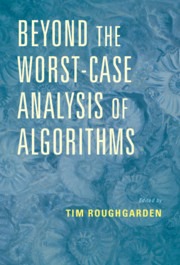
There are no silver bullets in algorithm design, and no single algorithmic idea is powerful and flexible enough to solve every computational problem. Nor are there silver bullets in algorithm analysis, as the most enlightening method for analyzing an algorithm often depends on the problem and the application. However, typical algorithms courses rely almost entirely on a single analysis framework, that of worst-case analysis, wherein an algorithm is assessed by its worst performance on any input of a given size. The purpose of this book is to popularize several alternatives to worst-case analysis and their most notable algorithmic applications, from clustering to linear programming to neural network training. Forty leading researchers have contributed introductions to different facets of this field, emphasizing the most important models and results, many of which can be taught in lectures to beginning graduate students in theoretical computer science and machine learning.
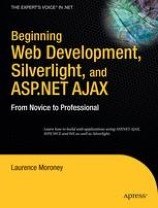
Beginning Web Development, Silverlight, and ASP.NET AJAX: From Novice to Professional aims to give you the skills you need to start building web applications with Microsoft's next–generation technology as quickly as possible. Whether you're interested in ASP.NET AJAX, Silverlight, or the technologies that support them (WPF, WCF, WF, etc.), this book is the starting point that you need. It adopts a “zero to hero” approach that concentrates on achieving practical results you can use in real projects rather than presenting a deep academic treatment that can't be immediately applied.
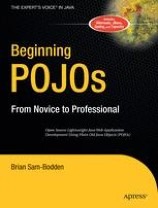
Beginning POJOs introduces you to open source lightweight web development using Plain Old Java Objects (POJOs) and the tools and frameworks that enable this. Tier by tier, this book guides you through the construction of complex but lightweight enterprise Java-based web applications. Such applications are centered around several major open source lightweight frameworks, including Spring, Hibernate, Tapestry, and JBoss (including the new lightweight JBoss Seam). This book is ideal if you're new to open source and lightweight Java. You'll learn how to build a complete enterprise Java-based web application from scratch, and how to integrate the different open source frameworks to achieve this goal.

Reacting to the popularity of Java 2.0 Enterprise Edition™ alternatives such as Ruby on Rails and the enterprise Spring Framework, Red Hat JBoss®, Inc. developed JBoss® Seam, a new open-source lightweight Java™ EE 5-based contextual application development framework. Beginning JBoss® Seam: From Novice to Professional gets you started as the first book on this popular framework.
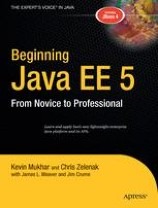
Sun's new lightweight Java Enterprise Edition (EE) 5 is an extremely powerful platform for developing enterprise-level Java-based applications, primarily for the server. This book shows you how to harness that power, examining how the pieces of the new Java EE 5 platform fit together, including the redesigned annotations-driven EJB 3 spec as well as JavaServer Faces (JSF), integrated into the platform for the first time. Hands-on tutorials are also included, along with clear explanations and working code examples. You will grow to take the next step—from writing client-side desktop applications to writing enterprise applications. You will also learn how to use the individual APIs and tools in the Java EE 5 platform, and how to merge these to create your own enterprise applications.
The open source, lightweight Google Web Toolkit (GWT) is a framework that allows Java developers to build rich Internet applications (RIAs), more recently called Ajax applications, in Java. Typically, writing these applications requires a lot of JavaScript development. However, Java and JavaScript are very distinctively different languages (although the name suggests otherwise), therefore requiring a different development process. In Beginning Google Web Toolkit: From Novice to Professional, you'll learn to build rich, user–friendly web applications using a popular Java–based Ajax web framework, the Google Web Toolkit.
CakePHP is a leading PHP–based web app development framework. When asking a question on forums or chat rooms, many CakePHP beginners get little help from the experts. Simple questions can get a response like, “Well, just read the online manual and API.” Unfortunately, the online manual is depreciated, and who wants to absorb a programming language or framework from an API? Beginning CakePHP will do the following: Lead you from a basic setup of CakePHP to building a couple applications that will highlight CakePHP’s functionality and capabilities without delving too deeply into the PHP language, but rather what the CakePHP framework can offer the developer. Teach you to use CakePHP by incorporating advanced features into your web development projects.
Beginning ASP.NET 2.0 Databases: From Novice to Professional is a comprehensive introduction to connecting a website to many different data sourcesnot just databases. You'll learn how to build a relational database, use SQL to communicate with it, and leverage both in your web applications. You'll also learn about the new features of ADO.NET and ASP.NET in .NET 2.0. The authors cover mission-critical issues, such as design, transactions, error handling, optimization, and scalability. They examine SQL Server, Jet, and MySQL databases, and highlight the differences among them.
This book demonstrates how nonlinear/non-Gaussian Bayesian time series estimation methods were used to produce a probability distribution of potential MH370 flight paths. It provides details of how the probabilistic models of aircraft flight dynamics, satellite communication system measurements, environmental effects and radar data were constructed and calibrated. The probability distribution was used to define the search zone in the southern Indian Ocean. The book describes particle-filter based numerical calculation of the aircraft flight-path probability distribution and validates the method using data from several of the involved aircraft’s previous flights. Finally it is shown how the Reunion Island flaperon debris find affects the search probability distribution.
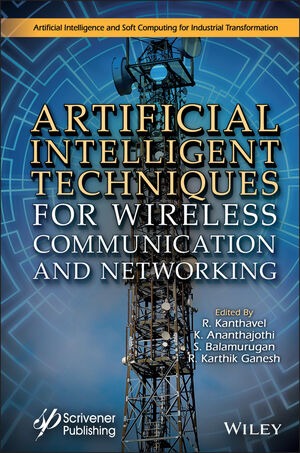
Wireless communication and networking based on AI concepts and techniques are explored in this book, specifically focusing on the current research in the field by highlighting empirical results along with theoretical concepts. The possibility of applying AI mechanisms towards security aspects in the communication domain is elaborated; also explored is the application side of integrated technologies that enhance AI-based innovations, insights, intelligent predictions, cost optimization, inventory management, identification processes, classification mechanisms, cooperative spectrum sensing techniques, ad-hoc network architecture, and protocol and simulation-based environments.
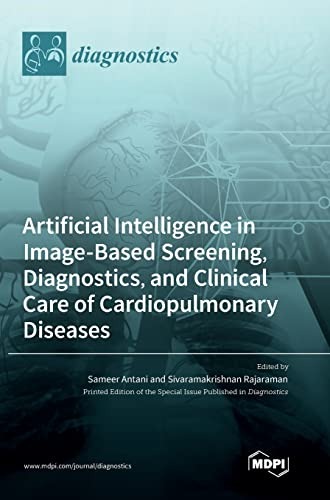
In this Special Issue, “Artificial Intelligence in Image-Based Screening, Diagnostics, and Clinical Care of Cardiopulmonary Diseases”, we have highlighted exemplary primary research studies and literature reviews focusing on novel AI/ML methods and their application in image-based screening, diagnosis, and clinical management of cardiopulmonary diseases.

Highlights the broad field of artificial intelligence applications in education, regarding any type of artificial intelligence that is correlated with education. It discusses learning methodologies, intelligent tutoring systems, intelligent student guidance and assessments, intelligent education chatbots, and artificial tutors and presents the practicality and applicability implications of AI in education. The book offers new and current research along with case studies showing the latest techniques and educational activities. Will find interest with academicians which includes teachers, students of various disciplines, higher education policymakers who believe in transforming the education industry, research scholars who are pursuing their Ph.D. or Post Doc. in the field of Education Technology, Education, and Learning, etc. and those working in the area of Education Technology and Artificial Intelligence such as industry professionals in education management and e-learning companies
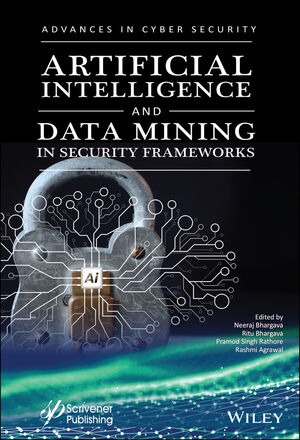
Offers solutions to the problems of security, outlining the concepts behind allowing computers to learn from experience and understand the world in terms of a hierarchy of concepts, with each concept defined through its relation to simpler concepts. provides state of the art approaches of artificial intelligence and data mining in these areas. It includes areas of detection, prediction, as well as future framework identification, development, building service systems and analytical aspects. In all these topics, applications of AI and data mining, such as artificial neural networks, fuzzy logic, genetic algorithm and hybrid mechanisms, are explained and explored. This book is aimed at the modeling and performance prediction of efficient security framework systems, bringing to light a new dimension in the theory and practice. This groundbreaking new volume presents these topics and trends, bridging the research gap on AI and data mining to enable wide-scale implementation. Whether for the veteran engineer or the student, this is a must-have for any library. This groundbreaking new volume: Clarifies the understanding of certain key mechanisms of technology helpful in the use of artificial intelligence and data mining in security frameworks ; Covers practical approaches to the problems engineers face in working in this field, focusing on the applications used every day ; Contains numerous examples, offering critical solutions to engineers and scientists ; Presents these new applications of AI and data mining that are of prime importance to human civilization as a whole
Highlights the opportunities and challenges of artificial intelligence in business, education, and healthcare from institutional, environmental, social perspectives Includes empirical and theoretical research Presents applications of Artificial Intelligence in Business, Education and Healthcare

Discusses existing conventional radio frequency (RF)-based wireless access technology and presents the challenges that can impact the requirements of the future wave of new wireless services in the context of artificial intelligence (AI) driven autonomous systems and machine-type communications. The relationship between visible light communications (VLC) and light fidelity (LiFi), is explored, and the major advantages of VLC and LiFi such as security and data density, and discuss existing research challenges are also introduced. Channel modeling techniques are provided for mobile multiuser scenarios, and will introduce key building blocks to achieve LiFi cellular networks achieving orders of magnitude improvements of area spectral efficiency compared to state-of-the-art. Challenges that arise from moving from a static point-to-point visible light link to a LiFi network that is capable of serving hundreds of mobile and fixed nodes are discussed. An overview of recent standardization activities and the commercialization challenges of this disruptive technology is also provided.

سوريا - اتستراد درعا - غباغب
+963-15 2050 - 15 860 380 /1/2/3 - 11 662 3900