


تحسين النتائح
ترتيب حسب
من
الى


Many difficult scientific discovery tasks can only be solved in interactive ways, by combining intelligent computing techniques with intuitive and adaptive user interfaces. It is inevitable to use human intelligence in scientific discovery systems: human eyes can capture complex patterns and relationships, along with detecting the exceptional cases in a data set; the human brain can easily manipulate perceptions to make decisions. Ambient intelligence is about this kind of ubiquitous and autonomous human interaction with information. Scientific discovery is a process of creative perception and communication, dealing with questions like: how do we significantly reduce information while maintaining meaning, or how do we extract patterns from massive data and growing data resources. Originating from the SIGCHI Workshop on Ambient Intelligence for Scientific Discovery, this state-of-the-art survey is organized in three parts: new paradigms in scientific discovery, ambient cognition, and ambient intelligence systems. Many chapters share common features such as interaction, vision, language, and biomedicine.

This book constitutes the refereed proceedings of the Second European Conference on Ambient Intelligence, AmI 2008, held in Nuremberg, Germany, in November 2008.

Ambient Intelligence (AmI) is an integrating technology for supporting a pervasive and transparent infrastructure for implementing smart environments. Such technology is used to enable environments for detecting events and behaviors of people and for responding in a contextually relevant fashion. AmI proposes a multi-disciplinary approach for enhancing human machine interaction. The authors start with a description of the iDorm as an example of a smart environment conforming to the AmI paradigm, and introduces computer vision as an important component of the system. Other computer vision examples describe visual monitoring for the elderly, classic and novel surveillance techniques using clusters of cameras installed in indoor and outdoor application domains, and the monitoring of public spaces. Face and speech recognition systems are also covered as well as enhanced LEGO blocks for novel educational purposes. The book closes with a provocative chapter on how a cybernetic system can be designed as the backbone of a human machine interaction.
Ajax is taking us into the next generation of web applications. Ajax has broken the client-server barrier by decoupling the client from the server, but an Ajax application still needs a server to extract content from. The most effective use of Ajax and the server requires an understanding of REST, an architectural style used to define Web services. Ajax Patterns and Best Practices explores dynamic web applications that combine Ajax and REST as a single solution. A major advantage of REST is that, like Ajax, it can be used with today's existing technologies.
AI (artificial intelligence) is predicted to radically change teaching and learning in both schools and industry causing radical disruption of work. AI can support well-being initiatives and lifelong learning but educational institutions and companies need to take the changing technology into account. Moving towards AI supported by digital tools requires a dramatic shift in the concept of learning, expertise and the businesses built off of it. Based on the latest research on AI and how it is changing learning and education, this book will focus on the enormous opportunities to expand educational settings with AI for learning in and beyond the traditional classroom. This book also introduces ethical challenges related to learning and education, while connecting human learning and machine learning.
Book constitutes papers from the research workshops presented at XP 2022 and XP 2023, respectively the 23rd and 24th International Conferences on Agile Software Development, held on June 13-17, 2022 at the IT University of Copenhagen, Denmark and June 13-16, 2023 in Amsterdam, Netherlands.
The present book provides an account of the latest work on a variety of aspects related to affect and emotion in human-technology interaction. It covers theoretical issues, user experience and design aspects as well as sensing issues, and reports on a number of affective applications that have been developed in recent years.
In the era of the internet of things, images have played important roles in human–computer interactions, and with the arrival of big data technology, people have higher requirements regarding image quality, especially for images collected in dark light. This can be addressed through the development of camera hardware quality, i.e., the resolution and exposure time of cameras, which may require high computational costs. As an alternative, image enhancement techniques can exact salient features to improve the quality of captured images according to the differences in diverse features, although they suffer from some challenges, i.e., a low contrast, artifacts, and overexposure, thus making it decidedly necessary to determine how to use advanced image enhancement techniques.
Perceiving the economy as a complex dynamic system, generates a need for new tools for its study. As a constructive simulation method, Agent-Based Computational Economics (ACE) has in recent years proven its strength and extensive applicability. Fields of study are widely spread within economics, with a cluster around financial markets. This book is based on communications given at AE’2006 (Aalborg, Denmark) – the second symposium on Artificial Economics, and covers both wellknown questions of economics, like the existence of market efficiency, as well as new questions raised by the new tools, for example questions related to networks of social interaction.
Divided into three parts. The first part discusses the architectural and design aspects of Flex 3 application development. It explains the internals of a Flex 3 application and advocates a few best practices to fine-tune your application to ensure maximum performance. It includes tutorials on creating custom components, data binding, and creating AIR-powered desktop applications. The second part concentrates on effectively integrating Flex 3 with server- and client-side technologies. Techniques for integration with Java and PHP are covered in detail, and content covering interaction with client-side technologies is also included. After reading the chapter on JavaScript integration, you will be ready to create applications that can use Ajax and Flex 3 together. The third and final part of the book is a unique and eclectic mix of some advanced topics like mash-ups, collaborative applications, 3D rendering, highly interactive visualization, and audio and video streaming.

Provides information on the basic science and tissue interactions of dental lasers and documents the principal current clinical uses of lasers in every dental discipline. The applications of lasers in restorative dentistry, endodontics, dental implantology, pediatric dentistry, periodontal therapy, and soft tissue surgery are clearly described and illustrated. Information is also provided on laser-assisted multi-tissue management, covering procedures such as crown lengthening, gingival troughing, gingival recontouring, and depigmentation.

Provides information on the basic science and tissue interactions of dental lasers and documents the principal current clinical uses of lasers in every dental discipline. The applications of lasers in restorative dentistry, endodontics, dental implantology, pediatric dentistry, periodontal therapy, and soft tissue surgery are clearly described and illustrated.
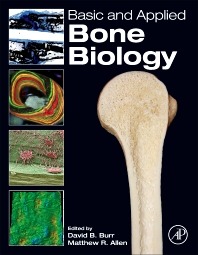
Provides an overview of skeletal biology from the molecular level to the organ level, including cellular control, interaction and response; adaptive responses to various external stimuli; the interaction of the skeletal system with other metabolic processes in the body; and the effect of various disease processes on the skeleton.

Provides an in-depth understanding of the pharmacologic principles needed for safe and effective dental treatment and oral health care. It discusses drug properties and mechanisms of action, dosages, intended effects, interactions, and adverse reactions — both for the medications a patient may already be taking and for the drugs prescribed by the dentist.
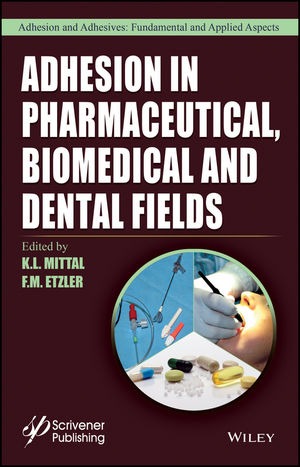
The phenomenon of adhesion is of cardinal importance in the pharmaceutical, biomedical and dental fields. A few eclectic examples will suffice to underscore the importance/relevance of adhesion in these three areas. For example, the adhesion between powdered solids is of crucial importance in tablet manufacture. The interaction between biodevices (e.g., stents, bio-implants) and body environment dictates the performance of such devices, and there is burgeoning research activity in modifying the surfaces of such implements to render them compatible with bodily components. In the field of dentistry, the modern trend is to shift from retaining of restorative materials by mechanical interlocking to adhesive bonding.
Focuses on the safety assessment of existing structures subjected to multi-hazard scenarios through advanced numerical methods. Whereas the focus is on concrete dams and nuclear containment structures, the presented methodologies can also be applied to other large-scale ones. This book is composed of seven sections: Fundamentals: theoretical coverage of solid mechnics, plasticity, fracture mechanics, creep, / seismology, dynamic analysis, probability and statistics / Damage: that can affect concrete structures, such as cracking of concrete, AAR, chloride ingress, and rebar corrosion, / Finite Element: formulation for both linear and nonlinear analysis including stress, heat and fracture mechanics, / Engineering Models: for soil/fluid-structure interaction, uncertainty quantification, probablilistic and random finite element analysis, machine learning, performance based earthquake engineering, ground motion intensity measures, seismic hazard analysis, capacity/fragility functions and damage indeces, / Applications to dams through potential failure mode analyses, risk-informed decision making, deterministic and probabilistic examples, / Applications to nuclear structures through modeling issues, aging management programs, critical review of some analyses, / Other applications and case studies: massive RC structures and bridges, detailed assessment of a nuclear containment structure evaluation for license renewal.
Deals with both mathematical modeling and experimental studies related to systems relevant for various civil engineering fields. The book addresses several key topics, including artificial intelligence applied to the control and monitoring of construction site personnel, finite element models for endplate beam-to-column connections under various load conditions, random functionally graded micropolar beams, and many others. The book explores the design and study of microstructures aimed at increasing the toughness and durability of novel materials in building and construction, based also on the re-utilization of residues and wastes of metallurgical industry produces.
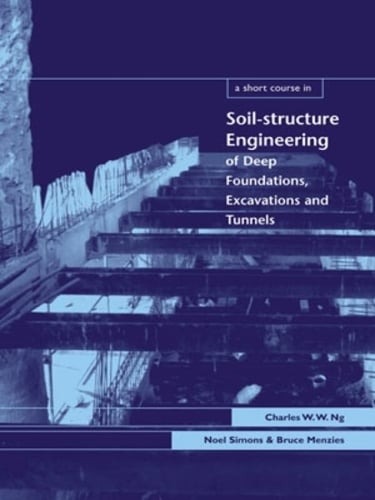
A Short Course in Soil-structure Engineering of Deep Foundations, Excavations and Tunnels, focuses on the three major geotechnical challenges of static soil-structure interaction problems. Deep foundations - piles, barrettes, Multi-propped deep excavations and Bored and open face tunnels beneath cities. This book gives both students and practising civil engineers an authoritative review of the state-of-the-art of designing deep foundations, excavations and tunnels. In addition, the case studies and numerical modelling presented will give valuable insights into the challenges of soil-structure engineering.

The interaction between mathematicians and statisticians reveals to be an effective approach to the analysis of insurance and financial problems, in particular in an operative perspective. The Maf2006 conference, held at the University of Salerno in 2006, had precisely this purpose and the collection here published gathers some of the papers presented at the conference and successively worked out to this aim. They cover a wide variety of subjects in insurance and financial fields, all treated in light of the successful cooperation between the two quantitative methods.
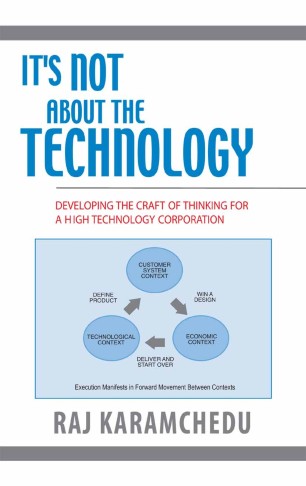
This book is not about a new concept, or a new technique. It tackles the big questions of how to develop the craft of the thinking that is required of us in high technology companies. It is predicated on a radical notion that, even though the problematic is the execution in a high technology corporation, neither a high level market strategy nor the kind of technology itself matters, insofar as learning the craft of execution goes. How marketers and engineers comprehend a context uniquely shapes the ways they interact, engage in decision-making phenomenon, and eventually their execution performance in a company. The breakdown of their interaction occurs when the individual contexts of a marketer and an engineer are permanently secluded from one another.this book methodically demystifies the key to successful execution in the high technology space

سوريا - اتستراد درعا - غباغب
+963-15 2050 - 15 860 380 /1/2/3 - 11 662 3900