


تحسين النتائح
ترتيب حسب
من
الى


Bone and Cartilage Engineering presents the theory and practice of cell-based regeneration of skeletal defects. Much of the focus is on the importance of the cell biological and biomaterial aspects for engineering a clinically relevant device. The basic key techniques for optimal engineering outcomes including cell and organ culture, biomaterial development, and bioreactor use are described in detail and highlighted by multiple figures.
Provides a comprehensive overview of the biosimilar regulatory framework, the development process and clinical aspects for development of biosimilars. The development path of a biosimilar is just as unique as a development path of a new drug, tailored by the mechanism of action, the quality of the molecule, published information on the reference product, the current competitive environment, the target market and regulatory guidance, and most importantly, the emerging totality of evidence for the proposed biosimilar during development.

Written for industrial and academic researchers and development scientists in the life sciences industry, Bioprocessing Technology for Production of Biopharmaceuticals and Bioproducts is a guide to the tools, approaches, and useful developments in bioprocessing. This important guide: •Summarizes state-of-the-art bioprocessing methods and reviews applications in life science industries •Includes illustrative case studies that review six milestone bio-products •Discuses a wide selection of host strain types and disruptive bioprocess technologies
Since the first volume on Biophysical Techniques in Photosynthesis Research, published in 1996, new experimental techniques and methods have been devised at a rapid pace. The present book is a sequel which complements the first volume (Volume 3 in the Series) by providing a comprehensive overview of the most important new techniques developed over the past ten years, especially those that are relevant for research on the mechanism and fundamental aspects of photosynthesis. The contributions are written by leading scientists in their field. The book has 5 sections: Imaging; Structure; Optical and laser spectroscopy; Magnetic resonance; Theory. Each chapter describes the basic concepts of the technique, practical applications and scientific results. Possibilities and limitations from a technical as well as a scientific point of view are addressed, allowing the reader not only to recognize the potential of a particular method for his/her own quest, but also to assess the resources that are required for implementation. The book is intended for use by graduate students and researchers in photosynthesis as well as in (bio)physics, (bio)chemistry and biology in general.

Presents reproducible and step-by-step procedures for the peptide synthesis, their characterization and applications. The volume includes an introductory section on in silico modelling of new peptide molecules, Molecular Dynamics Simulations, Docking, Electrostatic fingerprinting of peptides, and other modelling tools for peptide designing and optimization. Further, it covers protocols for the solid phase peptide synthesis, chromatographic and mass spectrometric characterization of peptides. Importantly, it covers methods for biophysical characterizations of peptides for their potential applications as drug delivery vehicles, peptide nano-assembly, bionanocatalysis, protein aggregation diseases, and peptide-based anti-bacterial.
This book follows "Bio-mechanisms of Animals in Swimming and Flying" published in 2004 including 11 chapters. This time, the book includes 31 chapters on the latest researches into natural autonomous systems and locomotion in both flying and swimming organisms. The area of sports science such as analysis and simulation of human swimming is newly added. The computational frameworks for the modeling, simulation and optimization of animals in swimming and flying demonstrate an important role in the progress of interdisciplinary work in the fields of biology and engineering. An innovative technology is exhibited for the flight of an insect size micro air vehicle. Neuronal science is not only unveiling the locomotion mechanisms of swimming in fish from the aspect of the neuronal activities, but also applied to underwater biomimetic robots. The interdisciplinary works are exhibited in the fields of biology and engineering, yielding real-world benefits in innovative technologies.
Looks at the applications of biomarkers as important tools for herbal drug discovery, presenting research on phytoconstituents with advanced nanotechnological applications for healthcare benefits. Herbal drug discovery based on biomarkers is an emerging area in complementary and alternative medicine that has tremendous potential in healthcare. Conventional medications have limited efficacy and high toxicity, whereas herbal drugs are said to provide wide structural diversity that is not usually seen with conventional/synthetic drug molecules. Recognition of various herbal constituents, such as terpenoids, fatty acids, flavonoids and steroids, are well explored in the management and treatment of various disorders in this volume. These agents target various biomarkers such as nitric oxide (NO), cytokines, chemokines, adhesion molecules, NF- kβ, lipoxygenase (LOX), and arachidonic acid. Reviews the literature on inflammatory biomarkers in the treatment of diseases Looks at the development of herbal drug discovery based on biomarkers Explores emerging concepts of nanomedicines for herbal drug delivery Takes an interdisciplinary approach, with application to disciplines related to medical, pharmaceutical, biotechnological, Ayurvedic, Unani and biomedical engineering fields
he most conspicuous biological invasions in terrestrial ecosystems have been by exotic plants, insects and vertebrates. Less conspicuous but possibly of equal importance are invasions by soil invertebrates, which are occurring literally beneath our feet. Familiar examples include the South American fire ant (Solenopsis invicta) which has invaded North America and Australia, and the New Zealand flatworm (Arthurdendyus triangulatus) which has become wide-spread in the United Kingdom; both have caused considerable ecological and economic damage. There is now evidence that exotic earthworm invasions are increasing world-wide and may be having significant impacts on soil processes and plant communities in some regions. Much remains to be learned about these ‘cryptic’ biological invasions. The papers in this book are based on efforts by an international group of soil ecologists to assess the biological and ecological mechanisms of earthworm invasions, their geographic extent and impacts on terrestrial ecosystems, and possible means by which earthworm invasions might be mitigated.
Presents the latest information on bioinformatics tools, artificial intelligence, machine learning, computational methods, protein interactions, peptide-based drug design, and omics technologies. And include bioinformatics tools for the pharmaceutical sector and the healthcare sector. Bioinformatics brings a new era in research to accelerate drug target and vaccine design development, improving validation approaches as well as facilitating and identifying side effects and predicting drug resistance. As such, this will aid in more successful drug candidates from discovery to clinical trials to the market, and most importantly make it a more cost-effective process overall.
Quantitative tools are becoming increasingly important in order to understand complex cascade of signal transduction events, pathways or biochemical reactions. The book showcases how computational techniques and algorithms are applied to biological data analysis, interpretation, and modelling. It covers applications in drug design and discovery, immune systems, phylogenetic analysis and protein structures.

Biogeography considers the distribution of biological units over a wide range of scales. The units range from genotypes, populations and species to families and higher taxa. Processes can be local, such as the isolation on islands due to sea-level fluctuations, or large-scale tectonic processes that separates continents and creates oceans. In all processes time is an important factor and by combining data on recent patterns with paleontological data the understanding of the distribution of extant taxa can be improved. This volume focuses on speciation due to isolation in island-like settings, and the evolution of large-scale diversity as the result of origination, maintenance and extinction.
This book brings an updated state of the art of phylogenetic diversity in conservation biology. Nineteen chapters written by scientists from research institutions of fourteen countries demonstrate that approaches for preserving the evolutionary heritage are now very tuned into human impacts and sustainability issues. The questions, methods and applications around which it is organized show the importance of phylogenetic diversity in avoiding biodiversity losses in the present extinction crisis. They touch important points such as the way we value phylogenetic diversity, the importance of thinking at a much wider sample of the Tree of Life, the choice of adequate measures. In methods section, new solutions, such as dealing with abundances, sampling effort, or with information coming from conflicting phylogenetic trees are provided. Application section includes study cases of different groups of organi
This stimulating new edition of the well-respected title Biochemistry and Molecular Biology of Antimicrobial Drug Action primarily covers medically important antimicrobial agents, but also includes some compounds not in current medical use which have been invaluable as research tools in biochemistry.
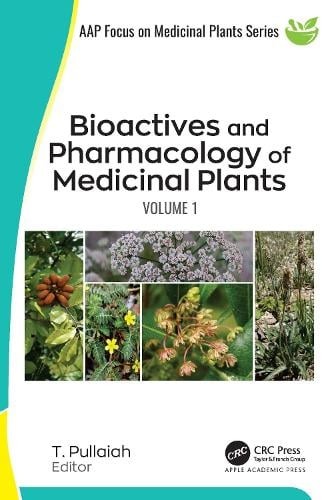
Bioctives and Pharmacology of Medicinal Plants, concisely presents an abundance of important information on the bioactive and pharmacological properties of medicinal plants. It provides valuable comprehensive research and studies on bioactive phytocompounds of over 68 important medicinal plants with beneficial properties. For each species included in the volume, a brief introduction is given along with their bioactive compounds and chemical structures, followed by their chief pharmacological activities that include antiviral, antimicrobial, antioxidant, anti-cancer, anti-inflammatory, antidiabetic, hepatoprotective, nephroprotective, and cardioprotective activities. A review of the published literature on pharmacological activities on each species is included also, providing a thorough resource on each of the plants covered in the volume.
Includes a description of the Alpha-, Beta-, Delta-, and Epsilonproteabacteria (1256 pages, 512 figures, and 371 tables). This large taxa include many well known medically and environmentally important groups.

Includes a description of the Gammaproteobacteria (1203 pages, 222 figures, and 300 tables). This large taxon includes many well known medically and environmentally important groups.

New three-dimensional endoanal and endorectal ultrasonographic and magnetic resonance imaging techniques have given better insight into the complex anatomy of the pelvic floor and its pathologic modification in benign anorectal diseases. Obstetrical events leading to fecal incontinence in females, the relationship between fistulous tracks and the sphincter complex, and mechanisms of obstructed defecation syndrome can now be accurately evaluated, which is of fundamental importance for decision making.

Before AIDS, the role of behavioral interventions in preventing transmission of sexually transmitted diseases was acknowledged in text books and journals but rarely promoted effectively in public health practice. Informed by a comprehensive knowledge of behavioral theory, intervention methods, and affected populations, the authors of this important book examine the central role of behavioral interventions in combating STDs. The book addresses the complexities and social contexts of human behaviors which spread STDs, the cultural barriers to STD education (ranging from conservative mores to "stay out of my bedroom" libertarianism), and the sociopolitical nuances surrounding treatment.
Interest in beetle conservation has long been evident, with many papers treating these abundant, ecologically important and popular insects. However, this issue of Journal of Insect Conservation is the first to be dedicated entirely to beetles, and contains a number of papers, predominantly from outside western Europe, to demonstrate the variety and scope of problems and conservation concerns that surround these insects. A short introductory perspective is followed by eight original contributions, in which beetles from many parts of the world are considered, and in which some major threats to their wellbeing are evaluated.
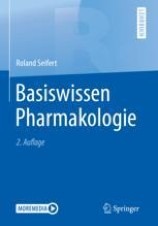
Offers a clear and concise overview of all exam-relevant pharmacology content. It guides you through the entire foundational knowledge, from the basics to the most important clinical pictures, in an easily understandable way and aligned with the German National Competency-Based Learning Objectives for Medicine (GK) and National Competency-Based Learning Objectives for Medicine (NKLM). Benefit from the lecturer's many years of experience, who has carefully selected and presented the essential information for you.

سوريا - اتستراد درعا - غباغب
+963-15 2050 - 15 860 380 /1/2/3 - 11 662 3900