



الصفحة 4
الصفحة 4

Guide to Deep Learning Basics : Logical, Historical and Philosophical Perspectives
This stimulating text/reference presents a philosophical exploration of the conceptual foundations of deep learning, presenting enlightening perspectives that encompass such diverse disciplines as computer science, mathematics, logic, psychology, and cognitive science. The text also highlights select topics from the fascinating history of this exciting field, including the pioneering work of Rudolf Carnap, Warren McCulloch, Walter Pitts, Bulcsú László, and Geoffrey Hinton.
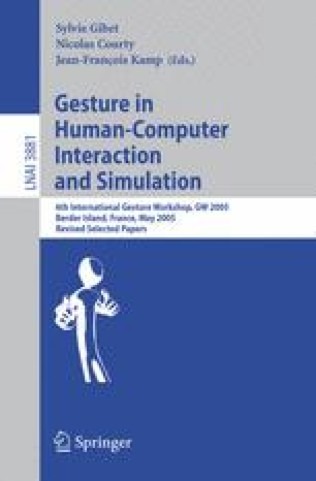
Gesture in Human-Computer Interaction and Simulation ; 6th International Gesture Workshop, GW 2005, Berder Island, France, May 18-20, 2005, Revised Selected Papers
The international Gesture Workshops have become the leading interdisciplinary events for dissemination of the latest results on gesture-based communication. The goal of these workshops is to bring together researchers who want to meet and share ideas on advanced research on gesture related to multidisciplinary scienti?c ?elds. Depending on the ?elds, the objectives can be very di?erent. While physiology and biomechanics aim to extract fundamental knowledge of physical gesture, computer sciences try to capture di?erent aspects of gesture and extract features that help to identify, interpret or rebuild the underlying mechanisms of communication gestures. Other approaches and methodologies are followed by cognitive sciences and linguistics, bringing a complementary - derstanding of motor control and gesture meaning. The results can be enhanced by technological applications or demonstrations.

Genetic Systems Programming : Theory and Experiences
This book is devoted to reporting innovative and significant progress about the contribution of genetic programming in systems programming. The contributions of this book clearly demonstrate that genetic programming is very effective in solving hard and yet-open problems in systems programming. Followed by an introductory chapter, in the remaining contributed chapters, the reader can easily learn about systems where genetic programming can be applied successfully. These include but are not limited to, information security systems, compilers, data mining systems, stock market prediction systems, robots and automatic programming.

Gene Expression Programming : Mathematical Modeling by an Artificial Intelligence
This monograph provides all the implementation details of GEP so that anyone with elementary programming skills will be able to implement it themselves. The book also includes a self-contained introduction to this new exciting field of computational intelligence, including several new algorithms for decision tree induction, data mining, classifier systems, function finding, polynomial induction, times series prediction, evolution of linking functions, automatically defined functions, parameter optimization, logic synthesis, combinatorial optimization, and complete neural network induction. The book also discusses some important and controversial evolutionary topics that might be refreshing to both evolutionary computer scientists and biologists.

Foundations of Intelligent Systems ; Vol. 4203 ; 16th International Symposium, ISMIS 2006, Bari, Italy, September 27-29, 2006, Proceedings
This book constitutes the refereed proceedings of the 16th International Symposium on Methodologies for Intelligent Systems, ISMIS 2006. The book presents 81 revised papers together with 3 invited papers. Topical sections include active media human-computer interaction, computational intelligence, intelligent agent technology, intelligent information retrieval, intelligent information systems, knowledge representation and integration, knowledge discovery and data mining, logic for AI and logic programming, machine learning, text mining, and Web intelligence.

Forging New Frontiers : Fuzzy Pioneers I
The 2005 BISC International Special Event-BISCSE’05 " FORGING THE FRONTIERS" was held in the University of California, Berkeley, “WHERE FUZZY LOGIC BEGAN, from November 3 – 6, 2005. The successful applications of fuzzy logic and it’s rapid growth suggest that the impact of fuzzy logic will be felt increasingly in coming years. Fuzzy logic is likely to play an especially important role in science and engineering, but eventually its influence may extend much farther. In many ways, fuzzy logic represents a significant paradigm shift in the aims of computing - a shift which reflects the fact that the human mind, unlike present day computers, possesses a remarkable ability to store and process information which is pervasively imprecise, uncertain and lacking in categoricity.

Fluid Mechanics : An Introduction to the Theory of Fluid Flows
Advancements of fluid flow measuring techniques and of computational methods have led to new ways to treat laminar and turbulent flows. These methods are extensively used these days in research and engineering practise. This also requires new ways to teach the subject to students at higher educational institutions in an introductory manner. The book provides the knowledge to students in engineering and natural science needed to enter fluid mechanics applications in various fields. Analytical treatments are provided, based on the Navier-Stokes equations. Introductions are also given into numerical and experimental methods applied to flows. The main benefit the reader will derive from the book is a sound introduction into all aspects of fluid mechanics covering all relevant subfields.

Finite Elements in Structural Analysis : Theoretical Concepts and Modeling Procedures in Statics and Dynamics of Structures
Introduces the basic concepts of the finite element method in the static and dynamic analysis of beam, plate, shell and solid structures, discussing how the method works, the characteristics of a finite element approximation and how to avoid the pitfalls of finite element modeling. Presenting the finite element theory as simply as possible, the book allows readers to gain the knowledge required when applying powerful FEA software tools. Further, it describes modeling procedures, especially for reinforced concrete structures, as well as structural dynamics methods, with a particular focus on the seismic analysis of buildings, and explores the modeling of dynamic systems. Featuring numerous illustrative examples, the book allows readers to easily grasp the fundamentals of the finite element theory and to apply the finite element method proficiently.

Finite Element Methods for Engineering Sciences : Theoretical Approach and Problem Solving Techniques
This self-tutorial offers a concise yet thorough grounding in the mathematics necessary for successfully applying FEMs to practical problems in science and engineering. The enlarged English-language edition, based on the original French, also contains a chapter on the approximation steps derived from the description of nature with differential equations and then applied to the specific model to be used.

Expert Clouds and Applications ; Proceedings of ICOECA 2021
Features original papers from International Conference on Expert Clouds and Applications (ICOECA 2021), organized by GITAM School of Technology, Bangalore, India during February 18–19, 2021. It covers new research insights on artificial intelligence, big data, cloud computing, sustainability, and knowledge-based expert systems. The book discusses innovative research from all aspects including theoretical, practical, and experimental domains that pertain to the expert systems, sustainable clouds, and artificial intelligence technologies.

Evolutionary Swarm Robotics : Evolving Self-Organising Behaviours in Groups of Autonomous Robots
In this book the use of ER techniques for the design of self-organising group behaviours, for both simulated and real robots is introduced. This research has a twofold value. From an engineering perspective, an automatic methodology for synthesising complex behaviours in a robotic system is described.

Evolutionary Scheduling
Evolutionary scheduling is a vital research domain at the interface of two important sciences - artificial intelligence and operational research. Scheduling problems are generally complex, large scale, constrained, and multi-objective in nature, and classical operational research techniques are often inadequate at solving them effectively. With the advent of computation intelligence, there is renewed interest in solving scheduling problems using evolutionary computational techniques. These techniques, which include genetic algorithms, genetic programming, evolutionary strategies, memetic algorithms, particle swarm optimization, ant colony systems, etc, are derived from biologically inspired concepts and are well-suited to solve scheduling problems since they are highly scalable and flexible in terms of handling constraints and multiple objectives. This edited book gives an overview of many of the current developments in the large and growing field of evolutionary scheduling, and demonstrates the applicability of evolutionary computational techniques to solve scheduling problems, not only to small-scale test problems, but also fully-fledged real-world problems.

Evolutionary Computation in Practice
This book is loaded with examples in which computer scientists and engineers have used evolutionary computation—programs that mimic natural evolution—to solve real problems. They aren’t abstract, mathematically intensive papers, but accounts of solving important problems, including tips from the authors on how to avoid common pitfalls, maximize the effectiveness and efficiency of the search process, and many other practical suggestions.

Evolutionary Computation in Dynamic and Uncertain Environments
This book provides a compilation on the state-of-the-art and recent advances of evolutionary algorithms in dynamic and uncertain environments within a unified framework. The motivation for this book arises from the fact that some degree of uncertainty in characterizing any realistic engineering systems is inevitable. Representative methods for addressing major sources of uncertainties in evolutionary computation, including handle of noisy fitness functions, use of approximate fitness functions, search for robust solutions, and tracking moving optimums, are presented. "Evolutionary Computation in Dynamic and Uncertain Environments" is a valuable reference for scientists, researchers, professionals and students in the field of engineering and science, particularly in the areas of computational intelligence, natural computing and evolutionary computation.

Evaluation of text summaries based on linear optimization of content metrics
Covers both theoretical contributions and practical applications in security system design by applying the Internet of Things (IoT) and CI. It further explains the application of IoT in the design of modern security systems and how IoT blended with computational intel- ligence can make any security system improved and realizable. Key features: Focuses on the computational intelligence techniques of security system design Covers applications and algorithms of discussed computational intelligence techniques Includes convergence-based and enterprise integrated security systems with their applications Explains emerging laws, policies, and tools affecting the landscape of cyber security Discusses application of sensors toward the design of security systems This book will be useful for graduate students and researchers in electrical, computer engineering, security system design and engineering

Enhancing Cognitive Assistance Systems with Inertial Measurement Units
The primary goal of this book is the specification, design and testing of an inertially stabilized camera platform for assistance systems with the focus on adaptive inertial measurement.

E-Learning Methodologies : Fundamentals, technologies and applications
Covers state of the art topics including user modeling for e-learning systems and cloud, IOT, and mobile-based frameworks. It also considers security challenges and ethical conduct using Blockchain technology. E-learning has become an important part of our educational life with the development of e-learning systems and platforms and the need for online and remote learning. ICT and computational intelligence techniques are being used to design more intelligent and adaptive systems. However, the art of designing good real-time e-learning systems is difficult as different aspects of learning need to be considered including challenges such as learning rates, involvement, knowledge, qualifications, as well as networking and security issues. The earlier concepts of standalone integrated virtual e-learning systems have been greatly enhanced with emerging technologies such as cloud computing, mobile computing, big data, Internet of Things (IoT), AI and machine learning, and AR/VT technologies.

Discrete-Time High Order Neural Control : Trained with Kaiman Filtering
The objective of this work is to present recent advances in the theory of neural control for discrete-time nonlinear systems with multiple inputs and multiple outputs. The book presents solutions for the output trajectory tracking problem of unknown nonlinear systems based on four schemes.

Digital Image Processing : An Algorithmic Introduction using Java
This modern, self-contained, textbook explains the fundamental algorithms of digital image processing through practical examples and complete Java implementations.

Differential Evolution Algorithm with Type-2 Fuzzy Logic for Dynamic Parameter Adaptation with Application to Intelligent Control
This book focuses on the fields of fuzzy logic, bio-inspired algorithm, especially the differential evolution algorithm and also considering the fuzzy control area. The main idea is that these two areas together can help solve various control problems and to find better results. In this book, the authors test the proposed method using five benchmark control problems. First, the water tank, temperature, mobile robot, and inverted pendulum controllers are considered. For these 4 problems, experimentation was carried out using a Type-1 fuzzy system and an Interval Type-2 system. The last control problem was the D.C. motor, for which the experiments were performed with Type-1, Interval Type-2, and Generalized Type-2 fuzzy systems. When we use fuzzy systems combined with the differential evolution algorithm, we can notice that the results obtained in each of the controllers are better and with increasing uncertainty, the results are even better. For this reason, the authors consider in this book the proposed method using fuzzy systems and the differential evolution algorithm to improve the fuzzy controllers’ behavior in complex control problems.
