


تحسين النتائح
ترتيب حسب
من
الى


Block coplolymers have been studied for several decades, a period that has been punctuated by a number of books and review articles on the topic. Despite this history, the subject is far from exhausted and, if anything, has experienced a strong renewal in recent years. This has been speartheaded by a vast variety of new block copolymers, the important development of powerful visualization techniques, AFM in particular, that have become readily available, as well as motivating visions of nanotechnological applications. In this context, this new two-volume book, with its focus on the most recent developments in the area, is timely,

Block copolymers have been studied for several decades, a period that has been punctuated by a number of books and review articles on the topic. Despite this history, the subject is far from exhausted and, if anything, has experienced a strong renewal in recent years. This has been spearheaded by a vast variety of new block copolymers, the important development of powerful visualization techniques, AFM in particular, that have become readily available, as well as motivating visions of nanotechnological applications. In this context, this new two-volume book, with its focus on the most recent developments in the area, is timely
One area that has attracted much attention is the use of cell factories for the production of a wide range of chemicals. This area illustrates very well the definition of biochemical engineering , and it has therefore been chosen as the focus of this volume. The use of cell factories for production of chemicals dates back to the production of penicillin, ethanol, acetone–butanol, glycerol and further to enzymes and other antibiotics. All these products were traditionally produced by cell factories that naturally produce these compounds. With the introduction of genetic engineering it has,This volume therefore contains chapters on concepts of metabolic engineering on detailed modeling of cellular systems

An international board of authors from universities, research institutes, and industries describe various biotechnological methods ranging from laboratory, to pilot evaluation and to full-scale process implementation. Topics include bioprocesses for the treatment of odors and air pollutants in wastewater treatment plants, rendering plants, chemical production facilities, and food and flavor manufacturing facilities. In addition to the basic microbiological and engineering aspects, the design, modeling and control of bioreactors are also presented.
In Biotechnology for Fuels and Chemicals: The Twenty-Ninth Symposium, leading US and international researchers from academia, industry, and government exchange cutting-edge technical information and update current trends in the development and application of biotechnology for sustainable production of fuels and chemicals. This symposium emphasizes advances in biotechnology to produce high-volume, low-price products from renewable resources, while improving the environment. The major areas of interest include advanced feedstock production and processing, enzymatic and microbial biocatalysis, bioprocess research and development, opportunities in biorefineries, and commercialization of biobased products. International and domestic progress on producing liquid biofuels, especially ethanol and biodiesel, is highlighted, and related topics, including bioseparations and optimal integration of biochemical and thermochemical conversion technologies, are featured.
In Biotechnology for Fuels and Chemicals: The Twenty-Eighth Symposium, leading US and international researchers from academia, industry, and government exchange cutting-edge technical information and update current trends in the development and application of biotechnology for sustainable production of fuels and chemicals. This symposium emphasizes advances in biotechnology to produce high-volume, low-price products from renewable resources, while improving the environment. The major areas of interest include advanced feedstock production and processing, enzymatic and microbial biocatalysis, bioprocess research and development, opportunities in biorefineries, and commercialization of biobased products.

The past 30 years have seen the emergence of a growing desire worldwide to take positive actions to restore and protect the environment from the degrading effects of all forms of pollution: air, noise, solid waste, and water. The Handbook of Environmental Engineering series guides readers to answer the fundamental questions facing pollution in the modern era – How serious is pollution? Is the technology needed to abate it not only available, but feasible? Among the topics included in this, the sixth edition, are: biosolids, flotation thickening, anaerobic and aerobic digestion, pressurized ozonation, lime stabilization, elutriation and polymer conditioning, and animal waste treatment.
Covers trends in modern biotechnology All aspects of this interdisciplinary technology, where knowledge, methods and expertise are required from chemistry, biochemistry, microbiology, genetics, chemical engineering and computer science, are treated

Biophotonics and Coherent Systems in Biology offers a timely research volume derived from papers submitted at the 3rd International Alexander Gurwitsch Conference. Biophotonics and Coherent Systems in Biology covers the major aspects of modern biophotonics and related biological and biophysical problems of interest to researchers today.Key topics include: Coherency of biophoton emission and its related physical and biological properties , Biological effects of microwaves, Photon emission from living samples, starting from human bodies up to cell cultures, Fundamental role of water in bioenergetics and the influence of electromagnetic fields upon hydrophobic-hydrophilic balance
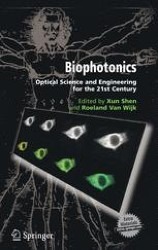
Biophotonics: Optical Science and Engineering in the 21st Century serves as an ideal aid to the research and development of these areas integrating light, photonics, and biological systems.Key topics include: Fluctuation Correlation Spectroscopy in Cells: Determination of Molecular Aggregation ,Using GFP and FRET Technologies for Studying Signaling Mechanisms of Apoptosis in a Single Living Cell, Study on Protein-Protein Interaction in Single Living Cells, Functional Optical Coherence Tomography: Simultaneous In Vivo Imaging of Tissue Structure and Physiology, Imaging –Photo- and Sonodynamic Diagnosis of Cancer Mediated by Chemiluminescence Probes, Biophotonic Analysis of Spontaneous Self-Organizing Oxidative Processes in Aqueous Systems, Biophoton Emission and Defense Systems in Plants

Bioorganometallic Chemistry has become a mature area of science and is comprehensively covered by leading experts in this book. Naturally occuring bioorganometallic complexes, such as vitamin B12 and recently discovered iron and nickel hydrogenases, including a possible role of the latter in the geochemical theory of the origin of life, are considered.

BioNanoFluidic MEMS explains nanofabrication and nanomaterials synthesis suitable for the development of biosensors. The fundamentals initiate an awareness for engineers and scientists who would like to develop and implement novel biosensors for various applications. In addition, the material covered includes: BioNanoFluidic MEMS connection between the interdisciplinary nature of BioNanoFluidics and MEMS BioNanoFluidics and sensor technology including Micro-Mechanical Sensors and Chemical Sensor Technologies ands-on steps for implementation of biosensor fabrication including a discussion of the clean room lithography process and etching, microsensor systems lamination, PDMS moulding, parylene deposition, and others Interconnection between the interdisciplinary nature of BioNanoFluidics and MEMS BioNanoFluidics and sensor technology including Micro-Mechanical Sensors and Chemical Sensor Technologies

In nature, biological organisms produce mineralized tissues such as bone, teeth, diatoms, and shells. Biomineralization is the sophisticated process of production of these inorganic minerals by living organisms. Construction of organic–inorganic hybrid materials with controlled mineralization analogous to those produced by nature has recently received much attention because it can aid in understanding the mechanisms of the biomineralization process and development of biomimetic materials processing. The biomineralization processes use aqueous solutions at temperatures below 100 ◦C and no toxic intermediates are produced in these systems. This series presents critical reviews of the present position and future trends in modern chemical research. The short and concise reports on chemistry are each written by world renowned experts. This series is still valid and useful after 5 or 10 years.

The five chapters of Biomineralization, volume 1, provide a bridge between the mineralogy and the organic substrates that enable the mineral formation by organisms in nature and under laboratory conditions. The book is a most useful reference for all concerned with biomineralization and biogenic minerals.In nature, biological organisms produce mineralized tissues such as bone, teeth, diatoms, and shells. Biomineralization is the sophisticated process of production of these inorganic minerals by living organisms. Construction of organic–inorganic hybrid materials with controlled mineralization analogous to those produced by nature has recently received much attention because it can aid in understanding the mechanisms of the biomineralization process and development of biomimetic materials processing.

Interfacial electrochemistry of redox metalloproteins and DNA-based molecules is presently moving towards new levels of structural and functional resolution. This is the result of powerful interdisciplinary efforts. Underlying fundamentals of biological electron and proton transfer is increasingly well understood although with outstanding unresolved issues. Comprehensive bioelectrochemical studies have mapped the working environments for bioelectrochemical electron transfer, supported by the availability of mutant proteins and other powerful biotechnology. Introduction of surface spectroscopy, the scanning probe microscopies, and other solid state and surface physics methodology has finally offered exciting new fundamental and technological openings in interfacial bioelectrochemistry of both redox proteins and DNA-based molecules.

Deals with genetic maps, from the problem of sequence comparison and alignment, including DNA chips and genomic rearrangement. It thus covers a wide variety of topics relating to algorithmic and combinatorial processing of questions arising from molecular bioinformatics and biotechnology.

In line with the current focus on a sustainable economy, bioethanol and other biofuels have received tremendous attention, making many headlines. Being produced in steadily growing volumes has made it necessary to consider production of biofuels from renewable raw materials that are not currently used. Therefore, the production of biofuels is at the gateway of moving from traditional raw materials to others such as lignocellulosic materials. However, sucha transfer requires new production processes that are economically feasible.This volume addresses and discusses the current status of biofuels, covering aspects from enabling technologies to different technology and processes options, as well as economical and policy perspectives.

Environmental and political concerns are generating a growing interest in alternative engine fuels such as biodiesel. Biodiesel is a renewable energy source produced from natural oils and fats, which can be used as a substitute for petroleum diesel without the need for diesel engine modification. In addition to being biodegradable and non-toxic, biodiesel is also essentially free of sulfur and aromatics, producing lower exhaust emissions than conventional gasoline whilst providing similar properties in terms of fuel efficiency.

Plants play a key role in purifying the biosphere of the toxic effects of industrial activity. This book shows how systematic application of the results of investigations into the metabolism of xenobiotics (foreign, often toxic substances) in plants could make a vastly increased contribution to planetary well-being. Deep physiological knowledge gained from an accumulation of experimental data enables the great differences between the detoxifying abilities of different plants for compounds of different chemical nature to be optimally exploited. Hence planting could be far more systematically adapted to actual environmental needs than is actually the case at present.
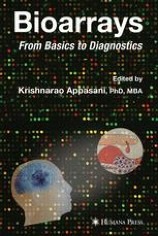
Bioarrays: From Basics to Diagnostics provides an integrated and comprehensive collection of timely articles on the use of bioarray techniques in the fields of biotechnology and molecular medicine. The entire volume is broken into four sections – Bioarray Technology Platforms, Biomarkers and Clinical Genomics, Biomarker Identification Using Clinical Proteomics and Glycomics, and Emerging Technologies in Diagnostics – that create one well-integrated work. Particular emphasis is placed on DNA, protein, and carbohydrate biochips. The volume also looks extensively at oligonucleotides, cDNA, proteins, antibodies, and carbohydrate arrays.

سوريا - اتستراد درعا - غباغب
+963-15 2050 - 15 860 380 /1/2/3 - 11 662 3900