


تحسين النتائح
ترتيب حسب
من
الى


Friederici describes the basic language functions and their brain basis; the language networks connecting different language-related brain regions; the brain basis of language acquisition during early childhood and when learning a second language, proposing a neurocognitive model of the ontogeny of language; and the evolution of language and underlying neural constraints. She finds that it is the information exchange between the relevant brain regions, supported by the white matter tract, that is the crucial factor in both language development and evolution.

"Well, it’s not rocket science, is it?" How many times have you heard people use that expression when they mean something pretty simple? There are other areas of science and technology that are arguably more challenging than rocket science, but no other (perhaps apart from brain surgery) has entered mainstream English vocabulary as a byword for ‘difficult’.
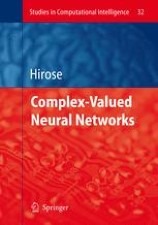
This book is the first monograph ever on complex-valued neural networks, which lends itself to graduate and undergraduate courses in electrical engineering, informatics, control engineering, mechanics, robotics, bioengineering, and other relevant fields. It is useful for those beginning their studies, for instance, adaptive signal processing for highly functional sensing and imaging, control in unknown and changing environment, brainlike information processing, robotics inspired by human neural systems, and interdisciplinary studies to realize comfortable society. It is also helpful to those who carry out research and development regarding new products and services at companies.
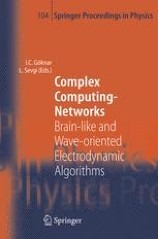
This book uniquely combines new advances in the electromagnetic and the circuits&systems theory. It integrates both fields regarding computational aspects of common interest. Emphasized subjects are those methods which mimic brain-like and electrodynamic behaviour; among these are cellular neural networks, chaos and chaotic dynamics, attractor-based computation and stream ciphers.
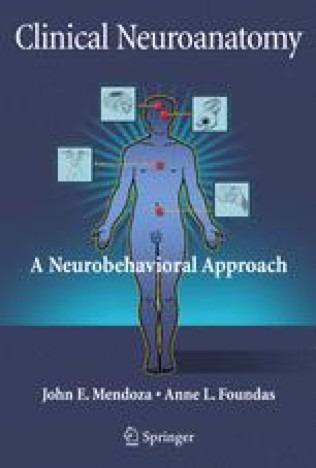
This book begins with a traditional review of the basic internal and external morphology, major nerve and fiber tracts, behavioral correlates, and clinical syndromes associated with spinal cord, brain stem, and cerebellum designed to reacquaint students and practicing clinicians with the functional anatomy of the subtentorial central nervous system. However, as the text was specifically geared to meet the needs of those practitioners whose primary interest is in what might be termed "higher order cognitive-behavioral function," the main focus of the text is on the brain itself. Borrowing heavily from a Lurian tradition, the central chapters reflect an attempt to offer more detailed, integrated, and, at times, theoretical models of cortical systems and their internal organization. Additional chapters highlight vascular anatomy and associated pathology, as well as neurochemical systems and their potential clinical relevance.
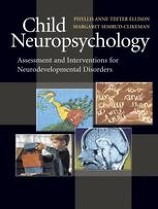
Child Neuropsychology guides therapists and neurologists toward common goals: early, accurate diagnosis and finely focused interventions across disciplines. By analyzing the affects of brain development on children and adolescents’ behavioral, cognitive, learning, and psychosocial abilities and deficits, this groundbreaking volume brings vital perspectives to assessment and treatment. Leading experts Ellison and Semrud-Clikeman start with the basics of child clinical neuropsychology and functional neuroanatomy, taking readers through examination protocols and assessment instruments to treatment planning and methods. In this volume, the authors address the full range of neurodevelopmental pathologies, from learning disabilities to autism, ADHD to CNS disorders, traumatic brain injury to fetal alcohol syndrome.

This sequel to the authors’ Psychological Knowledge in Court offers a welcome expansion on key concepts, terms, and issues in causality, bringing much needed clarity to psychological injury assessments and the legal contexts that employ them. Focusing on PTSD, traumatic brain injury, and chronic pain (and grounding readers in salient U.S. and Canadian case law), Causality sets out a multifactorial causality framework to facilitate admissibility of psychological evidence in court. Issues concerning malingering are examined in depth, as are clinical gray areas that can jeopardize validity. At the same time, the book clearly explains what lawyers and clinicians need to understand about each other’s work—of crucial importance since the two sides often seem to speak at cross-purposes.

This WTEC study gathered information on worldwide status and trends in BCI research to disseminate to government decisionmakers and the research community. The study reviewed and assessed the state of the art in sensor technology, the biotic-abiotic interface and biocompatibility, data analysis and modeling, hardware implementation, systems engineering, functional electrical stimulation, noninvasive communication systems, and cognitive and emotional neuroprostheses in academic research and industry.
processing with precise temporal and spatial resolutions, respectively. This book presents data obtained from various studies employing behavioral, electrophysiological and imaging methodologies in different languages focusing on the regular reading process and the dyslexic population.Educators and researchers within neuroscience, literacy, and special education will benefit from Brain Research in Language.
This book addresses a large variety of models in mathematical and computational neuroscience.He devotes the main part to the synchronization problem. He presents neural net models more realistic than the conventional ones by taking into account the detailed dynamics of axons, synapses and dendrites, allowing rather arbitrary couplings between neurons. He gives a complete stabile analysis that goes significantly beyond what has been known so far. He also derives pulse-averaged equations including those of the Wilson--Cowan and the Jirsa-Haken-Nunez types and discusses the formation of spatio-temporal neuronal activity pattems. An analysis of phase locking via sinusoidal couplings leading to various kinds of movement coordination is included.
Brain Dynamics serves to introduce graduate students and nonspecialists from various backgrounds to the field of mathematical and computational neurosciences. Some of the advanced chapters will also be of interest to the specialists. The book approaches the subject through pulse-coupled neural networks, with at their core the lighthouse and integrate-and-fire models, which allow for the highly flexible modelling of realistic synaptic activity, synchronization and spatio-temporal pattern formation. Topics also include pulse-averaged equations and their application to movement coordination. The book closes with a short analysis of models versus the real neurophysiological system.

Visual perception is the most important of the human senses. Lack of visual perception is one of the main causes of accidents. The safety of vehicle traffic depends on how well automotive lighting supports the visual perception of the driver. This book explains the fundamentals of visual perception, like e.g. physiology of eye and brain, as well as those of automotive lighting technology, like e.g. design of headlamps and signal lights. It is an interdiciplinary approach to a fastly evolving field of science and technology, answering questions like "How does information enter our brain when driving a car?" and "What are the benefits and dangers of LED signal lighting?"

This book is written from an engineer's perspective of the mind. "Artificial Mind System" exposes the reader to a broad spectrum of interesting areas in general brain science and mind-oriented studies. In this research monograph a picture of the holistic model of an artificial mind system and its behaviour is drawn, as concretely as possible, within a unified context, which could eventually lead to practical realisation in terms of hardware or software. With a view that "the mind is a system always evolving", ideas inspired by many branches of studies related to brain science are integrated within the text, i.e. artificial intelligence, cognitive science / psychology, connectionism, consciousness studies, general neuroscience, linguistics, pattern recognition / data clustering, robotics, and signal processing.

The book discovers an unappreciated unity to Arnheim’s thinking. Not content to simply summarize Arnheim’s theory, however, Arnheim, Art, and Gestalt goes on to enrich (and occasionally question) Arnheim’s findings with the contemporary results of gestalt-theoretical research from around the world, but especially in Italy and Germany. The result is a workable overview of the psychology of art with bridges built to contemporary research, making Arnheim’s approach living and sustainable.
A didactic concept is undertaken for microelectronics, computer technology and communication engineering, which deals with the visualization of signals and processes in addition to graphical programming of signal processing systems. Through the utilization of a professional and globally supported software for metrology and control engineering, DasyLab, useful applications can be developed, modified and optimized. Computer supported processing of real signals is made possible over the sound card and the parallel port. Over two hundred pre-programmed signal engineering systems and design transparencies are provided. Pictures also play a dominant rule in this book: there are numerous introduction-videos, one for every chapter, more than 250 high-quality pictures and - most important – all the "living" experiments and their results are visualized. With this learning system, readers can now make use of "equipment" and software, which was practically unaffordable for individuals in the past. What's more, here is a very new concept for learning Signal Processing, not only from the physically-based scientific fundamentals, but also from the didactic perspective, based on modern results of brain research.

This book presents a sample of the most recent research concerning the application of computational intelligence techniques and internet technology in computer games. The contents include: - COMMONS GAME in intelligent environment - Adaptive generation of dilemma-based interactive narratives - Computational intelligence in racing games - Evolutionary algorithms for board game players with domain knowledge - The ChessBrain project - Electronic market games - EVE’s entropy - Capturing player enjoyment in computer games This book is directed to researchers, practicing engineers/scientists and students.
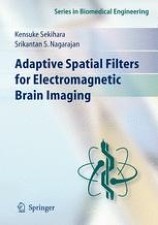
Adaptive spatial filters are powerful algorithms for electromagnetic brain imaging that enable high-fidelity reconstruction of neuronal activity. This book describes the technical advances of adaptive spatial filters for electromagnetic brain imaging by integrating and synthesizing available information and describes various factors that affect its performance.
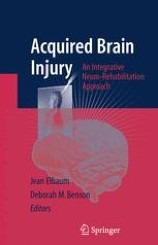
Regardless of etiology, such as accident, tumor, stroke or assault, acquired brain injury presents numerous challenges for survivors, caregivers and treating professionals. Interdisciplinary and integrated evaluations, treatment, and management can mean the difference between successful recovery and unfortunate outcomes. The first book to present a comprehensive team approach to rehabilitation of ABI survivors, Acquired Brain Injury gives medical and clinical specialists a deeper understanding of not only each others' roles, but also their complementary functions.

سوريا - اتستراد درعا - غباغب
+963-15 2050 - 15 860 380 /1/2/3 - 11 662 3900