



الصفحة 38
الصفحة 38

Atkins’ physical chemistry
Widely acknowledged by both students and lecturers around the globe to be the textbook of choice for studying physical chemistry. Now in its twelfth edition, the text has been enhanced with additional learning features, and the writing style has been refreshed to resonate with the modern student.

Astrophysical concepts
This classic text, aimed at senior undergraduates and beginning graduate students in physics and astronomy, presents a wide range of astrophysical concepts in sufficient depth to give the reader a quantitative understanding of the subject. Emphasizing physical concepts, the book outlines cosmic events but does not portray them in detail: it provides a series of astrophysical sketches. For this fourth edition, nearly every part of the text has been reconsidered and rewritten, new sections have been added to cover recent developments, and others have been extensively revised and brought up to date. The book begins with an outline of the scope of modern astrophysics and enumerates some of the outstanding problems faced in the field today. The basic physics needed to tackle these questions are developed in the next few chapters using specific astronomical processes as examples. The second half of the book enlarges on these topics and shows how we can obtain quantitative insight into the structure and evolution of stars, the dynamics of cosmic gases, the large-scale behavior of the Universe, and the origins of life.
Astroparticle physics
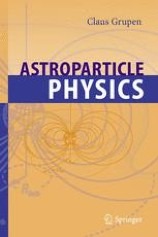
The book describes the branch of astrophysics in which processes in the universe are investigated with experimental methods known from particle physics experiments. After a historical introduction to the basics of elementary particles, their interactions and the relevant detection techniques are described. The main body of the book concerns cosmic rays. The modern aspects of astroparticle physics are described in a chapter on cosmology. The book provides an orientation in the field of astroparticle physics that many beginners might look for. The physics issues are presented with little mathematics, and the results are illustrated by many diagrams. The reader has a chance to enter this field of astrophysics with a book that closes the gap between expert and popular level.
Astronomical image and data analysis
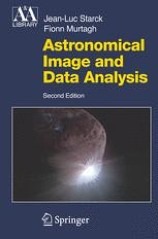
With information and scale as central themes, this comprehensive survey explains how to handle real problems in astronomical data analysis using a modern arsenal of powerful techniques. It treats those innovative methods of image, signal, and data processing that are proving to be both effective and widely relevant. The coverage includes chapters or appendices on: detection and filtering; image compression; multichannel, multiscale, and catalog data analytical methods; wavelets transforms, Picard iteration, and software tools. This second edition of Starck and Murtagh's highly appreciated reference again deals with topics that are at or beyond the state of the art. It presents material which is more algorithmically oriented than most alternatives and broaches new areas like ridgelet and curvelet transforms. Throughout the book various additions and updates have been made.
Aspects of mathematical modelling : Applications in science, medicine, economics and management
The construction of mathematical models is an essential scientific activity. Mathematics has long been associated with developments in the exact sciences and engineering, but more recently mathematical modelling has been used to investigate complex systems that arise in many other fields. The contributors to this book demonstrate the application of mathematics to modern research topics in ecology and environmental science, health and medicine, phylogenetics and neural networks, theoretical chemistry, economics and management. The reader will find some review papers outlining current research directions in hot topics such as pattern formation and applications to medicine, and more targeted research papers on current developments in the various disciplines included.

Arzneimittel, giftstoffe, kunststoffe, farbstoffe, pestizide = Pharmaceuticals, toxins, plastics, dyes, pesticides
Spells out which methods in which cases produce the most comprehensive results. Beschreibt alle modernen Spektroskopiemethoden in Theorie und Praxis. Behandelt die schnelle und effektive Identifikation von Giftstoffen. Enthält zahlreiche Absorptions- und Massenspektren aus der Zentralkartei der Bayer AG.
Arts of Allusion : Object, Ornament, and Architecture in Medieval Islam
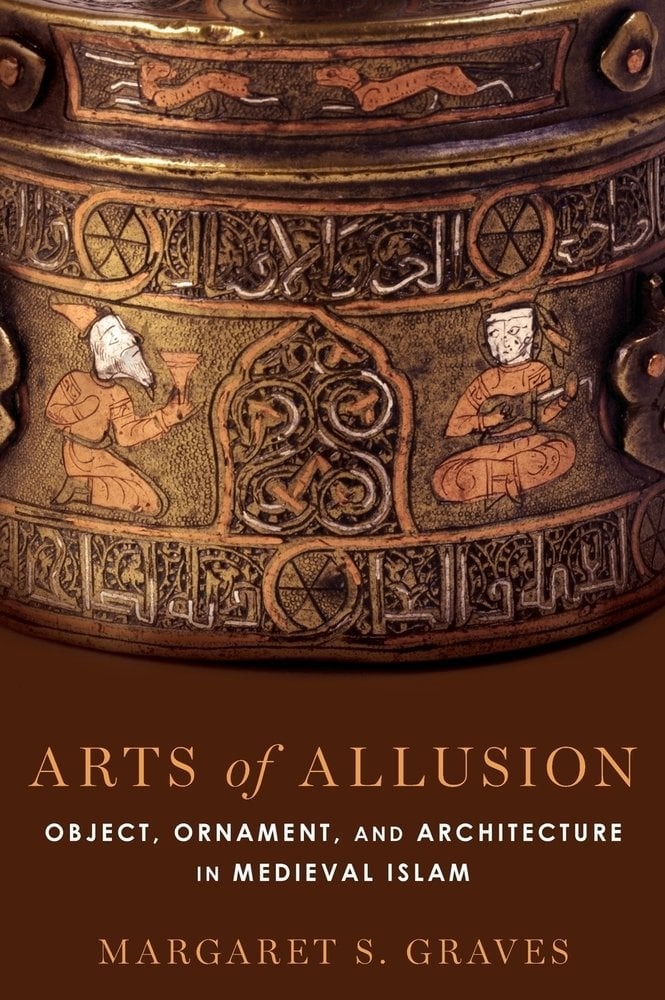
The art of the object reached unparalleled heights in the medieval Islamic world, yet the deep intellectual dimensions of ceramics, metalwares, and other plastic arts in this milieu have not always been acknowledged. Arts of Allusion reveals the object as a crucial site where premodern craftsmen of the eastern Mediterranean and Persianate realms engaged their creations in fertile dialogue with poetry, literature, painting, and, perhaps most strikingly, architecture. Through close studies of objects from the ninth to the thirteenth centuries, this book reveals that allusions to architecture abound across media in the portable arts of the medieval Islamic world.
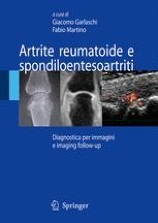
Artrite reumatoide e spondiloentesoartriti : Diagnostica per immagini e imaging follow-up = Rheumatoid Arthritis and Spondyloentesoarthritis : Follow-up imaging and imaging
Recent technological evolutions in diagnostic imaging have allowed him to grasp the anatomical and functional alterations that characterize the onset phase of degenerative and inflammatory arthropathies. In the context of the latter, in particular, imaging is not only fundamental in the diagnosis of the early stage of arthritis but also in defining their evolution and response to modern therapeutic treatment. The evaluation of a new imaging semeiology, which makes considerable use of the use of contrast medium in relation to both power Doppler and magnetic resonance imaging, has made it possible to narrow the gap between histology and imaging in rheumatological diagnostics.
Artificial sight : Basic research, biomedical engineering, and clinical advances
Artificial sight is a frontier area of modern ophthalmology combining the multidisciplinary skills of surgical ophthalmology, biomedical engineering, biological physics, and psychophysical testing. Many scientific, engineering, and surgical challenges must be surmounted before widespread practical applications can be realized. The goal of Artificial Sight is to summarize the state-of-the-art research in this exciting area, and to describe some of the current approaches and initiatives that may help patients in a clinical setting.
Artificial life models in software
Artificial Life Models in Software presents software tools, environments and realities dealing with creation, imitation and analysis of artefactual, virtual and living forms, written by those who personally design and produce software, hardware and art installations in artificial life, simulated complex systems and virtual worlds. This timely volume offers a nearly exhaustive overview and original analysis of major non-profit artificial life software packages. The carefully selected topics include: · simulation of real and imaginary life forms and their evolution · self-organization · emergent behaviours · swarm intelligence · evolutionary robotics · agent-based simulations · adaptive, complex and biologically inspired ecosystems · creative computer art There has long been a need within the academic and research community for an informal introduction and guidance to modern software tools for modelling and simulation of life-like phenomena – Artificial Life Models in Software fills this gap and provides invaluable information to both professional and amateur readers, offering detailed reviews of contemporary software for artificial life.

Artificial Intelligence in Intelligent Systems ; Proceedings of 10th Computer Science On-line Conference 2021, Vol.2
This book constitutes the refereed proceedings of the artificial intelligence in intelligent systems section of the 10th Computer Science Online Conference 2021 (CSOC 2021), held online in April 2021. Artificial intelligence in intelligent systems topics are presented in this book. Modern hybrid and bio-inspired algorithms and their application are discussed in selected papers.
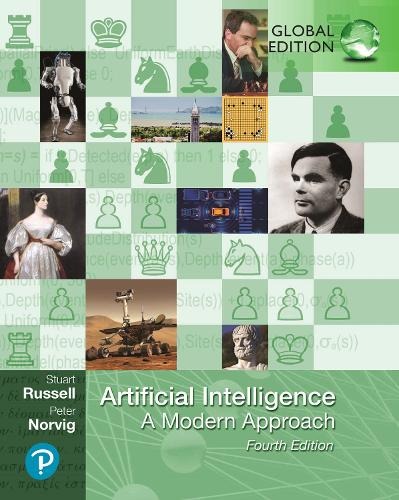
Artificial intelligence : A modern approach ; global ed.
Explores the full breadth and depth of the field of artificial intelligence (AI). The 4th edition brings readers up to date on the latest technologies, presents concepts in a more unified manner, and offers new or expanded coverage of machine learning, deep learning, transfer learning, multi agent systems, robotics, natural language processing, causality, probabilistic programming, privacy, fairness, and safe AI
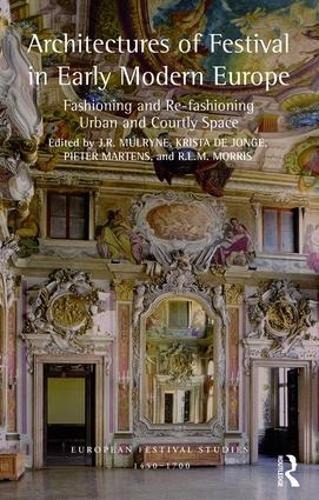
Architectures of festival in early modern Europe : Fashioning and re-fashioning urban and courtly space
Draws on up-to-date research by a Europe-wide group of academic scholars and museum and gallery curators to provide a unique, intellectually-stimulating and beautifully-illustrated account of temporary architecture created for festivals of the sixteenth and seventeenth centuries, together with permanent architecture pressed into service for festival occasions across major European locations including Italian, French, Austrian, Scottish and German.
Architecture of advanced numerical analysis systems: designing a scientific computing system using ocaml
Applies the functional OCaml programming language to numerical or computational weighted data science, engineering, and scientific applications. This book is based on the authors' first-hand experience building and maintaining Owl, an OCaml-based numerical computing library. You'll first learn the various components in a modern numerical computation library. Then, you will learn how these components are designed and built up and how to optimize their performance. After reading and using this book, you'll have the knowledge required to design and build real-world complex systems that effectively leverage the advantages of the OCaml functional programming language.

Architecture and the modern hospital : Nosokomeion to Hygeia
Explores the rapid evolution of hospital design in the twentieth century, analysing the ways in which architects and other specialists reimagined the modern hospital. It examines how the vast expansion of medical institutions over the course of the century was enabled by new approaches to architectural design and it highlights the emerging political conviction that physical health would become the cornerstone of human welfare.
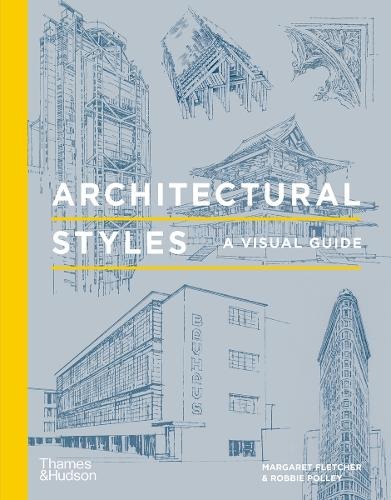
Architectural styles : A visual guide
It begins with the earliest styles of the ancient civilizations – Egypt, Greece and Rome – before travelling through Medieval, Renaissance and Baroque and into the modern world via the panoply of 19th century revivalist styles. Also covered is the traditional architecture of China, India, Japan and Pre-Columbian America. A final section gathers together key architectural elements from different periods – columns, towers, doorways, windows.
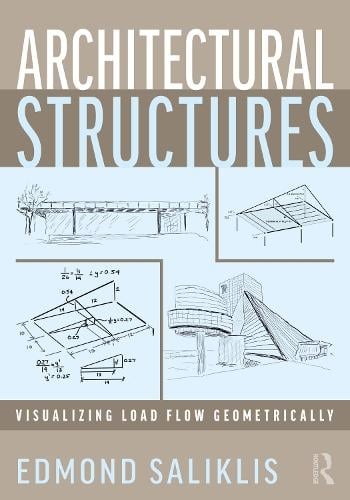
Architectural structures : Visualizing load flow geometrically
Presents an alternative approach to understanding structural engineering load flow using a visually engaging and three-dimensional format. This book presents a ground-breaking new way of establishing equilibrium in architectural structures using the Modern Müller-Breslau method. Includes approachable coverage of parametric modeling of two-dimensional and three-dimensional structures, as well as more advanced topics such as indeterminate structural analysis and plastic analysis. Hundreds of detailed drawings created by the author are included throughout to aid understanding. Architecture and structural engineering students can employ this novel method by hand sketching, or by programming in parametric design software.
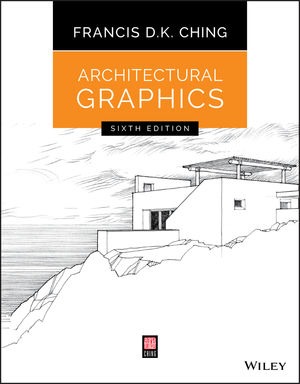
Architectural graphics ; 6th ed.
Offers a comprehensive introduction to using graphic tools and drafting conventions to translate architectural ideas into effective visual presentations, using hundreds of the author's distinctive drawings to illustrate the topic effectively. Includes new information on orthographic projection in relation to 3D models, and revised explanations of line weights, scale and dimensioning, and perspective drawing to clarify some of the most difficult concepts. New examples of modern furniture, APA facilities, and presentation layout provide more up-to-date visuals, and the Reference Center features all new animations, videos, and practice exercises. Architectural graphics are key tools for conveying design through representation on paper or on screen, and this book is the ultimate guide to mastering the skill, then applying your talent to create more effective design communication.
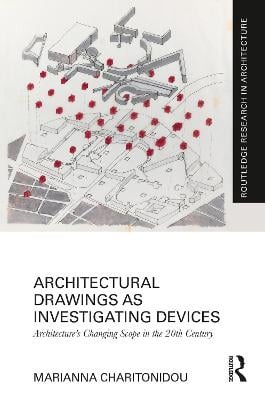
Architectural drawings as investigating devices : Architecture’s changing scope in the 20th century
Explores how the changing modes of representation in architecture and urbanism relate to the transformation of how the addressees of architecture and urbanism are conceived. Diagnoses the dominant epistemological debates in architecture and urbanism during the 20th and 21st centuries. It traces their transformations, paying special attention to Le Corbusier and Ludwig Mies van der Rohe’s preference for perspective representation, to the diagrams of Team 10 architects, to the critiques of functionalism, and the upgrade of the artefactual value of architectural drawings in Aldo Rossi, John Hejduk, Peter Eisenman, and Oswald Mathias Ungers, and, finally, to the reinvention of architectural programme through the event in Bernard Tschumi and the Office for Metropolitan Architecture (OMA). Particular emphasis is placed on the spirit of truth and clarity in modernist architecture, the relationship between the individual and the community in post-war era architecture, the decodification of design process as syntactic analogy and the paradigm of autonomy in the 1970s and 1980s architecture, the concern about the dynamic character of urban conditions and the potentialities hidden in architectural programme in the post-autonomy era.
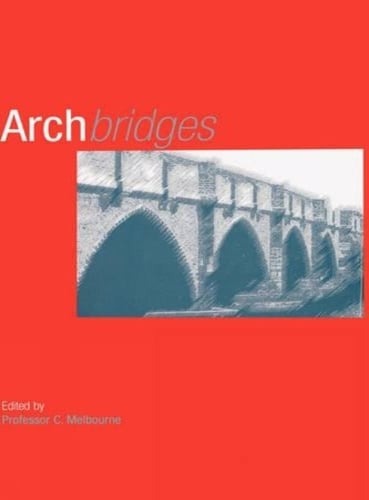
Arch bridges : Proceedings of the first international conference on arch bridges held at Bolton, UK on 3–6 September 1995
In the twentieth century bridge engineers have seen many changes. Advances in technology, materials and engineers understanding of structural behaviour and methods of analysis has presented opportunities for innovation and have led to increasingly sophisticated solutions to the basic problem of providing a bridge over an obstacle. However, despite these innovative technological changes, the masonry arch bridge has shown itself to be a durable, cost-effective structure, tolerant of its modern environment and out-performing many of its competitors.
