



الصفحة 38
الصفحة 38
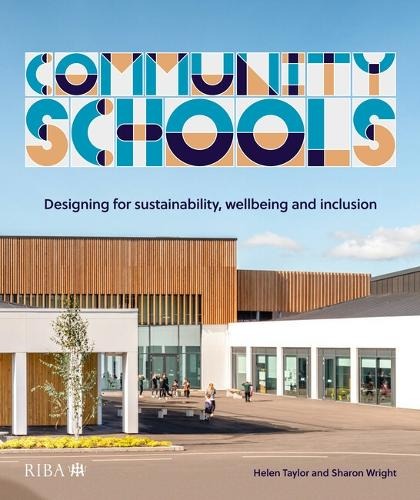
Community schools : Designing for sustainability, wellbeing and inclusion
Reconsiders what is required from physical school environments, building on the learning gathered from the sector over the past two decades. To meet the new social, environmental and economic challenges it advocates designing differently, both in terms of the form that buildings take and the evaluation of their impact and performance. By calling for a reframing of the way that schools are regarded as community-wide amenities, this book explores the potential for architects to deliver design in a manner that supports healthy lifestyles and promotes wellbeing. Through encouraging social connections, new possibilities open up for educational facilities to become open, welcoming and inclusive. Featuring: Over 12 international case studies from practices including: Architype, Argyll + Bute, Bogle Architects, DRMM, Revaerk, Scott Brownrigg and XDGA. Key themes of wellbeing, connectivity, inclusion, indicators and evaluation. Practical guidance and learning points throughout. A new design brief for community schools
Community Quality-of-Life Indicators : Best Cases VIII
Offers critical insights into the thriving international field of community indicators, incorporating the experiences of government leaders, philanthropic professionals, community planners and a wide range of academic disciplines. It illuminates the important role of community indicators in diverse settings and the rationale for the development and implementation of these innovative projects. details many of the practical “how to” aspects of the field as well as lessons learned from implementing indicators in practice. The case studies included here also demonstrate how, using a variety of data applications, leaders of today are monitoring and measuring progress and communities are empowered to make sustainable improvements in their wellbeing.

Community Quality-of-Life Indicators : Best Cases II
This book is second in a series covering best practices in community quality-of-life (QOL) indicators. The first volume in this series is a compilation of cases of best work in community indicators research. This second volume continues to build on the goal of the series and includes eleven cases (chapters). The cases in both volumes describe communities that have launched their own community indicators programs.
Commodity marketing : Strategies, concepts, and cases
Commoditization is a major challenge for companies in a wide range of industries, and commodity marketing has become a priority for many top managers. This book tackles the key issues associated with the marketing of commodities and the processes of commoditization and de-commoditization. It summarizes the state of the art on commodity marketing, providing an overview of current debates. It also offers managerial insights, case studies, and guidance to help manage and market commodity goods and services.
Clinical Neuroembryology : Development and Developmental Disorders of the Human Central Nervous System
Combines data from human embryology, animal research and developmental neuropathology. This book provides an overview of the development of the human Central Nervous System (CNS) in the context of its many developmental disorders due to genetic, environmental and hypoxic causes. It highlights numerous clinical cases and contains over 400 figures.
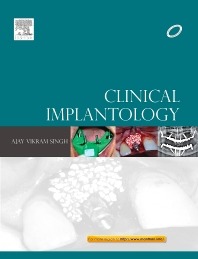
Clinical Implantology
Provides all the new and relevant information of basic to advanced implantology for the undergraduate as well as postgraduate dental students. Current concepts of implantology are beautifully presented with illustrations and clinical cases making this book a complete literature for the dentists to learn the basic science and various advanced techniques of implantology like sinus grafting, nasal floor grafting, block grafting, ridge splitting, distraction osteogenesis, soft tissue grafting, ‘all-on-4’/‘all-on-6’ techniques and many more.

Clinical guide to oral implantology : step by step procedures
Guides dentists through the complete surgical process, from basic techniques, impressions and sinus grafting, to complete denture stabilisation, implant aesthetics, suturing, and more. Complete chapters are dedicated to complications and their management, and a selection of challenging cases. Key points Practical guide to oral implantology for dental surgeons Covers basic surgery and more complex issues including complications and their management

Clinical guide to oral diseases
A concise reference on the common diseases encountered in daily practice. Presenting a large selection of clinical cases, this user-friendly resource covers a range of oral and perioral lesions located in hard and soft tissues of the mouth and neck, as well as oral manifestations of various systemic diseases. Nearly 300 high-quality color images complement succinct descriptions of clinical cases seen in both community and hospital care settings. Provides nearly 300 high-quality clinical photos and relevant questions to help lead readers to the proper diagnosis of common oral diseases Contains concise tables relevant to each chapter with a list of common oral lesions and conditions Offers MCQs of varying levels of difficulty to help readers test their knowledge in Oral Medicine Includes clinical flow charts according to the location and duration of oral lesions Incorporates the ICD-10 Codes of oral lesions and diseases

Clinical evaluation of medical devices : Principles and case studies
It include the many innovations and clinical research methods that have developed since the first edition, as well as current information on the regulatory, legal, and reimbursement environment for medical devices. The book's deeply experienced authors summarize the key principles and approaches employed in medical device clinical trials and illustrate their uses in a revealing series of detailed, real-world case studies.
Clinical consultation skills in medicine : A primer for MRCP PACES
Follows the revised format of the Practical Assessment Clinical Examination Skills (PACES) exam conducted by the Royal College of Physicians in the UK, where ‘clinical consultation skills’ will be tested twice in two separate stations. Thus, coming closest to what doctors do in real life: obtain a structured history, perform a focussed examination and explain the problem to the patient in lay terms. This book takes readers through a rational approach to 63 common presenting symptoms or laboratory abnormalities in medicine. It is aimed at improving the clinical consultation skills of young doctors and preparing them for the new format of MRCP PACES
Clinical Chemistry
Clinical Chemistry considers what happens to the body’s chemistry when affected by disease. It provides introductory coverage of the scientific basis for biochemistry tests routinely used in medicine - including tests for the assessment of organ function, diagnosis and monitoring disease activity and therapy efficacy. Each topic area begins with a concise description of the underlying physiological and biochemical principles and then applies them to patient investigation and management. The regular use of case histories helps further emphasise clinical relevance and chapter key points, as well as provide a useful starting point for examination revision.

Clinical Cases in Periodontics ; 2nd ed.
Clinical Cases in Periodontics offers: A thorough introduction to periodontic examination and diagnosis, including documentation, plaque, and non-plaque induced gingivitis A comprehensive exploration of non-surgical periodontal therapy, including local anatomic factors contributing to periodontal disease and local drug delivery Practical discussions of resective periodontal therapy, including gingivectomy and flap osseous surgery In-depth examinations of regenerative therapy, including the treatment of furcation and guided bone regeneration The latest advances in inter-disciplinary care, encompassing orthodontics, prosthodontics, and implant dentistry

Clinical cases in periodontics ; 1st ed.
Describes the core principles of periodontics and demonstrates their practical, every-day application through a range of representative cases building from the simple to the complex and from the common to the rare. This unique approach supports the new trend in case-based and problem-based learning, thoroughly covering topics ranging from infant oral health to complex pulp therapy.

Clinical cases in pediatric dentistry ; 2nd ed.
Features comprehensive updates to all 66 cases to include the latest diagnostic and treatment techniques. Each chapter also includes brand-new cases, for a total of 13 entirely new cases. The most current references to the literature, best practices, and evidence based clinical guidelines, plus new and updated self‐assessment questions with detailed answers and explanations, have been added to all the cases. Presents updated content, clinical guidelines, and references in existing cases, with thirteen brand new case scenarios Takes an easy-to-follow format, with patient history and diagnostics, questions, and answers, and explanations for each case Part of the "Clinical Cases" series applying both theory and practice to actual clinical cases Includes access to a companion website featuring additional case studies, charts, tables, web links, and the figures from the book in PowerPoint
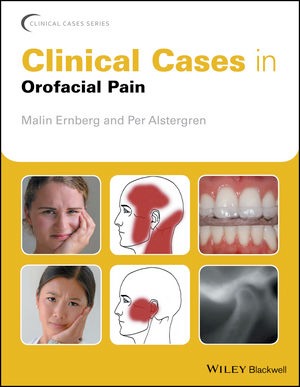
Clinical Cases in Orofacial Pain
Individual cases cover temporomandibular joint disorders, masticatory muscle disorders, headache, neuropathic pain, dental pain, tooth wear, and dystonia. Following the popular Clinical Cases series style, cases are presented with associated academic commentary, including background information, diagnostic criteria and fundamental points that might influence the diagnosis, treatment planning or management of the case.

Clinical cases in nail disorders
Designed to facilitate the diagnosis of nail disorders though presentation of clinical cases. Each case will drive the reader to the correct diagnosis following simple steps that will be specifically indicated for each case. These include dermoscopic evaluation, pathology and the use of other specific tools depending on the diagnosis.

Clinical cases in implant dentistry
Presents 49 actual clinical cases, accompanied by academic commentary, that question and educate the reader about essential topics in implant dentistry, encompassing diagnosis, surgical site preparation and placement, restoration, and maintenance of dental implants. Unique case-based format supports problem-based learning Promotes independent learning through self-assessment and critical thinking Highly illustrated with full-color clinical cases Covers all essential topics within implant dentistry
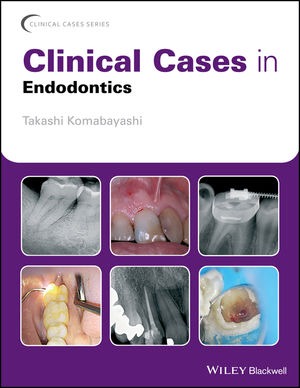
Clinical cases in endodontics
Presents actual clinical cases, accompanied by academic commentary, that question and educate the reader about essential topics in endodontic therapy. It begins with sets of cases illustrating the most common diagnoses and the steps involved in preparing a treatment plan. Subsequent chapters continue in this style, presenting exemplary cases as the basis of discussing various treatment options, including nonsurgical root canal treatment, re-treatment, periapical surgery, internal and external resorption, emergencies and trauma, and treating incompletely developed apices.

Clinical cases in early orthodontic treatment an atlas of when, how, and why to treat
Describes the most common types of malocclusion in children and presents illustrated step-by-step guidance on the procedures employed in their management, with the focus on early intervention. Advice is provided on the challenging decisions of when to start orthodontic treatment and whether to choose a one-phase or a two-phase treatment, taking into account the malocclusion, its severity, and its etiology.

Clinical cases in dental hygiene
An indispensable resource to understanding both the theory and practice of dental hygiene, illustrated by real-life cases in a clinically relevant format. Offers a unique case-based format that supports problem-based learning Promotes independent learning through self-assessment and critical thinking Includes a wealth of relevant cases for understanding dental procedures and management of patients. Covers all essential topics within the scope of dental hygiene
