



الصفحة 37
الصفحة 37

Arabian Deserts : Nature, origin and evolution
This is the first comprehensive survey of all the deserts of Arabia, based largely on the author's 50 years of experience there. The text deals with every kind of desert in the region, from vast sand seas to clay pans and stony plains to volcanic flows.
Applied soft computing technologies : The challenge of complexity
This volume presents the proceedings of the 9th Online World Conference on Soft Computing in Industrial Applications (WSC9), September 20th - October 08th, 2004, held on the World Wide Web. It contains plenary lectures, original papers and tutorials presented during the conference. The book brings together outstanding research and developments in the field of soft computing (evolutionary computation, fuzzy logic, neural networks, and their fusion) and its applications in science and technology.

Applied Fuzzy Arithmetic : An Introduction with Engineering Applications
Applied Fuzzy Arithmetic provides a well-structured compendium that offers both a deeper knowledge about the theory of fuzzy arithmetic and an extensive view on its applications in the engineering sciences, making it a resource for students, researchers, and practical engineers. The first part of the book gives an introduction to the theory of fuzzy arithmetic, which aims to present the subject in a well-organized and comprehensible form. The derivation of fuzzy arithmetic from the original fuzzy set theory and its evolution towards a successful implementation is presented with existing formulations of fuzzy arithmetic included and integrated in the overall context. The second part of the book presents a diversified exposition of the application of fuzzy arithmetic, addressing different areas of the engineering sciences, such as mechanical, geotechnical, biomedical, and control engineering.
Applied computational materials modeling : Theory, simulation and experiment
this book provides the average person working in the materials field with a more balanced perspective of the role that computational modeling can play in every day research and development efforts. This is done by presenting a series of examples of the successful application of various computational modeling procedures (everything from first principles to quantum approximate to CALPHAD methods) to real life surface and bulk alloy problems.This book should have a large appeal in the materials community, both for experimentalists who would greatly benefit from adding computational methods to their everyday research regimes, as well as for those scientists/engineers familiar with a particular computational method who would like to add complementary techniques to their arsenal of research and development tools

Applications of simulation methods in environmental and resource economics
Simulation methods are revolutionizing the practice of applied economic analysis. This volume collects eighteen chapters written by leading researchers from prestigious research institutions the world over. The common denominator of the papers is their relevance for applied research in environmental and resource economics. The topics range from discrete choice modeling with heterogeneity of preferences, to Bayesian estimation, to Monte Carlo experiments, to structural estimation of Kuhn-Tucker demand systems, to evaluation of simulation noise in maximum simulated likelihood estimates, to dynamic natural resource modeling. Empirical cases are used to show the practical use and the results brought forth by the different methods.

Applications of evolutionary computing ; Vol. 3907 : EvoWorkshops 2006: EvoBIO, EvoCOMNET, EvoHOT, EvoIASP, EvoINTERACTION, EvoMUSART, and EvoSTOC, Budapest, Hungary, April 10-12, 2006, Proceedings
This book constitutes the refereed joint proceedings of seven workshops on evolutionary computing, EvoWorkshops 2006, held in Budapest, Hungary, in April 2006. The 65 revised full papers and 13 revised short papers presented were carefully reviewed and selected from a total of 149 submissions. In accordance with the seven workshops covered, the papers are organized in topical sections on evolutionary bioinformatics, evolutionary computation in communications, networks, and connected systems, evolutionary computation in hardware optimization, evolutionary computation in image analysis and signal processing, interactive evolution and humanized computational intelligence, evolutionary music and art, and evolutionary algorithms in stochastic and dynamic environments.

Applications of evolutionary computing ; Vol. 3449 ; Evoworkshops : EvoBIO, EvoCOMNET, EvoHot, EvoIASP, EvoMUSART, and EvoSTOC
Evolutionary computation (EC) techniques are e?cient nature-inspired pl- ning and optimization methods based on the principles of natural evolution and genetics. Due to their e?ciency and the simple underlying principles, these methods can be used for a large number of problems in the context of problem solving,optimization,andmachinelearning. Alargeandcontinuouslyincreasing number of researchers and practitioners make use of EC techniques in many - plication domains. The book at hand presents a careful selection of relevant EC applications combined with thorough examinations of techniques for a successful application of EC. The presented papers illustrate the current state of the art in the application of EC and should help and inspire researchers and practitioners to develop e?cient EC methods for design and problem solving.
Applications of evolutionary computing ; EvoWorkshops 2008 : EvoCOMNET, EvoFIN, EvoHOT, EvoIASP, EvoMUSART, EvoNUM, EvoSTOC, and EvoTransLog, Naples, Italy, March 26-28, 2008. Proceedings
This volume presents a careful selection of relevant EC examples combined with a thorough examination of the techniques used in EC. The papers in the volume illustrate the current state of the art in the application of EC and should help and - spire researchers and professionals to develop e?cient EC methods for design and problem solving.

Applications of evolutionary computing ; EvoWorkshops 2007 : EvoCOMNET, EvoFIN, EvoIASP, EvoINTERACTION, EvoMUSART, EvoSTOC, and EvoTransLog, Valencia, Spain, April 11-13, 2007, Proceedings
This volume contains contributions for EvoCOMNET, EvoFIN, EvoIHOT, EvoMUSART, EvoSTIM, and EvoTRANSLOC. The 51 revised full papers presented were carefully reviewed and selected from numerous submissions. This volume presents an overview about the latest research in EC. Areas where evolutionary computation techniques have been applied range from telecommunication networks to complex systems, finance and economics, games, image analysis, evolutionary music and art, parameter optimization, scheduling, and logistics. These papers may provide guidelines to help new researchers tackling their own problem using EC.
Applications of computational intelligence in biology : Current trends and open problems
The purpose of this book is to provide a medium for such an exchange of expertise and concerns. In order to achieve the goal, we have solicited cont- butions from both computational intelligence as well as biology researchers.

Applications of computational intelligence
Computational intelligence (CI) is the theory, design, application, and development of biologically and linguistically motivated computational paradigms. Traditionally, the three main pillars of CI have been neural networks, fuzzy systems, and evolutionary computation. However, in time, many nature-inspired computing paradigms have evolved. Thus, CI is an evolving field, and, at present, in addition to the three main constituents, it encompasses computing paradigms such as ambient intelligence, artificial life, cultural learning, artificial endocrine networks, social reasoning, and artificial hormone networks. CI plays a major role in developing successful intelligent systems, including games and cognitive developmental systems.

Antioxidants effects in health : The bright and the dark side ; 1st ed.
Examines the role that antioxidants play in a variety of health and disease situations. The book discusses antioxidants’ historical evolution, their oxidative stress, and contains a detailed approach of 1) endogenous antioxidants, including endogenous sources, mechanisms of action, beneficial and detrimental effects on health, in vitro evidence, animal studies and clinical studies; 2) synthetic antioxidants, including sources, chemistry, bioavailability, legal status, mechanisms of action, beneficial and detrimental effects on health, in vitro evidence, animal studies and clinical studies; and 3) natural antioxidants, including sources, chemistry, bioavailability, mechanisms of action, possible prooxidant activity; beneficial and detrimental effects on health, in vitro evidence, animal studies and clinical studies. Throughout the boo, the relationship of antioxidants with different beneficial and detrimental effects are examined, and the current controversies and future perspectives are addressed and explored. Antioxidants Effects in Health: The Bright and the Dark Side evaluates the current scientific evidence on antioxidant topics, focusing on endogenous antioxidants, naturally occurring antioxidants and synthetic antioxidants. It will be a helpful resource for pharmaceutical scientists, health professionals, those studying natural chemistry, phytochemistry, pharmacognosy, natural product synthesis, and experts in formulation of herbal and natural pharmaceuticals.
Anticipatory Behavior in Adaptive Learning Systems : From Brains to Individual and Social Behavior
Anticipatory behavior in adaptive learning systems is steadily gaining the - terest of scientists, although many researchers still do not explicitly consider the actual anticipatory capabilities of their systems.The introductory chapter of this volume therefore does not only provide an overview of the contributions included in this volume but also proposes a taxonomy of how anticipatory mechanisms can improve adaptive behavior and learning in cognitive systems. During the workshop it became clear that ant- ipations are involved in various cognitive processes that range from individual anticipatory mechanisms to social anticipatory behavior.
Anticipating and preparing for emerging skills and jobs : Key issues, concerns, and prospects
Analyzes the main drivers that are influencing the dramatic evolution of work in Asia and the Pacific and identifies the implications for education and training in the region.
Ant Colony Optimization and Swarm Intelligence ; 5th International Workshop, ANTS 2006, Brussels, Belgium, September 4-7, 2006, Proceedings
ANTS – The International Workshop on Ant Colony Optimization and Swarm Intelligence is now at its ?fth edition. The series started in 1998 with the - ganization of ANTS 1998. At that time the goal was to gather in a common meeting those researchers interested in ant colony optimization: more than 50 researchers from around the world joined for the ?rst time in Brussels, Belgium, to discuss ant colony optimization and swarm intelligence related research. A selectionofthebest paperspresentedatthe workshopwaspublished asa special issue of the Future Generation Computer Systems journal (Vol. 16, No. 8, 2000). Two years later, ANTS 2000, organized again in Brussels, attracted more than 70 participants. The 41 extended abstracts presented as talks or posters at the workshopwere collected in a booklet distributed to participants, and a selection of the best papers was published as a special section of the IEEE Transactions on Evolutionary Computation (Vol. 6, No. 4, 2002).
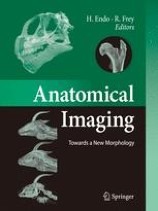
Anatomical Imaging : Towards a New Morphology
This book presents selected works of contemporary evolutionary morphologists and includes such topics as broad scale reconstructions of the brain and ear of dinosaurs, inference of locomotor habits from cancellous bone architecture in fossil primates, and a comparison of the independently evolved manipulating apparatuses in the lesser and giant pandas. Insight is provided into the application of modern noninvasive technologies, including digital imaging techniques and virtual 3D reconstruction, to the investigation of complex anatomical features and coherences. In combination with traditional methods, this allows for the formulation of improved hypotheses on coordinated function and evolution. The creation of virtual translucent specimens makes it possible to realize the age-old dream of the classical anatomists: looking through the skin into the inner organization of an organism. On full display here is the dramatic and promising impact that modern imaging techniques have on scientific progress in evolutionary morphology.

Analysis of phylogenetics and evolution with R
This book integrates a wide variety of data analysis methods into a single and flexible interface: the R language. This open source language is available for a wide range of computer systems and has been adopted as a computational environment by many authors of statistical software. Adopting R as a main tool for phylogenetic analyses will ease the workflow in biologists' data analyses, ensure greater scientific repeatability, and enhance the exchange of ideas and methodological developments.
Analysis and Design of Intelligent Systems Using Soft Computing Techniques
This book comprises a selection of papers from IFSA 2007 on new methods for analysis and design of hybrid intelligent systems using soft computing techniques. Soft Computing (SC) consists of several computing paradigms, including fuzzy logic, neural networks, and genetic algorithms, which can be used to produce powerful hybrid intelligent systems for solving problems in pattern recognition, time series prediction, intelligent control, robotics and automation. Hybrid intelligent systems that combine several SC techniques are needed due to the complexity and high dimensionality of real-world problems. Hybrid intelligent systems can have different architectures, which have an impact on the efficiency and accuracy of these systems, for this reason it is very important to optimize architecture design. The architectures can combine, in different ways, neural networks, fuzzy logic and genetic algorithms, to achieve the ultimate goal of pattern recognition, time series prediction, intelligent control, or other application areas.
Anaesthesia, pain, intensive care and emergency medicine A.P.I.C.E. ; Proceedings of the 21st Postgraduate Course in Critical Medicine: Venice-Mestre, Italy - November 10-13, 2006
Developing sectors in the Intensive Care field – and in Critical Care Medicine in general – require specific levels of competence having a same common denominator: an in-depth knowledge of human pathophysiology. Although this volume presents plenty of topics in constant evolution, as witnessed by the collection of chapters compiled by several researchers, this edition includes, in particular, fields in which decision-making at the patient’s bedside prevails over theoretical argumentation. In other words, the first and foremost message this edition wants to provide is for the reader to focus his/her attention on evidence-based medicine.

An Introduction to the Heisenberg Group and the Sub-Riemannian Isoperimetric Problem
This book provides an introduction to the basics of sub-Riemannian differential geometry and geometric analysis in the Heisenberg group, focusing primarily on the current state of knowledge regarding Pierre Pansu's celebrated 1982 conjecture regarding the sub-Riemannian isoperimetric profile.
