


تحسين النتائح
ترتيب حسب
من
الى

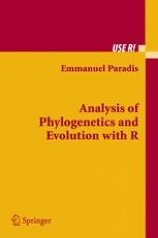
This book integrates a wide variety of data analysis methods into a single and flexible interface: the R language. This open source language is available for a wide range of computer systems and has been adopted as a computational environment by many authors of statistical software. Adopting R as a main tool for phylogenetic analyses will ease the workflow in biologists' data analyses, ensure greater scientific repeatability, and enhance the exchange of ideas and methodological developments.

This book provides an introduction to unsteady aerodynamics with emphasis on the analysis and computation of inviscid and viscous two-dimensional flows over airfoils at low speeds. It begins with a discussion of the physics of unsteady flows and an explanation of lift and thrust generation, airfoil flutter, gust response and dynamic stall. This is followed by an exposition of the four major calculation methods in currents use, namely inviscid-panel, boundary-layer, viscous-inviscid interaction and Navier-Stokes methods. Undergraduate and graduate students, teachers, scientists and engineers concerned with aeronautical, hydronautical and mechanical engineering problems will gain understanding of the physics of unsteady low-speed flows and an ability to analyze these flows with modern computational methods.
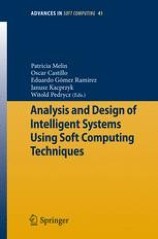
This book comprises a selection of papers from IFSA 2007 on new methods for analysis and design of hybrid intelligent systems using soft computing techniques. Soft Computing (SC) consists of several computing paradigms, including fuzzy logic, neural networks, and genetic algorithms, which can be used to produce powerful hybrid intelligent systems for solving problems in pattern recognition, time series prediction, intelligent control, robotics and automation. Hybrid intelligent systems that combine several SC techniques are needed due to the complexity and high dimensionality of real-world problems. Hybrid intelligent systems can have different architectures, which have an impact on the efficiency and accuracy of these systems, for this reason it is very important to optimize architecture design. The architectures can combine, in different ways, neural networks, fuzzy logic and genetic algorithms, to achieve the ultimate goal of pattern recognition, time series prediction, intelligent control, or other application areas.
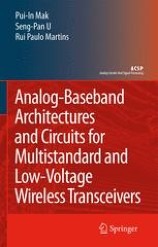
"Analog-Baseband Architectures and Circuits reviews the fundamentals and studies the state-of-the-art multistandard transceivers before describing novel architectural and circuit techniques for implementing multimode and wideband (tens of MHz) baseband analog front-ends under low-voltage constraints. Techniques developed on architecture level for efficient system-in-package (SiP) integration, testability and multi-standardability; and on circuit level for reducing the required supply voltage, power and area are generally applicable for most wireless systems, and are somewhat independent to technology scaling. Experimental 1-V baseband building blocks (i.e., double-quadrature-downconversion filter, programmable-gain amplifier and dc-offset canceler) and a 1-V fully-integrated receiver analog-baseband chain for IEEE 802.11a/b/g WLAN validate the techniques. The implementations are all in standard-VTH CMOS process, and no voltage boosting is required at any node." "Analog-Baseband Architectures and Circuits will be relevant to system architects, circuit designers, professors and students engaged in wireless transceiver front-ends research and development."

Intends to support a second teaching of Mathematical Analysis according to the principles of the new Didactic Regulations. It is especially designed for those study courses (such as Engineering, Computer Science, Physics) in which the mathematical tool is a significant part of the training. The fundamental concepts and methods of the differential and integral calculus of several variables, the series of functions and the ordinary differential equations are presented with the primary objective of training the student in their operational but critical use. The didactic setting of the text follows the one used for ANALYSIS I. The method of presentation of the arguments allows a flexible and modular use of the text, in order to respond to the various possible didactic choices in the organization of a Mathematical Analysis course.
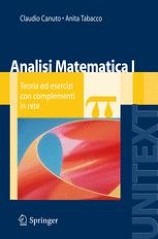
Intends to support a first teaching of Mathematical Analysis according to the principles of the new Didactic Regulations. It is especially designed for Engineering, Computer Science, Physics. The text has three different levels of reading. An essential level allows the student to grasp the essential concepts of the subject and to familiarize himself with the related calculation techniques. An intermediate level provides justifications for the main findings and enriches the presentation with useful observations and complements. A third level of reading, based on numerous references to a virtual text available online, allows the more motivated and interested student to deepen his or her preparation on the subject. Numerous examples and exercises with solutions complete the text. The captivating 2-color graphics make this text a fundamental point of reference for the study of the discipline.
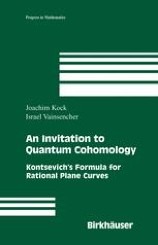
This book is an elementary introduction to stable maps and quantum cohomology, starting with an introduction to stable pointed curves, and culminating with a proof of the associativity of the quantum product. The viewpoint is mostly that of enumerative geometry, and the red thread of the exposition is the problem of counting rational plane curves. Kontsevich's formula is initially established in the framework of classical enumerative geometry, then as a statement about reconstruction for Gromov–Witten invariants, and finally, using generating functions, as a special case of the associativity of the quantum product.

Point processes and random measures find wide applicability in telecommunications, earthquakes, image analysis, spatial point patterns and stereology, to name but a few areas. The authors have made a major reshaping of their work in their first edition of 1988 and now present An Introduction to the Theory of Point Processes in two volumes with subtitles Volume I: Elementary Theory and Methods and Volume II: General Theory and Structure.
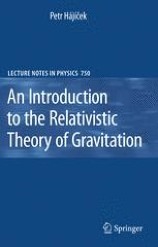
The geometric interpretation of gravitation is one of the major foundations of modern theoretical physics. This primer introduces classical general relativity with emphasis on the clarity of conceptual structure and on the basic mathematical methods to build up systematically application skills. The wealth of physical phenomena entailed by the Einstein‘s equations is revealed with the help of specific models describing gravitomagnetism, gravitational waves, cosmology, gravitational collapse and black holes. End-of-chapter exercises complete the main text.
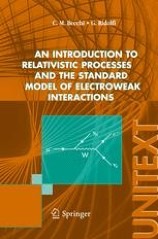
The first part of the volume is devoted to the description of scattering processes in the context of relativistic quantum field theory. The use of the semi-classical approximation allows us to illustrate the relevant computation techniques in a reasonably small amount of space. Our approach to relativistic processes is original in many respects. The second part contains a detailed description of the construction of the standard model of electroweak interactions, with special attention to the mechanism of particle mass generation. The extension of the standard model to include neutrino masses is also described. We have included a number of detailed computations of cross sections and decay rates of pedagogical and phenomenological relevance.
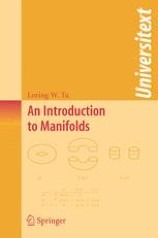
Manifolds, the higher-dimensional analogs of smooth curves and surfaces, are fundamental objects in modern mathematics. Combining aspects of algebra, topology, and analysis, manifolds have also been applied to classical mechanics, general relativity, and quantum field theory. In this streamlined introduction to the subject, the theory of manifolds is presented with the aim of helping the reader achieve a rapid mastery of the essential topics. By the end of the book the reader should be able to compute, at least for simple spaces, one of the most basic topological invariants of a manifold, its de Rham cohomology. Along the way the reader acquires the knowledge and skills necessary for further study of geometry and topology.
The use of various types of wave energy is an increasingly promising, non-destructive means of detecting objects and of diagnosing the properties of quite complicated materials. An analysis of this technique requires an understanding of how waves evolve in the medium of interest and how they are scattered by inhomogeneities in the medium. These scattering phenomena can be thought of as arising from some perturbation of a given, known system and they are analysed by developing a scattering theory. This monograph provides an introductory account of scattering phenomena and a guide to the technical requirements for investigating wave scattering problems.

This book is the based on the work of many people, and while I discuss many of them in the general context of this book in Chapter 1. The backbone of the book is based on a project, 'Farm Lives' conducted between 1999 and 2002, funded exclusively by the McDonald Institute for Archaeolog-ical Research at the University of Cambridge.

This book describes how the basic building blocks of life, the amino acids, formed. After a comprehensible introduction into stereochemistry, the author addresses the inherent property of amino acids in living organisms, namely the preference for left-handedness. What was the cause for violation of parity of amino acids in the emergence of life on Earth? All the fascinating models proposed by physicists, chemists and biologist are vividly presented including the scientific conflicts.

Alzheimer’s disease (AD) is a neurodegenerative disease that robs the minds of our elderly population. Approximately one in every eight adults over the age of 65 and nearly half of those over 85 are afflicted with this disease. The aging population in developed societies will impose an ever increasing socioeconomic threat in the future. Current medicines for AD patients are mainly symptomatic treatments and a huge unmet medical need exists to slow the progression of this disease. A great deal of research has been dedicated to understanding the pathogenesis of AD from which comes many ideas for intervening with its progression. Some of these ideas have been fast-tracked to clinical trials due to the availability of medicines with proven clinical efficacies for other diseases (e.g. atorvastatin, simvastatin, rosiglitazone and clioquinol) while others represent novel chemical entities (e.g. glycogen synthase kinase-3 inhibitors).

The two volumes of Altering Nature consider the complex ways that concepts of 'nature' and 'the natural' are understood and the relevance of those understandings to discussions of biotechnology.Volume Two, Religion, Biotechnology, and Public Policy, reviews recent religious and ethical analyses of four specific areas of biotechnology: assisted reproduction, genetic therapy and enhancement, human-machine incorporation, and biodiversity. It identifies and explores the richer normative themes that inform particular debates and suggests ways that policy choices in biotechnology may be illuminated by devoting greater attention to religious perspectives.
The chapters in this volume greatly develop our understanding of the nature and measurement of transfers, their motives and mechanisms, and their macro-level dimensions, especially in the context of demographic transitions.

Algorithms are the heart of computer science and mathematics, since without them the use of computers would not be possible. In this book, which in its English edition has been a longtime bestseller, Harel and Feldmann answer all questions relating to this topic. They talk about the evaluation, correctness and effectiveness of algorithms, but also clarify some doubts about programming techniques and also refer to the very current discussion on quantum computing. The book is useful both as a basic text for an introductory university course in computer science, and as a general introduction to natural sciences, mathematics or engineering.

To do algebra is essentially to calculate, that is to say to perform, on elements of a set, (<algebraic operations n, the best-known example of which is provided by the (<four rules)) of elementary arithmetic. This is not the place to retrace the slow process of progressive abstraction by which the notion of algebraic operation, initially restricted to natural integers and to measurable quantities, gradually widened its field, as it grew. at the same time generalized the notion of ((number O, until, going beyond the latter, it came to apply to elements which no longer had any character ((numeric)>, for example to permutations of a - seems (see Historical Note in chap. 1).

Sesquilinear and quadratic forms : The Mathematics Elements of Nicolas BOURBAKI aim to provide a rigorous, systematic presentation without prerequisites of mathematics from their foundations. This ninth chapter of the Book of Algebra, the second Book of the treatise, is devoted to quadratic, symplectic or Hermitian forms and to associated groups.

سوريا - اتستراد درعا - غباغب
+963-15 2050 - 15 860 380 /1/2/3 - 11 662 3900