


تحسين النتائح
ترتيب حسب
من
الى


The book begins with a brief introduction to binary rare earth oxides, their physical and chemical stabilities, polymorphism, crystal structures and phase transformation and the association with current applications. The book goes on to present the band structure of the oxides using several quantum chemical calculations, which belong to a newly developed area in the binary rare earth oxides. Central to this chapter are the characterizations of electrical, magnetic and optical properties, as well as details of single crystal growth and particle preparation methods that have progressed in recent years. Later chapters concentrate on thermo-chemical properties and trace determination techniques. The final chapter contains a variety of useful applications in various fields such as phosphors, glass abrasives, automotive catalysts, fuel cells, solid electrolytes, sunscreens, iron steels, and biological materials.
This book deals with algorithmic problems concerning binary quadratic forms 2 2 f(X,Y)= aX +bXY +cY with integer coe?cients a, b, c, the mathem- ical theories that permit the solution of these problems, and applications to cryptography.
Leading international researchers and practitioners of bifurcations and instabilities in geomechanics debate the developments and applications which have occurred over the last few decades. The topics covered include modeling of bifurcation, structural failure of geomaterials and geostructures, advanced analytical, numerical and experimental techniques, and application and development of generalised continuum models etc. In addition analytical solutions, numerical methods, experimental techniques, and case histories are presented. Beside fundamental research findings, applications in geotechnical, petroleum, mining, and bulk materials engineering are emphasised.
This book discusses the statistical methods most often applied for such adjustments, ranging from ad hoc procedures to regression-based models. The latter are emphasized, because of their clarity, ease of application, and superior results. Each topic is illustrated with many real case examples. In order to facilitate understanding of their properties and limitations of the methods discussed, a real data example, the Canada Total Retail Trade Series, is followed throughout the book.This book brings together the scattered literature on these topics and presents them using a consistent notation and a unifying view.
Bayesian Reliability presents modern methods and techniques for analyzing reliability data from a Bayesian perspective. The adoption and application of Bayesian methods in virtually all branches of science and engineering have significantly increased over the past few decades. This increase is largely due to advances in simulation-based computational tools for implementing Bayesian methods. The authors extensively use such tools throughout this book, focusing on assessing the reliability of components and systems with particular attention to hierarchical models and models incorporating explanatory variables. Such models include failure time regression models, accelerated testing models, and degradation models. The authors pay special attention to Bayesian goodness-of-fit testing, model validation, reliability test design, and assurance test planning. Throughout the book, the authors use Markov chain Monte Carlo (MCMC) algorithms for implementing Bayesian analyses--algorithms that make the Bayesian approach to reliability computationally feasible and conceptually straightforward.
Builds further on the contents of the first volume in the Philips Research Book Series, Battery Management Systems - Design by Modelling. Since the subject of battery SoC indication requires a number of disciplines, this book covers all important disciplines starting from (electro)chemistry to understand battery behaviour, via mathematics to enable modelling of the observed battery behaviour and measurement science to enable accurate measurement of battery variables and assessment of the overall accuracy, to electrical engineering to enable an efficient implementation of the developed SoC indication system. It will therefore serve as an important source of information for any person working in engineering and involved in battery management.
This book presents elementary probability theory with interesting and well-chosen applications that illustrate the theory. An introductory chapter reviews the basic elements of differential calculus which are used in the material to follow. The theory is presented systematically, beginning with the main results in elementary probability theory. This is followed by material on random variables. Random vectors, including the all important central limit theorem, are treated next. The last three chapters concentrate on applications of this theory in the areas of reliability theory, basic queuing models, and time series. Examples are elegantly woven into the text and over 400 exercises reinforce the material and provide students with ample practice.
This introductory chapter discusses such notions as determinism, chaos and randomness, p- dictibility and unpredictibility, some initial approaches to formalizing r- domness and it surveys certain problems that can be solved by probability theory. This will perhaps give one an idea to what extent the theory can - swer questions arising in speci?c random occurrences and the character of the answers provided by the theory. 1. 1 The Nature of Randomness The phrase “by chance” has no single meaning in ordinary language. For instance, it may mean unpremeditated, nonobligatory, unexpected, and so on. Its opposite sense is simpler: “not by chance” signi?es obliged to or bound to (happen). In philosophy, necessity counteracts randomness. Necessity signi?es conforming to law – it can be expressed by an exact law. The basic laws of mechanics, physics and astronomy can be formulated in terms of precise quantitativerelationswhichmustholdwithironcladnecessity.
This textbook can be used to teach electromagnetism to a wide range of undergraduate science majors in physics, electrical engineering or materials science. However, by making lesser demands on mathematical knowledge than competing texts, and by emphasizing electromagnetic properties of materials and their applications, this textbook is uniquely suited to students of materials science. Many competing texts focus on the study of propagation waves either in the microwave or optical domain, whereas Basic Electromagnetism and Materials covers the entire electromagnetic domain and the physical response of materials to these waves.
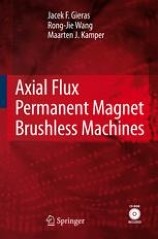
This book deals with the analysis, construction, design, control and applications of AFPM machines. The authors present their own research results, as well as significant research contributions made by others.
Axial Flux Permanent Magnet (AFPM) brushless machines are modern electrical machines with a lot of advantageous merits over their conventional counterparts. They are increasingly used in power generation, domestic appliances, industrial drives, electric vehicles, and marine propulsion drives and many other applications. This book deals with the analysis, construction, design, optimisation, control and applications of AFPM machines. The authors present their own research results, as well as significant research contributions made by others. This monograph will be of interest to electrical engineers and other engineers involved in the design and application of AFPM brushless machine drives. It will be an important resource for researchers and graduate students in the field of electrical machine and drives.
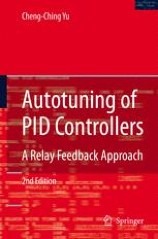
Recognising the benefits of improved control, the second edition of Autotuning of PID Controllers provides simple yet effective methods for improving PID controller performance. The practical issues of controller tuning are examined using numerous worked examples and case studies in association with specially written autotuning MATLAB® programs to bridge the gap between conventional tuning practice and novel autotuning methods. Autotuning of PID Controllers is more than just a monograph, it is an independent learning tool applicable to the work of academic control engineers and of their counterparts in industry looking for more effective process control and automation.
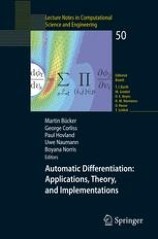
This collection covers the state of the art in automatic differentiation theory and practice. Practitioners and students will learn about advances in automatic differentiation techniques and strategies for the implementation of robust and powerful tools. Computational scientists and engineers will benefit from the discussion of applications, which provide insight into effective strategies for using automatic differentiation for design optimization, sensitivity analysis, and uncertainty quantification.
It takes advantage of greater computing power and robust algorithms to produce enough candidate models to be sure of providing a suitable candidate for given data. Improved order selection quality guarantees that one of the best (and often the best) will be selected automatically. The data themselves suggest their best representation. Should the analyst wish to intervene, alternatives can be provided. Written for graduate signal processing students and for researchers and engineers using time series analysis for practical applications ranging from breakdown prevention in heavy machinery to measuring lung noise for medical diagnosis.
Automated Nanohandling by Microrobots introduces an actuation principle for such microrobots and presents a new robot design. Different aspects of this research field regarding the hardware and software implementation of the system components, including the sensory feedback for automated nanohandling, are discussed in detail. Extensive applications of the microrobot station for nanohandling, nano-characterization and nanostructuring are provided, together with the experimental results.
Making a clear distinction is made between nano- and micro-mechanical testing for physical reasons, this monograph describes the basics and applications of the supermicroscopies AFM and SNOM, and of the nanomechanical testing on rough and technical natural surfaces in the submicron range down to a lateral resolution of a few nm. New or improved instrumentation, new physical laws and unforeseen new applications in all branches of natural sciences (around physics, chemistry, mineralogy, materials science, biology and medicine) and nanotechnology are covered as well as the sources for pitfalls and errors.
this book offers a comprehensive and state of the art analysis of aerodynamic and flight mechanic entry topics. In addition, it provides a large set of application exercises and solutions. It is addressed to university and engineering school students, as well as engineers in aerospace companies and government agencies, or simply curious readers.
This collection of peer reviewed papers represents a concise, up-to-date summary of our current knowledge of planetary boundary layer (PBL) physics and parameterization. As such, it makes a major contribution to the interchange of knowledge and ideas between physicists, meteorologists and environmental modellers and sets out the course to be followed in subsequent research to improve PBL parameterizations in climate, numerical weather prediction, air quality, and emergency preparedness models. Major themes covered are: Nature and theory of turbulent boundary layers, Boundary layer flows - modelling and applications to environmental security, Nature, theory and modelling of boundary-layer flows, and Air flows within and above urban and other complex canopies - air-sea-ice interactions.
Presents a new method of asymptotic analysis of boundary-layer problems, the Successive Complementary Expansion Method (SCEM). The first part is devoted to a general comprehensive presentation of the tools of asymptotic analysis. It gives the keys to understand a boundary-layer problem and explains the methods to construct an approximation. The second part is devoted to SCEM and its applications in fluid mechanics, including external and internal flows. The advantages of SCEM are discussed in comparison with the standard Method of Matched Asymptotic Expansions. In particular, for the first time, the theory of Interactive Boundary Layer is fully justified. With its chapter summaries, detailed derivations of results, discussed examples and fully worked out problems and solutions, the book is self-contained.
Astrobiology, a new exciting interdisciplinary research field, seeks to unravel the origin and evolution of life wherever it might exist in the Universe. The current view of the origin of life on Earth is that it is strongly connected to the origin and evolution of our planet and, indeed, of the Universe as a whole. We are fortunate to be living in an era where centuries of speculation about the two ancient and fundamental problems: the origin of life and its prevalence in the Universe are being replaced by experimental science. The subject of Astrobiology can be approached from many different perspectives. This book is focused on abiogenic organic matter from the viewpoint of astronomy and planetary science and considers its potential relevance to the origins of life on Earth and elsewhere. Guided by the review papers in this book, the concluding chapter aims to identify key questions to motivate future research and stimulate astrobiological applications of current and future research facilities and space missions. Today’s rich array of new spacecraft, telescopes and dedicated scientists promises a steady flow of discoveries and insights that will ultimately lead us to the answers we seek.

سوريا - اتستراد درعا - غباغب
+963-15 2050 - 15 860 380 /1/2/3 - 11 662 3900