



الصفحة 35
الصفحة 35
Classification and Modeling with Linguistic Information Granules : Advanced Approaches to Linguistic Data Mining
Many approaches have already been proposed for classification and modeling in the literature. These approaches are usually based on mathematical mod els. Computer systems can easily handle mathematical models even when they are complicated and nonlinear (e.g., neural networks). On the other hand, it is not always easy for human users to intuitively understand mathe matical models even when they are simple and linear. This is because human information processing is based mainly on linguistic knowledge while com puter systems are designed to handle symbolic and numerical information. A large part of our daily communication is based on words. We learn from various media such as books, newspapers, magazines, TV, and the Inter net through words. We also communicate with others through words. While words play a central role in human information processing, linguistic models are not often used in the fields of classification and modeling. If there is no goal other than the maximization of accuracy in classification and modeling, mathematical models may always be preferred to linguistic models. On the other hand, linguistic models may be chosen if emphasis is placed on interpretability.
Classical Methods of Statistics : With Applications in Fusion-Oriented Plasma Physics
Classical Methods of Statistics is a blend of theory and practical statistical methods written for graduate students and researchers interested in applications to plasma physics and its experimental aspects. It can also fruitfully be used by students majoring in probability theory and statistics. In the first part, the mathematical framework and some of the history of the subject are described. Many exercises help readers to understand the underlying concepts. In the second part, two case studies are presented exemplifying discriminant analysis and multivariate profile analysis. The introductions of these case studies outline contextual magnetic plasma fusion research. In the third part, an overview of statistical software is given and, in particular, SAS and S-PLUS are discussed. In the last chapter, several datasets with guided exercises, predominantly from the ASDEX Upgrade tokamak, are included and their physical background is concisely described. The book concludes with a list of essential keyword translations.
Classical Electromagnetic Theory
This book stresses the unity of electromagnetic theory with electric and magnetic fields developed in parallel. SI units are used throughout and considerable use is made of tensor notation and the Levi-Cevita symbol. To more closely display the parallelism, extensive use is made of the scalar magnetic potential particularly in dealing with the Laplace and Poisson equation. 85 worked problems illustrate the theory. Conformal mappings are dealt with in some detail. Relevant mathematical material is provided in appendices.
Classical and Advanced Theories of Thin Structures : Mechanical and Mathematical Aspects
The book presents an updated state-of-the-art overview of the general aspects and practical applications of the theories of thin structures, through the interaction of several topics, ranging from non-linear thin-films, shells, junctions, beams of different materials and in different contexts (elasticity, plasticity, etc.).
Citation Analysis in Research Evaluation
This book is written for members of the scholarly research community, and for persons involved in research evaluation and research policy. More specifically, it is directed towards the following four main groups of readers: – All scientists and scholars who have been or will be subjected to a quantitative assessment of research performance using citation analysis. – Research policy makers and managers who wish to become conversant with the basic features of citation analysis, and about its potentialities and limitations. – Members of peer review committees and other evaluators, who consider the use of citation analysis as a tool in their assessments. – Practitioners and students in the field of quantitative science and technology studies, informetrics, and library and information science. Citation analysis involves the construction and application of a series of indicators of the ‘impact’, ‘influence’ or ‘quality’ of scholarly work, derived from citation data, i.e. data on references cited in footnotes or bibliographies of scholarly research publications. Such indicators are applied both in the study of scholarly communication and in the assessment of research performance. The term ‘scholarly’ comprises all domains of science and scholarship, including not only those fields that are normally denoted as science – the natural and life sciences, mathematical and technical sciences – but also social sciences and humanities.
Chernobyl - What Have We Learned? : The Successes and Failures to Mitigate Water Contamination Over 20 Years
Twenty million people have been exposed to Chernobyl radionuclides through the Dnieper River aquatic pathways. This book presents a 20-year historical overview and comprehensive study results of the aquatic environment affected by the 1986 Chernobyl nuclear accident. During this time, many water quality management practices and countermeasures were enacted. The book presents in-depth analyses of these water remediation actions, using current science and mathematical modeling, and discusses why some were successful, but many others failed. The chapter entitled Where Do We Go From Here? incorporates a comprehensive discussion of the planned New Safe Confinement (NSC) structure to cover the Chernobyl plant. The book closes with a summary and conclusions drawn from these analyses, making it a valuable reference tool for the future. This book will be of interest to engineers, scientists, decision-makers, and those involved in radiation protection and radioecology, environmental protection and risk assessment, water remediation and mitigation measures, and radioactive waste disposal. In addition, the detailed, almost day-to-day, emergency responses to the Chernobyl accident described in this book will also be useful to people developing emergency and long-term responses to accidental or intentional (by terrorists) releases of radionuclides, toxic chemicals and biological agents.
Chemical Reactor Modeling : Multiphase Reactive Flows
Chemical Reactor Modeling closes the gap between Chemical Reaction Engineering and Fluid Mechanics. It presents the fundamentals of the single-fluid and multi-fluid models for the analysis of single- and multiphase reactive flows in chemical reactors with a chemical reactor engineering rather than mathematical bias.
Chaos and fractals : New frontiers of science
Covers the central ideas and concepts of chaos and fractals as well as many related topics including: the Mandelbrot set, Julia sets, cellular automata, L-systems, percolation and strange attractors.
Chaos : A Program Collection for the PC
This new edition strives yet again to provide readers with a working knowledge of chaos theory and dynamical systems through parallel introductory explanations in the book and interaction with carefully-selected programs supplied on the accompanying diskette. The programs enable readers, especially advanced-undergraduate students in physics, engineering, and math, to tackle relevant physical systems quickly on their PCs, without distraction from algorithmic details. For the third edition of Chaos: A Program Collection for the PC, each of the previous twelve programs is polished and rewritten in C++ (both Windows and Linux versions are included). A new program treats kicked systems, an important class of two-dimensional problems, which is introduced in Chapter 13. Each chapter follows the structure: theoretical background; numerical techniques; interaction with the program; computer experiments; real experiments and empirical evidence; reference.
Chance : The life of games and the game of life
With its many easy-to-follow mathematical examples, this book takes the reader on an almost chronological trip through the fascinating and amazing laws of chance, omnipresent in the natural world and in our daily lives. Along the route many fascinating topics are discussed, such as: challenging probability paradoxes; "paranormal" coincidences; game odds; causes and effects; interpretation of opinion polls; winning chances as a game proceeds; the nature of randomness; entropy and randomness; randomness in life; algorithmic complexity and the undecidability of randomness; possibilities and limitations of learning the laws of a Universe immersed in chance events. This charming book will inform and entertain the scientist and non-scientist alike.
Central European Functional Programming School : 2nd Summer School, CEFP 2007, Cluj-Napoca, Romania, June 23-30, 2007, Revised Selected Lectures
This volume presents texts from selected lectures given by leading researchers at the Second Central European Functional Programming School, CEFP 2007, held in Cluj-Napoca, Romania, in June 2007.
Cellular Automaton Modeling of Biological Pattern Formation: Characterization, Applications, and Analysis
This book focuses on a challenging application field of cellular automata: pattern formation in biological systems, such as the growth of microorganisms, dynamics of cellular tissue and tumors, and formation of pigment cell patterns. These phenomena, resulting from complex cellular interactions, cannot be deduced solely from experimental analysis, but can be more easily examined using mathematical models, in particular, cellular automaton models.
Cell Surface Receptors : A Short Course on Theory and Methods
Cell Surface Receptors: A Short Course on Theory and Methods, 3rd Edition, links theoretical insights into drug-receptor interactions described in mathematical models with the experimental strategies to characterize the biological receptor of interest.
Categories for software engineering
This book provides a gentle, software engineering oriented introduction to category theory. Assuming only a minimum of mathematical preparation, this book explores the use of categorical constructions from the point of view of the methods and techniques that have been proposed for the engineering of complex software systems: object-oriented development, software architectures, logical and algebraic specification techniques, models of concurrency, inter alia. After two parts in which basic and more advanced categorical concepts and techniques are introduced, the book illustrates their application to the semantics of CommUnity – a language for the architectural design of interactive systems. "For computer scientists, this unique book presents Category Theory in a manner tailored to their interests and with examples to which they can relate." Ira Forman, IBM "This book applies little-known yet quite powerful formal tools from category theory to software structures: designs, architectures, patterns, and styles. Rather than focus on issues at the level of computational models and semantics, it instead applies these tools to some of the problems facing the sophisticated software architect.
Case based design : Applications in process engineering
The book by Professors is an impressive and in-depth treatment of the essence of the case–based reasoning strategy and case-based design dwelling upon the algorithmic facet of the paradigm, the authors provided an excellent applied research framework by showing how this development can be effectively utilized in real word complicated environment of process engineering.
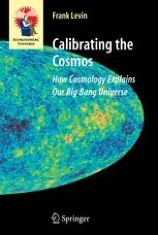
Calibrating the Cosmos : How Cosmology Explains Our Big Bang Universe
Calibrating the Cosmos describes hard science, but is gently written. It explains in clear, non-mathematical language the measurements and the interpretation of the resulting data that have led to the current understanding of the origin, evolution and properties of our expanding Big Bang universe. Many people have a sketchy idea of the work of cosmologists, but Professor Levin’s experience in teaching both scientific and liberal arts students has enabled him to impart much of our current thinking without resorting to difficult mathematics. Theoretical concepts are emphasized, in particular the symmetries of homogeneity and isotropy enjoyed by our universe on the largest scales, how these symmetries lead to only one quantity being needed to describe the growth of the universe from its infancy to the present time, and how the so-called parameters of the universe are the ingredients used to construct the model universes to which ours – the real thing – is compared.

Calculus : One and several variables
Provides clear calculus content to help them master these concepts and understand its relevance to the real world. Throughout the pages, it offers a perfect balance of theory and applications to elevate their mathematical insights. Readers will also find that the book emphasizes both problem-solving skills and real-world applications.
Cálculo científico con MATLAB y Octave = Scientific computing with MATLAB and Octave
This textbook is an introduction to Scientific Calculus, illustrating various numerical methods for the computer solution of certain classes of mathematical problems. The authors show how to compute the zeros or integrals of continuous functions, solve linear systems, approximate functions by polynomials, and construct precise approximations for the solution of differential equations. To make the presentation concrete and attractive, the MATLAB programming environment has been adopted as a faithful companion.
Cálculo científico com MATLAB e Octave = Scientific calculus with MATLAB and Octave
Its objective is to present various numerical methods for solving certain mathematical problems on the computer that cannot be treated in a simpler way. Classical issues such as the computation of zeros or integrals of continuous functions, the solving of linear systems, the approximation of functions by polynomials and the construction of precise approximations for solutions of differential equations are addressed. All algorithms are presented in the programming languages MATLAB and Octave, whose main commands and instructions are introduced gradually, aiming in particular at their compatibility in both languages.
Calcolo stocastico per la finanza = Stochastic Calculation for Finance
Offers an introduction to the mathematical, probabilistic and numerical methods that are the basis of the models for the valuation of derivative instruments, such as options and futures, dealt with in modern financial markets. The book is aimed at readers with scientific training, wishing to develop skills in the field of stochastic calculus applied to finance.
