



الصفحة 35
الصفحة 35
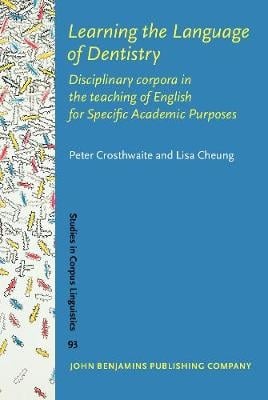
Learning the language of dentistry : disciplinary corpora in the teaching of English for specific academic purposes
Explores the affordances of disciplinary corpora for the teaching and learning of the language of dentistry, within the field of English for Specific Academic Purposes (ESAP). We extract disciplinary register features and vocabulary from three key genres of the dentistry discipline (published experimental research articles, case reports, and novice/professional research reports within the Dental Public Health domain), before integrating these features into ESAP pedagogy in the form of corpus-based ESAP materials that promote student-led direct engagement with disciplinary corpora – an approach known as 'data-driven learning'. This book is a timely and relevant addition to the field of corpus linguistics and ESAP, and is especially targeted at ESAP professionals who are required to teach disciplinary discourses but who may struggle to know what to teach as non-experts of the target discipline.
Learning Surgery : The Surgery Clerkship Manual
Provides a ready reference to those in third and fourth year residencies. Essential algorithms and case presentations meet with clerkship learning objectives as outlined by the Association of Surgical Education in their ASE Manual. Two sections include Introduction to Clinical Surgery in the Surgical Clerkship Setting and Management of Surgical Diseases During the Clerkship. Chapters include: Stroke, Hypertension, Abdominal Masses, Head Injuries, and Burns. Written by leading clinicians and educators, both surgery residents and medical students will find LEARNING SURGERY indispensible in their rotations and clerkships. Surgeons who train residents will also find the text a valuable ajunct to their teaching.
Learning in Modern International Society : On the Cognitive Problem Solving Abilities of Political Actors
Claudia Hofmann engages in a theoretical modelling of international learning processes and the substantiation of this model through three cases from international politics. She answers two questions: How may international actors learn as a collective? And how may the lessons learned influence actor behaviour and problem solving processes? As a foundation for answering these questions she examines the nature of actor behaviour within a social international system and integrates the diffusion of norms and values among macro-level actors.
Learning Diagnostic Imaging : 100 Essential Cases
Intended to provide medical students, residents of Radiology, and anybody else beginning to be involved in the radiological world, with a useful tool that gives them a quick and comprehensive overview of Radiology.

Learning and Adaption in Multi-Agent Systems ; 1st International Workshop, LAMAS 2005, Utrecht, The Netherlands, July 25, 2005, Revised Selected Papers
Contains selected and revised papers of the International Workshop on Lea- ing and Adaptation in Multi-Agent Systems (LAMAS 2005), held at the AAMAS 2005 Conference in Utrecht, The Netherlands, July 26. An important aspect in multi-agent systems (MASs) is that the environment evolves over time, not only due to external environmental changes but also due to agent int- actions. For this reason it is important that an agent can learn, based on experience, and adapt its knowledge to make rational decisions and act in this changing environment autonomously. Machine learning techniques for single-agent frameworks are well established. Agents operate in uncertain environments and must be able to learn and act - tonomously. This task is, however, more complex when the agent interacts with other agents that have potentially different capabilities and goals. The single-agent case is structurally different from the multi-agent case due to the added dimension of dynamic interactions between the adaptive agents. Multi-agent learning, i.e., the ability of the agents to learn how to cooperate and compete, becomes crucial in many domains. Autonomous agents and multi-agent systems (AAMAS) is an emerging multi-disciplinary area encompassing computer science, software engineering, biology, as well as cognitive and social sciences. A t- oretical framework, in which rationality of learning and interacting agents can be - derstood, is still under development in MASs, although there have been promising ?
Leading Pharmaceutical Innovation : Trends and Drivers for Growth in the Pharmaceutical Industry
Pharmaceutical giants have doubled their investments in drug development in the past decade only to see new drug approvals remain constant. This book investigates and highlights a set of proactive strategies aimed at generating sustainable competitive advantage based on value-generating business practices. We focus on three sources of pharmaceutical innovation: new management methods in the drug development pipeline, new technologies as enablers for cutting-edge R&D, and new forms of cooperation and internationalization, such as open innovation in the early phases of R&D. Our findings are illustrated by cases from Europe, the US, and Asia.
Leadership
• Practical, “how-to” approach that teaches you the skills you need to run a project successfully. • New spreads on powerful leadership while working remotely. / • Step-by-step instructions, tips, checklists and “Ask yourself” features that show you how to make an impact / • Tables, illustrations, “in-focus” panels and real-life case studies that demonstrate and explain problem-solving, and how to build confidence and get results.
Lead Markets for Environmental Innovations
Often, the leadership in technological development is accompanied by a leadership in environmental policy. The book provides an analysis of lead markets for innovations such as fuel cells, photovoltaics, and others. Contributions of innovation economics, policy analysis and environmental economics are assessed regarding their potential to explain the leadership of single countries. The book depicts the policy frameworks that are favourable to the creation of such lead markets on the basis of theoretical considerations and case studies. Finally, recommendations for R and D policies, environmental and industrial policies are derived.

Le raisonnement bayésien : Modélisation et inférence = Bayesian reasoning : Modeling and inference
Describes in detail the practice of the Bayesian statistical approach using many examples chosen for their educational interest. The first part gives the general principles of statistical modeling making it possible to supervise but also to come to the aid of the imagination of the apprentice modeler. By examining examples of increasing difficulty, the reader forges the keys to building their own model. The second part presents the most useful calculation algorithms for estimating the unknowns of the model. Each inference method is presented and illustrated by numerous application cases.

Le forme spastiche della paralisi cerebrale infantile : Guida all'esplorazione delle funzioni adattive = Spastic forms of cerebral palsy : A guide to exploring adaptive functions
Offers "travel notes" on the topics covered, to spark reflection and comparisons with the readers' experience. The authors address the topics from a pathophysiological perspective that guides their interpretation of the nature of the defect (functional diagnosis), the problems related to prognosis (as a natural history hypothesis), and rehabilitation (as a modification of the architecture of the function in an adaptive sense).The text is accompanied by an extensive glossary of terms used and a DVD with clinical cases, organized according to the authors' classification. This material also highlights the volume's great educational value, both for those already working in this field (physicians, child neuropsychiatrists and physiatrists, rehabilitation therapists) and for students completing their first and second level degrees in rehabilitation and attending postgraduate schools.
Le dépistage du cancer colorectal : État des lieux et perspectives = Colorectal cancer screening: Current status and perspectives
Prevention and screening are two major challenges for Public Health to reduce cancer mortality in our country. Screening for colorectal cancer is therefore quite exemplary. The number one cancer in both sexes in France, its incidence continues to increase due to the aging of the population. Its mortality remains high, in the order of fifty percent, despite the major therapeutic advances made in recent years. Preceded by a precancerous lesion - the adenomatous polyp, which can be removed by colonoscopy - colorectal cancer is also curable at the early stage. Finally, it can be the subject of a screening strategy, the impact of which has been demonstrated today on the reduction in mortality, when it is detected before any symptom by a simple test for blood in the stool followed by , in case of positivity, by a total colonoscopy. This book takes stock of the scientific rationale and the state of play of organized colorectal cancer screening in France. It is also an opportunity to discuss emerging techniques and strategies that can help improve the results of this screening if they prove their superiority over the current strategy. Intended primarily for doctors, this book is also intended for healthcare professionals and all those who, concerned about their health, have a proactive attitude in terms of screening and preventing this cancer.

Le Cancer du rein = Kidney cancer
Localized tumors are discovered at an earlier stage. The concept of active surveillance emerges. Minimally invasive treatments such as cryotherapy or radiofrequency for selected cases are now available. The indications for elective open partial nephrectomy are expanding and laparoscopic and then robotic partial nephrectomy are being evaluated.
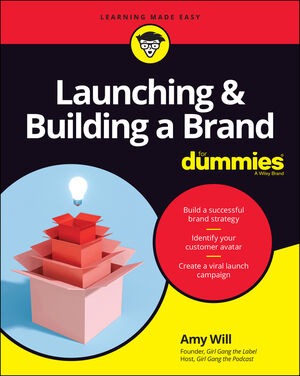
Launching & Building a Brand For Dummies
In Launching & Building a Brand For Dummies, Amy Will—who launched her first business at just 24-years-old and has been the brains behind four strong and buzzworthy brands—covers everything from crafting a powerful brand identity and planning that all-important launch to being prepared to scale up as you begin to take off. She reveals crucial lessons from her personal experience in launching five companies, as well as detailing case studies from some of the strongest brands out there, accompanied by insights and advice from successful founders and branding experts.

Lasers in the Conservation of Artworks ; LACONA V Proceedings, Osnabrück, Germany, Sept. 15-18, 2003
Since 1995, when Costas Fotakis first brought together restorers and scientists to discuss the potential of lasers in art conservation, the field has grown enormously in importance, and today restorers and laser scientists work together to develop new applications. This book presents the more than six dozen research papers prepared for LACONA V (Lasers in Art Conservation), held in Osnabrueck/Germany in September 2003. The fifth congress once again gathers restorers, art historians, museum staff, laser scientists and laser manufacturers. The topics include, among others: laser cleaning of artworks (case studies and side effects), removal of former conservation layers, fundamentals of laser-artwork interaction, online monitoring and process control, laser diagnostics, spectroscopy for monitoring and identification, networks and co-operation projects.

Large-Scale Nonlinear Optimization
Large-Scale Nonlinear Optimization reviews and discusses recent advances in the development of methods and algorithms for nonlinear optimization and its applications, focusing on the large-dimensional case, the current forefront of much research.The chapters of the book including theoretical analysis, algorithmic development, implementation issues and applications.

Languages, Methodologies and Development Tools for Multi-Agent Systems ; 1st International Workshop, LADS 2007, Durham, UK, September 4-6, 2007. Revised Selected Papers
Constitutes the thoroughly refereed post-workshop proceedings of the First International Workshop on Languages, Methodologies and Development Tools for Multi-Agent Systems, LADS 2007, held in Durham, UK, in September 2007. The workshop was part of MALLOW 2007, a federation of workshops on Multi-Agent Logics, Languages, and Organizations.

Language Production
This comprehensive text presents an up-to-date overview of the key topics in the field, providing important theoretical and empirical challenges to the traditional and accepted modal view of language production. Each chapter explores in detail a different aspect of language production, covering traditional methods including written and signed production alongside emerging research on joint action production. Emphasizing the neurobiological underpinnings of language, chapter authors showcase research that moves from a monologue-only approach to one that that considers production in more ecologically valid circumstances.

Language Policy and Modernity in Southeast Asia : Malaysia, the Philippines, Singapore, and Thailand
This volume considers the ways in which modernity challenges and informs the language policies of various Southeast Asians nations. Using case studies from Malaysia, the Philippines, Singapore and Thailand, the authors examine language policies that are explicitly articulated either in the form of State constitutions or in the public proclamations of political leaders. Particular attention is paid to the ways in which English, often seen as the language of globalization, impacts the status of indigenous Southeast Asian language.

Language Choice in a Nation Under Transition : English Language Spread in Cambodia
This book examines language choice in contemporary Cambodia, and uses the case study to explore and evaluate competing explanations for the spread of English globally. the multiple contexts in which Cambodians make individual and institutional language policy choices are considered. Chapters 2 and 3 examine the economic and political contexts for language choice, as Cambodia has transitioned from a planned economy and communism to a market economy and democracy. Chapters 4, 5, and 6 examine the assistance context for language choice; the bilateral, multilateral, and nongovernmental development agencies that have recently begun to work in Cambodia demand certain language skills of Cambodian employees and government counterparts, and support the learning of these languages in both nonformal and formal education.

Landscapes of Lifelong Learning Policies across Europe : Comparative Case Studies
This book explores different landscapes of Lifelong Learning policies (LLP), producing case-based examinations of their institutional, discursive, and relational dimensions. Across Europe, young people develop their life courses amidst diverse living conditions and are confronted with a variety of institutional and structural arrangements that impact on their opportunities in education and labour. Considering the relevance of LLP in shaping those opportunities, the chapters draw from multi-level, mixed-methods research and offer original insights on the interplay of discourses and governance patterns in the processes of policy-making and deliverance. The book yields noteworthy insights into the widely differing realities across the European landscape, and also into the diverging ways young people deal with and actively participate in LLP.
