



الصفحة 34
الصفحة 34

Bio-inspired computational intelligence and applications ; International conference on life system modeling, and simulation, LSMS 2007, Shanghai, China, September 14-17, 2007. Proceedings
It covers both micro and macro c- ponents ranging from cells, tissues and organs across to organisms and ecologic niches. These interact and evolve to produce an overall complex system whose beh- ior is difficult to comprehend and predict.The arrival of the 21st century has been marked by a resurgence of research interest both in arriving at a systems-level und- standing of biology and in applying such knowledge in complex real-world appli- tions. Consequently, computational methods and intelligence in systems, biology, as well as bio-inspired computational intelligence, have emerged as key drivers for new computational methods. For this reason papers dealing with theory, techniques and real-world applications relating to these two themes were especially solicited.
Bioinformatics research and development ; 2nd International Conference, BIRD 2008 Vienna, Austria, July 7-9, 2008 Proceedings
This book constitutes the refereed proceedings of the Second International Bioinformatics Research and Development Conference, BIRD 2008, held in Vienna, Austria in July 2008.

Bioinformatics research and applications : 4th International Symposium, ISBRA 2008, Atlanta, GA, USA, May 6-9, 2008. Proceedings
This book constitutes the refereed proceedings of the Fourth International Symposium on Bioinformatics Research and Applications, ISBRA 2008, held in Atlanta, GA, USA in May 2008.
Bioinformatics of genome regulation and structure II
The conference was organized by the Laboratory of Theoretical Genetics, Institute of Cytology and Genetics, Siberian Branch of the Russian Academy of Sciences, Novosibirsk, Russia. The material covers the most recent topics in bioinformatics, including (i) regulatory genomic sequences: databases, knowledge bases, computer analysis, modeling, and recognition; (ii) large-scale genome analysis and functional annotation; (iii) gene structure detection and prediction; (iv) comparative and evolutionary genomics; (v) computer analysis of genome polymorphism and evolution; computer analysis and modeling of transcription, splicing, and translation; structural computational biology: structure- function organization of genomic DNA, RNA, and proteins; (vi) gene networks, signal transduction pathways, and genetically controlled metabolic pathways: databases, knowledge bases, computer analysis, and modeling; principles of organization, operation, and evolution; (vii) data warehousing, knowledge discovery and data mining; and (viii) analysis of basic patterns of genome operation, organization, and evolution.
Bioinformatics and the cell : Modern computational approaches in genomics, proteomics and transcriptomics
"Xuhua Xia’s Bioinformatics and the Cell is a welcome addition to the bourgeoning field of bioinformatics text books. Xia stakes out a too-often neglected middle ground in bioinformatics by presenting a work that emphasizes methods’ biological utility without eschewing algorithmic formalism. Readers will find a well-rounded presentation of bioinformatics techniques employed in genomics, transcriptomics and proteomics – unified throughout by the common theme of molecular evolution."

Biogeography, Time, and Place : Distributions, Barriers, and Islands
Biogeography considers the distribution of biological units over a wide range of scales. The units range from genotypes, populations and species to families and higher taxa. Processes can be local, such as the isolation on islands due to sea-level fluctuations, or large-scale tectonic processes that separates continents and creates oceans. In all processes time is an important factor and by combining data on recent patterns with paleontological data the understanding of the distribution of extant taxa can be improved. This volume focuses on speciation due to isolation in island-like settings, and the evolution of large-scale diversity as the result of origination, maintenance and extinction.
Biodiversity Conservation and Phylogenetic Systematics : Preserving our evolutionary heritage in an extinction crisis
This book brings an updated state of the art of phylogenetic diversity in conservation biology. Nineteen chapters written by scientists from research institutions of fourteen countries demonstrate that approaches for preserving the evolutionary heritage are now very tuned into human impacts and sustainability issues. The questions, methods and applications around which it is organized show the importance of phylogenetic diversity in avoiding biodiversity losses in the present extinction crisis. They touch important points such as the way we value phylogenetic diversity, the importance of thinking at a much wider sample of the Tree of Life, the choice of adequate measures. In methods section, new solutions, such as dealing with abundances, sampling effort, or with information coming from conflicting phylogenetic trees are provided. Application section includes study cases of different groups of organi
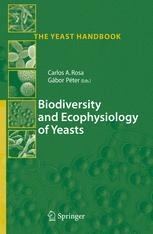
Biodiversity and Ecophysiology of Yeasts
In the last few decades more and more yeast habitats that were not investigated earlier, spanning cold climates to tropical regions and dry deserts to rainforests, have been explored. As a result, a large body of ecological data has been accumulated and the number of known yeast species has increased rapidly. This book provides an overview of the biodiversity of yeasts in different habitats. The recent advances achieved by the application of molecular biological methods in the field of yeast taxonomy and ecology are also incorporated in the book. Wherever possible, the interaction between yeasts and the surrounding environment is discussed.
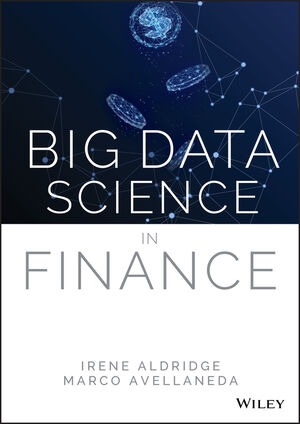
Big Data Science in Finance
Explains the mathematics, theory, and methods of Big Data as applied to finance and investing Examines the mathematics, theory, and practical use of the revolutionary techniques that are transforming the industry. Designed for mathematically-advanced students and discerning financial practitioners alike, this energizing book presents new, cutting-edge content based on world-class research taught in the leading Financial Mathematics and Engineering programs in the world. Marco Avellaneda, a leader in quantitative finance, and quantitative methodology author Irene Aldridge help readers harness the power of Big Data. Provides a complete account of Big Data that includes proofs, step-by-step applications, and code samples Explains the difference between Principal Component Analysis (PCA) and Singular Value Decomposition (SVD) Covers vital topics in the field in a clear, straightforward manner Compares, contrasts, and discusses Big Data and Small Data Includes Cornell University-tested educational materials such as lesson plans, end-of-chapter questions, and downloadable lecture slides
Beyond Safety Training : Embedding Safety in Professional Skills
Investigates why, despite more and more resources devoted to safety training, expectations are not entirely met, particularly in the industrial sectors that have already achieved a high safety level. It not only reflects the most precious viewpoints of experts from different disciplines, different countries, with experiences in various industrial fields at the cutting edge of theories and practices in terms of safety, professionalization and their relationships. It also consolidates the positioning of the Foundation for an Industrial Safety Culture, highlighting what is currently considered at stake in terms of safety training, taking into account the system of constraints the different stakeholders are submitted to. It reports some success stories as well as elements which could explain the observed plateau in terms of outcome. It identifies some levers for evolution for at-risk industry and outlines a possible research agenda to go further with experimental solutions.

Beyond partial differential equations : On linear and Quasi-Linear abstract hyperbolic evolution equations
The present volume is self-contained and introduces to the treatment of linear and nonlinear (quasi-linear) abstract evolution equations by methods from the theory of strongly continuous semigroups.

Beyond Kyoto : A new global climate certificate system : Continuing Kyoto commitsments or a global ´Cap and Trade´ scheme for a sustainable climate policy?
This book shows how humankind can ‘prevent dangerous interference with the c- mate system’ without dangerous interference with the global economic system. In the two underlying studies on behalf of the Ministry of Environment and Transport of i the German federal state of Baden-Württemberg, the results have been elaborated through scientific evaluation of different climate protection systems and intensive developmental work on an efficient climate protection system. The results will be presented in nine chapters according to the following nine basic R&D steps: 1. Quantifying the ‘ultimate climate objective’ of the world community in order ‘to prevent dangerous interference with the climate system,’ thus achieving climate sustainability; 2. Development of a comprehensive standard system for evaluating the prospect of success for different climate protection systems; 3. Based on this scientific standard system, evaluation of the current Kyoto system and of the most important proposals for ‘incremental regime evolution’ of the Kyoto system. Unfortunately, it must be noted that these systems are incapable of achi- ing climate sustainability; 4. Evaluating three proposals for ‘structural regime change’ of the Kyoto system. Following this objective evaluation process and numeric comparison of the diff- ent proposals, 5. Description of the eight basic elements of GCCS and its in-depth ‘critical asse- ment;’ 6.
Bergeys manual of systematic bacteriology ; Vol.2 : The proteobacteria, Part B : The Gammaproteobacteria
Includes a description of the Gammaproteobacteria (1203 pages, 222 figures, and 300 tables). This large taxon includes many well known medically and environmentally important groups.
Bergeys manual of systematic bacteriology ; Vol.2 : The proteobacteria ; Part A : Introductory essays
Includes introductory chapters on classification of prokaryotes, the concept of bacterial species, numerical and polyphasic taxonomy, bacterial nomenclature and the etymology of prokaryotic names, nucleic acid probes and their application in environmental microbiology, culture collections, and the intellectual property of prokaryotes.

Beauty’s Appeal : Measure and Excess
Beauty fulfils human existence. As it registers in our aesthetic experience, beauty enhances nature’s enchantment around us and our inward experience lifting our soul toward moral elevation. Carried by creative imagination (Imaginatio Creatrix), beauty participates in the moulding of the forms of the intellective constitution of the mind in tandem with praxis and seeks deeper enigmas of the real in the labyrinth of the cosmos. Yet with the evolution of human development and in technological inventions, beauty, while suffusing all modalities of experience, seems to undergo transformations and expansion. Are there perduring norms and modalities of beauty or are we carried along blindly by human development? Is there a measure intrinsic to our human ontopoietic unfolding and the growth of human life that we may follow instead of the whim of fancy and excess? The present collection of art-explorations seeks the elemental ties of Human Condition. Together, the authors aim to answer the questions posed above.
Bacteriocins : Ecology and Evolution
Microbes produce an extraordinary array of defense systems. These include bacteriocins, a class of antimicrobial molecules with narrow killing spectra, produced by bacteria. The book describes the diversity and ecological role of bacteriocins of Gram-positive and Gram-negative bacteria, presenting a new classification scheme for the former and a state-of-the-art look at the role of bacteriocins in bacterial communication. It discusses the molecular evolution of colicins and colicin-like bacteriocins, and provides a contemporary overview of archaeocins, bacteriocin-like antimicrobials produced by archaebacteria. Furthermore, various modeling (in silico) studies elucidate the role of bacteriocins in microbial community dynamics and fitness, delving into rock-paper-scissors competition and the counter-intuitive survival of the weakest. The book makes compelling reading for a multi-faceted scientific audience, including those working in the fields of biodiversity and biotechnology, notably in the human and animal health domain.
Bacterial signal transduction : Networks and drug targets
Interactions among different TCSs enable one system to respond to multiple signals, which is important for bacteria to minutely adjust themselves to complex environmental changes. Such interactions are found or predicted in various bacteria in this book. Over the past decade, a vast amount of exciting new information on the signal transduction pathway in bacteria has been brought to light. Reports on these develop› ments have been put together in this book, Bacterial Signal Transduction: Networks andDrug Targets. This book Offers an incentive for graduate students, academic scientists, and researchers in the pharmaceutical industry to further elucidate the TCS networks and apply them in the search for novel drugs.
Bacterial Physiology : A Molecular Approach
The application of new molecular methodologies in the study of bacterial behaviour and cell architecture has enabled new revolutionary insights and discoveries in these areas. While this has also raised a number of scientific mysteries about bacteria, it certainly improved our understanding of these organisms as complex and adaptive entities rather than just simple tiny buckets of enzymes. The value of this recent knowledge in bacterial physiology is not only restricted to fundamental biology, but it also extends to biotechnology and drug-discovery disciplines where understanding cell behaviour and structure is essential for better exploitation of useful bacteria and effective eradication of harmful ones. This makes a new text accommodating recent developments in bacterial physiology highly relevant to a wide range of readership including those interested in basic and applied knowledge.
Bacterial Genomes and Infectious Diseases
This book imparts fundamental knowledge on the structure, organization, and evolution of bacterial genomes. The value and power of comparative genomics and proteomics, bioinformatics, microarrays, and knockout animal models in analyzing genomes, bacteria-host interactions and disease are demonstrated. Also discussed are the genomes of virulent and nonvirulent strains and species, origin and evolution of pathogens, different models of bacteria-host interactions, and diseases mechanisms.
Bacterial and Bacteriophage Genetics
Genetic investigations and manipulations of bacteria and bacteriophage have made vital contributions to our basic understanding of living cells and to the development of molecular biology and biotechnology. This volume is a survey of the genetics of bacteria and their viruses, and it provides students with a comprehensive introduction to this rapidly changing subject. The book is written for upper level undergraduates and beginning graduate students, particularly those who have had an introductory genetics course.
