



الصفحة 33
الصفحة 33

Ethical and Philosophical Consideration of the Dual-Use Dilemma in the Biological Sciences
This book examines the kinds of life-science experiments that give rise to the dual-use dilemma and provides philosophical analysis of the ethical issues and policy options surrounding dual-use research. this is the first book-length treatment of the topic by professional ethicists. It also challenges, and offers an alternative perspective to, the hugely influential U.S. National Research Council position on the dual-use dilemma.

Ethereum Smart Contract Development in Solidity
This book introduces readers to the Solidity language from scratch, together with case studies and examples. It also covers advanced topics and explains the working mechanism of smart contracts in depth. Further, it includes relevant examples that shed new light on the forefront of Solidity programming. In short, it equips readers with essential practical skills, allowing them to quickly catch up and start using Solidity programming.

Essentials of Sports Nutrition and Supplements
Millions of consumers want to lose body fat, gain muscle mass, and/or improve exercise performance. In addition to an exercise program, they often look to sports supplements as ‘tools’ to help them reach their goals. This book, the culmination of years of work by the thought leaders in the sports nutrition field will help the consumer, student, scientist, and sports nutrition professional sift through the huge volume of information and come up with reasonable and scientifically-based ideas and conclusions about sports nutrition.

Essentials of Restenosis : For the Interventional Cardiologist
Essentials of Restenosis provides the practicing cardiologists and biologists an elaborate review of the current advances in the field. The book explore the process of restenosis from bench to bedside, encompassing in equal detail the newest scientific findings of the biological mechanisms as well as the progression in development of diagnostics and treatments. The volume also provides the reader with a basic understanding of the biological process and the latest diagnostics and treatments of the disease, with an up-to-date detailed discussion of the most important recent findings.

Essentials of pharmacodynamics and drug action
Provides a comprehensive exploration of the dynamic field of pharmacology and its fundamental principles. It delves into the intricate interactions between drugs and the human body, focusing on pharmacokinetics, which explains the dynamics of drug actions in the body, and pharmacodynamics, which uncovers the mechanisms through which drugs exert their effects. The book also emphasizes the crucial aspects of therapeutics and gene-based therapy, shedding light on modern approaches to disease treatment.

Essential Infectious Disease Topics for Primary Care
This book provides an easy-to-use, practical, yet comprehensive resource for family practitioners to use in the daily struggle against infectious diseases. It discusses vaccines and preventive measures as well as information on how to reduce the incidence of antimicrobial-resistant organisms by judiciously prescribing antibiotics and informing patients about the appropriate use of these agents.

Essential echocardiography : A practical guide
A Practical Handbook serves as today's premier practical guide to the understanding of the most commonly used cardiac imaging technique in the world. The perfect marriage between anatomy and physiology, the text covers emerging cardiac imaging technologies, advances in ultrasound technology, as well as new techniques and applications of cardiac ultrasound. Essential Echocardiography: A Practical Handbook provides the physiological, anatomical, and diagnostic grounding for all students of cardiac ultrasound, as well as a sound basis for a more general understanding of cardiac imaging.

Ergodic Dynamics : From Basic Theory to Applications
This textbook provides a broad introduction to the fields of dynamical systems and ergodic theory. Motivated by examples throughout, the author offers readers an approachable entry-point to the dynamics of ergodic systems. Modern and classical applications complement the theory on topics ranging from financial fraud to virus dynamics, offering numerous avenues for further inquiry. Starting with several simple examples of dynamical systems, the book begins by establishing the basics of measurable dynamical systems, attractors, and the ergodic theorems. From here, chapters are modular and can be selected according to interest. Highlights include the Perron–Frobenius theorem, which is presented with proof and applications that include Google PageRank. An in-depth exploration of invariant measures includes ratio sets and type III measurable dynamical systems using the von Neumann factor classification. Topological and measure theoretic entropy are illustrated and compared in detail, with an algorithmic application of entropy used to study the papillomavirus genome. A chapter on complex dynamics introduces Julia sets and proves their ergodicity for certain maps. Cellular automata are explored as a series of case studies in one and two dimensions, including Conway’s Game of Life and latent infections of HIV. Other chapters discuss mixing properties, shift spaces, and toral automorphisms.

Equilibrium States and the Ergodic Theory of Anosov Diffeomorphisms
For this printing of R. Bowen's book, J.-R. Chazottes has retyped it in TeX for easier reading, thereby correcting typos and bibliographic details. From the Preface by D. Ruelle: "Rufus Bowen has left us a masterpiece of mathematical exposition... Here a number of results which were new at the time are presented in such a clear and lucid style that Bowen's monograph immediately became a classic. More than thirty years later, many new results have been proved in this area, but the volume is as useful as ever because it remains the best introduction to the basics of the ergodic theory of hyperbolic systems."

Epigenome editing : Methods and protocols
This second volume details new and updated methods covering applications of epigenome editing. Chapters guide readers through general and topical reviews, DNA-binding devices, optimization of the effector domains, readout of epigenome marks, and approaches for delivery at the cellular and organismal level. Written in the highly successful Methods in Molecular Biology series format, chapters include introductions to their respective topics, lists of the necessary materials and reagents, step-by-step, readily reproducible laboratory protocols, and key tips on troubleshooting and avoiding known pitfalls.

Epigenetics in oncology
Covers the most recent advances in RNA/histone/DNA epigenetics in Oncology. RNA/histone/DNA epigenetics have been shown to play pivotal roles in cancer initiation, progression, maintenance and drug response/resistance, tumor microenvironment, cancer stem cell self-renewal, cancer metabolism, and tumor immune evasion. In particular, research in RNA cancer epigenetics has made impressive progress in the last few years. Individual chapters in Part I (focusing on RNA epigenetics) are devoted to RNA modifications in Cancer Metabolism and Microenvironment, Cancer Stem Cell Biology, Immune Surveillance, Solid Tumors and Tumor Immunity, and Hematopoietic Malignancies, as well as to RNA editing in Cancer. Chapters in Part II and III of the book focus on histone epigenetics and DNA epigenetics, respectively.

Epigenetic Drug Discovery
This broad view of epigenetic approaches in drug discovery combines methods and strategies with individual targets, including new and largely unexplored ones such as sirtuins and methyl-lysine reader proteins. Presented in three parts - Introduction to Epigenetics, General Aspects and Methodologies, and Epigenetic Target Classes - it covers everything any drug researcher would need in order to know about targeting epigenetic mechanisms of disease.
Environments for Multi-Agent Systems ; 1st International Workshop, E4MAS, 2004, New York, NY, July 19, 2004, Revised Selected Papers
The modern ?eld of multiagent systems has developed from two main lines of earlier research. Its practitioners generally regard it as a form of arti?cial intelligence (AI). Some of its earliest work was reported in a series of workshops in the US dating from1980,revealinglyentitled,“DistributedArti?cialIntelligence,”andpioneers often quoted a statement attributed to Nils Nilsson that “all AI is distributed. ” The locus of classical AI was what happens in the head of a single agent, and much MAS research re?ects this heritage with its emphasis on detailed modeling of the mental state and processes of individual agents. From this perspective, intelligenceisultimatelythepurviewofasinglemind,thoughitcanbeampli?ed by appropriate interactions with other minds. These interactions are typically mediated by structured protocols of various sorts, modeled on human conver- tional behavior. But the modern ?eld of MAS was not born of a single parent. A few - searchershavepersistentlyadvocatedideasfromthe?eldofarti?ciallife(ALife). These scientists were impressed by the complex adaptive behaviors of commu- ties of animals (often extremely simple animals, such as insects or even micro- ganisms). The computational models on which they drew were often created by biologists who used them not to solve practical engineering problems but to test their hypotheses about the mechanisms used by natural systems. In the ar- ?cial life model, intelligence need not reside in a single agent, but emerges at the level of the community from the nonlinear interactions among agents. - cause the individual agents are often subcognitive, their interactions cannot be modeled by protocols that presume linguistic competence.

Environmental Photochemistry ; Part II
Photochemical reactions play a major role in the environment including a wide range of reactions in the atmosphere, natural waters, soil and living organisms. This new volume on Environmental Photochemistry up-dates the previous edition with chapters on basic aspects including concepts of photochemical transformations and mechanistic photochemical processes in the atmosphere and water. In addition a range of applications are also detailed such as advanced photochemical oxidation processes for water and air treatment as well as applications of photocatalysis for surface treatment and nuclear fuel reprocessing. The new edition provides a critical up to date overview of the most important research in the field of environmental photochemistry.
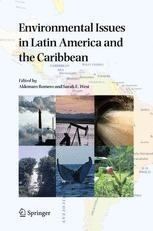
Environmental Issues in Latin America and the Caribbean
This book is a non-technical interdisciplinary collection of 12 essays, each of which uses natural or social science methods. The essays analyze a representative set of environmental issues in Latin America and the Caribbean. They consider problems at international, regional, national, and local levels and examine current and historical environmental policy. The essays are organized according to theme and approach into five parts: -conservation challenges; -national policies, local communities, and rural development; -market mechanisms for protecting public goods; -public participation and environmental justice; -the effects of development policies on the environment. Contributors are researchers from Canada, Europe, Latin America, and the United States

Environmental health impacts of transport and mobility
Transport and mobility are essential parts of the current organization of society. Complex activities are interwoven in such a way that problems occurring from the actual process of constant movement cannot be separated, as they are so tightly interconnected. This book examines the health effects of transport and mobility by addressing the major issues related to the subject and analyzing their consequences. Thus not only are air pollution, noise, and sedentarism and its related endocrine problems discussed, but topics such as jet-lag, accidents and violent displacement are also addressed. The strength of this book over others in the field lies in its multidisciplinary approach to the issues by a number of experts in different scientific fields who are documenting the health effects of transport and mobility. Moreover, it enhances the understanding of the issues by integrating information from different geographical regions.

Environmental Chemistry : Green Chemistry and Pollutants in Ecosystems
Environmental chemistry is a new, fast developing science aimed at deciphering fundamental mechanisms ruling the behaviour of pollutants in ecosystems. Applying this knowledge to current environmental issues leads to the remediation of environmental media, and to new, low energy, low emission, sustainable processes. This book describes the state-of-the-art advances regarding the pollution of water, soils, atmosphere, food and living organisms by toxic metals, fossil fuels, pesticides and other organic pollutants. Furthermore, the eco-toxicology section presents novel bio-assays to assess the toxicity of various pollutants such as dioxins and endocrine disrupters within complex media. The green chemistry section highlights novel chemical reactions based upon environmentally friendly conditions. The analytical chemistry section describes very sensitive methods which trace the fate of pollutants in complex ecosystems.

Environmental Challenges in Civil Engineering II
Rports on findings concerning structural material behavior, and new methods and technologies in constructions. A special emphasis is given to sustainable constructions practices, including material recycling and reuse, renovation and restoration of historical building and to those fostering sustainable development of cities and rural areas, and a better integration of buildings with the environment. Offering a good balance of theory and practice, and covering both technical and organizational aspects in civil engineering and architectural projects, this book offers extensive information on solutions and current challenges in construction projects and structural interventions in the context of environmental protection and earthquake prevention.

Environmental and Microbial Relationships
After the publication of Volume IV in 1997, the introduction of molecular methods into ecology led to significant new findings. Emphasizing these advances, the chapters for the second edition have been completely updated and revised. This volume provides insight into current research on fungal populations and communities. It focuses on fungal responses to the physical environment, interactions with other fungi, microorganisms and invertebrates, the role of fungi in ecosystem processes such as decomposition and nutrient cycling, and aspects of biogeography and conservation. Several chapters deal with various applications in, e.g. biological pest control, natural products discovery, and the degradation of toxic organic compounds. This is an invaluable source of information both for scientists who wish to update their knowledge of current progress and for graduate students interested in obtaining a first overview of this field of research.

Environment Learning for Indoor Mobile Robots : A Stochastic State Estimation Approach to Simultaneous Localization and Map Building
This monograph covers theoretical aspects of simultaneous localization and map building for mobile robots, such as estimation stability, nonlinear models for the propagation of uncertainties, temporal landmark compatibility, as well as issues pertaining the coupling of control and SLAM. One of the most relevant topics covered in this monograph is the theoretical formalism of partial observability in SLAM. The authors show that the typical approach to SLAM using a Kalman filter results in marginal filter stability, making the final reconstruction estimates dependant on the initial vehicle estimates. However, by anchoring the map to a fixed landmark in the scene, they are able to attain full observability in SLAM, with reduced covariance estimates.
