



الصفحة 32
الصفحة 32

Intelligence and security informatics : Biosurveillance ; 2nd NSF Workshop, BioSurveillance 2007, New Brunswick, NJ, USA, May 22, 2007, Proceedings
The 2007 NSF BioSurveillance Workshop (BioSurveillance 2007) was built on the success of the first NSF BioSurveillance Workshop, hosted by the University of Arizona’s NSF BioPortal Center in March 2006.

Intelleger = انتليجر
The project management system is a web application designed to assist software managers in efficiently managing their projects, including websites, mobile apps, and other software initiatives. Utilizing artificial intelligence, the application streamlines project creation and management processes, offering significant benefits in terms of organization and accuracy. Managers can create projects by inputting essential details such as the name, scope, deadline, and tasks. The system generates AI-based functional and non-functional requirements tailored to the project scope using gpt2 model on Pure dataset. Managers can then review and edit these requirements as needed before finalizing the project. The application facilitates comprehensive task management by allowing managers to assign tasks to developers, edit task details, and ensure task deadlines align with project deadlines. Developers can log their start and end times automatically when they begin and complete tasks, providing accurate time tracking and performance analysis.also they can use code generation model to generate their task’s code using codebert model on concode and codesearchnet dataset Real-time notifications keep both managers and developers informed of task assignments, completions, and other critical updates.

Integration, Growth, and Cohesion in an Enlarged European Union
This book’s thirteen contributions bring together the results of recent research on determinants of regional specialization, growth, and convergence in the context of European integration. They offer fresh theoretical and empirical evidence on patterns of regional production structures, specialization, regional disparities, convergence and divergence processes, and evaluation of cohesion policies on both current and future European Union (EU) member states in the context of increased integration. These subjects are addressed in both individual and cross-country analysis using innovative methodologies. They examine structural changes and economic performance differentials across regions and countries in an enlarged EU as well as on evaluating existing policies aimed at reducing economic imbalances.

Integration Processes and Policies in Europe : Contexts, Levels and Actors
Experts on integration processes, integration policies, transnationalism, and the migration and development framework provide an academic assessment of the 2011 European Agenda for the Integration of Third-Country Nationals, which calls for integration policies in the EU to involve not only immigrants and their society of settlement, but also actors in their country of origin. Moreover, a heuristic model is developed for the non-normative, analytical study of integration processes and policies based on conceptual, demographic, and historical accounts.

Integration of Insect-Resistant Genetically Modified Crops within IPM Programs
The goal of this book is to provide an overview on the role insect-resistant GM plants play in different crop systems worldwide. We hope that the book will contribute to a more rational debate about the role GM crops can play in IPM for food and fiber production.

Integration of Fuzzy Logic and Chaos Theory
Attempts to present some current research progress and results on the interplay of fuzzy logic and chaos theory. More specifically, this book includes a collection of some state-of-theart surveys, tutorials, and application examples written by some experts working in the interdisciplinary fields overlapping fuzzy logic and chaos theory.
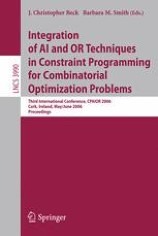
Integration of AI and OR Techniques in Constraint Programming for Combinatorial Optimization Problems ; Vol.3990 ; 3rd International Conference, CPAIOR 2006, Cork, Ireland, May 31 - June 2, 2006, Proceedings
Constitutes the refereed proceedings of the Third International Conference on Integration of AI and OR Techniques in Constraint Programming for Combinatorial Optimization Problems, CPAIOR 2006. The 20 revised full papers presented together with 3 invited talks address methodological and foundational issues from AI, OR, and algorithmics and present applications to the solution of combinatorial optimization problems in various fields via constraint programming.

Integration of AI and OR Techniques in Constraint Programming for Combinatorial Optimization Problems ; Vol.3524 : 2nd International Conference, CPAIOR 2005, Prague, Czech Republic, May 31 -- June 1, 2005
Intended primarily as a forum to focus on the integration and hybridization of the approaches of constraint programming (CP), arti?cial intelligence (AI), and operations research (OR) technologies for solving large-scale and complex real-life optimization problems. Therefore, CPAIOR is never far from industrial applications. The high number of submissions received this year, almost 100 papers, in witness to the interest of the research community in this conference. From these submissions, we chose 26 to be published in full in the proceedings. This volume includes summaries of the invited talks of CPAIOR: one from industry, one from the embedded system research community, and one from the operations research community.

Integration of AI and OR Techniques in Constraint Programming for Combinatorial Optimization Problems ; 5th International Conference, CPAIOR 2008 Paris, France, May 20-23, 2008 Proceedings
The 5th International Conference on Integration of AI and OR Techniques in Constraint Programming for Combinatorial Optimization Problems (CPAIOR 2008) was held in Paris, France May 20–23, 2008. The purpose of this conference series is to bring together researchers in the felds of constraint programming, artifcial intelligence, and operations research to explore ways of solving large-scale, practical optimization problems through integration and hybridization of the felds’ diferent techniques. Through the years, this research community is discovering that the felds have much in c- mon, and there has been tremendous richness in the resulting cross-fertilization of felds.

Integrating Science and Politics for Public Health
This volume is a welcome and timely contribution to our understanding of public health policy making as an essentially political endeavour. A sophisticated mix of theoretical, conceptual and empirical analysis serves as a guide to the challenges inherent in making public policy that accounts for and improves population health.

Integrating Human Aspects in Production Management ; IFIP TC5 / WG5.7 Proceedings of the International Conference on Human Aspects in Production Management 5-9 October 2003, Karlsruhe, Germany
This book is composed of six parts, each focusing on a specific theme: Human Resource Planning; Human Aspects in the Digital Factory; Human Aspects in Production Planning & Control; Knowledge Management; Management of Distributed Work; and Service Engineering. The included papers were presented at the IFIP International Working Conference "Human Aspects in Production Management." Following this conference, the papers were extended by the authors and passed a peer review process.

Integrating Data Science and Earth Science : Challenges and Solutions
This book presents the results of three years collaboration between earth scientists and data scientist, in developing and applying data science methods for scientific discovery. The book will be highly beneficial for other researchers at senior and graduate level, interested in applying visual data exploration, computational approaches and scientifc workflows.

Integrated Water Resources Management and Security in the Middle East
Integrated Water Resources Management and Security in the Middle East brings together diverse voices relating to the critical issue of water management in one of the world’s most politically volatile areas: the Middle East. The book brings together Palestinian, Israeli, Jordanian and international expert opinions on creating a holistic and comprehensive view of water management challenges and strategies in an area of conflict and resource scarcity.The book takes security studies to the next level beyond military preparedness to address the security implications of the most fundamental of resources, that of water. Indeed, the book delves deeply into the underlying ideological underpinnings of various water regimes and possible opportunities for new decision-making models and regional cooperation.This book serves an important place in the scholarly literature on this topic for its breadth of participants and perspectives and its concrete steps forward. It moves the academic discourse beyond pointing fingers and toward constructive solutions and dialogue.

Integrated Water Management : Practical Experiences and Case Studies
This book introduced a whole range of specific definitions, objectives and constraints regarding the various aspects of water management, including water quality management, policies, economic aspects, ecology, price, and sustainable development. These issues all require the formulation of common, integrated, sustainable approaches for managing the water system from a multidisciplinary perspective, and the definition of new professional skills, requirements which become even more evident where transboundary areas are concerned.

Integrated Urban Water Resources Management
Growing populations and rising standards of living exert stress on water supply and the quality of drinking water. In wastewater management, new challenges are caused by new chemicals of concern, including endocrine disrupters, pharmaceuticals, hormones, and personal care products, which often pass through wastewater treatment plants unabated, but may cause serious impacts on receiving aquatic ecosystems. Advanced wastewater treatment leads to production of biosolids, which are processed in various ways, including on-land applications in agriculture. Municipal effluents, combined with increasing withdrawals of water, lead to the worsening of receiving water quality. Expert opinions indicate that the only way to deal with the current urban water management dilemmas is by integrated management and innovative delivery of water services. This book presents important aspects of Challenges in Management of Urban Water Resources, Challenges in Urban Water Supply, Urban Drainage and Water Bodies, Wastewater Treatment and Security, and Wastewater Treatment and Reuse.

Integrated River Basin Management through Decentralization
Drawing upon a worldwide survey of river basin organizations and in-depth studies of eight river basins in a variety of locations around the globe, this book examines how institutional arrangements for managing water resources at the river-basin level have been designed and implemented, what the impetus for these arrangements has been, and what institutional features appear to be associated with greater or lesser success in river basin management.

Integrated Methods for Optimization
Integrated Methods for Optimization integrates the key concepts of Mathematical Programming and Constraint Programming into a unified framework that allows them to be generalized and combined. The unification of MP and CP creates optimization methods that have much greater modeling power, increased computational speed, and a sizeable reduction computational coding. Hence the benefits of this integration are substantial, providing the Applied Sciences with a powerful, high-level modeling solution for optimization problems. As reviewers of the book have noted, this integration along with constraint programming being incorporated into a number of programming languages, brings the field a step closer to being able to simply state a problem and having the computer solve it.

Integrated Marketing Communications : A Global Brand-Driven Approach
Integrated Marketing Communications: A Global Brand-Driven Approach, 2nd edition presents an integrated and global framework to marketing communications, delivered in a highly readable, cohesive and succinct manner. It offers a concise, stimulating approach in its coverage of IMC and combines insightful knowledge of trends in the global marketplace, consumer and stakeholder issues with wider adoption of a consumer-driven perspective, as well as a roadmap through the bewildering maze of marketing communications.

Integrated Management of Diseases Caused by Fungi, Phytoplasma and Bacteria
This book is about stone fruit and apple diseases, grapevine and fruit crops phytoplasma, Phytophthora on citrus, chestnut diseases, esca complex on grapevine and Rosellinia necatrix root rot. Includes models for potato late blight management and management of bacteria and DNA fingerprinting.

Integrated Management and Biocontrol of Vegetable and Grain Crops Nematodes
The second volume of the IMPD series describes aspects related to most important phytoparasitic nematodes, considering the integration of biological control methods with other management practices and technologies, including the use of predatory nematodes and microbial rhizosphere antagonists. Chapters cover topics like the mode of action and interactions of nematophagous fungi, the efficacy of controll and management of plant parasitic nematode communities through a soil conservation approach, and exploitation of nematodes-bacteria antagonistic relationships.
