



الصفحة 32
الصفحة 32

Evolutionary Multiobjective Optimization : Theoretical Advances and Applications
Evolutionary Multiobjective Optimization is a rare collection of the latest state-of-the-art theoretical research, design challenges and applications in the field of multiobjective optimization paradigms using evolutionary algorithms. It includes two introductory chapters giving all the fundamental definitions, several complex test functions and a practical problem involving the multiobjective optimization of space structures under static and seismic loading conditions used to illustrate the various multiobjective optimization concepts.

Evolutionary Intelligence : An introduction to theory and applications with Matlab
This book gives a good introduction to evolutionary computation for those who are first entering the field and are looking for insight into the underlying mechanisms behind them. Emphasizing the scientific and machine learning applications of genetic algorithms instead of applications to optimization and engineering, the book could serve well in an actual course on adaptive algorithms.

Evolutionary Epistemology, Language and Culture : A Non-Adaptationist, Systems Theoretical Approach
Today we know that natural selection and evolution are far from synonymous and that they do not explain isomorphic phenomena in the world. ‘Taking Darwin seriously’ is the way to go, but today the time has come to take alternative and complementary theories that developed after the Modern Synthesis, equally seriously, and, furthermore, to examine how language and culture can merit from these diverse disciplines.As this volume will make clear, a specific inter- and transdisciplinary approach is one of the next crucial steps that needs to be taken, if we ever want to unravel the secrets of phenomena such as language and culture.

Evolutionary Computer Music
The evolutionary computation approach to music is an exciting new development for composers and musicologists alike. For composers, it provides an innovative and natural means for generating musical ideas from a specifiable set of primitive components and processes. For musicologists, these techniques are used to model the cultural transmission and change of a population's body of musical ideas over time. In both cases, musical evolution can be guided by a variety of constraints and tendencies built into the system, such as realistic psychological factors that influence the way music is expressed, experienced, learned, stored, modified, and passed on among individuals. This book discusses not only the applications of evolutionary computation to music, but also the tools needed to create and study such systems. These tools are drawn in part from research into the origins and evolution of biological organisms, ecologies, and cultural systems on the one hand, and from computer simulation methodologies on the other. They can be combined to create surrogate artificial worlds populated by interacting simulated organisms in which complex musical experiments can be performed that would otherwise be impossible.

Evolution, Monitoring and Predicting Models of Rockburst : Precursor Information for Rock Failure
Focuses on investigating predicting precursor information and key points of rockburst in mining engineering through laboratory experiment, theoretical analysis, numerical simulation and case studies. Understanding the evolution patterns for the microstructure instability of rock is a prerequisite for rockburst prediction. The book provides a guide for readers seeking to understand the evolution patterns for the microstrucure of rock failure, the predicting key point of rock failure and the rockburst predicting model. It will be an essential reference to understand mechanism of rockburst and sheds new light on dynamic disasters prediction. Chapters are carefully developed to cover (1) The evolution patterns for the microstructure instability of rock; (2) Rockburst hazard monitoring and predicting criterion and predicting models. The book addresses the issue with a holistic and systematic approach that investigates the occurrence mechanism of rockburst based on the evolution patterns for the microstructure of rock failure and establishes the predicting model of rockburst.

Evolution of Thin Film Morphology : Modeling and Simulations
Thin film deposition is the most ubiquitous and critical of the processes used to manufacture high tech devices. Morphology and microstructure of thin films directly controls their optical, magnetic, and electrical properties. This book focuses on modeling and simulations used in research on the morphological evolution during film growth. The authors emphasize the detailed mathematical formulation of the problem both through numerical calculations based on Langevin continuum equations, and through Monte Carlo simulations based on discrete surface growth models when an analytical formulism is not convenient. Evolution of Thin-Film Morphology will be of benefit to university researchers and industrial scientists working in the areas of semiconductor processing, optical coating, plasma etching, patterning, micro-machining, polishing, tribology, and any discipline that requires an understanding of thin film growth processes.

Evolution from Cellular to Social Scales
Evolution is a critical challenge for many areas of science, technology and development of society. The book reviews general evolutionary facts such as origin of life and evolution of the genome and clues to evolution through simple systems. Emerging areas of science such as "systems biology" and "bio-complexity" are founded on the idea that phenomena need to be understood in the context of highly interactive processes operating at different levels and on different scales. This is where physics meets complexity in nature, and where we must begin to learn about complexity if we are to understand it. Similarly, there is an increasingly urgent need to understand and predict the evolutionary behavior of highly interacting man-made systems, in areas such as communications and transport, which permeate the modern world. The same applies to the evolution of human networks such as social, political and financial systems, where technology has tended to vastly increase both the complexity and speed of interaction, which is sometimes effectively instantaneous.

Evidence-Based Imaging : Optimizing Imaging in Patient Care
Evidence-Based Imaging: Optimizing Imaging for Patient Care presents the radiologist and clinician with a user-friendly guide to the evidence-based science and the merit behind the diagnostic imaging studies performed in medicine. The book provides a systematic framework for understanding the best imaging choices for patient care.
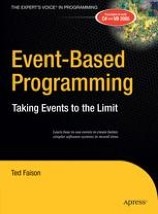
Event-Based Programming : Taking Events to the Limit
This book teaches you how to develop software based on parts that interact primarily through an event mechanism. You'll learn how to use events in many different situations, to solve recurring development problems without coupling. The book introduces Signal Wiring Diagram, a novel form of software diagram similar to the circuit diagrams used by hardware designers. The book concludes with a series of case studies, incorporating all featured concepts.

Evaluation of the use of medicine plants in cancer treatment
Turmeric (Curcuma longa) and ginger (Zingiber officinale) have been widely studied for their potential anticancer effects, primarily due to the bioactive compounds curcumin and gingerol. Both compounds exhibit significant therapeutic properties, including anti-inflammatory, antioxidant, pro-apoptotic, and anti-angiogenic activities, which target key pathways implicated in cancer progression, such as NF-κB, STAT-3, and mTOR. Through these mechanisms, curcumin and gingerol inhibit tumor growth, reduce metastasis, and enhance the efficacy of conventional cancer treatments.

Evaluating evidence of mechanisms in medicine : Principles and procedures
This book is the first to develop explicit methods for evaluating evidence of mechanisms in the field of medicine. It explains why it can be important to make this evidence explicit, and describes how to take such evidence into account in the evidence appraisal process. In addition, it develops procedures for seeking evidence of mechanisms, for evaluating evidence of mechanisms, and for combining this evaluation with evidence of association in order to yield an overall assessment of effectiveness.

EU-Turkey Relations : Theories, Institutions, and Policies
This book explores the new complexities and ambiguities that epitomize EU-Turkey relations. With a strong focus on the developments in the last decade, the book provides full access to a comprehensive understanding of the multifaceted relationship through three entry points: (1) Theories and Concepts, (2) Institutions, and (3) Policies. Part I brings together complementary and competing analytical approaches to study the evolution of EU-Turkey relations, ranging from traditional integration theories to novel concepts. Part II investigates the institutional machinery of EU-Turkey relations by analyzing the roles and perspectives of the European Council, the European Commission, and the European Parliament. Part III offers analyses of the policies most relevant for the relationship: enlargement policy, trade and macroeconomic policies, foreign and security policy, migration and asylum policies, and energy policy. In Part IV, the volume closes with a systematic survey of the conditions under which cooperative trends in EU-Turkey relations could be (re)invigorated. The systematic setup and the balanced combination of distinguished experts from EU- and Turkey-based institutions make this book a fundamental reading for students, researchers, lecturers, and practitioners of EU-Turkey relations, European integration and Turkish foreign policy.

Eutrophication of Shallow Lakes with Special Reference to Lake Taihu, China
Eutrophication and algal blooms are worldwide environmental issues in lakes. The eutrophication process and formation mechanisms of algal blooms are particularly complicated in shallow lakes due to the strong lake–land, air–water and water–sediment interactions. This volume features papers presented at the International Symposium on the Eutrophication Process and Control in Large Shallow Lakes – with Special Reference to Lake Taihu, a Shallow Subtropical Chinese Lake, held in Nanjing, China, 22–26 April, 2005. The topics include: physical processes and their effects on shallow lake ecosystems; biogeochemistry of sediments and nutrient cycling in shallow lakes; algal blooms and ecosystem response in shallow lakes; eutrophication control and restoration in shallow lakes; and resource exploitation, environmental protection and sustainable management in shallow lakes.

European cultural diplomacy and Arab Christians in Palestine, 1918–1948 : Between contention and connection
This book investigates the transnationally connected history of Arab Christian communities in Palestine during the British Mandate (1918-1948) through the lens of the birth of cultural diplomacy.

Euro-Par 2020 : Parallel Processing ; 26th International Conference on Parallel and Distributed Computing, Warsaw, Poland, August 24–28, 2020, Proceedings
This book constitutes the proceedings of the 26th International Conference on Parallel and Distributed Computing, Euro-Par 2020, held in Warsaw, Poland, in August 2020. The conference was held virtually due to the coronavirus pandemic. The 39 full papers presented in this volume were carefully reviewed and selected from 158 submissions. They deal with parallel and distributed computing in general, focusing on support tools and environments; performance and power modeling, prediction and evaluation; scheduling and load balancing; high performance architectures and compilers; data management, analytics and machine learning; cluster, cloud and edge computing; theory and algorithms for parallel and distributed processing; parallel and distributed programming, interfaces, and languages; multicore and manycore parallelism; parallel numerical methods and applications; and accelerator computing.

Euro-Par 2006 Parallel Processing ; 12th International Euro-Par Conference, Dresden, Germany, August 28-September 1, 2006, Proceedings
This book constitutes the refereed proceedings of the 12th International Conference on Parallel Computing, Euro-Par 2006. parallel and distributed databases, data mining and knowledge discovery; grid and cluster computing: models, middleware and architectures; parallel computer architecure and instruction-level parallelism.

Ethylene Action in Plants
The plant hormone ethylene plays a prominent role among several intrinsic and extrinsic factors that control growth and physiology of plants. Its biological activity was discovered over a century ago. However, extensive studies on its mode of action came later. To date, it is well documented that ethylene is a versatile signaling molecule that plays an important role in many physiological processes - like growth, senescence, fruit ripening, stress responses, symbioses, and photosynthesis. Molecular-genetic analyses have revealed mechanisms responsible for ethylene production, perception, and signal transduction. The present work brings into focus the recent developments on the biochemical, physiological, and molecular basis for ethylene action in plants.

Ethnobotany : A phytochemical perspective
Explores the chemistry behind hundreds of plant medicines, dyes, fibers, flavors, poisons, insect repellants, and many other uses of botanicals. Bridging the gap between ethnobotany and chemistry, this book presents an introduction to botany, ethnobotany, and phytochemistry to clearly join these fields of study and highlight their importance in the discovery of botanical uses in modern industry and research. Part I. Ethnobotany, explores the history of plant exploration, current issues such as conservation and intellectual property rights, and a review of plant anatomy. An extensive section on plant taxonomy highlights particularly influential and economically important plants from across the plant kingdom. Part II. Phytochemistry, provides fundamentals of secondary metabolism, includes line drawings of biosynthetic pathways and chemical structures, and describes traditional and modern methods of plant extraction and analysis. The last section is devoted to the history of native plants and people and case studies on plants that changed the course of human history from five geographical regions: Africa, the Americas, Asia, Europe, and Ocean. Throughout the entire book, vivid color photographs bring science to life, capturing the essence of human botanical knowledge and the beauty of the plant kingdom.

Ethics Dumping : Case Studies from North-South Research Collaborations
Provides original, up-to-date case studies of “ethics dumping” that were largely facilitated by loopholes in the ethics governance of low and middle-income countries. It is instructive even to experienced researchers since it provides a voice to vulnerable populations from the forementioned countries. Ensuring the ethical conduct of North-South collaborations in research is a process fraught with difficulties. The background conditions under which such collaborations take place include extreme differentials in available income and power, as well as a past history of colonialism, while differences in culture can add a new layer of complications. In this context, up-to-date case studies of unethical conduct are essential for research ethics training.

Ethical Dimensions of the Economy : Making Use of Hegel and the Concepts of Public and Merit Goods
This book reflects philosophically about the socio-political dimension of economics. Part I provides normative reflections on the economy: Section I reflects on the interconnections between the multiple discourses on the economy, section II presents Hegel's claim that the economic order is an ethical institution and defends his ontological view of the economy against the one of Adam Smith. Section III dialogues with economists about their concepts of public and merit goods. This section defends a Hegelian ontology of the economy through an analysis of technical concepts used by economists. Part II provides applications derived from the normative analysis: Section I presents the views of authors in different academic disciplines pointing to failures in late capitalism, in particular failures of American capitalism and section II asks the question: " What must one pay attention to in a transition from a command economy to a free market?" Section III draws attention to an overlap of ideas found in Catholic Social Thought and in the publications of some recent Nobel prize winners in economics (Buchanan, Sen, Stiglitz).
