



الصفحة 32
الصفحة 32

Groundwater Geochemistry : A Practical Guide to Modeling of Natural and Contaminated Aquatic Systems
Numerical groundwater flow, transport, and geochemical models are important tools besides classical deterministic and analytical approaches. Solving complex linear or non-linear systems of equations, commonly with hundreds of unknown parameters, is a routine task for a PC. Modeling hydrogeochemical processes requires a detailed and accurate water analysis, as well as thermodynamic and kinetic data as input. Thermodynamic data, such as complex formation constants and solubility-products, are often provided as databases within the respective programs. However, the description of surface-controlled reactions (sorption, cation exchange, surface complexation) and kinetically controlled reactions requires additional input data. Unlike groundwater flow and transport models, thermodynamic models, in principal, do not need any calibration.

Groundwater Geochemistry : A Practical Guide to Modeling of Natural and Contaminated Aquatic Systems
Offers beginners and advanced modellers alike a minimum theoretical background and a focus on the practical solution of geochemical modeling with PHREEQC. This book covers the possibility to use PITZER equation and the CD music concept within the version of PHREEQC.

Greening the Industrial Facility : Perspectives, Approaches, and Tools
This book fills a critical gap as a textbook and reference book on the comprehensive environmental impacts of industrial organizations. It is intended for both upper-level undergraduate and beginning graduate students in environmental studies or engineering, and, more broadly, for practicing managers and engineers seeking to improve industrial processes. Nineteen chapters, each focusing on an industrial sector, from resource extraction through fabrication and manufacturing to recycling, evaluate the sector’s inherent "potential to pollute" by providing an overview of typical sector operations and their environmental implications. Beyond outlining and providing frameworks for assessing industrial facilities’ contemporary interactions with the environment (energy and water use, material throughput and hazard, and pollution potential), the book provides forward-looking analyses concerning how new technologies and practices can transform environmentally degrading effects of industry. It also addresses how managers can navigate these changes and move their industrial organizations towards environmental sustainability over the long term.

Graph-theoretic concepts in computer science ; 33rd International workshop, WG 2007, Dornburg, Germany, June 21-23, 2007, Revised Papers
The WG conference traditionally aims at uniting theory and practice by demonstrating how graph-theoretic concepts can be applied to various areas in computer science, or by extracting new problems from applications. The goal is to present recent researchresults and to identify and exploredirections of future research.

Graph-theoretic concepts in computer science ; 30th International workshop, WG 2004, Bad Honnef, Germany, June 21-23, 2004, Revised Papers
During its 30-year existence, the International Workshop on Graph-Theoretic Concepts in Computer Science has become a distinguished and high-quality computer science event. The workshop aims at uniting theory and practice by demonstrating how graph-theoretic concepts can successfully be applied to v- ious areas of computer science and by exposing new theories emerging from applications. In this way, WG provides a common ground for the exchange of information among people dealing with several graph problems and working in various disciplines. Thereby, the workshop contributes to forming an interdis- plinary research community. The original idea of the Workshop on Graph-Theoretic Concepts in C- puter Science was ingenuity in all theoretical aspects and applications of graph concepts, wherever applied. Within the last ten years, the development has strengthened in particular the topic of structural graph properties in relation to computational complexity.
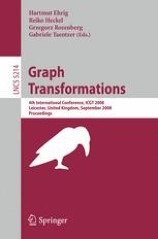
Graph Transformations ; 4th International Conference, ICGT 2008, Leicester, United Kingdom, September 7-13, 2008. Proceedings
This book constitutes the refereed proceedings of the 4th International Conference on Graph Transformations, ICGT 2008, held in Leicester, UK, in September 2008.The 27 revised full papers presented together with 5 tutorial and workshop papers and 3 invited lectures were carefully selected from 57 submissions. All current aspects in graph drawing are addressed including hypergraphs and termgraph rewriting, applications of graph transformation, execution of graph transformations, compositional systems, validation and verification, graph languages and special transformation concepts, as well as patterns and model transformations.
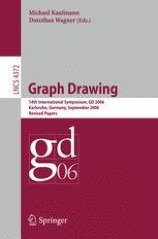
Graph drawing ; 14th International symposium, GD 2006, Karlsruhe, Germany, September 18-20, 2006, Revised Papers
The 33 revised full papers and 5 revised short papers presented together with 2 invited talks, 1 system demo, 2 poster papers address all current aspects in graph drawing, ranging from foundational and methodological issues to applications for various classes of graphs in a variety of fields.

Granite genesis : in-situ melting and crustal evolution
In this book we suggest an alternative model for the origin of granite in terms of in-situ meltingintracrustal convection that physically determines the process from partial melting of mid-upper crustal rocks to formation of a convecting magma layer. We illustrate the model using the geological, geochemical and geophysical studies from Australia, North and South America, Europe and China, and conclude that heat convection within a crustal partial melting layer is essential for formation of granite magma and that without convection, partial melting of rocks produces migmatites rather than granites. Granite is layer-like within the crust, and shape and size of granite bodies reflect the geometric relationship between an irregular upper surface of the crystallised magma layer and erosion surface. Repeated melting of the crust generates downward-younging granite sequences. Chemical and isotopic compositions of granites indicate differentiation within the magma rather than different deep sources.

Grammatical Inference ; Algorithms and Applications : 9th International Colloquium, ICGI 2008 Saint-Malo, France, September 22-24, 2008 Proceedings
This book constitutes the refereed proceedings of the 9th International Colloquium on Grammatical Inference, ICGI 2008, held in Saint-Malo, France, in September 2008.The 21 revised full papers and 8 revised short papers presented were carefully reviewed and selected from 36 submissions. The topics of the papers presented vary from theoretical results of learning algorithms to innovative applications of grammatical inference, and from learning several interesting classes of formal grammars to applications to natural language processing.

Grammar for Teachers : A Guide to American English for Native and Non-Native Speakers
The purpose of Grammar for Teachers is to encourage readers to develop a solid understanding of the use and function of grammatical structures in American English. It approaches grammar from a descriptive rather than a prescriptive approach; however, throughout Grammar for Teachers differences between formal and informal language, and spoken and written English are discussed. Grammar for Teachers avoids jargon or excessive use of technical terminology and reviews essential grammar structures clearly and concisely.

GPS : Theory, algorithms and applications
This reference and handbook describes Global Positioning System (GPS) theory, algorithms and applications. It is primarily based upon source-code descriptions of the KSGSoft program developed by author at the GFZ in Potsdam. The theory and algorithms are revised and extended for a new development of a multiple functional GPS software. New concepts such as the unified GPS data processing method and ambiguity-ionospheric algorithm, as well as general ambiguity search criteria, are reported for the first time. Mathematically rigorous, the book begins with the basics of coordinate and time systems and satellite orbits, as well as GPS observables, and deals with topics such as physical influences, observation equations, adjustment and filtering, ambiguity resolution, data processing, kinematic positioning, and the determination of perturbed orbits.

Governing social protection in the long term : Social policy and employment relations in Australia and New Zealand
This book examines the comparative evolution of social protection in Australia and New Zealand from 1890 to the present day, focusing on the relationship between employment relations and social policy. Utilising longstanding and more recent developments in historical institutionalist methodology, Ramia investigates the relationship between these two policy domains in the context of social protection theory.

Governing Europe under a Constitution : The Hard Road from the European Treaties to a European Constitutional Treaty
At the summit in Laeken in December 2001 the European Council opened the debate on the reform of the supranational structures through its "Declaration on the Future of the European Union" and proposed a wide-ranging agenda. The European Convention, with the mandate of the European Council, has been forming proposals for a more democratic, transparent and efficient European Union and presented a draft of a Treaty establishing a Constitution for Europe on 20th of June 2003. On these fundaments the Intergovernmental Conference finally came to a compromise in summer 2004 after wrestling especially with the problem of qualified majority voting within the Council. On 29th of October 2004 the Heads of State and Governments of the 25 Member States signed the Treaty.

Governance and performance of education systems
The proposed book is unique in that it brings together a wide range of disciplines and experience from several countries. What are possible models of governance? How do we measure their effects in terms of efficiency and equity? What type of contribution can financial and information systems make? How do we adapt the prevailing culture to the challenge of better performance? These are some of the concrete questions to which this book provides an answer.

Governance : Systemic foundation and framework
Instead of yet another theory on good governance, this book presents a substantiation of contemporary notions. It builds on the theoretical foundations for taking an overall perspective on social contexts and culminates in a systemic framework that captures social structures based on first principles of viability and sustainability. The framework at hand enables applicants to view social contexts holistically while at the same time envisioning a rich picture of what leverages the implementation of social purposes beyond the boxes of the professional disciplines: social structures can be assessed, strengths and weaknesses identified and measures arrived at. Ultimately, the required structures can be tailor-made to align forces for a joint implementation of purposes. Conventional static hierarchies can be deployed into dynamic social organisms capable of developing and adapting continuously according to the opportunities and challenges faced.
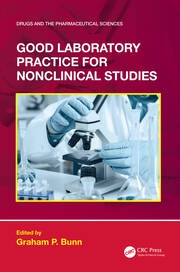
Good laboratory practice for nonclinical studies
The GLP regulations have been enacted since 1978 and are currently under a proposed FDA amendment to revise terminology and accommodate other changes relating to advances in technology related to the industry. This book provides a unique opportunity to access interpretation of the 21CFR58 regulatory requirements from leading industry experts with a vast knowledge and expertise in their fields. The approach used takes the regulations, provides interpretations and references to examples and regulatory actions. Data integrity and the use of electronic systems in compliance with 21CFR11 Electronic Records: Electronic Signatures are also discussed.

Good laboratory practice : The why and the how
The GLP regulations have developed from rules on how to exactly document the planning, conduct and reporting of toxicity studies to a quality system for the management of a multitude of study types, from the simple determination of a physical/chemical parameter to the most complex field studies or ecotoxicology studies. At the same time the term “Good Laboratory Practice” has become somewhat of a slogan with the aim to characterise any reliably conducted laboratory work.

GN Company for face masks and hand sanitizers production
If there is any product that has been in high demand in Pharmacies and Supermarkets since the advent of the corona virus, then it must be face mask and sanitizers. The fact that wearing of face masks during the COVID-19 pandemic received varying recommendations from different public health agencies and governments means that the product is bound to sell well. In essence, starting a face mask and sanitizers production company is a business you should consider as an aspiring entrepreneur. This business that is still open for investors to come and compete for the available market. From here we got the idea to start up this business GN company for Masks and Hand Sanitizers.

Glycopeptides and Glycoproteins : Synthesis, Structure, and Application
Their structure, biosynthesis, and mode of action are summarized in the fth chapter. The last chapter covers current methods for the determination of high-resolution structures of glycopeptides and glycoproteins mainly based onNMRspectroscopy, X-raycrystallography,and molecular modeling.This series presents critical reviews of the present position and future trends in modern chemical research Short and concise reports on chemistry.

Glossary of dental implantology
A comprehensive, consensus-based global platform of dental implant terminology for effective communication among dental professionals, clinicians, clinical and basic science researchers, and scientists. Offers clear definitions for dental implant-related terms for use by the whole dental team Fosters a working knowledge of currently used dental implant terminology. Helps team members to communicate more efficiently and effectively. Presents a comprehensive guide for specialist and general dentists, dental students, residents, dental hygienists, and dental laboratory technicians. Includes entries for hardware technology, regenerative materials, lasers, radiology, and more
