



الصفحة 30
الصفحة 30

Laparoscopic Urologic Surgery in Malignancies
The horizons of laparoscopic surgery are expanding, such that the overwhelming majority of abdominal urologic procedures have now been performed laparoscopically. In some of these procedures, the laparoscopic alternative has been demonstrated to be superior to its open counterpart; in others comparative analyses are ongoing; and in yet others, only the initial forays into minimally invasive surgery have been undertaken. This book sets out to collate the current body of knowledge on laparoscopic urology under one cover. The authors are respected experts in the field and have provided concise, thoughtful updates on their respective topics. The information contained in this volume will help urologists to increase their laparoscopic knowledge and skills.

Languages and Compilers for Parallel Computing ; 21th International Workshop, LCPC 2008, Edmonton, Canada, July 31 - August 2, 2008, Revised Selected Papers
This book constitutes the thoroughly refereed post-conference proceedings of the 21th International Workshop on Languages and Compilers for Parallel Computing, LCPC 2008, held in Edmonton, Canada, in July/August 2008.The 18 revised full papers and 6 revised short papers presented were carefully reviewed and selected from 35 submissions. The papers address all aspects of languages, compiler techniques, run-time environments, and compiler-related performance evaluation for parallel and high-performance computing and comprise

Languages and Compilers for Parallel Computing ; 20th International Workshop, LCPC 2007, Urbana, IL, USA, October 11-13, 2007, Revised Selected Papers
This book constitutes the thoroughly refereed post-conference proceedings of the 20th International Workshop on Languages and Compilers for Parallel Computing, LCPC 2007, held in Urbana, IL, USA, in October 2007.The 23 revised full papers presented were carefully reviewed and selected from 49 submissions. The papers are organized in topical sections on reliability, languages, parallel compiler technology, libraries, run-time systems and performance analysis, and general compiler techniques.
Language, Meaning, Interpretation
Philosophy of logic and language, and of meaning and communication are central to this volume. The discussion of these issues involves analytical approaches, including semantics and semiotics, philosophy of science, mathematical logic, phenomenology, hermeneutics and some aspects of philosophical anthropology and aesthetics. Philosophy of the Absolute also belongs to this broad repertoire of philosophical problems and disciplines. A number of problems and viewpoints derive from the metaphysical system; any relativistic view on ethical values, for instance, makes sense in relation to some absolute. Metaphysical system building may have come to an end, but after all it belongs to philosophy to remind us of our past.
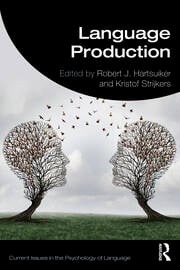
Language Production
This comprehensive text presents an up-to-date overview of the key topics in the field, providing important theoretical and empirical challenges to the traditional and accepted modal view of language production. Each chapter explores in detail a different aspect of language production, covering traditional methods including written and signed production alongside emerging research on joint action production. Emphasizing the neurobiological underpinnings of language, chapter authors showcase research that moves from a monologue-only approach to one that that considers production in more ecologically valid circumstances.

Language Choice in a Nation Under Transition : English Language Spread in Cambodia
This book examines language choice in contemporary Cambodia, and uses the case study to explore and evaluate competing explanations for the spread of English globally. the multiple contexts in which Cambodians make individual and institutional language policy choices are considered. Chapters 2 and 3 examine the economic and political contexts for language choice, as Cambodia has transitioned from a planned economy and communism to a market economy and democracy. Chapters 4, 5, and 6 examine the assistance context for language choice; the bilateral, multilateral, and nongovernmental development agencies that have recently begun to work in Cambodia demand certain language skills of Cambodian employees and government counterparts, and support the learning of these languages in both nonformal and formal education.

Language and Automata Theory and Applications ; 2nd International Conference, LATA 2008, Tarragona, Spain, March 13-19, 2008. Revised Papers
This book constitutes the refereed proceedings of the Second International Conference on Language and Automata Theory and Applications, LATA 2008, held in Tarragona, Spain, in March 2008.The 40 revised full papers presented were carefully reviewed and selected from 134 submissions. The papers deal with the various issues related to automata theory and formal languages

Landscapes of Lifelong Learning Policies across Europe : Comparative Case Studies
This book explores different landscapes of Lifelong Learning policies (LLP), producing case-based examinations of their institutional, discursive, and relational dimensions. Across Europe, young people develop their life courses amidst diverse living conditions and are confronted with a variety of institutional and structural arrangements that impact on their opportunities in education and labour. Considering the relevance of LLP in shaping those opportunities, the chapters draw from multi-level, mixed-methods research and offer original insights on the interplay of discourses and governance patterns in the processes of policy-making and deliverance. The book yields noteworthy insights into the widely differing realities across the European landscape, and also into the diverging ways young people deal with and actively participate in LLP.

Land-Change Science in the Tropics : Changing Agricultural Landscapes
Land use and land-cover change research over the past decade has focused mainly on contemporary primary land-cover conversions in the tropics and sub-tropics, with considerable resources dedicated to the explanation and prediction of tropical deforestation and often ignoring the dynamism in the world’s agro-pastoral landscapes. This collection integrates cutting-edge research in the social, biogeophysical, and geographical information sciences to understand the human and environmental dynamics that change the type, magnitude and location of land uses and land covers in the changing countryside.This book describes the monitoring of land-cover changes, explains the processes through which land is altered, and describes the development of spatially-explicit models to predict land change. This book illustrates how practitioners have integrated knowledge from the three scientific realms - social, biophysical, and GIScience - that underpin land-change science.

Lacroix and the Calculus
Lacroix and the Calculus is the first major study of Lacroix’s large Traité. It uses the unique and massive bibliography given by Lacroix to explore late 18th-century calculus, and the way it is reflected in Lacroix’s account. Several particular aspects are addressed in detail, including: the foundations of differential calculus, analytic and differential geometry, conceptions of the integral, and types of solutions of differential equations (singular/complete/general integrals, geometrical interpretations, and generality of arbitrary functions).

Kristian Birkeland : The First Space Scientist
PREFACEThisscientific biography of Kristian Birkeland (1867–1917) was written to bring the story ofa Norwegian national hero to the attention ofthe English-speaking world. Birkeland’sheroic stature was established not on a field of military battle,but in the bitter cold of the Artic wilderness ashe sought to answer basic questions abouthow the Sun controlled northern lights andmag-netic storms. He was also afather of Norsk Hydro one ofNorway’s largest industries. Birkel and died before reaching the age of 50.Because Birkel and never kept adiary, documented information about his family and private life is sparse. Before he died, Olaf Devik, the last of Birke-ffland’s close friends, gave along interview and graciously transferred his personal archive to A.E. Birkeland’s 82 scientific papers and three book-length publications map the progress of his investigations. addressed this book questions that had vexed European scientists for centuries. Why do the northern lights appear overhead when the Earth’s magnetic field is disturbed? How are magnetic storms connected to disturbances on the Sun? To answer these questions Birkeland interpreted his advance laboratory simulations and daring campaigns in the Arctic wilderness in the light of Maxwell’s newly discovered laws of electricity and magnetism. Birkeland’s ideas were dismissed for decades, only to be vindicated when satellites could fly above the Earth’s atmosphere.
Knowledge Solutions : Tools, Methods, and Approaches to Drive Organizational Performance
Covers topics in knowledge management and competence in strategy development, management techniques, collaboration mechanisms, knowledge sharing and learning, as well as knowledge capture and storage. Presented in accessible “chunks,” it includes more than 120 topics that are essential to high-performance organizations. The extensive use of quotes by respected experts juxtaposed with relevant research to counterpoint or lend weight to key concepts; “cheat sheets” that simplify access and reference to individual articles; as well as the grouping of many of these topics under recurrent themes make this book unique. In addition, it provides scalable tried-and-tested tools, method and approaches for improved organizational effectiveness.
Knowledge Sharing in the Integrated Enterprise : Interoperability Strategies for the Enterprise Architect
The IFIP series publishes state-of-the-art results in the sciences and technologies of information and communication. The scope of the series includes: foundations of computer science; software theory and practice; education; computer applications in technology; communication systems; systems modeling and optimization; information systems; computers and society; computer systems technology; security and protection in information processing systems; artificial intelligence; and human-computer interaction. Proceedings and post-proceedings of referred international conferences in computer science and interdisciplinary fields are featured. These results often precede journal publication and represent the most current research. The principal aim of the IFIP series is to encourage education and the dissemination and exchange of information about all aspects of computing.

Knowledge Management for Health Care Procedures ; From Knowledge to Global Care, AIME 2007 Workshop K4CARE 2007, Amsterdam, The Netherlands, July 7, 2007, Revised Selected Papers
The incursion of information and communication technologies (ICT) in health care entails evident bene?ts at the levels of security and efciency that improve not only the quality of life of the patients, but also the quality of the work of the health care professionals and the costs of national health care systems. Leaving research approaches aside, the analysis of ICT in health care shows an evo- tion from the initial interest in representing and storing health care data (i. e. , electronic health care records) to the current interest of having remote access to electronic health care systems, as for example HL7 initiatives or telemedicine. This sometimes imperceptible evolution can be interpreted as a new step of the progress path of health care informatics.

Knowledge Integration : The Practice of Knowledge Management in Small and Medium Enterprises
The ability to manage knowledge is relevant for millions of small and medium sized enterprises (SMEs) that operate in high-tech environments. They strongly depend on external knowledge about customers, technologies, and competitors because, as opposed to large companies, they have limited internal knowledge resources and little power to control their business environments.

Knowledge Enterprise : Intelligent Strategies in Product Design, Manufacturing, and Management ; Proceedings of PROLAMAT 2006, IFIP TC5, International Conference, June 15-17 2006, Shanghai, China
Contains the edited version of the technical presentations of PROLMAT 2006, the IFIP TC5 international conference held on June 15-17, 2006 at the Shanghai University in China. The main theme of this conference is Knowledge Enterprise – Intelligent Strategies in Product Design, Manufacturing and Management. These proceedings focus on the issue of how to translate data and information into knowledge in manufacturing enterprises.
Knowledge and Information Visualization : Searching for Synergies
The basic ideas underlying knowledge visualization and information vi- alization are outlined. In a short preview of the contributions of this volume, the idea behind each approach and its contribution to the goals of the book are outlined. 2 The Basic Concepts of the Book Three basic concepts are the focus of this book: "data", "information", and "kno- edge". There have been numerous attempts to define the terms "data", "information", and "knowledge", among them, the OTEC Homepage "Data, Information, Kno- edge, and Wisdom" (Bellinger, Castro, & Mills, see http://www.syste- thinking.org/dikw/dikw.htm): Data are raw. They are symbols or isolated and non-interpreted facts. Data rep- sent a fact or statement of event without any relation to other data. Data simply exists and has no significance beyond its existence (in and of itself). It can exist in any form, usable or not. It does not have meaning of itself.
Knowledge and Civil Society
Focuses on the role of civil society in the creation, dissemination, and interpretation of knowledge in geographical contexts. It offers original, interdisciplinary and counterintuitive perspectives on civil society. The book includes reflections on civil and uncivil society, the role of civil society as a change agent, and on civil society perspectives of undone science. Conceptual approaches go beyond the tripartite division of public, private and civic sectors to propose new frameworks of civic networks and philanthropic fields, which take an inclusive view of the connectivity of civic agency across sectors.

Kinetics of Water-Rock Interaction
Systems at the surface of the Earth are continually responding to energy inputs derived from solar radiation or from the radiogenic heat in the interior. These energy inputs drive plate movements and erosion, exposing metastable mineral phases at the Earth’s surface. In addition, these energy fluxes are harvested and transformed by living organisms. As long as these processes persist, chemical disequilibrium at the Earth’s surface will be perpetuated. Chemical disequilibrium is also driven by human activities related to production of food, extraction of water and energy resources, and burial of wastes. To understand how the surface of the Earth will change over time, we must understand the rates at which reactions occur and the chemical feedbacks that relate these reactions across extreme temporal and spatial scales. This book addresses fundamental and applied questions concerning the rates of water-rock interactions driven by tectonic, climatic, and anthropogenic forcings.

Kaposi Sarcoma Herpesvirus : New Perspectives
Since the identificationof two sequences fromKSHV,wehave learnedmuch about this pathogen as reflected in this book. As it turned out, KSHV itself encodes for a number of cytokines, and induces cellular cytokine secretion, contributing to tumour growth. Moreover, KSHV vFLIP targets the IKKNFκB axis to encourage the inflammatory microenvironment observed by Gallo and his colleagues. KSHV continues to elucidate both mechanisms of viral oncogenesis, and cellular and immune pathways involved in non-viral driven neoplasia.
