


تحسين النتائح
ترتيب حسب
من
الى

Introduces readers to various topics and examples of programming in Python, as well as key concepts in artificial intelligence. Python programming skills will be imparted as we go along. Concepts and code snippets will be covered in a step-by-step manner, to guide and instill confidence in beginners. Complex subjects in deep learning and machine learning will be broken down into easy-to-digest content and examples. Artificial intelligence implementations will also be shared, allowing beginners to generate their own artificial intelligence algorithms for reinforcement learning, style transfer, chatbots, speech, and natural language processing.
Applies the functional OCaml programming language to numerical or computational weighted data science, engineering, and scientific applications. This book is based on the authors' first-hand experience building and maintaining Owl, an OCaml-based numerical computing library. You'll first learn the various components in a modern numerical computation library. Then, you will learn how these components are designed and built up and how to optimize their performance. After reading and using this book, you'll have the knowledge required to design and build real-world complex systems that effectively leverage the advantages of the OCaml functional programming language.
Focuses on the fundamental concepts and at the same time on practical aspects of implementing neural networks and deep learning for your research projects. This book is designed so that you can focus on the parts you are interested in. You will explore topics as regularization, optimizers, optimization, metric analysis, and hyper-parameter tuning. In addition, you will learn the fundamentals ideas behind autoencoders and generative adversarial networks. All the code presented in the book will be available in the form of Jupyter notebooks which would allow you to try out all examples and extend them in interesting ways. A companion online book is available with the complete code for all examples discussed in the book and additional material more related to TensorFlow and Keras. All the code will be available in Jupyter notebook format and can be opened directly in Google Colab (no need to install anything locally) or downloaded on your own machine and tested locally. You will: Understand the fundamental concepts of how neural networks work / Learn the fundamental ideas behind autoencoders and generative adversarial networks / Be able to try all the examples with complete code examples that you can expand for your own projects / Have available a complete online companion book with examples and tutorials.
This book constitutes the thoroughly refereed post-conference proceedings of the Third International Symposium on Applications of Graph Transformations, AGTIVE 2007, held in Kassel, Germany, in October 2007.
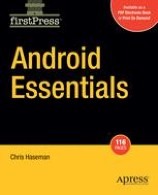
Android Essentials is a no–frills, no–nonsense, code–centric run through the guts of application development on Google's Mobile OS. This book uses the development of a sample application to work through topics, focusing on giving developers the essential tools and examples required to make viable commercial applications work. Covering the entirety of the Android catalog in less than 150 pages is simply impossible. Instead, this book focuses on just four main topics: the application life cycle and OS integration, user interface, location–based services, and networking.
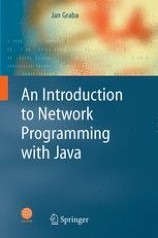
This book provides an overview of Java … . Each chapter is supplemented with practical programming exercises.The combination of code templates with good supporting discussions allows a competent Java programmer to rapidly expand his or her skill base to include network programming.
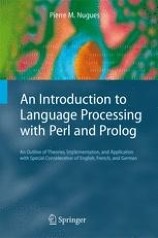
This book teaches the principles of natural language processing, first covering linguistics issues such as encoding, entropy, and annotation schemes; defining words, tokens and parts of speech; and morphology. It then details the language-processing functions involved, including part-of-speech tagging using rules and stochastic techniques; using Prolog to write phase-structure grammars; parsing techniques and syntactic formalisms; semantics, predicate logic and lexical semantics; and analysis of discourse, and applications in dialog systems. The key feature of the book is the author's hands-on approach throughout, with extensive exercises, sample code in Prolog and Perl, and a detailed introduction to Prolog. The reader is supported with a companion website that contains teaching slides, programs, and additional material.
Introduces graph algorithms on an intuitive basis followed by a detailed exposition using structured pseudocode, with correctness proofs as well as worst-case analyses. Centered around the fundamental issue of graph isomorphism, the content goes beyond classical graph problems of shortest paths, spanning trees, flows in networks, and matchings in bipartite graphs. Advanced algorithmic results and techniques of practical relevance are presented in a coherent and consolidated way. Numerous illustrations, examples, problems, exercises, and a comprehensive bibliography support students and professionals in using the book as a text and source of reference. Furthermore, Python code for all algorithms presented is given in an appendix. Topics and features: Algorithms are first presented on an intuitive basis, followed by a detailed exposition using structured pseudocode / Correctness proofs are given, together with a worst-case analysis of the algorithms / Full implementation of all the algorithms in Python / An extensive chapter is devoted to the algorithmic techniques used in the book / Solutions to all the problems
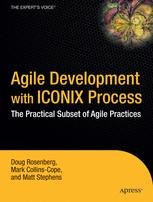
Describes how to apply ICONIX Process (a minimal, use case-driven modeling process) in an agile software project. It's full of practical advice for avoiding common agile pitfalls. Further, the book defines a core agile subset so those of you who want to get agile need not spend years learning to do it. Instead, you can simply read this book and apply the core subset of techniques. The book follows a real-life .NET/C# project from inception and UML modeling, to working code through several iterations. You can then go on-line to compare the finished product with the initial set of use cases. The book also introduces several extensions to the core ICONIX Process, including combining test-driven development (TDD) with up-front design to maximize both approaches (with examples using Java and JUnit). And the book incorporates persona analysis to drive the projects goals and reduce requirements churn.
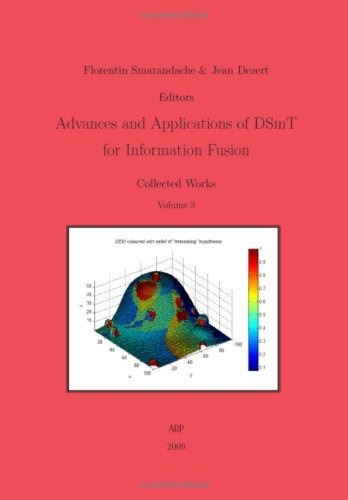
One of the most comprehensive and flexible fusion theory based on belief functions. It can work in all fusion spaces: power set, hyper-power set, and super-power set, and has various fusion and conditioning rules that can be applied depending on each application. Some new generalized rules are introduced in this volume with codes for implementing some of them. For the qualitative fusion, the DSm Field and Linear Algebra of Refined Labels (FLARL) is proposed which can convert any numerical fusion rule to a qualitative fusion rule. When one needs to work on a refined frame of discernment, the refinement is done using Smarandache s algebraic codification. New interpretations and implementations of the fusion rules based on sampling techniques and referee functions are proposed, including the probabilistic proportional conflict redistribution rule.
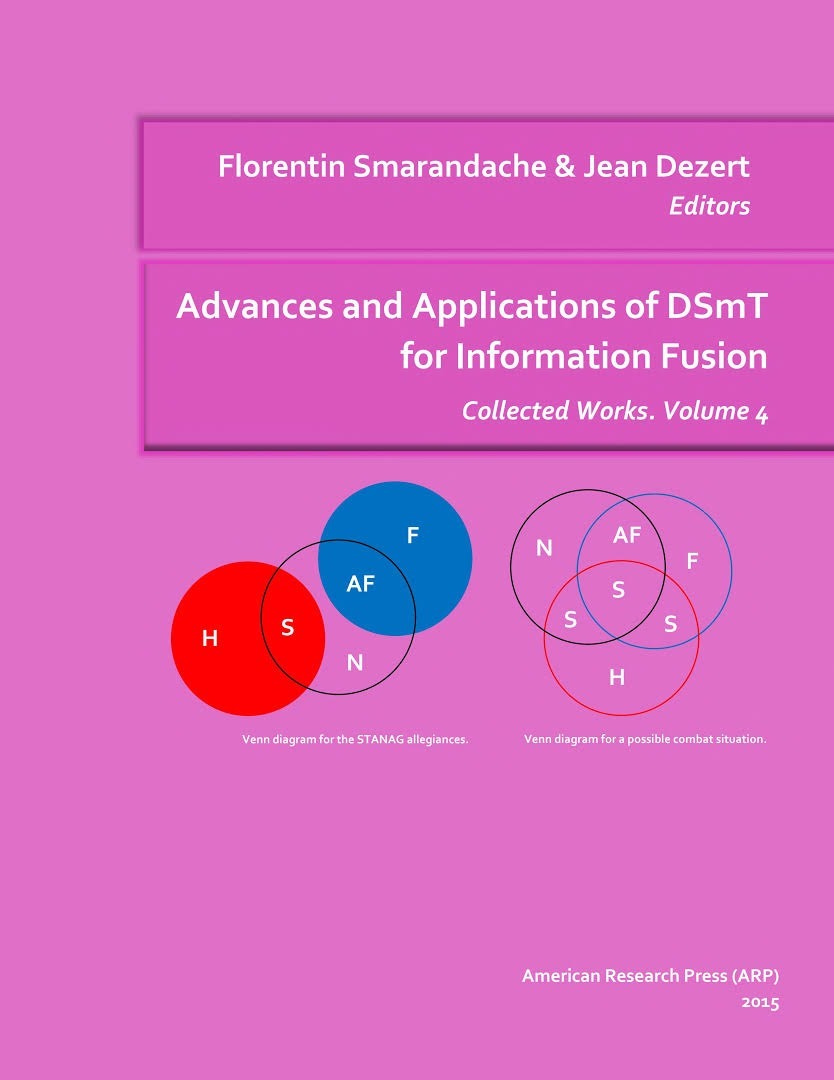
One of the most comprehensive and flexible fusion theory based on belief functions. It can work in all fusion spaces: power set, hyper-power set, and super-power set, and has various fusion and conditioning rules that can be applied depending on each application. Some new generalized rules are introduced in this volume with codes for implementing some of them. For the qualitative fusion, the DSm Field and Linear Algebra of Refined Labels (FLARL) is proposed which can convert any numerical fusion rule to a qualitative fusion rule. When one needs to work on a refined frame of discernment, the refinement is done using Smarandache s algebraic codification. New interpretations and implementations of the fusion rules based on sampling techniques and referee functions are proposed, including the probabilistic proportional conflict redistribution rule.
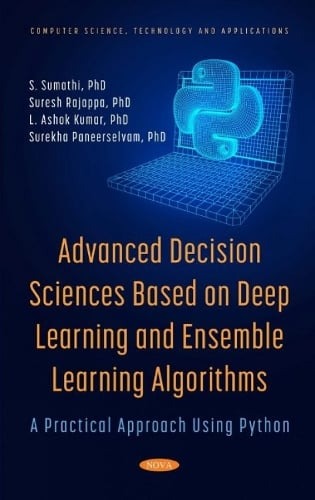
Describes the deep learning models and ensemble approaches applied to decision-making problems. The authors have addressed the concepts of deep learning, convolutional neural networks, recurrent neural networks, and ensemble learning in a practical sense providing complete code and implementation for several real-world examples. The authors of this book teach the concepts of machine learning for undergraduate and graduate-level classes and have worked with Fortune 500 clients to formulate data analytics strategies and operationalise these strategies.
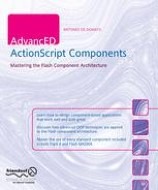
Macromedia's architecture is like a chest filled with precious jewels, and this book is quite simply the key to open it! One of the most important tools provided with Flash is the Macromedia Component Architecture: a framework of components written in ActionScript 2, based on established design patterns, that provides a wealth of functionality you can just bolt on to your Flash applications when desired. This can save you an enormous amount of time during application development and help you improve the quality of your code. What's more, the source code is included, so if you can't find the component you need within the component architecture, you can just modify existing components to create your own!
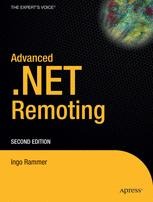
Surpassing any white papers, specialist documents and other documentationthis book features in-depth coverage of the .NET Remoting Framework. The text is organized into three main parts, and this revised, second edition features 150 pages of entirely new material! Part one includes a guide to the 1.1 framework and its capabilities in real-world applications. Part two presents .NET remoting internals, and provides real-world code and development strategies. Finally, part three looks at futuristic remoting tools and their present implementation in Visual Studio .NET 2005. You will come to see how remoting procedures will change within the new IDE and revised framework.
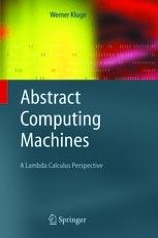
The book addresses ways and means of organizing computations, highlighting the relationship between algorithms and the basic mechanisms and runtime structures necessary to execute them using machines. It completely abstracts from concrete programming languages and machine architectures, taking instead the lambda calculus as the basic programming and program execution model to design various abstract machines for its correct implementation. The emphasis is on fully normalizing machines based on full-fledged beta-reductions as essential prerequisites for symbolic computations that treat functions and variables truly as first-class objects. Their weakly normalizing counterparts are shown to be functional abstract machines that sacrifice the flavors of full beta-reductions for decidedly simpler runtime structures and improved runtime efficiency. Further downgrading of the lambda calculus leads to classical imperative machines that permit side-effecting operations on the runtime environment.
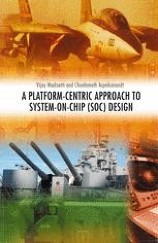
The book proposes a new methodology for realizing platform-centric design of complex systems, and presents a detailed plan for its implementation. The proposed plan allows component vendors, system integrators and product developers to collaborate effectively and efficiently to create complex products within budget and schedule constraints.
This volume, with forewords by Greg Bollella and Dana Scott, presents novel programs based on the new advances in this area, including the first randomness-preserving version of Heapsort. Programs are provided, along with derivations of their average-case time, to illustrate the radically different approach to average-case timing. The automated static timing tool applies the Modular Calculus to extract the average-case running time of programs directly from their MOQA code.
This advanced-level textbook covers conventional cryptographic primitives and cryptanalysis of these primitives; basic algebra and number theory for cryptologists; public key cryptography and cryptanalysis of these schemes; and other cryptographic protocols, e.g. secret sharing, zero-knowledge proofs and undeniable signature schemes.
.NET represents a new and improved way of developing software for the Windows platform. Given the chance, you'd probably rewrite all of your existing code in the newer managed code environment that .NET provides. But it is difficult or impossible to throw out all existing legacy code and start over when a new technology arrives. Instead, you need to find a way to move forward with new .NET development while reusing existing pieces of tested, working code. You need a way to interoperate with the existing code until you have a chance to finally rewrite all of it in .NET.
The book has been well received internationally by a wide audience of clinicians, including general dentists, oral surgeons, otolaryngologists, primary care physicians, nurse practitioners, dental hygienists, physician assistants, and dermatologists, and sales have been strong among students and post-graduate residents training in medical, dental, and allied health fields, supporting the versatility of this work and serving as testimony to its value in both the academic and private practice arenas. Several key updates and improvements have been made to the second edition. All informational content has been updated to ensure accuracy and relevance, particularly in the rapidly evolving fields of oncology and pharmacology. A new chapter has been added entitled "Oral Sequelae of Cancer and Cancer Therapy" which better organizes and consolidates previous content while expanding on topics such as targeted therapies and hematopoietic stem cell transplantation. Additional clinical images have been included throughout the book so that the full clinical spectrum of any given condition is well-represented. Furthermore, the print quality, as well as the positioning and layout of the clinical images has been improved for optimal utility. Lastly, the summary boxes that follow each condition have been reconfigured with color-coded icons for improved definition, ease of use and cross-referencing.

سوريا - اتستراد درعا - غباغب
+963-15 2050 - 15 860 380 /1/2/3 - 11 662 3900