



الصفحة 3
الصفحة 3
Beyond Cartesian Dualism : Encountering affect in the teaching and learning of science.
There is surprisingly little known about affect in science education. Despite periodic forays into monitoring students’ attitudes-toward-science, the effect of affect is too often overlooked. Beyond Cartesian Dualism gathers together contemporary theorizing in this axiomatic area. In fourteen chapters, senior scholars of international standing use their knowledge of the literature and empirical data to model the relationship between cognition and affect in science education. Their revealing discussions are grounded in a broad range of educational contexts including school classrooms, universities, science centres, travelling exhibits and refugee camps, and explore an array of far reaching questions. What is known about science teachers’ and students’ emotions? How do emotions mediate and moderate instruction? How might science education promote psychological
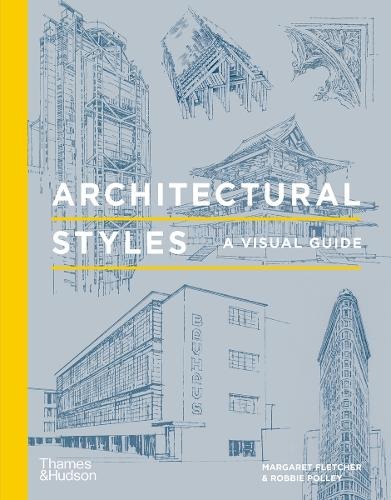
Architectural styles : A visual guide
It begins with the earliest styles of the ancient civilizations – Egypt, Greece and Rome – before travelling through Medieval, Renaissance and Baroque and into the modern world via the panoply of 19th century revivalist styles. Also covered is the traditional architecture of China, India, Japan and Pre-Columbian America. A final section gathers together key architectural elements from different periods – columns, towers, doorways, windows.

Advances in Computer, Information, and Systems Sciences, and Engineering ; Proceedings of IETA 2005, TeNe 2005 and EIAE 2005
All aspects of the conference were managed on-line; not only the reviewing, submissions and registration processes; but also the actual conference. Conference participants - authors, presenters and attendees - only needed an internet connection and sound available on their computers in order to be able to contribute and participate in this international ground-breaking conference. The on-line structure of this high-quality event allowed academic professionals and industry participants to contribute work and attend world-class technical presentations based on rigorously refereed submissions, live, without the need for investing significant travel funds or time out of the office.
Advances in computer systems architecture ; Vol. 4186 : 11th Asia-Pacific Conference, ACSAC 2006, Shanghai, China, September 6-8, 2006, Proceedings
This is the 11th in a series of conferences, which started life in Australia, as the computer architecture component of the Australian Computer Science Week. In 1999 it ventured away from its roots for the first time, and the fourth Australasian Computer Architecture Conference was held in the beautiful city of Sails (Auckland, New Zealand). Perhaps it was because of a lack of any other computer architecture conference in Asia or just the attraction of traveling to the Southern Hemisphere but the conference became increasingly international during the subsequent three years and also changed its name to include Computer Systems Architecture, reflecting more the scope of the conference, which embraces both architectural and systems issues. In 2003, .
Across the Sahara : Tracks, trade and cross-cultural exchange in Libya
Provides a multi-perspective approach to the caravan trade in the Sahara during the 19th century. Based on travelogues from European travelers, recently found Arab sources, historical maps and results from several expeditions, the book gives an overview of the historical periods of the caravan trade as well as detailed information about the infrastructure which was necessary to establish those trade networks.
Academic Flying and the Means of Communication
This book shines a light on how and why academic work became entwined with air travel, and what can be done to change academia’s flying habit. The starting point of the book is that flying is only one means of scholarly communication among many, and that the state of the planet now obliges us to shift to other means.
