


تحسين النتائح
ترتيب حسب
من
الى

Discusses how to build various ML algorithms and how they can be applied to improve healthcare systems. Healthcare applications of AI are innumerable: medical data analysis, early detection and diagnosis of disease, providing objective-based evidence to reduce human errors, curtailing inter- and intra-observer errors, risk identification and interventions for healthcare management, real-time health monitoring, assisting clinicians and patients for selecting appropriate medications, and evaluating drug responses. Extensive demonstrations and discussion on the various principles of machine learning and its application in healthcare is provided, along with solved examples and exercises.
Introduces and explores a variety of schemes designed to empower, enhance, and represent multi-institutional and multi-disciplinary machine learning (ML) and deep learning (DL) research in healthcare paradigms. Serving as a unique compendium of existing and emerging ML/DL paradigms for the healthcare sector, this book demonstrates the depth, breadth, complexity, and diversity of this multi-disciplinary area. It provides a comprehensive overview of ML/DL algorithms and explores the related use cases in enterprises such as computer-aided medical diagnostics, drug discovery and development, medical imaging, automation, robotic surgery, electronic smart records creation, outbreak prediction, medical image analysis, and radiation treatments.

Offers the first systematic guide to machine ethics, bridging between computer science, social sciences and philosophy. Based on a dialogue between an AI scientist and a novelist philosopher, the book discusses important findings on which moral values machines can be taught and how. In turn, it investigates what kind of artificial intelligence (AI) people do actually want.
This book addresses the application of computing to cultural heritage and the discipline of Digital Humanities that formed around it. Digital Humanities research is transforming how the Human record can be transmitted, shaped, understood, questioned and imagined and it has been ongoing for more than 70 years. However, we have no comprehensive histories of its research trajectory or its disciplinary development. The authors make a first contribution towards remedying this by uncovering, documenting, and analysing a number of the social, intellectual and creative processes that helped to shape this research from the 1950s until the present day.

Media and communication have become ubiquitous in today’s societies andaffect all aspects of life. On an individual level, they impact how we learnabout the world, how we entertain ourselves, and how we interact withothers. On an organisational level, the interactions between media andorganisations, such as political parties, NGOs, businesses and brands, shapeorganisations’ reputation, legitimacy, trust and (financial) performance, aswell as individuals’ consumer, political, social and health behaviours. Atthe societal level, media and communication are crucial for shaping publicopinion on current issues such as climate change, sustainability, diversity,and well-being.
This book is written for members of the scholarly research community, and for persons involved in research evaluation and research policy. More specifically, it is directed towards the following four main groups of readers: – All scientists and scholars who have been or will be subjected to a quantitative assessment of research performance using citation analysis. – Research policy makers and managers who wish to become conversant with the basic features of citation analysis, and about its potentialities and limitations. – Members of peer review committees and other evaluators, who consider the use of citation analysis as a tool in their assessments. – Practitioners and students in the field of quantitative science and technology studies, informetrics, and library and information science. Citation analysis involves the construction and application of a series of indicators of the ‘impact’, ‘influence’ or ‘quality’ of scholarly work, derived from citation data, i.e. data on references cited in footnotes or bibliographies of scholarly research publications. Such indicators are applied both in the study of scholarly communication and in the assessment of research performance. The term ‘scholarly’ comprises all domains of science and scholarship, including not only those fields that are normally denoted as science – the natural and life sciences, mathematical and technical sciences – but also social sciences and humanities.

This book covers a variety of well known topics of interest to practitioners in industry and research scientists. The range of topics includes languages, tools and methodologies for the semantic Web, semantic Web-based ontology management and engineering, semantic Web services, practical applications of the semantic Web techniques, artificial intelligence methods and tools for the semantic Web, software agents on the semantic Web, visualization and modeling of the semantic Web. The goal of this book is to provide a state-of-the-art review of the research as well as to introduce topics of interest to experts.

Blockchain technology is a powerful, cost-effective method for network security. Essentially, it is a decentralized ledger for storing all committed transactions in trustless environments by integrating several core technologies such as cryptographic hash, digital signature and distributed consensus mechanisms. Over the past few years, blockchain technology has been used in a variety of network interaction systems such as smart contracts, public services, Internet of Things (IoT), social networks, reputation systems and security and financial services. With its widespread adoption, there has been increased focus on utilizing blockchain technologies to address network security concerns and vulnerabilities as well as understanding real-world security implications.
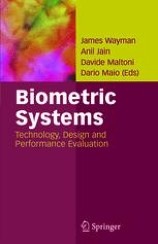
The use of computers to recognize humans from physical and behavioral traits dates back to the digital computer evolution of the 1960s. But even after decades of research and hundreds of major deployments, the field of biometrics remains fresh and exciting as new technologies are developed andoldtechnologiesareimprovedandfieldedinnewapplications.Wor- wide over the past few years,there has been a marked increase in both g- ernment and private sector interest in large-scale biometric deployments for accelerating human–machine processes, efficiently delivering human services, fighting identity fraud and even combating terrorism. The p- pose of this book is to explore the current state of the art in biometrics- tems and it is the system aspect that we have wished to emphasize. By their nature, biometric technologies sit at the exact boundary of the human–machineinterface.Butlikealltechnologies,bythemselvestheycan provide no value until deployed in a system with support hardware, n- work connections, computers, policies and procedures, all tuned together to work withpeople to improve some real business process within a social structure.
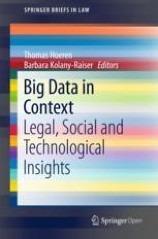
Sheds new light on a selection of big data scenarios from an interdisciplinary perspective. It features legal, sociological and economic approaches to fundamental big data topics such as privacy, data quality and the ECJ’s Safe Harbor decision on the one hand, and practical applications such as smart cars, wearables and web tracking on the other. Addressing the interests of researchers and practitioners alike, it provides a comprehensive overview of and introduction to the emerging challenges regarding big data.All contributions are based on papers submitted in connection with ABIDA (Assessing Big Data), an interdisciplinary research project exploring the societal aspects of big data and funded by the German Federal Ministry of Education and Research.
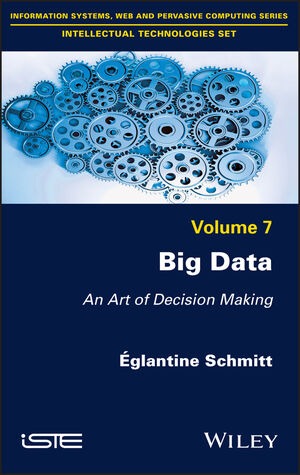
Manipulating and processing masses of digital data is never a purely technical activity. It requires an interpretative and exploratory outlook - already well known in the social sciences and the humanities - to convey intelligible results from data analysis algorithms and create new knowledge. Big Data is based on an inquiry of several years within Proxem, a software publisher specializing in big data processing. The book examines how data scientists explore, interpret and visualize our digital traces to make sense of them, and to produce new knowledge. Grounded in epistemology and science and technology studies, Big Data offers a reflection on data in general, and on how they help us to better understand reality and decide on our daily actions.
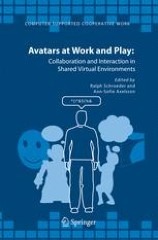
examining uses of shared virtual environments in practical settings such as scientific collaboration, distributed meetings, building models together, and others. It also covers online gaming in virtual environments, which has attracted hundreds of thousands of users and presents an opportunity for studying a myriad of social issues. Covering both ‘work’ and ‘play’, the volume brings together issues common to the two areas.
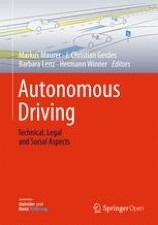
This book takes a look at fully automated, autonomous vehicles and discusses many open questions: How can autonomous vehicles be integrated into the current transportation system with diverse users and human drivers? Where do automated vehicles fall under current legal frameworks? What risks are associated with automation and how will society respond to these risks? How will the marketplace react to automated vehicles and what changes may be necessary for companies?
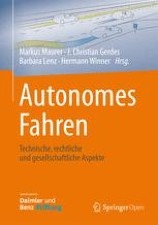
This book provides answers to a wide range of these and other questions. Experts from Germany and the USA describe central topics related to the automation of vehicles on public roads from an engineering and social science perspective. They show which "decisions" are required of an autonomous vehicle or which "ethics" must be programmed. The authors discuss expectations and concerns that characterize the individual and societal acceptance of autonomous driving. An increased safety potential through autonomous vehicles is compared to the challenges and solution approaches that play a role in securing the safety concept. In addition, they explain what possibilities for change and opportunities arise for our mobility and the reorganization of traffic, not least for freight traffic. The book thus offers an up-to-date, comprehensive and scientifically sound examination of the topic of "autonomous driving".
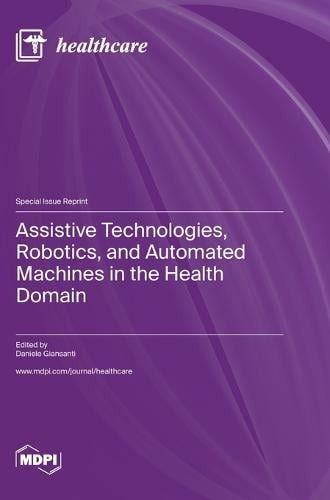
The field of healthcare is constantly evolving and advancing with new technologies and innovations. Among these, assistive technologies, robotics, and automated machines are rapidly gaining ground as powerful tools to improve the quality of care and enhance patient outcomes. From wearable devices that monitor vital signs to surgical robots that assist in complex procedures, these technologies have the potential to revolutionize the way we deliver healthcare. The development and the integration of assistive technologies, care robots, and automated machines are strategic both as single components, when paired together, and when interconnected in the health domain.This reprint explores the latest developments in assistive technologies, robotics, and automated machines in the health domain, providing a comprehensive overview of their applications and potential impact. The reprint is for the benefit of healthcare professionals, researchers, engineers, and students interested in these rapidly evolving fields.
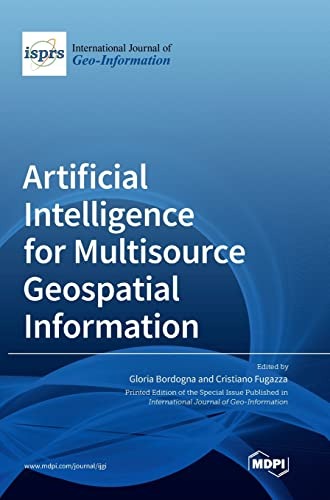
Collects 10 original research contributions published in the Special Issue entitled “Artificial Intelligence for Multisource Geospatial Information” of the ISPRS International Journal of Geo-Information. The focus is on different methods of Geospatial Artificial Intelligence (GeoAI) based on deep learning using different network architectures, clustering, soft computing, and semantic approaches. They are proposed to deal with a variety of Geospatial Big Data (GBD), such as georeferenced texts and photos in social networks, remote sensing images, cartographic maps, multidimensional geo databases, metadata in spatial data infrastructures, and for different tasks, such as for multisource georeferenced text integration and geodata flexible querying, for social sensing by applying sentiment analysis, clustering and geo analysis, for segmentation of roads, clouds and snow, and for detection of small targets and people on the streets.
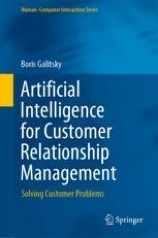
This book describes a number of applications of Artificial Intelligence in the field of Customer Relationship Management with the focus of solving customer problems. We design a system that tries to understand the customer complaint, his mood, and what can be done to resolve an issue with the product or service. To solve a customer problem efficiently, we maintain a dialogue with the customer so that the problem can be clarified and multiple ways to fix it can be sought. We introduce dialogue management based on discourse analysis: a systematic linguistic way to handle the thought process of the author of the content to be delivered. We analyze user sentiments and personal traits to tailor dialogue management to individual customers. We also design a number of dialogue scenarios for CRM with replies following certain patterns and propose virtual and social dialogues for various modalities of communication with a customer.
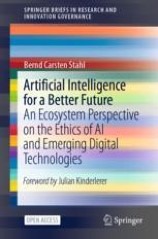
This book proposes a novel approach to Artificial Intelligence (AI) ethics. AI offers many advantages: better and faster medical diagnoses, improved business processes and efficiency, and the automation of boring work.

Provides advanced system implementation for Smart Cities using artificial intelligence. It addresses the complete functional framework workflow and explores basic and high-level concepts. The book is based on the latest technologies covering major challenges, issues and advances, and discusses intelligent data management and automated systems.
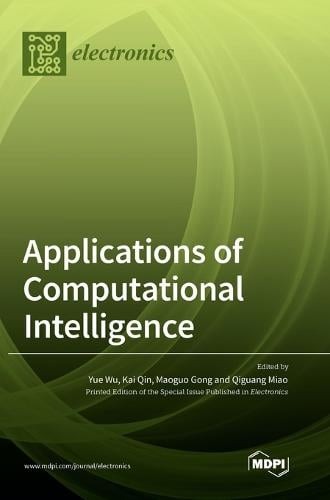
Computational intelligence (CI) is the theory, design, application, and development of biologically and linguistically motivated computational paradigms. Traditionally, the three main pillars of CI have been neural networks, fuzzy systems, and evolutionary computation. However, in time, many nature-inspired computing paradigms have evolved. Thus, CI is an evolving field, and, at present, in addition to the three main constituents, it encompasses computing paradigms such as ambient intelligence, artificial life, cultural learning, artificial endocrine networks, social reasoning, and artificial hormone networks. CI plays a major role in developing successful intelligent systems, including games and cognitive developmental systems.

سوريا - اتستراد درعا - غباغب
+963-15 2050 - 15 860 380 /1/2/3 - 11 662 3900