


تحسين النتائح
ترتيب حسب
من
الى

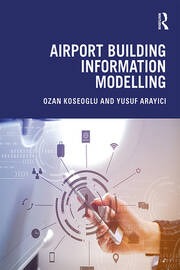
Details how Building Information Modelling is being successfully deployed in the planning, design, construction and future operation of the Istanbul New Airport, a mega-scale construction project incorporating a varying mix of infrastructures including terminals, runways, passenger gates, car parks, railways and roads. The book demonstrates how Airport Building Information Modelling (ABIM) is being used to: • facilitate collaboration, cooperation and integrated project delivery • manage subcontractors and eliminate cost over-runs • reduce waste on site and enhance overall quality • connect people in a virtual environment to encourage collaborative working • provide clients with an effective interface for lifecycle management including: design development, construction documentation, construction phases and BIM and Big Data Integration for future facilities management
Focuses on the safety assessment of existing structures subjected to multi-hazard scenarios through advanced numerical methods. Whereas the focus is on concrete dams and nuclear containment structures, the presented methodologies can also be applied to other large-scale ones. This book is composed of seven sections: Fundamentals: theoretical coverage of solid mechnics, plasticity, fracture mechanics, creep, / seismology, dynamic analysis, probability and statistics / Damage: that can affect concrete structures, such as cracking of concrete, AAR, chloride ingress, and rebar corrosion, / Finite Element: formulation for both linear and nonlinear analysis including stress, heat and fracture mechanics, / Engineering Models: for soil/fluid-structure interaction, uncertainty quantification, probablilistic and random finite element analysis, machine learning, performance based earthquake engineering, ground motion intensity measures, seismic hazard analysis, capacity/fragility functions and damage indeces, / Applications to dams through potential failure mode analyses, risk-informed decision making, deterministic and probabilistic examples, / Applications to nuclear structures through modeling issues, aging management programs, critical review of some analyses, / Other applications and case studies: massive RC structures and bridges, detailed assessment of a nuclear containment structure evaluation for license renewal.

Highlights Singapore’s development into a city in which water and greenery, along with associated environmental, technical, social and political aspects have been harnessed and cultivated into a liveable sustainable way of life. It is also a story about a unique and thoroughgoing approach to large-scale and potentially transferable water sustainability, within largely urbanized circumstances, which can be achieved, along with complementary roles of environmental conservation, ecology, public open-space management and the greening of buildings, together with infrastructural improvements.
In recent years, logistics outsourcing has gained increasing importance and today is used by a large number of firms across virtually all industries worldwide. Logistics service providers have developed a wide array of services that are utilized to improve logistics processes - and mainly to cut costs.This book uses state-of-the-art scientific methods to reveal that most firms currently do not realize the full potential of logistics outsourcing. It shows the complexity of outsourcing performance and that its true drivers lie in the relationship between service providers and their customers. Through the results of a large-scale empirical survey, the book also emphasizes the importance of a firm's approach towards outsourcing: solely striving for cost reductions may be a dead end, while the often overlooked increased logistics service levels are equally important for boosting logistics performance. In the light of current outsourcing practices, this indicates substantial room for improvement for most firms.
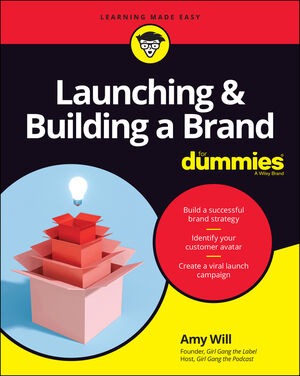
In Launching & Building a Brand For Dummies, Amy Will—who launched her first business at just 24-years-old and has been the brains behind four strong and buzzworthy brands—covers everything from crafting a powerful brand identity and planning that all-important launch to being prepared to scale up as you begin to take off. She reveals crucial lessons from her personal experience in launching five companies, as well as detailing case studies from some of the strongest brands out there, accompanied by insights and advice from successful founders and branding experts.
The proposed consensus models focus on the treatment of non-cooperative behaviors in the consensus-reaching process and explores the influence of trust loss on the consensus-reaching process.The logic behind is as follows: firstly, a clustering algorithm is adopted to reduce the dimension of decision-makers, and then, based on the clusters’ opinions obtained, a consensus-reaching process is carried out to obtain a decision result acceptable to the majority of decision-makers.

Bridges the disciplinary boundaries within the social sciences to explore the role of social institutions in shaping geographical contexts, and in creating new knowledge. It includes theorizations as well as original empirical case studies on the emergence, maintenance and change of institutions as well as on their constraining and enabling effects on innovation, entrepreneurship, art and cultural heritage, often at regional scales across Europe and North America. Rooted in the disciplines of management and organization studies, sociology, geography, political science, and economics the contributors all take comprehensive approaches to carve out the specific contextuality of institutions as well as their impact on societal outcomes. Not only does this book offer detailed insights into current debates in institutional theory, it also provides background for scholars, students, and professionals at the intersection between regional development, policy-making, and regulation.
Analysis, Control and Optimization of Complex Dynamic Systems gathers in a single volume a spectrum of complex dynamic systems related papers written by experts in their fields, and strongly representative of current research trends. Complex systems present important challenges, in great part due to their sheer size which makes it difficult to grasp their dynamic behavior, optimize their operations, or study their reliability. Yet, we live in a world where, due to increasing inter-dependencies and networking of systems, complexity has become the norm. With this in mind, the volume comprises two parts. The first part is dedicated to a spectrum of complex problems of decision and control encountered in the area of production and inventory systems. The second part is dedicated to large scale or multi-agent system problems occurring in other areas of engineering such as telecommunication and electric power networks, as well as more generic context.
Kuklys examines how Nobel Prize-winning economist Amartya Sen’s approach to welfare measurement can be put in practice for poverty and inequality measurement in affluent societies such as the UK. Sen argues that an individual’s welfare should not be measured in terms of her income, but in terms what she can actually do or be, her capabilities. In Chapters 1 and 2, Kuklys describes the capability approach from a standard welfare economic point of view and provides a comprehensive literature review of the empirical applications in this area of research. In the remaining chapters, novel econometric techniques are employed to operationalise the concepts of functionings and capability to investigate inequality and poverty in terms of capability in the UK. Kuklys finds that capability measurement is always a useful complement to traditional monetary analysis, and particularly so in the case of capability-deprived disabled individuals.

Offers an in‑depth examination of multi‑capital accounting, which has already been integrated within the corporate sustainability reporting directive and will follow on from sustainability reporting. the LIFTS model (limits and foundations towards sustainability accounting model) used in this book combines various scientific and practical contributions to develop budgets for environmental impacts and social obligations on an organisational scale. it proposes an accounting mechanism that enables an organization to manage each of its budgets and measure variances between forecast and actual. it provides an introduction to the principles of this model and its conditions of application and describes its implementation in numerous companies.
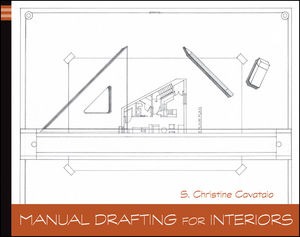
An essential reference for interior designers learning how to manually draft scaled floor plans, elevations, sections, and three-dimensional drawings. Clearly explaining techniques and methods, it begins with an explanation of drafting tools and their various uses, and then presents instructions and illustrations that indicate how to complete increasingly more difficult drafting conventions. Additionally, readers will learn drawing techniques for indicating various materials, symbols for coordinating related drawings, and architectural lettering. Complemented with extensive drawings, inspiring examples, and tips for developing your own style of graphic expression, Manual Drafting for Interiors arms readers with essential skills they'll use throughout their career as a designer.
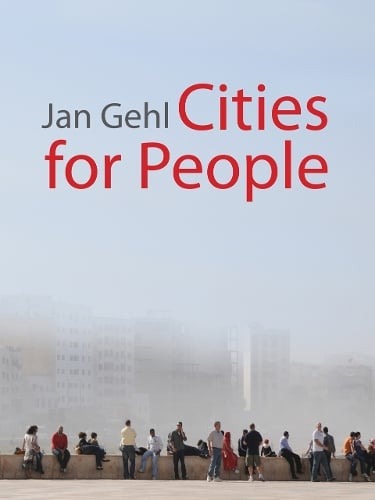
Presents latest work creating (or recreating) cityscapes on a human scale. He clearly explains the methods and tools he uses to reconfigure unworkable cityscapes into the landscapes he believes they should be: cities for people. Taking into account changing demographics and changing lifestyles, Gehl emphasizes four human issues that he sees as essential to successful city planning. He explains how to develop cities that are lively, safe, sustainable, and healthy. Focusing on these issues leads Gehl to think of even the largest city on a very small scale. For Gehl, the urban landscape must be considered through the five human senses and experienced at the speed of walking rather than at the speed of riding in a car or bus or train. This small-scale view, he argues, is too frequently neglected in contemporary projects. In a final chapter, Gehl makes a plea for city planning on a human scale in the fast-growing cities of developing countries.
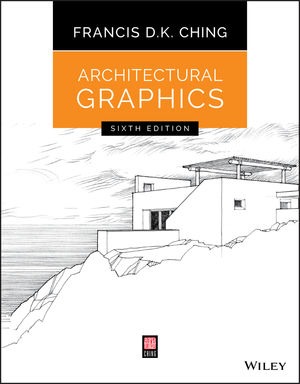
Offers a comprehensive introduction to using graphic tools and drafting conventions to translate architectural ideas into effective visual presentations, using hundreds of the author's distinctive drawings to illustrate the topic effectively. Includes new information on orthographic projection in relation to 3D models, and revised explanations of line weights, scale and dimensioning, and perspective drawing to clarify some of the most difficult concepts. New examples of modern furniture, APA facilities, and presentation layout provide more up-to-date visuals, and the Reference Center features all new animations, videos, and practice exercises. Architectural graphics are key tools for conveying design through representation on paper or on screen, and this book is the ultimate guide to mastering the skill, then applying your talent to create more effective design communication.
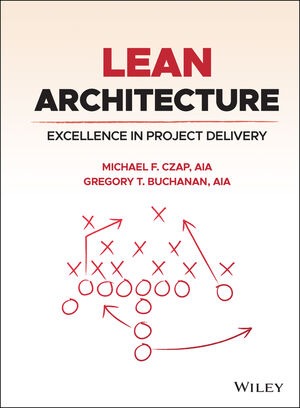
Shows readers a path to improve their project delivery via the application of lean concepts and process management. Authors Michael Czap and Gregory Buchanan challenge readers to reexamine their approach to architectural practice and projects by presenting a unique and compelling alternative. Readers will learn to: Maximize the use of their resources to deliver superior results in less time / Minimize waste, cost, and inefficiency in their firm’s operations / Move between radically different project scales while retaining efficient and effective processes
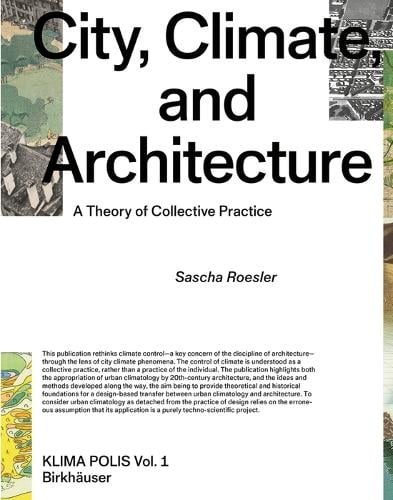
Based on a history of climate control on urban scales, it promotes the integration of indoors and outdoors in order to reduce environmental and thermal loads in cities. Just as heating and cooling practices inside the buildings are affecting the (urban) climate outdoors, urban heat islands are influencing the energy requirements and thermal conditions inside the buildings. While the first part of the book focuses on the interwar period in Europe, the publication’s second part considers examples from all over the globe, tracing the growing significance of ecological thinking for the design of urban environments.
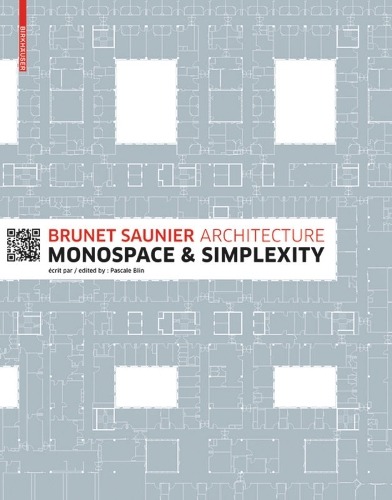
Discusses and analyzes this concept in detail, presenting trueto- scale floor plans, cross-sections, architectural views, and other information. The Monospace concept - which is based on a process of creative reduction down to essentials, i.e. "simplexity" - is adaptive rather than normative or prescriptive, and based on probabilities rather than determinism. It respects energy, even when it sometimes uses it. It takes the individual's experience into account, and starts from the position of the subject. It also permits changing perspectives. This design concept should attract attention far beyond the borders of France.

Expands on Building Information Modeling, showing its applicability to a range of design-oriented projects. It emphasizes the full impact that a data modeling tool has on design processes, systems, and the high level of collaboration required across the design team. It also explains the quantitative analysis opportunities that BIM affords for sustainable design and for balancing competing design agendas, while highlighting the benefits BIM offers to designing in 3D for construction. The book concludes with a deep look at the possible future of BIM and digitally-enhanced design.
Detailed drawings are developed on the basis of the working drawings; they form an important part of the specification and contain precise information for the tradesmen, indicating how materials are to be used and how they are to be joined. Drawings are produced in various degrees of detail. Depending on the function of the drawings, they are produced in scales from 1:20 to 1:1 in order to define the materials and method of joining, and to better illustrate the various dimensions. Basics Detailed Drawings explains, step by step, how to compose detailed designs and produce correct construction drawings, using clear examples
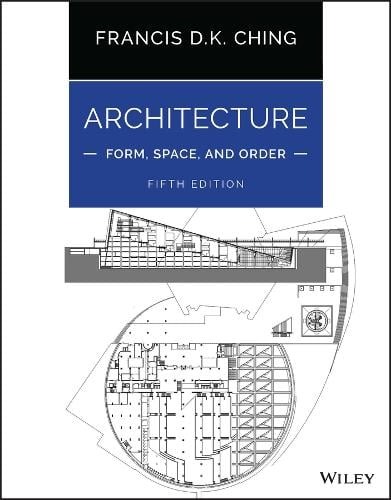
Distills complex concepts of design into a clear focus and brings difficult abstractions to life. It explains form and space in relation to light, view, openings, and enclosures and explores the organization of space, and the elements and relationships of circulation, as well as proportion and scale. In addition, the text's detailed illustrations demonstrate the concepts presented and reveal the relationships between fundamental elements of architecture through the ages and across cultures.

Complex geometric forms generated using virtual media can be tested and validated only by means of physical models, which also make it possible to assess their practical application. The complexity of contemporary architectural design requires the mastery of new methods of producing scale models, which opens a new chapter in the field of modeling, and is the focus of this book. Along with the traditional methods that provide the basis for modeling, this book presents the principles of digital NURBS modeling, parametric modeling, digital modeling support, and model creation, complete with a number of tutorials, practical advice and examples found in architectural practice today.

سوريا - اتستراد درعا - غباغب
+963-15 2050 - 15 860 380 /1/2/3 - 11 662 3900