


تحسين النتائح
ترتيب حسب
من
الى


This book contains a survey of present-day research into the biomedical fundamentals of Alzheimer’s disease (AD). It contains 20 chapters dealing with widely ranging topics, all of which have a bearing upon the understanding and treatment of AD. Starting with a broad survey of the contribution that the various microscopical techniques (light microscopy, electron microscopy, atomic force microscopy)
Splicing of primary RNA transcript, i.e. removal of introns and joining of exons to produce mature mRNAs competent for translation into proteins, is a quasi-systematic step of gene expression in higher organisms. However, this process is not unequivocal but can follow alternate pathways. Alternative splicing of a given transcript can therefore yield several distinct mRNAs encoding as many different proteins. Its full biological significance has not been appreciated until it was recognized that alternative splicing is so general as to affect about 75% of all human genes. Therefore, alternative splicing not only vastly increases protein diversity but also offers numerous opportunities for aberrant splicing events with pathological consequences.
Organized around the central dogma of life, progressing from genes to proteins and higher-order cellular structures, including core application areas such as imaging, chemical genetics, activity-based protein profiling, and natural product discovery and biosynthesis. Advanced topics and applications in, e. g., microbiology, developmental biology, and neurobiology, are covered in separate sections.

Inflammatory cell recruitment requires the concerted action of at least five major sets of adhesion molecules: integrins, immunoglobulin-like molecules, selectins, carbohydrate structures serving as selectin ligands, and certain ectoenzymes. This volume gives a comprehensive overview on the most relevant leukocyte and endothelial adhesion molecules. The chapters are written by leaders in the field and focus on the biology, structure, function, and regulation of adhesion molecules. Currently approved adhesion molecule-based therapies are reviewed and an outlook for future approaches is also provided. The book is of interest to clinicians and scientists from immunology, physiology, cancer research, rheumatology, allergology, infectious diseases, gastroenterology, pulmonology and cardiology.
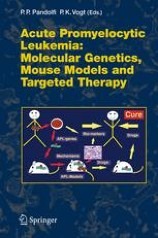
Over the past 10 years, work on acute promyelocytic leukemia (APL) has become the paradigm of translational research that began with the discovery of a recurrent chromosomal translocation, followed by the identification of the genes and proteins involved, finding their molecular functions in transcriptional control, establishing mouse models and culminating in the development of targeted therapy.
This volume, written by experts in the field, is the first to deal with the relationship between human disease and the actin cytoskeleton. It provides overviews of actin and selected actin-binding proteins, and then focuses on diseases that involve these proteins. Specific chapters deal with actin, cofilin, profilin, gelsolin and thymosin ¾4. Other chapters discuss the roles of multiple actin-binding proteins in cancer and metastasis, leukocyte disorders, and heart failure, and there is a chapter that describes how intracellular pathogens use the host actin cytoskeleton. This seminal volume is intended for researchers, clinicians, physicians, and graduate students in the fields of biochemistry, cell biology, microbiology, immunology, and genetics.
The actin cytoskeleton plays a central role in many cellular processes including cell motility, cytokinesis, endocytosis and phagocytosis. The structure and dynamics of the actin cytoskeleton is regulated by a large number of proteins that interact with monomeric and/or filamentous actin. Actin monomer binding proteins provides a comprehensive view on actin monomer-binding proteins and the mechanisms by which they contribute to actin dynamics and various actin-dependent cellular processes. This new title contains chapters that describe the basic mechanisms of actin dynamics as well as the structural principles by which various actin-binding proteins interact with actin.
this book is presenting a review of basic proteomic techniques. The second part of the book is related to the novel high throughput protein identification technique called the 'molecular scanner'
Advances in bioinformatics and systems biology require improved computational methods for analyzing data, while progress in molecular biology is in turn influencing the development of computer science methods. This book introduces some key problems in bioinformatics, discusses the models used to formally describe these problems, and analyzes the algorithmic approaches used to solve them. After introducing the basics of molecular biology and algorithmics, Part I explains string algorithms and alignments; Part II details the field of physical mapping and DNA sequencing; and Part III examines the application of algorithmics to the analysis of biological data. Exciting application examples include predicting the spatial structure of proteins, and computing haplotypes from genotype data. This book describes topics in detail and presents formal models in a mathematically precise, yet intuitive manner, with many figures and chapter summaries, detailed derivations, and examples. It is well suited as an introduction into the field of bioinformatics, and will benefit students and lecturers in bioinformatics and algorithmics, while also offering practitioners an update on current research topics.

Lipids are as important for life as proteins, sugars, and genes. The present book gives a multi-disciplinary perspective on the physics of life and the particular role played by lipids and the lipid-bilayer component of cell membranes. The book is aimed at undergraduate students and young research workers within physics, chemistry, biochemistry, molecular biology, nutrition, as well as pharmaceutical and biomedical sciences. The emphasis is on the physical properties of lipid membranes seen as soft and molecularly structured interfaces. By combining and synthesizing insights obtained from a variety of recent studies, an attempt is made to clarify what membrane structure is and how it can be quantitatively described. Furthermore, it is shown how biological function mediated by membranes is controlled by lipid membrane structure and organization on length scales ranging from the size of the individual molecule, across molecular assemblies of proteins and lipid domains in the range of nanometers, to the size of whole cells. Applications of lipids in nano-technology and biomedicine are also described.
Specifically covered are the following aspects: exposure from the environment and the diet; biomarkers of exposure; risk assessment; epidemiology; mechanism of formation in food; biological alkylation of amino acids, peptides, proteins, and DNA by acrylamide and its epoxide metabolite glycidamide; neurotoxicity, reproductive toxicity, and carcinogenicity; protection against adverse effects; and possible approaches to reducing levels in food. Cross-fertilization of ideas among several disciplines in which an interest in acrylamide has developed, including food science, pharmacology, toxicology, and medicine, will provide a better understanding of the chemistry and biology of acrylamide in food, and can lead to the development of food processes to decrease the acrylamide content of the diet.
Up to now, we do not have a generally accepted theory about the origin of life and about the process of development of life, we only have a great number of - to some extent even contradictory – hypotheses. Meanwhile there came up some scientific findings beyond thought only a few years ago.Horst Rauchfuss is comparing the different theories from the view of the latest results and is giving an exciting and easy understandable insight into the present state of research.
Cellulose: Molecular and Structural Biology is an up-to-date treatise on the most advanced and provocative research into the biosynthesis, structure, and applications of nature’s most abundant macromolecule and renewable resource, cellulose.Molecular, biochemical, and evolutionary aspects of cellulose biosynthesis are reviewed in a variety of living organisms, including cyanobacteria, eubacteria, (Acetobacter, Salmonella, and E. coli), vascular plants (including Arabidopsis, forest trees, and maize), and tunicates.
Cell motility is a fascinating example of cell behavior which is fundamentally important to a number of biological and pathological processes. It is based on a complex self-organized mechano-chemical machine consisting of cytoskeletal filaments and molecular motors. In general, the cytoskeleton is responsible for the movement of the entire cell and for movements within the cell. The main challenge in the field of cell motility is to develop a complete physical description on how and why cells move. For this purpose new ways of modeling the properties of biological cells have to be found. This long term goal can only be achieved if new experimental techniques are developed to extract physical information from these living systems and if theoretical models are found which bridge the gap between molecular and mesoscopic length scales. Cell Motility gives an authoritative overview of the fundamental biological facts, theoretical models, and current experimental developments in this fascinating area.
Many patients suffering with life-threatening diseases or chronic dysfunctions, which were medically untreatable not long ago, can attest to the wonder these drugs have achieved. Although the first generation of p- tein therapeutics was produced in recombinant Escherichia coli, most recent products use mammalian cells as production hosts. Not long after the first p- duction of recombinant proteins in E. coli, it was realized that the complex tasks of most post-translational modifications on proteins could only be efficiently carried out in mammalian cells.

The Carotenoids book series provides detailed accounts of the fundamental chemistry of carotenoids and the basic methods used in carotenoid research, and critical discussions of the biochemistry, functions and applications of these important compounds. Volume 4 and its companion, Volume 5, deal with the functions of carotenoids in all kinds of living organisms and the actions of carotenoids in human nutrition and health. The material presented in the earlier Volumes is all relevant to studies of biological functions and actions. In particular, biological studies must be supported by a rigorous analytical base. The various analytical procedures described in Volumes 1A and 1B, supplemented by the data for individual compounds given in the Carotenoids Handbook, must be understood and applied correctly, whether they are being used for quantitative analysis, identification or in complex studies of carotenoids in situ.
Calcium performs diverse biological functions in the human body and is a micronutrient essential to human health and well-being. It serves as a second messenger for nearly every biological process, stabilizes many proteins, and in deficient amounts is associated with a large number diseases and disorders. In Calcium in Human Health, a panel of highly respected researchers and clinical practitioners comprehensively reviews the state of our knowledge concerning this ubiquitous micronutrient, not only demonstrating its importance to human health, but also defining its many complex roles.
Tissue engineering is gaining interest as it is applied for regeneration of organs to attain their lost function. Although resorbable scaffolds and progenitor cell types are required principles to engineer a functional tissue locally, the inductive signal is a prerequisite to trigger the growth and differentiation of responding cells in space and time. Bone morphogenetic proteins (BMPs), also called growth and differentiation factors (GDFs), originally identified from bone have been successfully used to regenerate the bone in humans. Most recent preclinical data suggests that BMPs have a potential to provide protection against inflammation and fibrosis in acute and chronic injury of parenchymal tissues when applied systemically to sustain the function of kidney and liver. The application of BMPs from a local to systemic utility is a rapidly growing field, gaining interest among researchers and biotech entrepreneurs.
Ion channels are biological nanotubes that are formed by membrane proteins. Because ion channels regulate all electrical activities in living cells, understanding their mechanisms at a molecular level is a fundamental problem in biology. This book deals with recent breakthroughs in ion-channel research that have been brought about by the combined effort of experimental biophysicists and computational physicists, who together are beginning to unravel the story of these exquisitely designed biomolecules. With chapters by leading experts.

Interfacial electrochemistry of redox metalloproteins and DNA-based molecules is presently moving towards new levels of structural and functional resolution. This is the result of powerful interdisciplinary efforts. Underlying fundamentals of biological electron and proton transfer is increasingly well understood although with outstanding unresolved issues. Comprehensive bioelectrochemical studies have mapped the working environments for bioelectrochemical electron transfer, supported by the availability of mutant proteins and other powerful biotechnology. Introduction of surface spectroscopy, the scanning probe microscopies, and other solid state and surface physics methodology has finally offered exciting new fundamental and technological openings in interfacial bioelectrochemistry of both redox proteins and DNA-based molecules.

سوريا - اتستراد درعا - غباغب
+963-15 2050 - 15 860 380 /1/2/3 - 11 662 3900