



الصفحة 3
الصفحة 3

Handbook of Data Visualization
This new volume in the series Springer Handbooks of Computational Statistics gives an overview of modern data visualization methods, both in theory and practice. There are definitive chapters on modern graphical tools such as mosaic plots, parallel coordinate plots and linked views. There are chapters dedicated to graphical methodology for particular areas of statistics, for example Bayesian analysis, genomic data and cluster analysis, as well as chapters on software for graphics.

Handbook of Bioentrepreneurship
Providing an important and timely overview of research in the field of entrepreneurship in biotechnology, The Handbook of Bioentrepreneurship examines one of the most promising industries of the 21st century. While genetically engineered foods and biopharmaceuticals have made biotechnology part of our everyday lives, launching a bioventure is among the most complex and risky entrepreneurial undertakings, given long development cycles, high levels of technological and market uncertainty, and extraordinary capital requirements. Featuring unparalleled, in-depth analysis from experts around the world, the Handbook sheds light on emerging business models and strategies, geographical and regional networks, cooperation between firms and universities, legal frameworks, and policy issues that influence the context in which biotech ventures are established and the conditions under which they may flourish. biotechnology.

Handbook of big data analytics ; Vol.2 : Applications in ICT, security and business analytics
Big Data analytics is the complex process of examining big data to uncover information such as correlations, hidden patterns, trends and user and customer preferences, to allow organizations and businesses to make more informed decisions. These methods and technologies have become ubiquitous in all fields of science, engineering, business and management due to the rise of data-driven models as well as data engineering developments using parallel and distributed computational analytics frameworks, data and algorithm parallelization, and GPGPU programming. However, there remain potential issues that need to be addressed to enable big data processing and analytics in real time.

Handbook of big data analytics ; Vol.1 : Methodologies
Big Data analytics is the complex process of examining big data to uncover information such as correlations, hidden patterns, trends and user and customer preferences, to allow organizations and businesses to make more informed decisions. These methods and technologies have become ubiquitous in all fields of science, engineering, business and management due to the rise of data-driven models as well as data engineering developments using parallel and distributed computational analytics frameworks, data and algorithm parallelization, and GPGPU programming. However, there remain potential issues that need to be addressed to enable big data processing and analytics in real time. This volume presents several methodologies to support Big Data analytics including database management, processing frameworks and architectures, data lakes, query optimization strategies, towards real-time data processing, data stream analytics, Fog and Edge computing, and Artificial Intelligence and Big Data.

Growth, Differentiation and Sexuality
Since publication of the first edition of Volume I in 1994, the field of fungal biology has developed tremendously, mainly through the advancement of various molecular techniques and international fungal genome projects. To accommodate these developments, the second edition has been completely updated. Six chapters have been revised by former authors, others by newly recruited experts, and also novel subjects, emerged in more recent years, have been added to the book. Leading scientists in the field have compiled comprehensive overviews as well as latest results obtained from cytological, genetic and molecular studies. Topics include: cellular and colony growth of fungi, cellular fusion and incompatibility, senescence and programmed cell death, environmental and physiological signalling in differentiation processes, asexual and sexual reproduction, mitosis and meiosis of various types of fungi. Both parallels and differences become visible between individual fungi as well as between fungal classes.

Grid computing in life science ; 1st International Workshop on Life Science Grid, LSGRID 2004 Kanazawa, Japan, May 31-June 1, 2004, Revised Selected and Invited Papers
Researchers in the ?eld of life sciences rely increasingly on information te- nology to extract and manage relevant knowledge. The complex computational and data management needs of life science research make Grid technologies an attractive support solution. However, many important issues must be addressed before the Life Science Grid becomes commonplace. The 1st International Life Science Grid Workshop (LSGRID 2004) was held in Kanazawa Japan, May 31–June 1, 2004. This workshop focused on life s- ence applications of grid systems especially for bionetwork research and systems biology which require heterogeneous data integration from genome to phenome, mathematical modeling and simulation from molecular to population levels, and high-performance computing including parallel processing, special hardware and grid computing.

Grid Computing : Software Environments and Tools
The book provides: • Discussion of software engineering and modelling tools for the Grid • Analysis of issues inherent in enabling distributed computing across the Grid • Consideration of the software engineering support necessary for managing Grid applications • Proposal of a posited software engineering lifecycle to support application development for Grid Environments (along with associated tools). • Identification of novel concepts, methods and tools within Grid computing which can be put to work in the context of existing experiments and application case studies
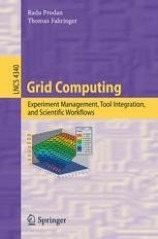
Grid computing : Experiment management, Tool Integration, and Scientific Workflows
Grid computing has become a topic of significant interest in the scientific community as a means of enabling application developers to aggregate resources scattered around the globe for solving large-scale scientific problems. This monograph addresses four critical software development aspects for the engineering and execution of applications on parallel and Grid architectures.

Graph-theoretic concepts in computer science ; 34th International Workshop, WG 2008, Durham, UK, June 30 – July 2, 2008. Revised Papers
This book constitutes the thoroughly refereed post-conference proceedings of the 34th International Workshop on Graph-Theoretic Concepts in Computer Science, WG 2008, held in Durham, UK, in June/July 2008.The 30 revised full papers presented together with 3 invited paper were carefully reviewed and selected from 76 submissions. The papers feature original results on all aspects of graph-theoretic concepts in Computer Science, e.g. structural graph theory, sequential, parallel, and distributed graph and network algorithms and their complexity, graph grammars and graph rewriting systems.
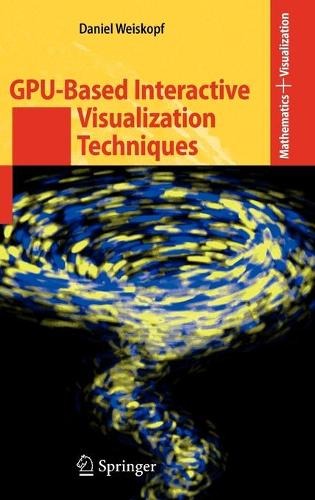
GPU-Based Interactive Visualization Techniques
This book focuses on efficient visualization techniques, which are the prerequisite for the interactive exploration of complex data sets. High performance is primarily achieved by devising algorithms for the fast graphics processing units (GPUs) of modern graphics hardware. Other aspects discussed in the book include parallelization on cluster computers with several GPUs, adaptive rendering methods, multi-resolution models, and non-photorealistic rendering techniques for visualization. Covering both the theoretical foundations and practical implementations of algorithms, this book provides the reader with a basis to understand and reproduce modern GPU-based visualization approaches.

Geometrical Geodesy : Using Information and Computer Technology
This book reviews developments in geodesy and hydrography, using a wide variety of electronic and acoustic instruments. The aim is to take stock of the latest fundamental geodetic constants for the 2000s, to focus on dissimilar ellipsoidal areas, distances, and conversion of applications, referenced to an abundant bibliography. It presents a mixture of issues, dealing with reference and time systems, datums, and s-transformations, elucidate multi-dimensional aspects of the information, communication, and computation technology, including the use of parallel computers. Stressing the hands-on methodology, the handbook is of interest to geodetic engineers, consultants, hydrographers, and engineers with an interest in the field of earth sciences.

Genomics of Tropical Crop Plants
Genomics of Tropical Crop Plants summarizes recent progress on genomic research, including the development of molecular markers, genomic and cDNA libraries, expressed sequence tags (ESTs), genetic and physical maps, gene expression profiles, and whole genome sequences for 20 tropical crop plants. It offers background information about the evolutionary origin and environments of tropical crop species, international programs that are addressing the needs of tropical agriculture, and the potential for new technologies to increase the productivity and value of tropical crops. This book provides new dimensions to growing information concerning temperate crops and their morphology, physiology, and parallel evolution in diverse plant lineages.

General Relativity
this book is a short and concise exposition of the central ideas of general relativity. Although the original audience was made up of mathematics students, the focus is on the chain of reasoning that leads to the relativistic theory from the analysis of distance and time measurements in the presence of gravity, rather than on the underlying mathematical structure. The geometric ideas - which are central to the understanding of the nature of gravity - are introduced in parallel with the development of the theory, the emphasis being on laying bare how one is led to pseudo-Riemannian geometry through a natural process of reconciliation of special relativity with the equivalence principle.

Fundamentals of anatomy and physiology of speech, language, and hearing
Each topic is explored in bullet-point form with augmentative paragraph information, in-depth box features, and detailed illustrations. High-resolution Anatomage virtual dissection table figures derived from real cadavers offer an unparalleled glimpse into the anatomical structures of the human body, featuring true-to-life colors and an impressive level of detail. Topics explored include respiration, phonation, articulation, swallowing, resonance, hearing, balance, neuroanatomy, and neurophysiology.

Fundamental approaches to software engineering ; 24th International Conference, FASE 2021, Held as Part of the European Joint Conferences on Theory and Practice of Software, ETAPS 2021, Luxembourg City, Luxembourg, March 27 – April 1, 2021, Proceedings
This book constitutes the proceedings of the 24th International Conference on Fundamental Approaches to Software Engineering, FASE 2021, which took place during March 27–April 1, 2021, and was held as part of the Joint Conferences on Theory and Practice of Software, ETAPS 2021.

Functional and logic programming ; 9th International Symposium, FLOPS 2008, Ise, Japan, April 14-16, 2008. Proceedings
This volume contains the proceedings of the 9th International Symposium on Functional and Logic Programming (FLOPS 2008), held in Ise, Japan, April 14-16, 2008 at the Ise City Plaza. FLOPS is a forum for research on all issues concerning functional progr- ming and logic programming. In particular it aims to stimulate the cro- fertilization as well as integration of the two paradigms. The Program Committee meeting was conducted electro- cally, for a period of two weeks in December 2007. After careful and thorough discussion, the ProgramCommittee selected20 papers(33%)for presentationat theconference.

Functional and logic programming ; 8th International Symposium, FLOPS 2006, Fuji-Susono, Japan, April 24-26, 2006, Proceedings
This book constitutes the refereed proceedings of the 8th International Symposium on Functional and Logic Programming, FLOPS 2006, held in Fuji-Susono, Japan, in April 2006. The 17 revised full papers presented together with 2 invited contributions were carefully reviewed and selected from 51 submissions. The papers are organized in topical sections on data types, FP extensions, type theory, LP extensions, analysis, contracts, as well as Web and GUI.

Frontiers of Numerical Analysis : Durham 2004
Contains lecture notes on four topics at the forefront of research in computational mathematics. This book presents a self-contained guide to a research area, an extensive bibliography, and proofs of the key results. It is suitable for professional mathematicians who require an accurate account of research in areas parallel to their own.

Frontiers of high performance computing and networking – ISPA 2007 workshops ; ISPA 2007 International workshops, SSDSN, UPWN, WISH, SGC, ParDMCom, HiPCoMB, and IST-AWSN, Niagara Falls, Canada, August, 28-September 1, 2007, Proceedings
This book constitutes the refereed joint proceedings of seven international workshops held in conjunction with the 5th International Symposium on Parallel and Distributed Processing and Applications, ISPA 2007, held in Niagara Falls, Canada in August 2007.

Frontiers of high performance computing and networking – ISPA 2006 workshops ; ISPA 2006 International workshops FHPCN, XHPC, S-GRACE, GridGIS, HPC-GTP, PDCE, ParDMCom, WOMP, ISDF, and UPWN, Sorrento, Italy, December 4 -7, 2006, Proceedings
This book constitutes the refereed joint proceedings of ten internationl workshops held in conjunction with the 4th International Symposium on Parallel and Distributed Processing and Applications, ISPA 2006, held in Sorrento, Italy in December 2006 (see LNCS 4330). Topics addressed are frontiers of high performance computing and networking (FHPCN 2006), XEN in HPC cluster and grid computing environments (XHPC 2006), semantic grid applications in computing and engineering (S-GRACE 2006), fertilization of grid computing and geographic information system (GridGIS 2006), high performance computing in genomic proteomic and transcriptomic (HPC-GTP 2006), parallel and distributed computing in engineering (PDCE 2006), parallel and distributed multimedia computing (ParDMCom 2006), middleware performance (WOMP 2006), information security and digital forensics (ISDF 2006), and ubiquitous processing for wireless networks (UPWN 2006).
